Reports Can't Tell You the Resin Formation Years: Where the Four Cycle Ranges Come From
Source:收稿桥投稿· 2026-10-28· 伍佰艺编辑部· 4 views
Once an old customer came in with a bracelet and a test report. He laid the paper on the counter and his first question was: Can this report tell whether it's artificial or natural?
I couldn't tell. The report doesn't have that column.
Let's be clear: what a test report can answer and what it cannot are two different things. Mixing them up is the easiest way to end up in a deadlock.
The report has two columns
The material column checks whether it counts as wood of the Aquilaria genus in the Thymelaeaceae family.
Whether it contains resin.
These two are hard indicators that laboratories can handle and measure accurately. GB/T 18107 "Hongmu" and the current jewelry and jade identification standards govern exactly these two things.
The column the report doesn't have
Whether the resin formation is natural or artificial—the report says not a word about it. This is not because testing agencies are deliberately hiding something; it's because the scope of testing simply doesn't include the method of resin formation.
As a result, one column is left blank: how many years of resin formation.
That column has to be asked of people; the report can't answer it.
What the blank column is roughly said to be in the trade
Here are a few commonly heard claims, each with its source. These are prevailing trade sayings and research perspectives, not national standard clauses. If someone ever presents them as standard regulations, take them with a grain of salt.
For natural resin formation, the most widespread claim is over 30 years; for better material, 50 to 100 years. (Chenxiang Zhijia)
For artificially induced resin, the claim is 6 months to 5 years, with very few exceeding 10 years. (Chenxiang Zhijia)
Another claim refers to the earliest commercially viable cycle, 3 to 5 years. Moreover, the so-called "3-year resin formation" only means preliminary oil formation; it then needs another 1 to 2 years of aging. From inoculation to maturity, the actual minimum is 5 years. (Chenxiang Zhijia)
Grafted qinan cultivation can shorten the cycle to 2 to 3 years, with tree age also 2 to 3 years. (Baidu Baike entry "Artificial Agarwood")
Of these four groups, two come from industry media and one from an encyclopedia entry—none are test reports or standard clauses. If you want to copy them into a contract, verify the original text yourself first.
Another dimension: years are not the only dimension
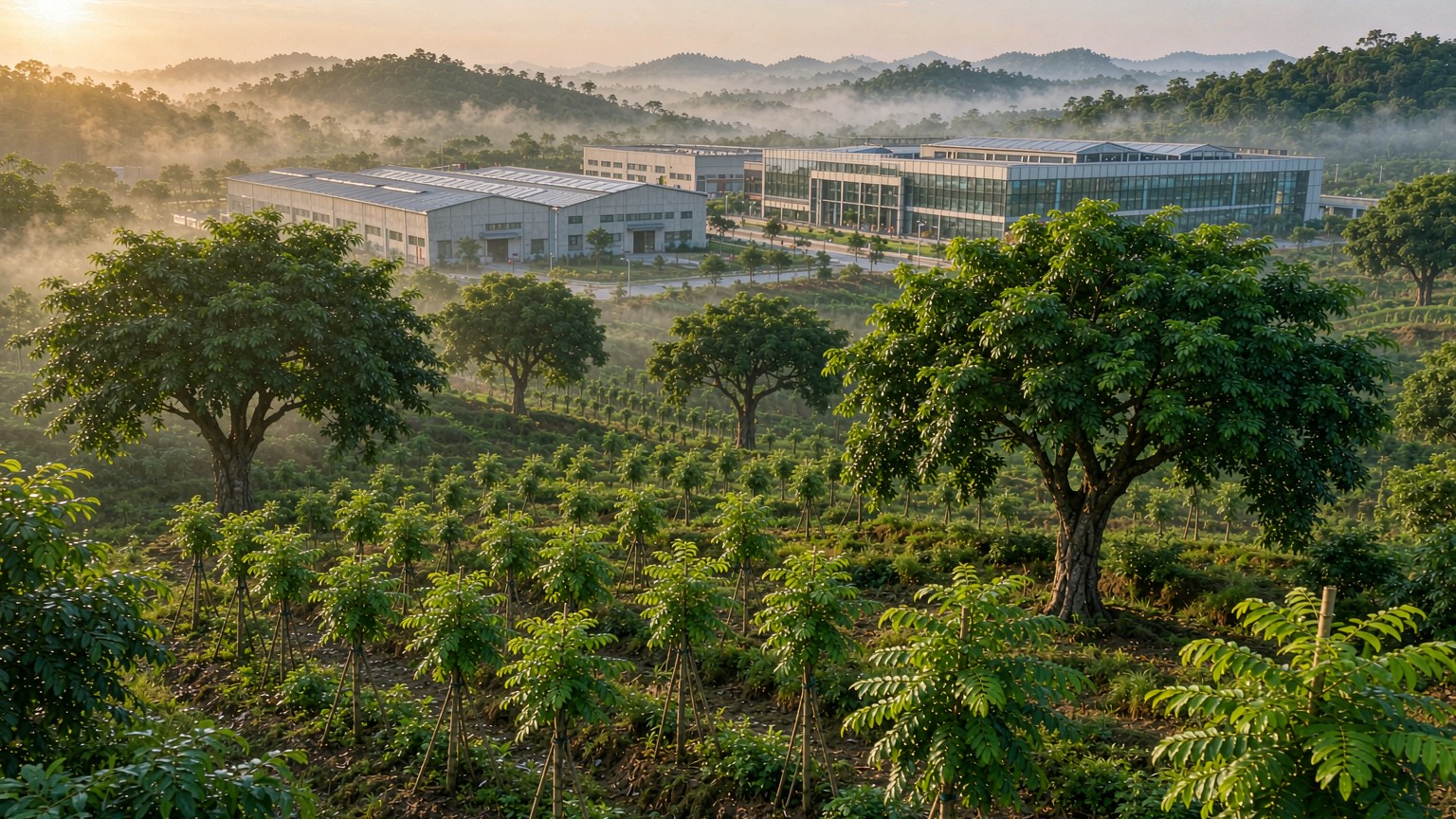
Dai Haofu and his team (Dai Haofu, deputy director of the Institute of Tropical Bioscience and Biotechnology, Chinese Academy of Tropical Agricultural Sciences, and concurrently head of the Haikou Comprehensive Experimental Station) take a different approach. Their stated timeline is: traditional agarwood takes 8 to 10 years from planting, resin formation, and harvesting to seeing returns.
The variety they bred, "Reke No. 2 Aquilaria sinensis," can begin resin formation at 3 years of tree age.
The same two words "resin formation" can differ severalfold in speed. So speaking only at the level of "natural or artificial" is actually quite coarse.
By the way, something often miswritten
For the grading step, the common basis is the current industry standard LY/T 3223—2020 "Agarwood Quality Grading," issued on December 29, 2020, and implemented on June 1, 2021. It divides into five grades from special grade to fourth grade, based on indicators such as ethanol extract and chromones.
Early PDFs posted online had "(draft for approval)" on the cover, with placeholders like ×××× for the standard number and year. The official version effective from June 1, 2021, is numbered LY/T 3223—2020, with technical clauses identical cell by cell; the only difference is that line on the cover. Checking the status on the National Public Service Platform for Standards Information takes a minute.
Using it to check resin formation years won't work. It answers how much extract, how much chromone, how much moisture.
So what should you ask the merchant
Don't start by asking "Is it real?"—that question won't get you anywhere.
Instead, ask how many years of resin formation. Whether the merchant can answer or not—that reaction itself is information.
Then follow up: Is it smelled at room temperature or after warming? The same material yields different aromas via the two routes.
Honestly, clarifying the years is far more useful than asking "Is it real?" right off the bat. This can't be rushed, but asking gets you a definite answer.
For raw loose material, you can look at the cut surface; don't cut a bracelet. The boiling-water method only applies to loose material; beads can't take it.
With the bracelet in hand, how many years did the merchant give? Report in the comments: years of resin formation, plus whether it's at room temperature or warmed. I'll collect these numbers, and once I have a batch, I'll make a cycle comparison table.
At the end, four verifiable paths: 1. For the interpretation boundaries of test reports, see the original article "Differences Between Artificial and Natural Resin Formation in Agarwood" by Zhen Shoucang, and compare with GB/T 18107 "Hongmu" and current jewelry and jade identification standards regarding material classification; 2. The four sets of resin formation cycle figures and their source annotations cited in this article are reproduced as is, without conversion, and not mixed with standard clauses; 3. The issuance and implementation dates and current status of LY/T 3223—2020 are verified on the public information page of the National Public Service Platform for Standards Information, with record number 80021-2021 and announcement No. 1 of 2021; 4. The timeline from Dai Haofu and the Chinese Academy of Tropical Agricultural Sciences is based on an article reprinted from Hainan Daily on the academy's official website.
For more industry materials, see zgcx.net.cn.
To put it even more plainly: the report only tells you what wood this string is and whether it contains resin; it cannot tell you how many years this string has grown. That column requires you to ask, and then verify the answer yourself.
---
Compiled from industry information; not trading or investment advice.
常见问题
Reports Can't Tell You the Resin Formation Years是什么?
Jewelry and jade identification standards only cover material classification and resin presence, not natural vs. artificial resin formation. This article presents four common claims about resin formation cycles with their sources and explains which column can only be answered by people.
沉香怎么选购?
选购沉香应认准可溯源、可检测的渠道,按用途选择形态(线香 / 手串 / 原料),不盲目追高、不轻信「野生」「沉水」等夸大宣传;优先选择带检测报告与来源凭证的商品。
沉香如何保养?
沉香怕潮、怕串味、怕暴晒,应密封、避光、阴凉存放,不同产区分开保存;长期不用的香材定期通风检查,防霉防虫。
如何鉴别沉香的真假?
鉴别沉香需综合感官与辅助手段:天然沉香香气清雅、持久、凉甜交织,燃烧烟气清白而非刺鼻;可结合 GC-MS 色谱检测特征成分(色酮、倍半萜)。建议通过可信渠道与可溯源凭证降低风险。
不同产区沉香有什么区别?
各产区因气候、树种与结香方式差异,香韵各具特色(如海南清雅、越南甜凉、印尼醇厚),是沉香分级与定价的重要参考维度。
沉香价格行情如何?
沉香行情随结香程度、产区、形态分化明显,顶级收藏与入门消费两端活跃;建议以合法、可检测渠道的实际成交为参考,勿轻信单一报价。
沉香与香道文化有什么关系?
沉香是东亚香道文化的核心媒介,从礼佛、文人雅集到当代生活美学,承载「静心、慢享」的东方审美,理解文化背景有助于读懂沉香价值。
沉香有健康功效吗?
传统上沉香被用于舒缓、助眠等场景,但证据等级与用量需谨慎看待;把「传统用法」与「科学证据」分开表述,具体以专业指导为准。
参考资料
Related reading
Related Agarwood Picks
While reading, you might also like these compliant cultivated-agarwood products.
Visit Mall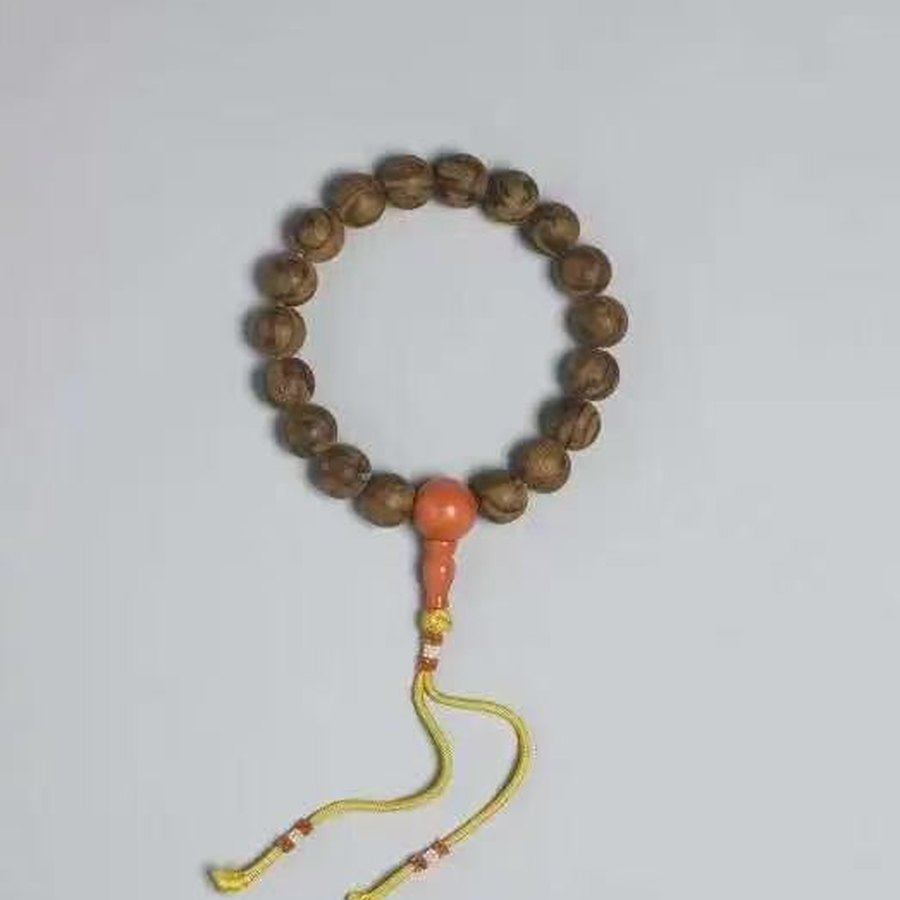
评论区
评论匿名可浏览,登录后可发表;提交后先审后显。
评论加载中…
Check related market data
Want the reference price for this category? Compare on the market page.
Go to market