2025 Chinese Pharmacopoeia Agarwood Entry: Four Core Metrics and One Common Misjudgment
Source:收稿桥投稿· 2026-10-25· 伍佰艺编辑部· 7 views
When people talk about "agarwood standards," the most cited—and most easily misapplied—document in the industry is the Chinese Pharmacopoeia.
It is fundamentally a drug quality standard, not a grading standard for agarwood collecting. But because it is the most authoritative statutory technical document in China's agarwood field, understanding it helps you do two things: first, judge whether a piece of material is "medicinally compliant"; second, see through the various marketing narratives that invoke standards.
The 2025 edition of the Chinese Pharmacopoeia (Part I) has been implemented since October 1, 2025, with the agarwood entry on pages 199–200. This article breaks it down item by item.
I. First, the Botanical Origin: What Tree Counts as "Medicinal Agarwood"
The pharmacopoeia clearly states:
> This product is the resin-containing wood of Aquilaria sinensis (Lour.) Gilg, a Thymelaeaceae plant. It may be harvested throughout the year; the resin-containing wood is cut, the non-resin parts removed, and dried in the shade.
This sentence has three key points:
1. The species is limited to domestic Aquilaria sinensis. Much star-region material comes from other species such as Aquilaria spp. and Gyrinops, and is generally not a compliant source for pharmacopoeial medicinal agarwood.
2. It must be "resin-containing wood." Un-resinated white wood, even of the correct species, does not meet the definition.
3. Harvest requires "removing the non-resin parts." This directly corresponds to the pharmacopoeia's description of "streaks of black-brown resin alternating with yellow-white wood."
II. Four Core Quality-Control Metrics
Metric 1: Description
The pharmacopoeia describes agarwood medicinal material as: irregular blocks, flakes, or helmet-shaped, some as small fragments; surface uneven, with knife marks and occasional holes, showing streaks of black-brown resin alternating with yellow-white wood; hole and depression surfaces mostly decayed-wood-like; relatively firm, fracture splintery; aromatic odor, bitter taste.
> Practical value: "oil-wood alternation" is a hard indicator written into the description. This can be used in reverse—any "agarwood" that is uniformly black throughout with no white-wood transition fails even the medicinal-material description gate.
Metric 2: Identification
Includes three parts:
- Transverse-section microscopic identification: rays 1–2 cells wide, filled with brown resin; vessels round-polygonal, 42–128 μm in diameter; wood fibers polygonal, 20–45 μm in diameter, walls slightly thick, lignified; interxylary phloem flat-elliptical or band-like.
- Micro-sublimation + color reaction: alcohol-soluble extractives yield a yellow-brown oily sublimate with intense aroma; add 1 drop hydrochloric acid and a small amount of vanillin, then 1–2 drops ethanol, gradually showing cherry red, deepening on standing.
- Thin-layer chromatography (TLC): develop with chloroform-ether (10:1), examine under UV light at 365 nm; should show fluorescent spots of the same color as the reference medicinal material.
Metric 3: Extractives (One of the Content Baselines)
> Determined by the hot extraction method under the alcohol-soluble extractives determination method (General Rule 2201), using ethanol as solvent, not less than 10.0%.
Meaning: the proportion of substances soluble in ethanol. This value reflects the "total level of resin-class components" and is a coarse screening indicator for the degree of resin formation. Extractives of un-resinated white wood are usually far below this level.
Metric 4: Assay—Agarwood Tetraol (the Second Content Baseline)
> Calculated on the dried product, this product contains agarwood tetraol (C₁₇H₁₈O₆) not less than 0.10%.
Key points of the test method:
- High-performance liquid chromatography (General Rule 0512)
- Octadecylsilane-bonded silica gel as filler
- Mobile phase A: acetonitrile; mobile phase B: 0.1% formic acid solution, gradient elution
- Column temperature 30°C, detection wavelength 252 nm
- Theoretical plate count calculated on the agarwood tetraol peak not less than 6000
- Reference solution: 60 μg of agarwood tetraol per 1 ml
Agarwood tetraol is a characteristic chromone compound produced after resin formation in agarwood, and is the core quantitative indicator for medicinal agarwood in the pharmacopoeia.
III. The Biggest Change in the 2025 Edition: New HPLC Characteristic Fingerprint
The most substantive revision in the 2025 edition over the 2020 edition is the addition of an HPLC characteristic fingerprint.
Requirement: the test sample's characteristic fingerprint should show 6 characteristic peaks, corresponding to the 6 characteristic peaks of the reference medicinal material, of which peak 1 should have the same retention time as the agarwood tetraol reference peak.
Identity of the three key peaks:
| Peak | Component |
|---|---|
| Peak 1 | Agarwood tetraol |
| Peak 3 | 8-chloro-2-(2-phenylethyl)-5,6,7-trihydroxy-5,6,7,8-tetrahydrochromone |
| Peak 5 | 6,4′-dihydroxy-3′-methoxy-2-(2-phenylethyl)chromone |
Why is this important? The assay only answers "is there enough agarwood tetraol"; the characteristic fingerprint answers "does the ratio of this whole set of components look like real agarwood." The former can be "propped up" by adding a single component; the latter requires multiple components to match simultaneously. It can be said that the fingerprint raises the fraud threshold by an order of magnitude.
It is worth emphasizing: the 2025 edition did not adjust the medicinal threshold; the two red lines of alcohol-soluble extractives ≥10.0% and agarwood tetraol ≥0.10% remain unchanged—only identification precision has improved.
IV. The Most Easily Misused Point: Qinan
This is a widespread misconception in the industry:
> Qinan's agarwood tetraol content is generally low, mostly failing to reach the pharmacopoeia's 0.10% medicinal threshold, yet extractives are often high and the aroma outstanding.
Two conclusions follow:
1. The pharmacopoeia's agarwood tetraol metric cannot be used to judge Qinan's grade. Qinan's evaluation system is aroma profile, soft-silk texture, cool notes, and transparency—a different logic from medicinal quality control.
2. Conversely, a piece failing the pharmacopoeia does not mean it is fake. It may simply not belong to the pharmacopoeia's botanical origin (e.g., star-region material), or may be special Qinan-type material.
V. Beyond the Pharmacopoeia: What Other Standards Exist
The pharmacopoeia governs "medicine," not "collectibles." Two other frequently cited standards in the agarwood field are:
| Standard No. | Name | Main Function |
|---|---|---|
| LY/T 2904-2017 | Agarwood (forestry industry standard) | Definitions, terminology, quality requirements |
| LY/T 3223-2020 | Agarwood quality grading | Grading methods and grade determination |
There are also local standards (such as Hainan Province's local standard for agarwood quality grades) and group standards (such as the "natural original-state incense products" series released in recent years). When purchasing, first clarify which set of standards you are looking at—applying collectible grading standards to medicinal metrics, or using medicinal metrics to reject Qinan, are both misplacements.
VI. Putting the Pharmacopoeia to Use: Three Practical Tips
1. When reading a test report, look at only two lines.
- "Alcohol-soluble extractives (ethanol, hot extraction) ____%," whether ≥10.0
- "Agarwood tetraol (calculated on dried product) ____%," whether ≥0.10
Also check whether there is a "characteristic fingerprint" item and whether it states "all 6 characteristic peaks correspond." A report with the two content items plus the characteristic fingerprint is significantly more credible than one with only a "species identification" conclusion.
2. Sample the correct location when submitting for testing.
Agarwood tetraol distribution is extremely uneven—taking only a small piece of white-wood area will yield a severely low result. Correct approach: multi-point sampling, taking only resin-formed areas, removing waxed, dyed, and oil-soaked surface layers. Bracelets and carvings require destructive sampling (drilling or scraping powder from resin-formed areas).
3. Don't treat one report as a "pass."
Testing is responsible only for the submitted sample. Different beads from the same batch may vary widely. For high-value transactions, piece-by-piece or multi-point spot testing is recommended.
Frequently Asked Questions
Q: Is pharmacopoeia-compliant agarwood necessarily good?
A: Not necessarily. The pharmacopoeia is a passing line, not an excellence line. It screens out "non-compliant" material and does not distinguish "good" from "excellent." Collectible value still depends on aroma profile, oil content, appearance, and origin.
Q: Online sources say "only agarwood tetraol 0.15% qualifies"—is that right?
A: The 2025 pharmacopoeia stipulates not less than 0.10% (calculated on dried product). Measured values vary across testing institutions and submitted samples, but compliance determination should be based on the pharmacopoeia text. When encountering marketing language citing specific figures, verify against the original pharmacopoeia.
Q: Can imported agarwood be used medicinally?
A: The 2025 Chinese Pharmacopoeia specifies the botanical origin as Aquilaria sinensis. Star-region agarwood mostly comes from other species and is generally not a compliant source for pharmacopoeial medicinal agarwood. For medicinal use, follow the pharmacopoeia and licensed pharmacist advice; do not substitute imported incense material for medicinal material on your own.
Q: Must all 6 fingerprint peaks appear?
A: The pharmacopoeia requires that "6 characteristic peaks should be present and should correspond to the 6 characteristic peaks in the reference medicinal material chromatogram." This is an identification item; failure means the component profile does not match the genuine product and should be regarded as non-compliant.
---
Related Reading
- "Agarwood Authenticity Identification: The Six Most Common Fakes on the Market and How to Spot Them"
- "Brunei Agarwood Explained: Why It Is Called 'the Hui'an Aroma of the Star Region'"
- "Agarwood Standards System Overview: How to Use Pharmacopoeia, Industry, Local, and Group Standards"
*This article is compiled from the agarwood entry in Part I of the 2025 edition of the Pharmacopoeia of the People's Republic of China, for study and exchange only; the official printed edition prevails. For medicinal matters, consult a licensed pharmacist or physician.*
Compiled from industry information; not trading or investment advice.
常见问题
2025 Chinese Pharmacopoeia Agarwood Entry是什么?
The 2025 Chinese Pharmacopoeia (effective Oct 1, 2025) sets the medicinal agarwood standard with alcohol-soluble extractives ≥10.0% and agarwood tetraol ≥0.10%, plus a new HPLC characteristic fingerprint. This article decodes each metric's meaning, testing method, and practical value for industry re
沉香价格行情如何?
沉香行情随结香程度、产区、形态分化明显,顶级收藏与入门消费两端活跃;建议以合法、可检测渠道的实际成交为参考,勿轻信单一报价。
沉香怎么选购?
选购沉香应认准可溯源、可检测的渠道,按用途选择形态(线香 / 手串 / 原料),不盲目追高、不轻信「野生」「沉水」等夸大宣传;优先选择带检测报告与来源凭证的商品。
沉香如何保养?
沉香怕潮、怕串味、怕暴晒,应密封、避光、阴凉存放,不同产区分开保存;长期不用的香材定期通风检查,防霉防虫。
如何鉴别沉香的真假?
鉴别沉香需综合感官与辅助手段:天然沉香香气清雅、持久、凉甜交织,燃烧烟气清白而非刺鼻;可结合 GC-MS 色谱检测特征成分(色酮、倍半萜)。建议通过可信渠道与可溯源凭证降低风险。
不同产区沉香有什么区别?
各产区因气候、树种与结香方式差异,香韵各具特色(如海南清雅、越南甜凉、印尼醇厚),是沉香分级与定价的重要参考维度。
沉香与香道文化有什么关系?
沉香是东亚香道文化的核心媒介,从礼佛、文人雅集到当代生活美学,承载「静心、慢享」的东方审美,理解文化背景有助于读懂沉香价值。
沉香有健康功效吗?
传统上沉香被用于舒缓、助眠等场景,但证据等级与用量需谨慎看待;把「传统用法」与「科学证据」分开表述,具体以专业指导为准。
参考资料
Related reading

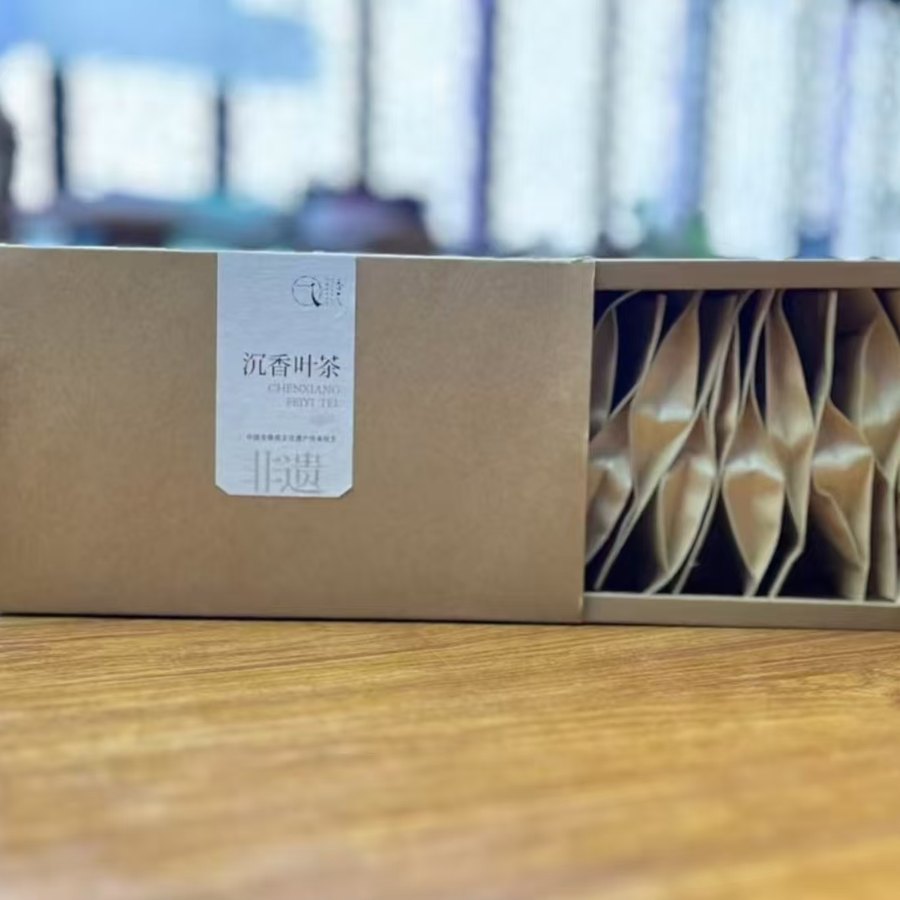
Related Agarwood Picks
While reading, you might also like these compliant cultivated-agarwood products.
Visit Mall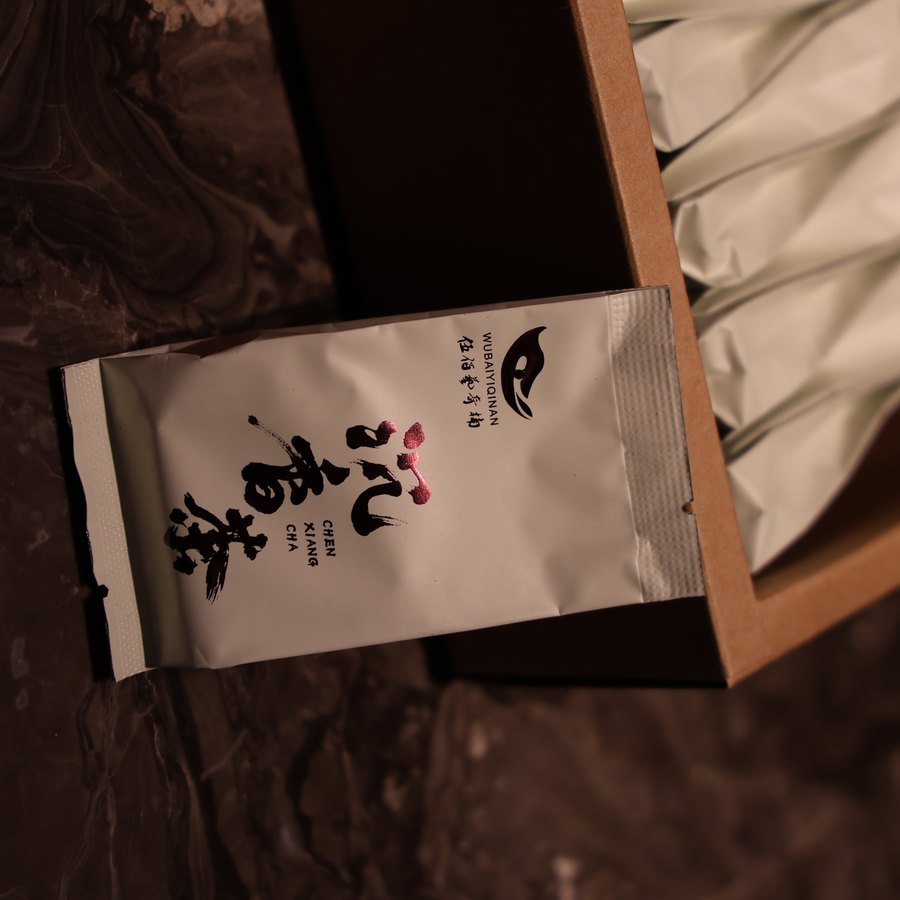
评论区
评论匿名可浏览,登录后可发表;提交后先审后显。
评论加载中…
Check related market data
Want the reference price for this category? Compare on the market page.
Go to market