Agarwood Six Records · Volume Two: The Cry of Incense
Source:收稿桥投稿· 2026-10-24· 伍佰艺编辑部· 3 views
Agarwood Six Records · Volume Two: The Cry of Incense
One · [Modern · the Capital · The Next Morning]
The rain had stopped.
Liu Zhiqiang was gnawing on a fried dough stick at a breakfast stall outside Xihua Gate of the Palace Museum. Wang Wanshu had already swiped her access card three times. She went in through the internal passage of the Cultural Relics Hospital—not taking him into the storage, only leading him to the digitalization studio: a room with no windows, screens on three of its walls.
"Sit." She dragged a chair up to the main screen and opened the full scan of "Along the River During the Qingming Festival."
On the screen was the familiar Bianliang: the Rainbow Bridge, the grain barges, the donkey carts and umbrellas crowding the bridgehead. Wang Wanshu's fingers swept a few times across the trackpad, and the image jumped to the east side of the Zhou Bridge, where a shop with the smallest of facades was magnified to its limit.
Shang se chen tan.
Liu Zhiqiang stared at those four characters, and the back of his neck tightened once more. Those were the four characters he had turned over and over in his mind all night—the shop in the painting and the plaque in his own shop were cut from the same piece of wood.
"This one spot alone is not enough." Wang Wanshu pushed up her glasses. "What your ancestor left is not an address. It's a lock. Three locks." She pulled the image toward the end of the scroll. In a shadow beneath the Rainbow Bridge, a tiny "seal" character—almost swallowed by the texture of the silk—floated into view.
"This is the first—the seal. The second is the mirror image of the left-falling stroke in the 'se' character on the back of your plaque. The third," she cut back to the shopfront east of the Zhou Bridge, "lies in the direction of the third stroke of the plaque's inscription, and it matches the pattern of your seal." She stacked the three things onto a single screen: the painted shopfront, the stroke on the back of the plaque, a rubbing of the incense seal. The three coordinates crossed, and a faint folded line snapped onto the screen, its endpoint marked in an old hutong quarter awaiting demolition in the eastern district of the Capital.
"Xiaobian Hutong, number thirty-seven." Wang Wanshu read out the address the system had reverse-searched. "The Liu family's ancestral residence from the Qing era. After 1949 it was taken into public ownership, then left standing empty for years; the year before last it was zoned into the dilapidated-housing renovation program." Liu Zhiqiang looked at it for a long time.
"All right," he said. "Let's go take a look." He paused, then added, his voice a little lower: "My father's booklet says, 'those who see the whole must leave.' Yesterday you left; today I'm taking you to see it. Does that mean... I've seen the whole too?" Wang Wanshu didn't take up the remark. She closed the tablet, the way one closes a book.
"Liu Zhiqiang, I'm not here to keep you company in your fear. I'm here to get this thing figured out. Once it's figured out, there's nothing to be afraid of."
Two · [Northern Song · Bianliang · Yuanfeng 3 · Summer]
Liu Jiulang flipped a yellowed page out of an old account ledger.
The paper was in his late father's hand; what it recorded was not spice, but a conversation. At the end was written: "Autumn of the Xining era, year seven; Lord Wang came to the shop to discourse on incense."
Lord Wang said: If incense is to bring peace to the realm, it should go into the state storehouses, held in the Son of Heaven's hand, not in the shop of one family.
Father replied: Incense is not power. It is memory. It is the remembering not to let the six pieces come together in one. Come together in one, and the realm will be the less at peace.
Lord Wang was silent, and after a long while said: You and I have argued this very point before. Your father, back in his day, said the same.
Liu Jiulang closed the ledger.
That was an old affair of the Xining era—when Wang Anshi held the reins of state and pushed the New Policies, so that even all the spices under heaven were to be registered and handed over to officials. His father had argued with him over "whether incense should be given to the state." Lord Wang had long since been dismissed as chancellor and retired to Jinling; yet that notion of his—"where the incense stays, the state stays"—smoldered on like a dark fire in incense ash, and later men had taken it up.
"Wen An," Liu Jiulang called.
The young shop hand poked his head around the doorframe. "Boss?" "Of those lords in the front room, which one most resembles the sort Lord Wang meant—the 'incense into official storehouses' kind?" Wen An thought for a moment and lowered his voice. "Lord Cai. The other day he came and said the sea trade is flourishing these days, there's too much private incense among the people, it should be gathered up by the authorities. He speaks with even more force than Lord Wang." Liu Jiulang said nothing. The Lady Wang heard it from the back chamber and said softly through the curtain: "Jiulang, Lord Cai's talk is official courtesy. Your father said—those who truly mean to collect incense never say so to your face." Outside the curtain the cicadas were loud. Summer in Bianliang; mint and mugwort drifted through the incense shop, pressing down the indescribable old smell seeping up from the cellar.
Three · [Northern Song · Bianliang · Yuanfeng 3 · Autumn]
In a newly built mansion in the west of the city, Cai Jing was meeting the Taoist adept for the third time.
The adept spoke a halting Bianliang dialect, yet his cadence carried the soft tones of the Eastern Land—like the voice of an incense seller in a Kyoto lane. He unbuckled the small incense case from his back and took out a piece of wood three cun long, its color like old ivory, the cut face bearing a very fine spiral grain.
"Lord Cai." The adept set the wood on the table. "This is a piece of the first of the six incenses. My master says: since the first incense is already in my hand, the rest must be taken from the chaos. If my lord will open a channel, then after the chaos the incense returns to the state storehouses—my lord to rule it." Cai Jing did not touch the piece of incense. One glance was enough for him to know it was no ordinary agarwood: within the spiral of the cut lay a wisp of quiet that did not belong to the mortal world.
"Your master," Cai Jing asked slowly, "does he want the incense—or the chaos?" The adept smiled. "The chaos is something incense will bring on its own. Lord Cai need only... not block it." Cai Jing pushed the case back, and calmly pocketed the piece of wood. In the firelight he recalled the letter that had come from the Eastern Sea at the start of the year—"The first of the six incenses is already in the Eastern Land. The rest must be taken from the chaos." Now the first-incense fragment had actually made its way into Bianliang. The letter had not been idle words.
He did not know that at that same moment, in the little shop east of the Zhou Bridge, the wooden case holding the purple oil-lease wood gave a violent shudder.
Liu Jiulang was slicing incense; the thin slices beneath the blade curled up on their own. He stood stunned, then went to the back courtyard to call Lu Zhishen.
"Brother, that purple incense of yours—" Lu Zhishen's nostrils flared, and his face changed color. "It's not your purple incense moving. Something has entered the city carrying the smell of your purple incense. And yet it is not your purple incense." "What do you mean?" "The mother incense has entered the city." Lu Zhishen was rarely serious. "Your father said: beyond the six incenses there is one old root, called Ranjatai—it is the token by which the other five are verified, and it has never truly been lit. Whoever holds it near, the other incenses will know it. Today's shudder—Ranjatai has entered the city." Sweat broke out on Liu Jiulang's palm.
That evening Huang Tingjian came to collect the draft of the register.
He carried his usual purple-hair brush; entering, he first took a breath of the room full of incense, and smiled with narrowed eyes. "Jiulang, the smell of your shop is three degrees deeper than when I came last year—there's one more care locked in the cellar." Liu Jiulang pushed the just-finalized Register of the Six Incenses across. "Scholar, proof it once. That 'first incense' at Lord Cai's residence today—Brother Lu says a fragment of Ranjatai has entered the city." Huang Tingjian's hand stopped for an instant as he turned the pages.
"Ranjatai..." he murmured, his gaze dropping to the "Six Incenses" column of the register. After a long while he dipped his brush and added a line of small characters at the end of the final draft: Ranjatai is not one of the six incenses; it is the mother incense Shennong left for later ages. Whoever comes bearing it comes not to return the incense, but to open the lock wrongly. Beware.
Setting down his brush, he did not hurry to leave, but turned the question back to Liu Jiulang. "Jiulang, do you know why I have spent these years compiling this register for your family?" "The Scholar's learning is vast, and he is willing to condescend to us." "It is not learning." Huang Tingjian shook his head. "It is fear. The world always wants to gather the scattered into one—gathered, and one thinks it whole, at peace. But incense, if it gathers in one place, the six aromas blend into a single one, and you can never tell again which piece is the orchid and which the yellow; and people too all become one shape, so that there are no people left. I wrote the Ten Virtues of Incense; the first of the ten virtues is tranquility—tranquility is not contending. The six incenses, each guarding one of the six directions, each becoming its own incense—this is precisely Shennong's 'tranquility.'" He looked at Liu Jiulang, his tone suddenly heavier. "So remember this to your dying day: if in the future someone brings Ranjatai to your house, comes to sweet-talk you with 'gather the six incenses and the realm in great harmony'—do not take him for one returning the incense. He has come to open the lock wrongly." Wen An heard it all in a daze, and only muttered: "But what if great harmony really were possible?" Huang Tingjian glanced at the boy, and for once did not smile. "Anzai, you ask well. But think—if the realm really could be 'all the same,' what difference would remain between your sister at her medicine shop west of the city, and you here behind the counter peeling incense bark? It is precisely this difference that people live by." Liu Jiulang nodded, pressing the draft back into the hidden compartment. He did not know that nine hundred years later that piece of "mother incense" would fall into the hands of a Japanese man in a dark gray suit with impeccably clean cuffs; nor did he know that the "lock" was the half-piece of jade held by his own descendant; still less did he know that Huang Tingjian's words—"people all become one shape, so that there are no people left"—would be turned into another kind of logic in the mouth of a Japanese man named Liu Shengjingma.
Four · [Modern · the Capital · Days Later]
No. 37 Xiaobian Hutong was a courtyard house half collapsed; the house-number plate was long gone, and on the wall a huge character was sprayed: "Demolish."
Liu Zhiqiang went around to the back courtyard, and beneath a withered jujube tree he found the cellar mouth—half a rotten piece of wood wedged into a gap between the flagstones, carved with the same left-falling stroke of the "se" character as on the back of the plaque. Wang Wanshu squatted down and shone her flashlight on it. "The hidden cellar of your old house." Inside there was only a single wooden box.
The box was a twin, originally meant to hold two cakes; now both grooves were empty. Eight characters were cut into the bottom of the box, the knife marks very old: Purple enters the Southern Sea, Green exits the Western Pass.
Wang Wanshu rubbed the eight characters with the pad of her finger; her breath caught for an instant.
"Liu Zhiqiang, the Purple Ranjatai (紫奢待) was a twin incense cake. The year of Jingkang, your ancestor split it apart." "Where is the other half?" "One half went aboard a sea ship with the yellow incense and sank in the Southern Sea—later it will be raised from the shipwreck at Quanzhou. The other half..." She looked up, her gaze settling on the original plaque in his arms, "is hidden in the painting. Your ancestor made that stroke of 'Shang se chen tan' into the case for the other half of the purple incense." Liu Zhiqiang gripped the jade in his hand. The three characters "Ranjatai" on the jade suddenly matched the words "mother incense" in that one brushstroke of Huang Tingjian's, which he had seen yesterday on the screen at the Palace Museum.
"And 'Green exits the Western Pass'?" "The Green Ranjatai. It left the Western Regions long ago and went to the Middle East." Wang Wanshu put away her phone. "What this box holds is not incense—it is your family's master record of where each incense went. Purple went to the Southern Seas, Green went beyond the Western Pass—the six pieces were scattered long ago." As the two of them came up out of the cellar, a push notification popped up on Liu Zhiqiang's phone: [Heritage News] Kyoto's Ryusei Incense House donates an entire batch of East Asian archaeological relics to the national museum of a certain country, including many fragments of Song-dynasty agarwood. The shop's owner, Liu Shengjingma, says the act is "returning civilization to its rightful place."
Liu Zhiqiang stared at the four characters "Liu Shengjingma." The dark gray suit in the car that rainy night, the clean cuffs, the words "What your father would not listen to back then, you will not listen to either"—all of it landed on one name.
This was no ordinary guest.
Three days later, Liu Shengjingma walked into the Liu family's Agarwood & Sandalwood Shop.
He wore a dark gray suit, his cuffs impeccably clean, a thin wooden cane in his hand, its head set with a small seal of nine chrysanthemum petals. Entering, he first took a deep breath of the room full of incense, then tilted his head slightly, as if savoring it.
"Mr. Liu," he said, speaking very slowly. "Last time, in the car, I could not get out to see you." Liu Zhiqiang did not move. "You are?" "Liu Shengjingma. The Ryusei Incense House, Kyoto." He walked to the counter and pointed at that Hainan purple oil-lease block. "Cut me a small piece. The one you are cutting right now." Liu Zhiqiang cut it and wrapped it. Liu Shengjingma paid by scan, the sum double the marked price.
"This piece of incense is worth it." Liu Shengjingma tucked the paper packet into his inner pocket. "Your father, back in the day, bought the same incense in this shop. He said, purple oil-lease is like an old friend—marked down and marked down again, it hasn't changed one bit." Liu Zhiqiang's hand stopped in midair.
"You... knew my father?" Liu Shengjingma looked at him, his gaze calm to the point of tenderness. "Mr. Liu, sooner or later we must have a proper talk. While you still take this to be nothing more than a shop, there is nothing to talk about. Once you no longer take it so—" he paused, using a word that counted a man as one of his own, "then we will talk." He walked to the door and turned back. "Zhiqiang. What your father would not listen to back then, you will not listen to either?" The door sounded. Liu Zhiqiang stood where he was, and after a long while crushed the receipt showing double payment into a ball.
That night Wen Ye came.
Not by knocking at the door. Someone tapped Liu Zhiqiang's rear window three times, lightly, and half a face peered out—thirty-eight years old, crew-cut, wearing a jacket washed pale, shoulders and back straight, like a man who had served in the army.
"Boss Liu?" The man lowered his voice. "Wen Ye. Cultural Relics Security Detachment." Liu Zhiqiang's instinct was to shut the window.
"Don't rush." Wen Ye flashed a work ID. "That old house of yours, No. 37 Xiaobian Hutong—these past two days more people than you have gone in. Another crew as well; their methods are not like thieves', more like doing a preliminary survey of cultural relics—documents in order, backing from an overseas foundation." "That's within your jurisdiction?" "It's within my ancestors' jurisdiction." Wen Ye suddenly smiled, a hard self-assurance in the smile. "Wen An—Northern Song, Yuanfeng era, the young shop hand who ran errands for your family. Nine hundred years; now it's my turn to take the bullets for you." Liu Zhiqiang was stunned.
"Officer Wen—" "Just call me Ye-ge." Wen Ye pushed a stack of photos through the gap in the window: surveillance screenshots around the old house, among them one profile, dark gray suit, clean cuffs. "This man, you know him?" "You could say I do." "The people behind him, these years, under the banners of 'donating cultural relics' and 'cultural protection,' have been collecting Song-dynasty agarwood fragments all over the world. We've watched them for two years and never reached the root. Now he has come to the Capital in person, and walked into your shop." Wen Ye paused. "Boss Liu, this shop of yours may be one brick in the foundation." Liu Zhiqiang turned the photos over; nothing was written on the back. The streetlamp outside lit Wen Ye's face half bright and half dark, like the boy nine hundred years ago who had crouched on the threshold peeling incense bark, returned in different clothes.
"All right," Liu Zhiqiang said. It was the second time today he had said those two words, and both times it meant the same: he had decided not to hide.
"Ye-ge, and if that brick cracks, can you block it?" Wen Ye did not answer; he only closed the window gently, his figure melting into the night of the hutong.
Liu Zhiqiang returned behind the counter and laid out the empty box, the jade, and his father's booklet side by side. The empty box's two grooves faced the sky, like an open mouth. The three characters "Ranjatai" on the jade gleamed cold under the lamp.
He suddenly understood one thing: Ranjatai was not one of the six incenses—it was a key. And the key was in the enemy's hands.
The rain began to fall again. The night of the Capital steeped nine hundred years of events in the same rain once more.
— *Agarwood Six Records*, Volume Two, to be continued · next: Volume Three, "Night Rain of the Jingkang Era"
> This is an original serialized story from *Agarwood Six Records*; characters and plot are fictional. Common knowledge of agarwood and aromatics herein is compiled from public materials and does not constitute investment or medical advice.
Compiled from industry information; not trading or investment advice.
常见问题
Agarwood Six Records · Volume Two是什么?
A watermarked slip from the Shosoin bearing the words 'the yardstick remains,' the cry of incense in the night, and a second seal surfacing — Volume Two.
沉香怎么选购?
选购沉香应认准可溯源、可检测的渠道,按用途选择形态(线香 / 手串 / 原料),不盲目追高、不轻信「野生」「沉水」等夸大宣传;优先选择带检测报告与来源凭证的商品。
沉香如何保养?
沉香怕潮、怕串味、怕暴晒,应密封、避光、阴凉存放,不同产区分开保存;长期不用的香材定期通风检查,防霉防虫。
如何鉴别沉香的真假?
鉴别沉香需综合感官与辅助手段:天然沉香香气清雅、持久、凉甜交织,燃烧烟气清白而非刺鼻;可结合 GC-MS 色谱检测特征成分(色酮、倍半萜)。建议通过可信渠道与可溯源凭证降低风险。
不同产区沉香有什么区别?
各产区因气候、树种与结香方式差异,香韵各具特色(如海南清雅、越南甜凉、印尼醇厚),是沉香分级与定价的重要参考维度。
沉香价格行情如何?
沉香行情随结香程度、产区、形态分化明显,顶级收藏与入门消费两端活跃;建议以合法、可检测渠道的实际成交为参考,勿轻信单一报价。
沉香与香道文化有什么关系?
沉香是东亚香道文化的核心媒介,从礼佛、文人雅集到当代生活美学,承载「静心、慢享」的东方审美,理解文化背景有助于读懂沉香价值。
沉香有健康功效吗?
传统上沉香被用于舒缓、助眠等场景,但证据等级与用量需谨慎看待;把「传统用法」与「科学证据」分开表述,具体以专业指导为准。
参考资料
Related reading
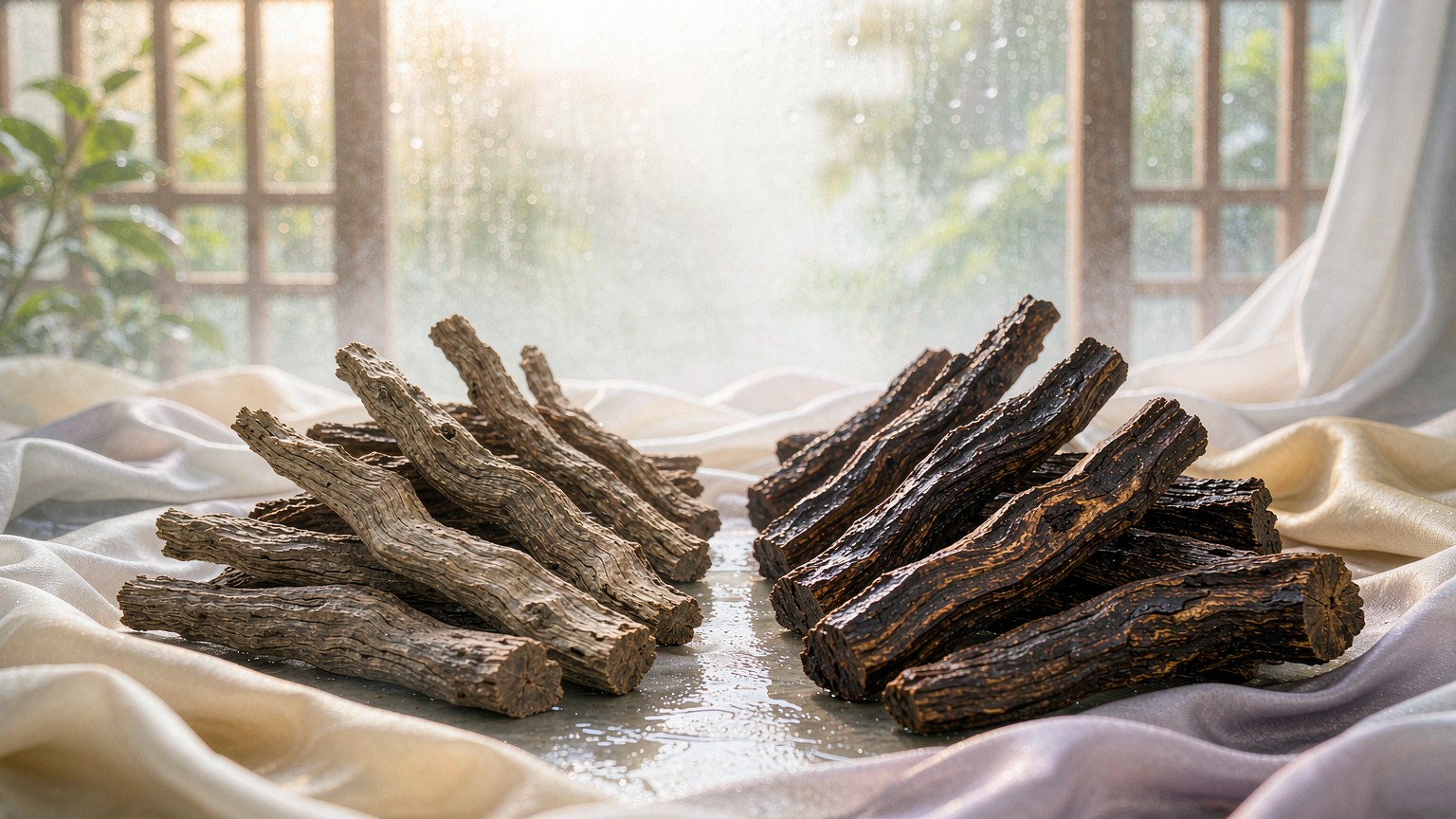
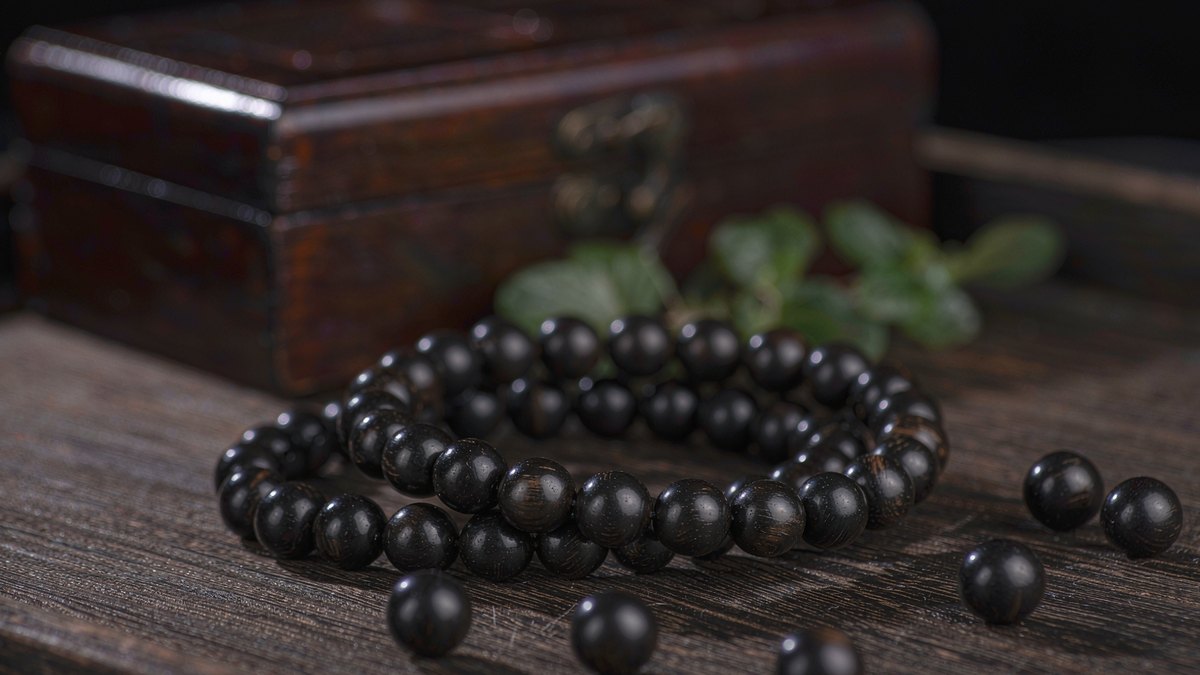
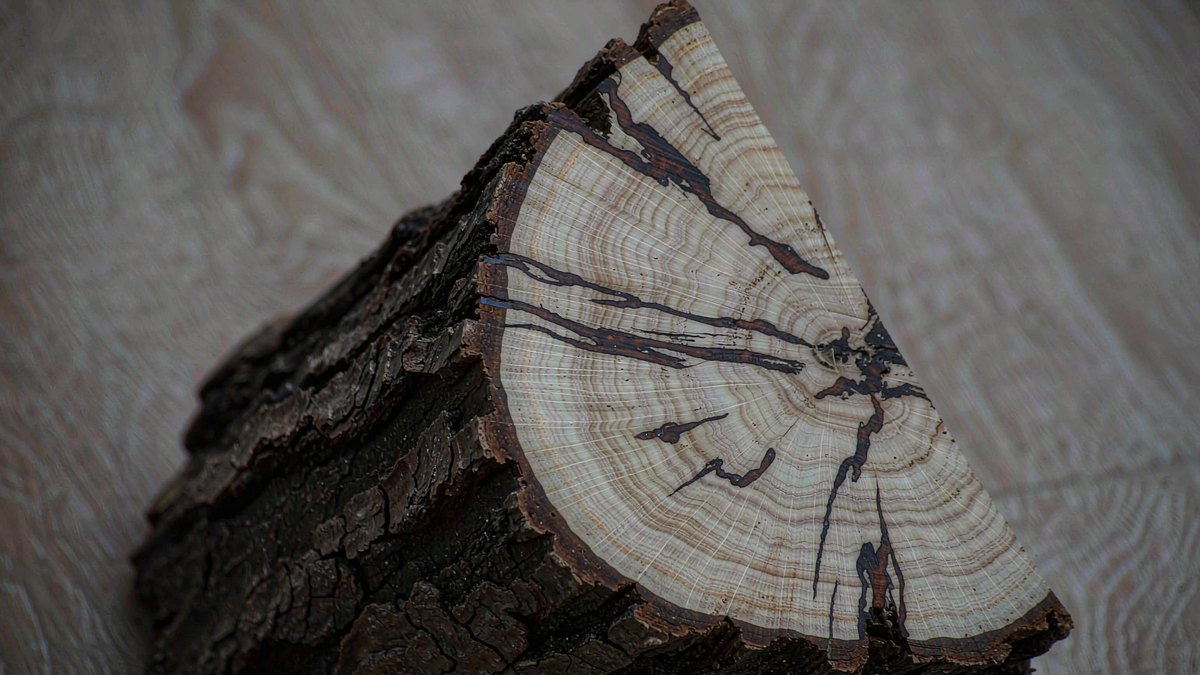
Related Agarwood Picks
While reading, you might also like these compliant cultivated-agarwood products.
Visit Mall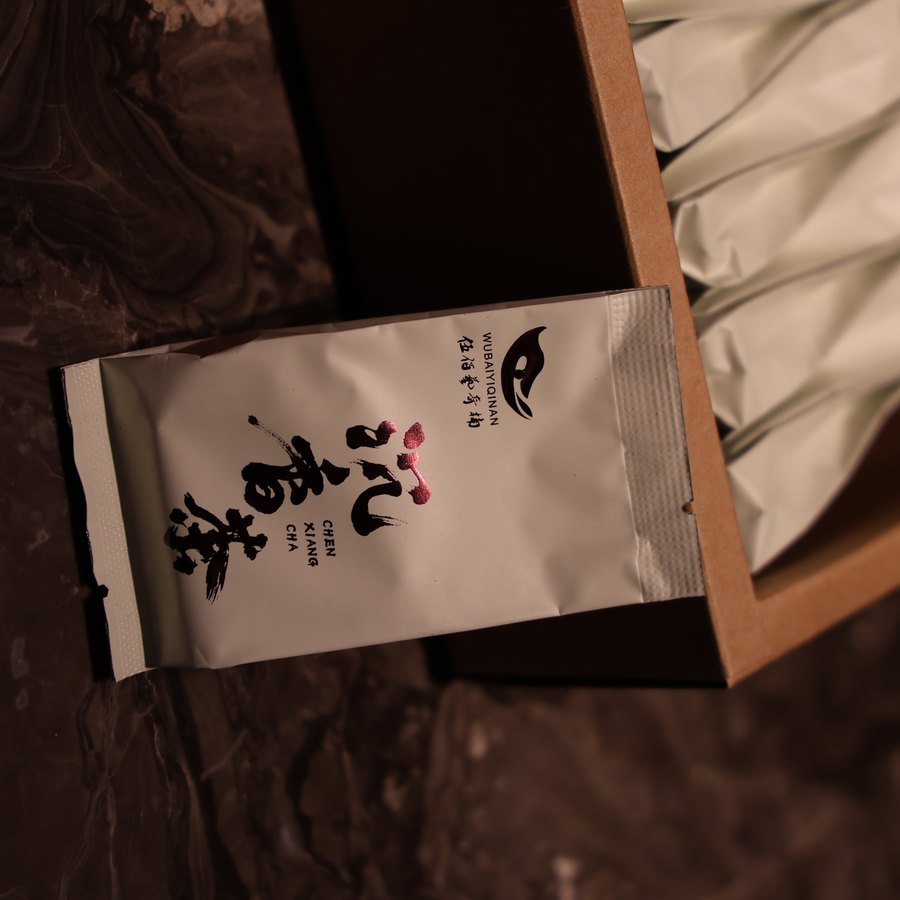
评论区
评论匿名可浏览,登录后可发表;提交后先审后显。
评论加载中…
Check related market data
Want the reference price for this category? Compare on the market page.
Go to market