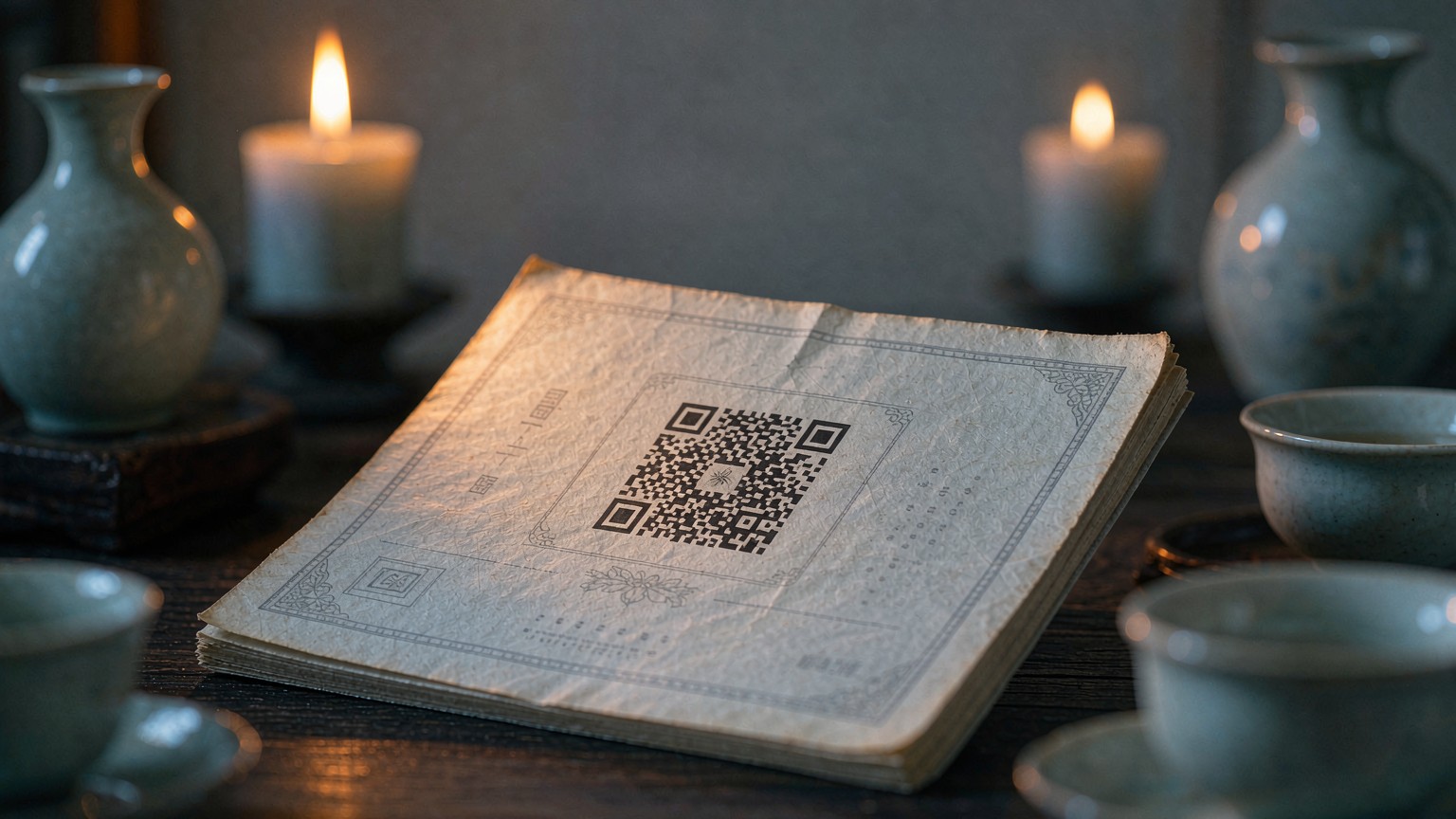
The Six Records of Agarwood — Book Two: The Incense Resonance
Source:《沉香六记》原创小说 · 中国沉香网「小说」频道首发· 2026-10-14· 刘家沉檀店· 153 views
The Six Records of Agarwood — main text · dual-timeline, part two
I. [Modern · The Capital · Next Morning]
The rain had stopped.
Liu Zhiqiang gnawed a youtiao at a breakfast stall outside the Palace Museum's West Glorious Gate; Wang Guanshu had already swiped her access card three times. She took the staff passage of the conservation hospital, not into the vaults, only leading him to the digitization studio — a windowless room, three walls of screens.
"Sit." She dragged a chair before the main screen and opened the full scan of The Qingming Riverside Scroll.
On the screen was the familiar Bianliang: the Rainbow Bridge, grain boats, donkeys and umbrellas jammed at the bridgehead. Wang Guanshu's fingers flicked across the trackpad; the view jumped to east of Zhouqiao, the tiny shopfront magnified to its limit.
Shang-se Chen-tan.
Liu Zhiqiang stared at those four characters; the back of his neck tightened again. All night he had turned those four characters over — the shop in the painting and the plaque in his shop were the same piece of wood.
"This one spot isn't enough," Wang Guanshu pushed her glasses. "What your ancestor left wasn't an address. It was a lock. Three locks."
She pulled the view to the end of the scroll. In a shadow beneath the Rainbow Bridge floated an extremely small seal character, nearly swallowed by the silk grain.
"This is the first — the seal. The second is the mirror-image of the left-falling stroke of 'se' on the back of your plaque. The third," she cut back to the Zhouqiao shop, "is in the direction of the third stroke of the shop sign, matching your seal pattern."
She overlaid the three on one screen: the painted shopfront, the plaque's backstroke, the seal rubbing. The three coordinates intersected; the screen popped a faint broken line, its landing marked in an old alley in the east city marked for demolition.
"Biaobei Alley, number thirty-seven," Wang Guanshu read the address the system reverse-looked. "The Liu family ancestral home from the Qing. Confiscated after the founding, empty since, slated for redevelopment two years ago."
Liu Zhiqiang looked a long while.
"All right," he said. "Let's go see."
He paused, then added, his voice lower: "My father's booklet says, 'all who read them all must leave.' You left yesterday; today I'm taking you to look. Does that count as… I've read them all too?"
Wang Guanshu didn't take the bait. She closed the tablet like closing a book.
"Liu Zhiqiang, I didn't come to hold your hand through being afraid. I came to get this clear. Get it clear, and there's nothing to fear."
II. [Northern Song · Bianliang · Yuanfeng 3 · Summer]
Liu Jiulang turned up a yellowed page from an old ledger.
The page was his father's hand, not recording spices but a conversation. The colophon read "Autumn, seventh year of Xining: Minister Wang came to the shop to discuss incense."
Minister Wang said: If incense is to pacify the realm, it should enter the official storehouse, in the Son of Heaven's hand, not one family's shop.
Father answered: Incense is not power; it is memory. Remember not to let the six pieces come together. Together, the realm grows unsettled.
Minister Wang fell silent; after a long while: You and I once argued thus. Your father, in his day, said the same.
Liu Jiulang closed the ledger.
That was old business from the Xining years — when Wang Anshi held power, pushing the New Policies, even the realm's spices were to be registered and taken into the state. Father had argued with him over "whether incense should be handed to the state." Now Minister Wang had long been dismissed, retired to Jinling, yet his notion of "incense stands with the state" smoldered like hidden fire in ash, taken up by those who came after.
"Wen An." Liu Jiulang called.
The young helper poked his head from the door. "Boss?"
"Of those lords who came earlier, which is most like what Minister Wang meant by 'incense to the state storehouse'?"
Wen An thought, lowered his voice: "Lord Cai. A few days back he came and said maritime trade is booming, too much private incense among the people, the top should consolidate it. Spoke even firmer than Minister Wang."
Liu Jiulang said nothing. Lady Wang, hearing from the rear wing, said softly through the curtain: "Jiulang, Lord Cai's is official pleasantry. Your father said, those who truly mean to collect incense never say so to your face."
Cicadas were loud beyond the curtain. Bianliang's summer: the shop drifted with mint and mugwort, pressing down an indefinable old scent seeping from the cellar.
III. [Northern Song · Bianliang · Yuanfeng 3 · Autumn]
In the newly built mansion west of the city, Cai Jing met the sorcerer for the third time.
The sorcerer spoke stiff Bianliang dialect, his trailing tones carrying an Eastern-Island softness — like the accent of a incense-seller at a Kyoto lane corner. He untied the small incense casket from his back, took out a three-inch length of wood, the color of aged ivory, its cut face bearing an extremely fine spiral grain.
"Lord Cai." The sorcerer set the wood on the desk. "This is a sliver of the head of the six incenses. My master says, since the head incense is in my hand, the rest shall be taken in the chaos. If Lord Cai will open one line of passage, after the chaos the incense goes to the public storehouse — under Lord Cai's charge."
Cai Jing did not touch the incense. One glance told him it was no ordinary agarwood: within the spiral of its cut face hid a stillness belonging to no human world.
"Your master," Cai Jing asked slowly, "wants the incense, or the chaos?"
The sorcerer smiled. "The chaos will come of its own, with the incense. Lord Cai need only… not block it."
Cai Jing pushed the casket back and calmly accepted the sliver of wood. In the firelight, he recalled the letter from the Eastern Sea at the year's start — "The head of the six incenses is already in the Eastern Kingdom. The rest shall be taken in the chaos." Now a fragment of the head incense had entered Bianliang. The letter was no empty words.
He did not know that, at that same moment, in the little shop east of Zhouqiao, the wooden case holding the Zi-you-ge trembled sharply.
Liu Jiulang was slicing incense; the thin sheet under his blade curled of its own. He froze, went to the rear courtyard to call Lu Zhishen.
"Brother, that purple incense of yours…"
Lu Zhishen's nostrils flared; his face changed. "It's not your purple incense moving. Something carrying your purple incense's scent has entered the city. Yet it is not your purple incense."
"What do you mean?"
"The mother incense has entered the city," Lu Zhishen was rarely serious. "Your father said, beyond the six incenses there is an old root called Lan She Dai — it is the token that verifies the other five, never truly lit. Whoever holds it near, the rest will recognize. This trembling today — Lan She Dai has entered the city."
Liu Jiulang's palm broke into a sweat.
That evening, Huang Tingjian came for the manual draft.
He carried his customary purple-bristle brush, took a breath of the room's full incense at the door, squinted and smiled: "Jiulang, your shop's scent is three parts heavier than when I came last year — one more worry added to the cellar's stores."
Liu Jiulang pushed over the just-finalized Six-Incense Manual: "Academician, check it once. Today at Lord Cai's residence that 'head incense' sliver — Brother Lu says a fragment of Lan She Dai has entered the city."
Huang Tingjian's hand turning the manual paused a beat.
"Lan She Dai…" he whispered, his gaze falling on the "six incenses" column. After a long moment, he added a line of small characters at the end of the final draft:
Lan She Dai is not one of the six incenses, but the mother incense Shennong left for later ages. He who comes holding it comes not to return incense, but to open the wrong lock. Be cautious.
Setting the brush, he did not hurry off, but asked Liu Jiulang instead: "Jiulang, do you know why I've spent these years compiling this manual for your family?"
"The Academician's learning is vast; he deigns to stoop."
"Not learning." Huang Tingjian shook his head. "It is fear. The world always wants to gather what is scattered — gather it, and they think they've made it whole, made it safe. But incense, gathered in one place, the six flavors mingle into one; you can no longer tell which is lan, which is huang. People too — all become one mold, and there are no people left. I wrote the Ten Virtues of Incense; the first virtue is 'tranquility' — tranquility is non-contention. The six incenses kept apart in six quarters, each its own incense, is precisely Shennong's 'tranquility.'"
He looked at Liu Jiulang, his tone suddenly heavy: "So burn this into memory: should someone ever come to your house with Lan She Dai, coaxing you with talk of 'gathering the six incenses, a world made one' — do not take him for one returning incense. He comes to open the lock wrongly."
Wen An beside them was lost, only muttering: "But what if it really could make one world?"
Huang Tingjian looked at the boy, and for once did not smile. "Anzi, good question. But think — if the whole world truly were 'all the same,' what difference would there be between your sister's herb shop west of the city and you peeling incense bark behind this counter? What makes life live is exactly this difference."
Liu Jiulang nodded and pressed the manual back into the hidden compartment. He did not know that, nine hundred years later, that sliver of "mother incense" would fall into the hands of a Japanese man in a dark-grey suit with immaculately clean cuffs; nor that the "lock" was precisely his own descendant's half-jade; still less that Huang Tingjian's words "all become one mold, and there are no people left" would, in the mouth of a Japanese named Yagyu Shizuma, be turned into another doctrine.
IV. [Modern · The Capital · Several Days Later]
Biaobei Alley number thirty-seven was a half-collapsed courtyard, its house number long gone, a large "DEMOLISH" sprayed on the wall.
Liu Zhiqiang circled to the rear courtyard and found the cellar mouth beneath a dead jujube tree — a slab-stone seam stuffed with a piece of rotted wood, carved with the same left-falling stroke of "se" as on the plaque's back. Wang Guanshu squatted, lit it with her flashlight: "Your family's old hidden cellar."
Inside the cellar was only one wooden box.
The box was twin-linked, meant to hold two cakes; now both slots were empty. On its base were eight characters, the cuts very old:
The purple went to the Southern Sea; the green left by the Western Pass.
Wang Guanshu ran a fingertip over those eight characters; her breath caught a moment.
"Liu Zhiqiang, Zi She Dai is a twin incense cake. The year Jingkang, your ancestor split it apart."
"And the other half?"
"One half boarded a sea ship with Huang Xiang, sunk in the Southern Sea — it will later surface from a Quanzhou shipwreck. The other half…" she raised her eyes to the original plaque in his arms, "is hidden in the painting. Your ancestor made the brushstroke of 'Shang-se Chen-tan' into the case for the other half of the purple incense."
Liu Zhiqiang clenched the jade in his hand. The three characters "Lan She Dai" on it suddenly aligned with the "mother incense" brushstroke Huang Tingjian had drawn on the Palace Museum screen yesterday.
"And 'the green left by the Western Pass'?"
"Lü She Dai. Long gone past the Western Regions, to the Middle East." Wang Guanshu put away her phone. "What this box holds is not incense, but your family's master register of where each incense went. The purple went south; the green went beyond the Western Pass — the six pieces scattered long ago."
As they came out of the cellar, a push notification popped on Liu Zhiqiang's phone:
[Cultural Relics Wire] Kyoto's Yagyu Incense Hall donates a full batch of East-Asian archaeological artifacts to a national museum of a certain country, including multiple Song-dynasty agarwood fragments. Hall master Yagyu Shizuma says the act is "to return civilization to where it belongs."
Liu Zhiqiang stared at the four characters "Yagyu Shizuma." The dark-grey suit in the rainy-night car, the clean cuffs, that line "what your father wouldn't heed, won't you heed either" — all landed on one name.
This was no ordinary customer.
Three days later, Yagyu Shizuma entered the Liu Family Chen-tan Emporium.
He wore a dark-grey suit, cuffs immaculately clean, a slender wooden cane in hand, its head inset with a small nine-petaled chrysanthemum seal. Entering, he first drew a deep breath of the room's incense, then tilted his head slightly, as if savoring.
"Mr. Liu," he said, slowly. "Last time, in the car, I could not step down to meet you."
Liu Zhiqiang did not move. "And you are?"
"Yagyu Shizuma. Kyoto's Yagyu Incense Hall." He walked to the counter, pointed at the Hainan Zi-you-ge. "Slice me a small piece. The very piece you're cutting now."
Liu Zhiqiang sliced it, wrapped it. Yagyu scanned to pay — double the marked price.
"This incense is worth it," Yagyu tucked the paper packet into an inner pocket. "Your father bought the same incense in this shop, years ago. He said Zi-you-ge is like an old friend — demoted again and again, it hasn't changed a bit."
Liu Zhiqiang's hand hung in midair.
"You… knew my father?"
Yagyu looked at him, his gaze calm nearly to tenderness. "Mr. Liu, we will talk properly, sooner or later. Not while you still think this is only a shop. Once you no longer think so —" he paused, using a word that counts the other as one of his own, "we will talk."
He reached the door, then turned back. "Zhiqiang. What your father wouldn't heed back then — won't you heed it either?"
The door chimed. Liu Zhiqiang stood where he was; after a long while, he crumpled the double-payment receipt into a ball.
That night, Wen Ye came.
Not through the door. Three light taps on Liu Zhiqiang's rear window; half a face appeared — thirty-eight, cropped hair, a washed-faded jacket, shoulders straight, like a veteran.
"Boss Liu?" the man lowered his voice. "Wen Ye. Cultural Relics Protection Unit."
Liu Zhiqiang instinctively moved to close the window.
"Don't rush," Wen Ye flashed a work badge. "Your old home, Biaobei Alley thirty-seven, hasn't had only you in it these two days. Another group — their method isn't like thieves, more like cultural-relics pre-survey — credentials complete, background an overseas foundation."
"Your business?"
"My ancestors' business." Wen Ye suddenly smiled, a familiar bluntness in it. "Wen An, the helper who ran errands at your house in the Yuanfeng years of the Northern Song. Nine hundred years on, it's my turn to take the bullet for you."
Liu Zhiqiang froze.
"Officer Wen —"
"Just call me Ye." Wen Ye passed a stack of photos through the window gap — surveillance stills around the old home, one silhouette, dark-grey suit, clean cuffs. "This person — you know him?"
"Suppose so."
"The people behind him, these years, under the name of 'donating relics' and 'cultural protection,' have been collecting Song-dynasty agarwood fragments worldwide. We've watched two years, never reached the root. Now he's come to the capital himself, and entered your shop." Wen Ye paused. "Boss Liu, this shop of yours is likely a brick at the very root."
Liu Zhiqiang turned the photo over; nothing written on the back. The streetlamp outside lit Wen Ye's face half-bright, half-dark, like the boy who nine hundred years ago squatted on the threshold peeling incense bark, returned in changed clothes.
"All right," Liu Zhiqiang said. It was the second time that day he said those two words; both times they meant: he had decided not to hide.
"Brother Ye, if that brick cracks, can you hold it?"
Wen Ye did not answer, only eased the window shut; his figure melted into the alley's night.
Liu Zhiqiang went behind the counter and laid out the empty box, the jade, and his father's booklet in a row. The empty box's two slots faced up, like an open mouth. The three characters "Lan She Dai" on the jade threw cold light under the lamp.
He suddenly understood one thing: Lan She Dai is not one of the six incenses; it is a key. And the key is in the enemy's hand.
The rain began again. The capital's night soaked nine hundred years of events into the same rain once more.
— The Six Records of Agarwood, Book Two, to be continued · next: Book Three, "The Jingkang Night Rain"
Frequently Asked Questions
What is The Six Records of Agarwood — Book Two?
Modern thread: Wang Guanshu traces The Qingming Riverside Scroll to the ancestral home in Biaobei Alley; in the cellar, the twin-slot empty box of the Zi She Dai holds nothing. Yagyu Shizuma enters the shop formally as a customer. Northern Song thread: Cai Jing privately meets an Eastern-Island sorcerer; the purple incense "resonates" for the first time.
How should I choose agarwood?
Buy from traceable, testable channels and match the form (incense, beads, raw wood) to your use. Avoid exaggerated claims such as "wild" or "sinking grade" without proof, and prefer products with lab reports and origin documentation.
How should agarwood be stored and maintained?
Agarwood dislikes moisture, odours and direct sunlight. Keep it sealed, dark and cool, store different origins separately, and air and inspect long-stored pieces periodically against mould and insects.
How can I tell real agarwood from fake?
Authentication combines sensory checks with technical ones: natural agarwood has a clean, long-lasting, cool-sweet scent and burns with pale, non-pungent smoke. GC-MS analysis of characteristic compounds (chromones, sesquiterpenes) adds objective confirmation. Buying through traceable channels with certificates lowers the risk.
How do agarwood origins differ?
Climate, tree species and resin-induction methods give each origin a distinct scent profile — for example Hainan tends to be clean and elegant, Vietnam sweet and cool, Indonesia deep and full. Origin is a key factor in grading and pricing.
What is the current agarwood market like?
Prices diverge sharply by resin density, origin and form, with both top-end collectibles and entry-level consumer products active. Use actual transactions from legal, testable channels as reference rather than a single quotation.
What is the relationship between agarwood and incense culture?
Agarwood is the core medium of East Asian incense culture, spanning temple offerings, literati gatherings and contemporary lifestyle aesthetics. Understanding this cultural background helps explain its value.
Does agarwood have health benefits?
Traditionally agarwood has been used for calming and sleep-related rituals, but evidence quality and dosage need careful reading. Keep traditional use and scientific evidence clearly separated and follow professional guidance.
参考资料
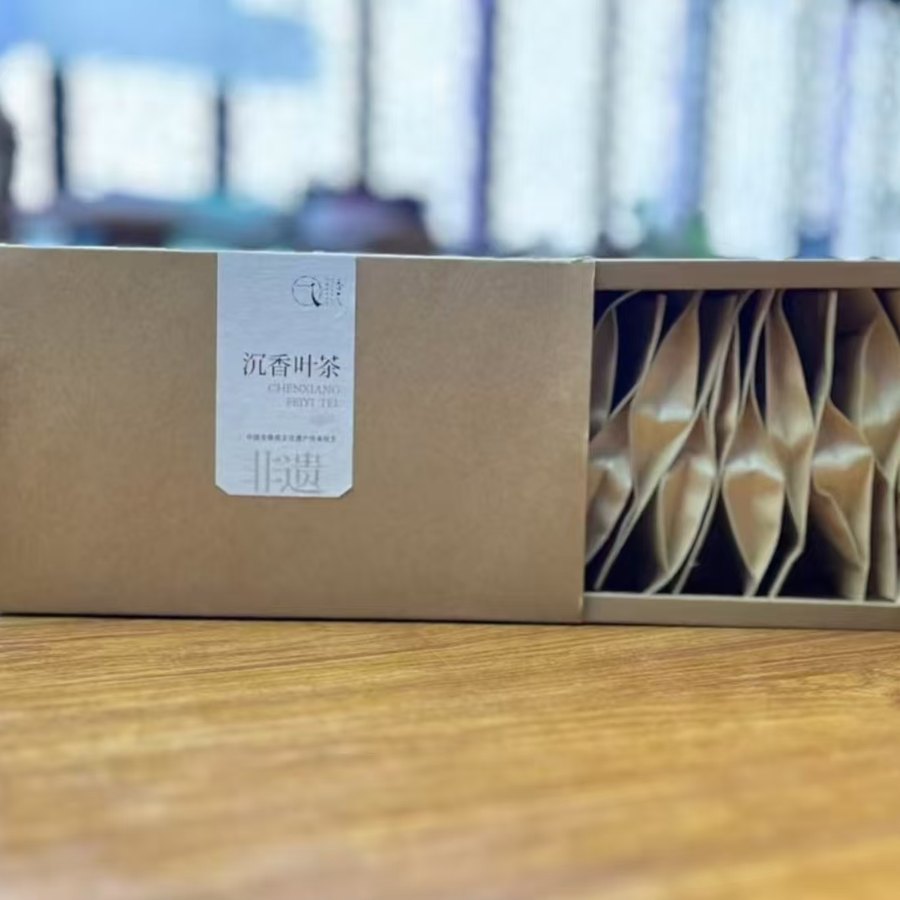
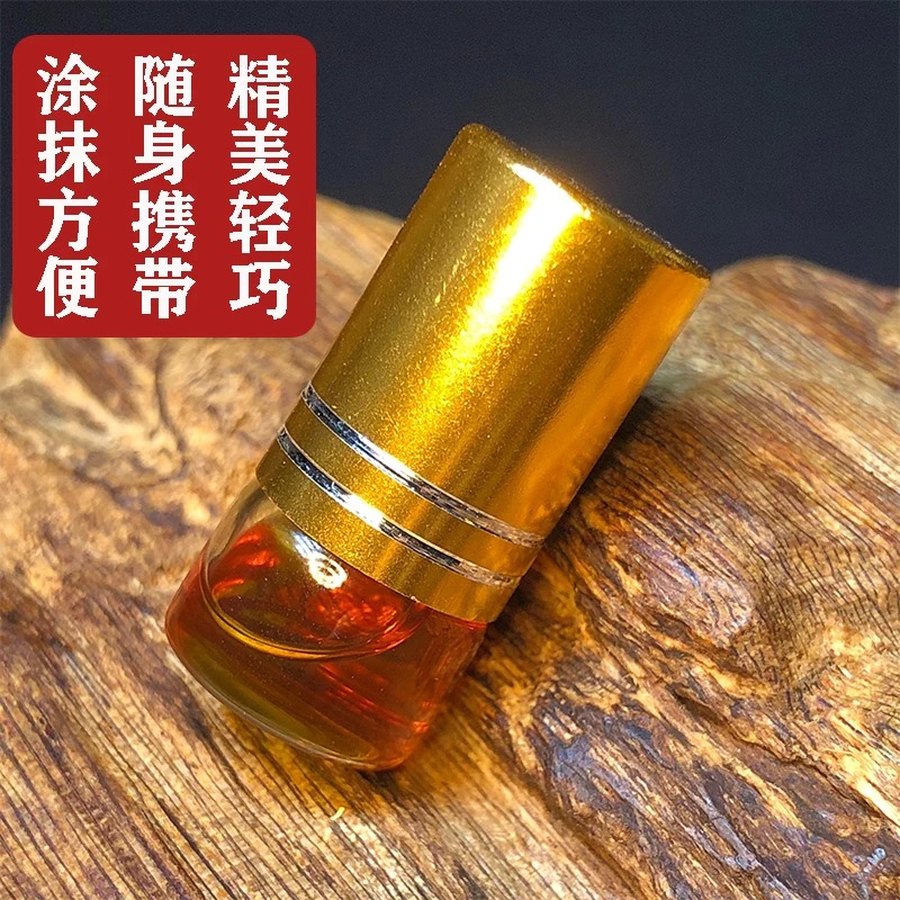
Related Agarwood Picks
While reading, you might also like these compliant cultivated-agarwood products.
Visit Mall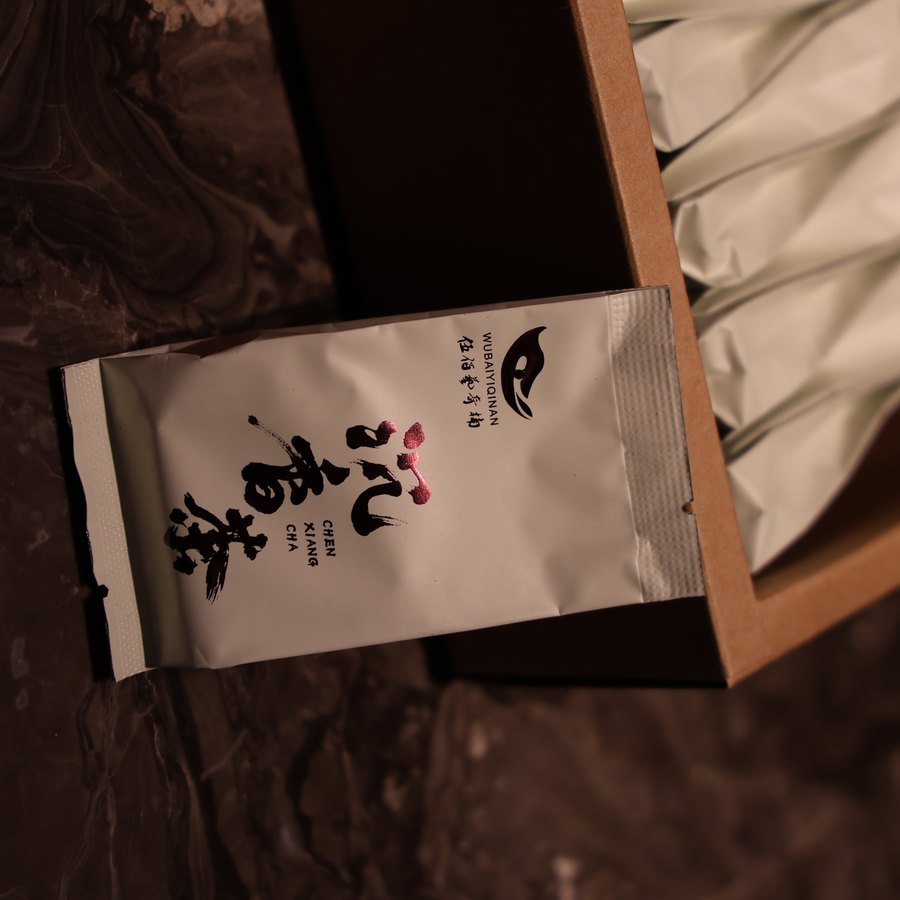
评论区
评论匿名可浏览,登录后可发表;提交后先审后显。
评论加载中…
Check related market data
Want the reference price for this category? Compare on the market page.
Go to market