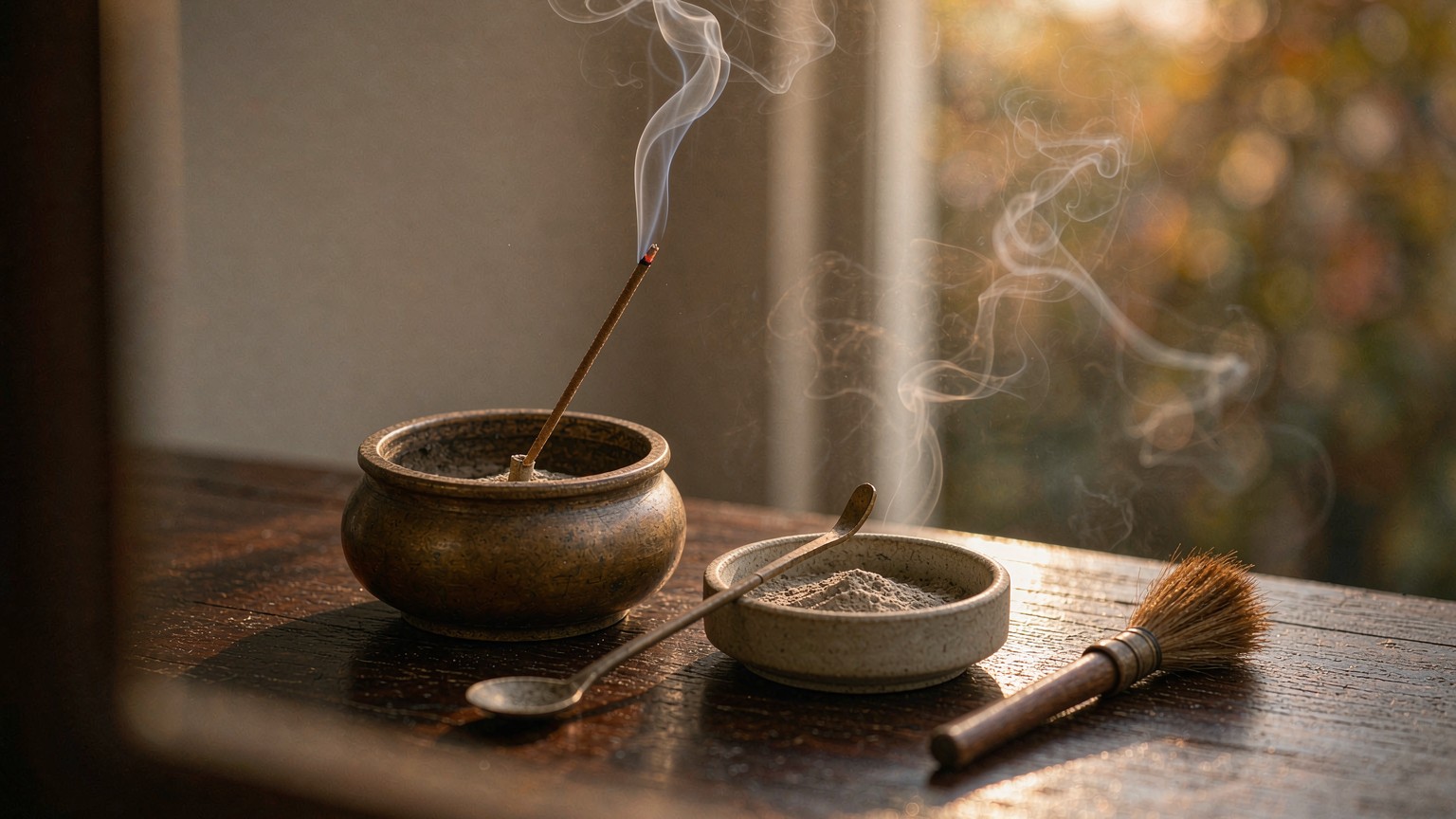
After GB 26386 Revision: How to Cite Three Types of Sources in Industry Writing
Source:收稿桥投稿· 2026-11-09· 伍佰艺编辑部· 26 views
1. A Standard Has Been Revised
GB 26386—2025 "General Safety Technical Requirements for Incense Products" has been published and implemented: published on April 25, 2025, effective May 1, 2026, fully replacing GB 26386—2011.
The revision itself can be verified on the official information page. The foreword states the direction of changes—deleting the technical requirements for smoke dust and corresponding test methods, deleting the technical requirements for product performance and corresponding test methods, and adjusting the maximum limits for migratable elements.
For writers covering incense, this is critical. A large amount of content on incense selection and grading on the market is built on the smoke dust criteria of the 2011 edition. The new edition deletes this technical requirement—deletion does not mean smoke dust is unimportant, nor does it mean any numerical value can continue to be cited—it means the current mandatory standard no longer contains this requirement, and the original grading table has lost its basis.
2. Three Types of Sources, Three Levels of Authority
When writing about incense safety, the most common confusion is treating three types of documents as one.
National standards, prefixed with GB, are issued by the national standardization authority and are mandatory.
Group standards, prefixed with T/, are developed by industry associations or social organizations and apply within agreed scopes.
Product instructions are provided by manufacturers with the goods and state the specific usage requirements for that particular incense product.
These three types have different authority and different applicable scenarios. Which one can answer "how should I dispose of this incense after burning?" The answer is the third type. Which one can answer "what method should be used to test the ignition parameters of incense?" That is the first type.
Presenting language from product instructions as provisions of a mandatory national standard is the most common overreach in industry writing. Readers follow it believing "this is legally required," and if something goes wrong, the responsibility falls on the reader.
3. After Burning, Who Governs the Leftovers
This mandatory standard governs production-side indicators: dimensions, combustible materials, hazardous substance limits, and inspection rules.
The ash and incense tips remaining after burning are not covered by this document—that is the domain of the accompanying product instructions.
This area is currently the most chaotic in the industry. Some present "how to dispose of incense ash" as a standard provision when the standard contains no such clause; others interpret it conversely as "ash can be disposed of casually," while the instructions clearly state this is not acceptable.
4. Practical Actions for This Edition
The requirements stated in the safety instructions for incense products follow a logical chain: extinguish thoroughly first, then cool, then dispose.
Extinguishing: After use, thoroughly extinguish with sand or water. Confirm there are no embers, no smoke, and that the back of your hand feels no heat when brought near—only then is it properly extinguished.
Cooling: After extinguishing, the incense holder and ash still retain high temperatures; wait until fully cooled before touching.
Disposal: Incense sticks with residual embers must not be thrown directly into a trash bin.
There is also one about scenarios—do not burn without supervision.
These four points come from the accompanying product instructions and are the manufacturer's usage requirements. Presenting them as mandatory provisions of a national standard inflates the authority of one type of document; readers will assume that not following them constitutes a violation, when in fact they are product usage conditions.
5. Three Suggestions for Writers
First, when a standard is revised, cite the version accurately. GB 26386—2025 replaces GB 26386—2011; write the publication date and implementation date separately—the implementation date is May 1, 2026. Do not treat publication as already in effect.
Second, check the official full text before citing numerical values. What the official information page confirms is metadata: standard number, title, publication date, implementation date, replacement relationship, and which requirements were deleted. Specific limit values require the official full text before writing; if unavailable, do not write them—do not fill in with "it is understood that."
Third, when multiple sources address the same matter, label the hierarchy. Which sentence comes from a national standard, which from a group standard, which from product instructions—if readers can distinguish at a glance, the credibility of industry writing stands on solid ground.
For more practical content on incense making and appreciation, feel free to browse our past articles on the site.
Compiled from industry information; not trading or investment advice.
常见问题
After GB 26386 Revision是什么?
GB 26386—2025 has replaced the 2011 edition, with the foreword explicitly deleting smoke dust and product performance requirements. This article distinguishes the authority of national standards, group standards, and product instructions, clarifying that post-combustion disposal clauses come from ma
沉香怎么选购?
选购沉香应认准可溯源、可检测的渠道,按用途选择形态(线香 / 手串 / 原料),不盲目追高、不轻信「野生」「沉水」等夸大宣传;优先选择带检测报告与来源凭证的商品。
沉香如何保养?
沉香怕潮、怕串味、怕暴晒,应密封、避光、阴凉存放,不同产区分开保存;长期不用的香材定期通风检查,防霉防虫。
如何鉴别沉香的真假?
鉴别沉香需综合感官与辅助手段:天然沉香香气清雅、持久、凉甜交织,燃烧烟气清白而非刺鼻;可结合 GC-MS 色谱检测特征成分(色酮、倍半萜)。建议通过可信渠道与可溯源凭证降低风险。
不同产区沉香有什么区别?
各产区因气候、树种与结香方式差异,香韵各具特色(如海南清雅、越南甜凉、印尼醇厚),是沉香分级与定价的重要参考维度。
沉香价格行情如何?
沉香行情随结香程度、产区、形态分化明显,顶级收藏与入门消费两端活跃;建议以合法、可检测渠道的实际成交为参考,勿轻信单一报价。
沉香与香道文化有什么关系?
沉香是东亚香道文化的核心媒介,从礼佛、文人雅集到当代生活美学,承载「静心、慢享」的东方审美,理解文化背景有助于读懂沉香价值。
沉香有健康功效吗?
传统上沉香被用于舒缓、助眠等场景,但证据等级与用量需谨慎看待;把「传统用法」与「科学证据」分开表述,具体以专业指导为准。
参考资料
Related reading
Related Agarwood Picks
While reading, you might also like these compliant cultivated-agarwood products.
Visit Mall
评论区
评论匿名可浏览,登录后可发表;提交后先审后显。
评论加载中…
Check related market data
Want the reference price for this category? Compare on the market page.
Go to market