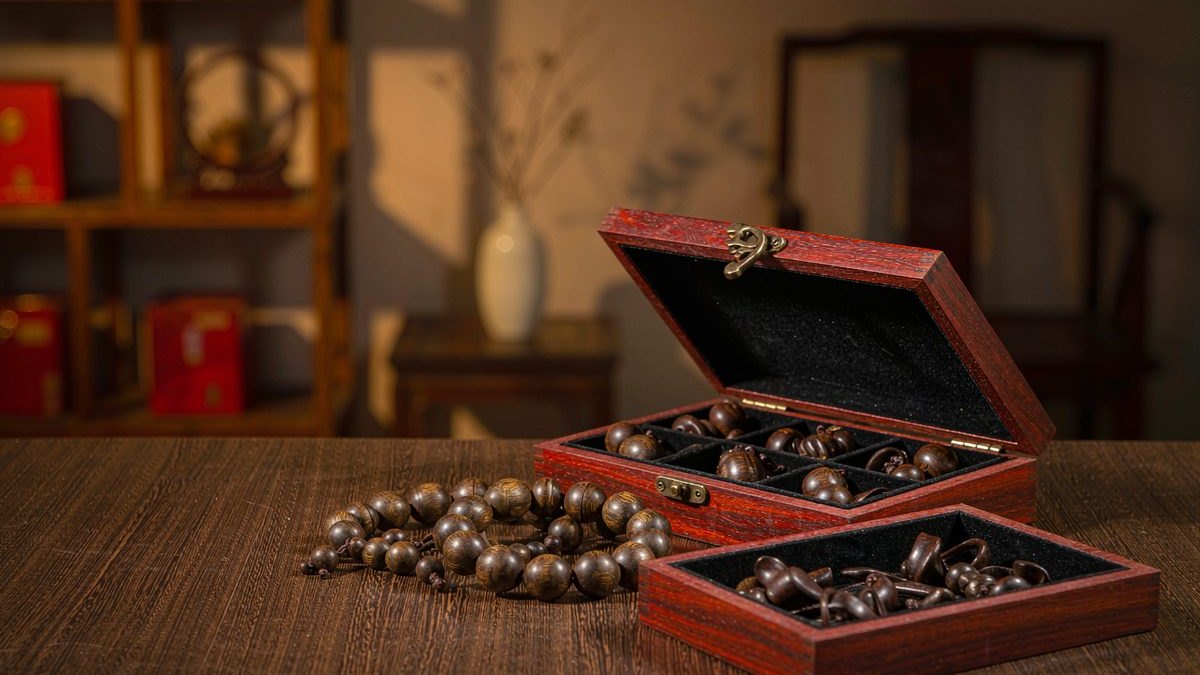
Agarwood Market Cycle: Recent Price Trends and Logic
· 2026-10-13· 中国沉香网编辑· 3 views
Agarwood prices have risen amid volatility, driven by resource scarcity, growing demand, and capital inflow. The market shows divergence: high-end kyara and sinking-grade materials remain strong, while mid-to-low-end plantation agarwood fluctuates. This article analyzes price trends from supply-demand, cycle logic, and investment perspectives.
1. Overview of Recent Agarwood Price Trends
Over the past decade, the agarwood market has experienced two major upcycles. The first, from 2013 to 2015, was driven by Chinese collector demand and gift purchases. The second began in 2019 and peaked in 2021–2023, fueled by the scarcity of high-end materials and the rise of online trading. For example, the price of sinking-grade Vietnamese Nha Trang agarwood rose from a few hundred yuan per gram in 2018 to several thousand yuan in 2023, with a compound annual growth rate exceeding 30%. In contrast, plantation agarwood prices corrected after 2020 due to increased supply, creating a clear “two-tier” market.
Notably, kyara, the top-grade agarwood, has followed an independent price trajectory. Top white kyara now exceeds tens of thousands of yuan per gram and is extremely hard to obtain. This divergence indicates that the agarwood market is not a single cycle but a combination of segments by quality and use. For systematic price benchmarks, see the Agarwood Encyclopedia.
2. Core Logic Behind Price Fluctuations
The underlying logic can be summarized as “rigid supply, elastic demand, capital catalyst.” On the supply side, wild agarwood resources are near depletion, and major origins like Vietnam, Indonesia, and Malaysia restrict harvesting. Demand from the Middle East remains stable, while East Asia sees growing interest driven by incense culture revival and investment. Capital inflows further push up scarce varieties.
Improved information transparency has also changed price formation. Previously, prices were opaque and traded within circles; now e-commerce and livestreaming make prices more public but also bring speculation and fakes. Therefore, authentication skills are essential. Readers should first master methods in the Authentication Pillar Page before judging price reasonableness.
3. Cycle Stage and Future Outlook
Currently, the market is in a stage of “high-end prosperity, mid-range adjustment, low-end oversupply.” High-end kyara and sinking-grade materials remain supported by scarcity; mid-range semi-sinking grades have seen 10–20% corrections due to economic conditions and reduced gift demand; low-end plantation agarwood faces fierce price competition. Over the next 3–5 years, high-end prices will likely stay high as wild resources dwindle, while the mid-to-low-end market will accelerate consolidation.
For collectors, long-term scarcity matters more than short-term fluctuations. To understand agarwood values from a historical perspective, read classic texts in Chinese Incense Studies: Agarwood Authentication. For kyara’s unique logic, see the Kyara Pillar Page.
Conclusion
The agarwood market cycle is not a simple rise-and-fall loop but a result of resource, culture, and capital interplay. High-end scarce varieties are resilient, while mid-to-low-end segments are more supply-demand sensitive. Rational participants should focus on authentication and long-term value, avoiding short-term speculation.
(This is industry observation and popular-science summary, not investment advice. Buy agarwood through legal channels with traceable, testable sources.)
Compiled from industry information; not trading or investment advice.
常见问题
Agarwood Market Cycle是什么?
Agarwood prices have risen amid volatility, driven by resource scarcity, growing demand, and capital inflow. The market shows divergence: high-end kyara and sinking-grade materials remain strong, while mid-to-low-end plantation agarwood fluctuates. This article analyzes price trends from supply-demand, cycle logic, and investment perspectives.
沉香怎么选购?
选购沉香应认准可溯源、可检测的渠道,按用途选择形态(线香 / 手串 / 原料),不盲目追高、不轻信「野生」「沉水」等夸大宣传。
沉香如何保养?
沉香怕潮、怕串味、怕暴晒,应密封、避光、阴凉存放,不同产区分开保存;长期不用的香材定期通风检查,防霉防虫。
Related reading
评论区
评论匿名可浏览,登录后可发表;提交后先审后显。
评论加载中…
Check related market data
Want the reference price for this category? Compare on the market page.
Go to market