Agarwood Industry Becomes the No.1 Project of "Lucid Waters and Lush Mountains Are Invaluable Assets"
Source:中国沉香网· 2026-02-22· 中国沉香网· 81 views
Chinese agarwood roughly began to fade from people's view during the late Qing Dynasty to the Republican period, when wars were incessant, society was turbulent, large amounts of wealth flowed abroad, and people's livelihoods were in decline. Today, Chinese agarwood culture is reviving along with the rejuvenation of Chinese culture.
The core of the 2026 No. 1 Central Document is to anchor agricultural and rural modernization and solidly advance comprehensive rural revitalization. Between technology and the countryside, what ordinary people are capable of grasping is still the countryside. "Lucid waters and lush mountains are invaluable assets." With ecological assets, in the future, in addition to skills, people will also have ecological assets to rely on for a living.
To possess ecological assets and harvest ever-growing wealth, why choose agarwood trees? A piece of fine agarwood is worth a thousand in gold; the agarwood tree is a "golden tree" with financial attributes. Fine agarwood will always be relatively scarce, especially since agarwood culture has long been interrupted, and it takes a long time to obtain high-quality agarwood of considerable age and quantity.
No matter how many agarwood trees are planted, as long as age is emphasized, they are scarce and will not flood the market like fresh fruit products such as Shine Muscat grapes once production increases.
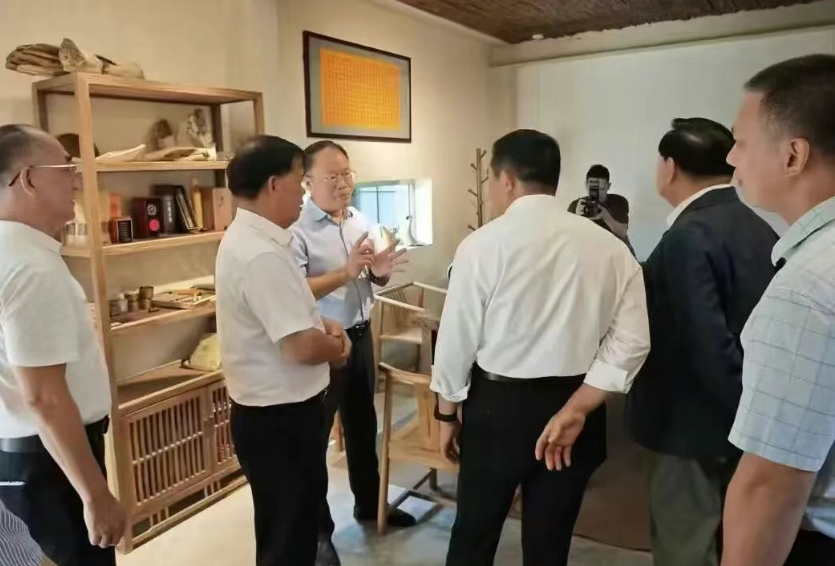
Starting from planting agarwood trees in Lianjiang Village, Zhuhai, and constantly telling people from all walks of life and leaders at all levels about agarwood, it seemed as if there was divine assistance—in November 2024, wild ancient agarwood trees were unexpectedly discovered in Lianjiang Village, Zhuhai, and the thousand-year aromatic lineage of Xiangshan was found.
From the Chinese agarwood industry sounding the horn to march toward the trillion-level, to enabling every Chinese person to own an agarwood tree, and to proposing that the agarwood industry is a national-fate-level major industry for China's rural revitalization—this is not a whim, but the result of long-term exploration and thinking to find a path for ecological industry development in the second half of China's economy. From devoting a decade to studying agarwood culture to now vigorously promoting the agarwood industry, this also reflects the conviction that cultural and ecological industries will become important pillars of the future economy.

The agarwood industry combines multiple values of ecological protection, economic income growth, and cultural inheritance. Its development characteristics of "cultivating agarwood through forests, enriching people through agarwood, and revitalizing industry through culture" are highly consistent with the concept that "lucid waters and lush mountains are invaluable assets."
On August 15, 2005, Comrade Xi Jinping, then Secretary of the Zhejiang Provincial Party Committee, first put forward the scientific thesis that "lucid waters and lush mountains are invaluable assets" during an inspection in Yucun, Anji County, Huzhou City. This thesis can be described as far-sighted. Today, after profound changes in the economy and society, accelerating the comprehensive green transformation of economic and social development has become an inevitable trend.
Promoting the agarwood industry to become the No.1 project for transforming "two mountains" is a strategic choice made after years of practice and the inevitable path to achieving win-win synergy among ecological, economic, and social benefits.
From a wisp of fragrance, we can perceive the path of a new track for future trillion-level and ten-trillion-level industries. "Some people see because they believe, and some believe because they see." I have always tried to make more people believe, and there is still a long way to go.

From an observer, thinker, and participant in this industry to a firm promoter, I have likewise undergone a transformation in understanding. When I made the determination to vow to "let every Chinese person own an agarwood tree," the idea of striving to promote the agarwood industry to become the No.1 project of "lucid waters and lush mountains are invaluable assets" had already sprouted. According to the view put forward by strategic consulting expert Wang Zhigang, 99% of people who were very rich in the past have disappeared, and China's economy has entered its second half.
New business forms are taking shape: artificial intelligence, biomedicine, new energy, low-altitude economy, digital economy, green and low-carbon economy, future health industry, smart agriculture, and so on. What can enable the broadest population to participate in and benefit from is still the green ecological industry that practices "lucid waters and lush mountains are invaluable assets." It is a systemic revolution that uses one tree to leverage a green value chain and one forest to explore a path of ecological common prosperity.

If the output value of one agarwood tree is calculated at 500 yuan, when the planting area of agarwood trees is equivalent to that of tea, the total output value could reach 5.3 trillion yuan, about five times the total output value of tea.
According to data from the National Forestry and Grassland Administration, by the end of 2025 the national eucalyptus planting area was about 91.83 million mu. There is no official data on the total output value of eucalyptus; it is estimated at several hundred billion yuan. If the agarwood planting area were equivalent to the eucalyptus planting area, the total output value would reach 9 trillion yuan. This is only the output value of the primary industry; the entire industrial chain of primary, secondary, and tertiary industries will generate even greater output value.
Let the mountains be filled with fragrance and turn green into gold. Promoting the agarwood industry to become the No.1 project of the "two mountains" concept is essentially a profound "revolution in ecological values" and "liberation of green productive forces." It can not only create the economic miracle of "a forest of agarwood, a green bank," but also prove to the world that the strictest ecological protection can fully coexist and achieve mutual success with the most vigorous economic development.
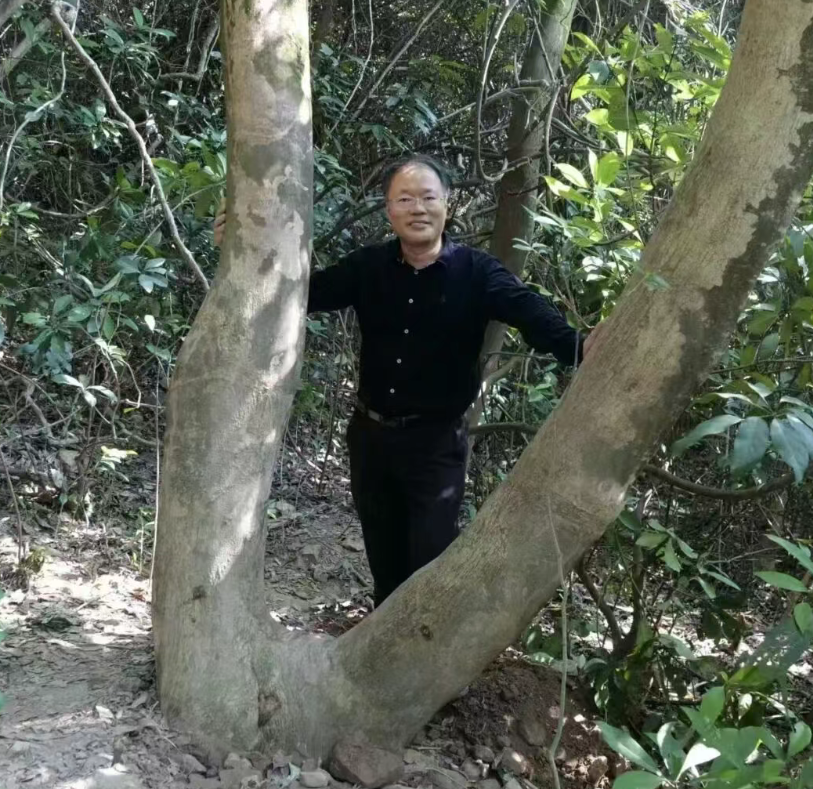
The agarwood industry has far-reaching influence, and more social capital needs to be encouraged to participate, forming a diversified investment pattern of "government guidance, enterprise as the main body, and public participation," so that the agarwood industry will ultimately become an ecological wealth-enriching project shared by all people.
Agarwood can enter the halls of the elite above and benefit the common people below. A world-class cultural tourism route, the "Journey of Fragrance Seeking," can be created, and aromatherapy hotels and meditation wellness bases can be built, making agarwood a carrier for experiencing the aesthetics of Chinese-style living.
When villagers plant ten agarwood trees around their homes, it is equivalent to raising a pig; planting thirty or forty trees is equivalent to raising a cow. Nearly every household in Lingnan can participate. People in other non-suitable planting areas can also participate in investment and in adopting and planting trees.
Benefit-linking mechanisms such as "forestland equity participation, labor participation, and guaranteed dividends" can be promoted, enabling farmers to become "fragrance farmers," share in the dividends of the industrial chain, and consolidate the foundation for rural revitalization. Explore a green and beautiful fragrant village development model with public participation. The agarwood industry can become a national-fate-level major industry for China's rural revitalization, not only because of its huge future output value, but also because hundreds of millions of people can participate, and moreover because it has global faith and cultural influence.
Looking at the thousands of years of human civilization, spices have always dominated the development of human socioeconomic civilization; only in the past two hundred years has their influence weakened.
Since the opening of the fourth industrial civilization, humanity has entered an era of intelligent integration and civilizational reconstruction, which will comprehensively reshape production methods, social structures, value systems, and civilizational forms. Spices will return to become an increasingly important leading force for humanity. Agarwood, as the foremost of all fragrances, has global faith and is forming a mass industry.
The famous British historian Arnold Toynbee predicted that the 21st century would be the Chinese century, believing that China's geographical endowment is the physical carrier of its civilizational rejuvenation and must ultimately be transformed into the soft power of "culture leading the world."
History is not accidental; spices change the world. When the agarwood industry becomes the No.1 project of "lucid waters and lush mountains are invaluable assets," the world will also quietly change.
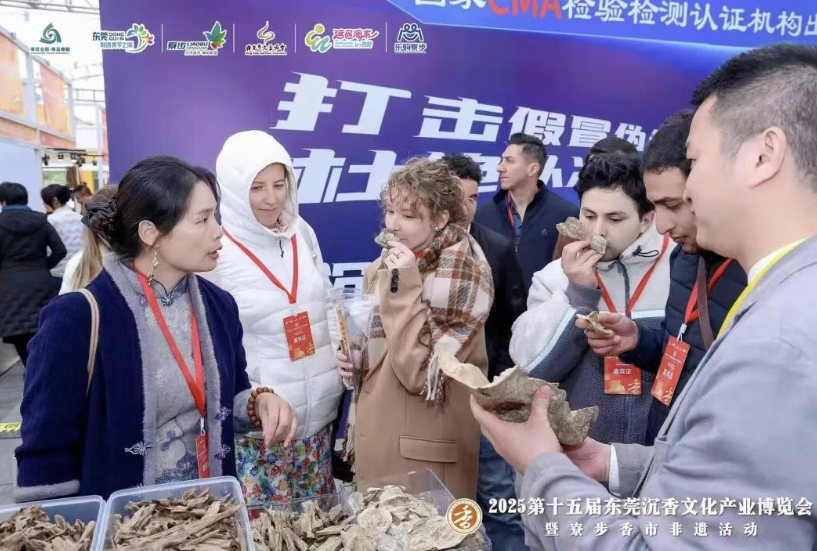
In the early Tang Dynasty, Xiangshan Town was established in areas such as present-day Zhuhai and Zhongshan, under the jurisdiction of Dongguan County. At that time, fragrance farmers delivered the agarwood they produced to the government-designated purchasing site "Xiangshan Market," namely the Shanchang area of today's Xiangzhou, Zhuhai, which became China's earliest agarwood trading market.
More than a thousand years later, Xiangshan has once again become an important source of agarwood industry development. Lingnan Guanxiang has revived the culture of the glorious Tang Dynasty, agarwood culture has become an important narrative influencing the world, and the scenes of envoys from all nations coming to court and fragrance wafting across the world are reappearing.
The 2026 No. 1 Central Document proposes deepening the integration of agriculture, culture, and tourism, advancing the upgrading of rural tourism, and developing "small and beautiful" cultural tourism formats. It also calls for actively developing the forestry and grassland industry and cultivating and strengthening formats such as under-forest economy and forest wellness. The agarwood industry is highly consistent with the spirit of the document.
Strive to promote the agarwood industry to become the No.1 project of "lucid waters and lush mountains are invaluable assets," make the agarwood industry a demonstration benchmark for the whole country in practicing the concept of "lucid waters and lush mountains are invaluable assets," and provide replicable and promotable experience for the high-quality development of ecological industries.
Use the agarwood industry to develop "small and beautiful" cultural tourism formats one after another in Lingnan villages, which may become an important component of rural cultural tourism. Starting from one green and beautiful fragrant village after another, let one mountain after another become green and beautiful fragrant mountains.
Compiled from industry information; not trading or investment advice.
Frequently Asked Questions
What is Agarwood Industry Becomes the No.1 Project of "Lucid Waters and Lush Mountains Are Invaluable Assets"?
Chinese agarwood gradually faded from public view from the late Qing Dynasty to the Republican era, a time of constant war, social turmoil, massive outflow of wealth, and a declining livelihood. Today, Chinese...
How should I choose agarwood?
Buy from traceable, testable channels and match the form (incense, beads, raw wood) to your use. Avoid exaggerated claims such as "wild" or "sinking grade" without proof, and prefer products with lab reports and origin documentation.
How should agarwood be stored and maintained?
Agarwood dislikes moisture, odours and direct sunlight. Keep it sealed, dark and cool, store different origins separately, and air and inspect long-stored pieces periodically against mould and insects.
How can I tell real agarwood from fake?
Authentication combines sensory checks with technical ones: natural agarwood has a clean, long-lasting, cool-sweet scent and burns with pale, non-pungent smoke. GC-MS analysis of characteristic compounds (chromones, sesquiterpenes) adds objective confirmation. Buying through traceable channels with certificates lowers the risk.
How do agarwood origins differ?
Climate, tree species and resin-induction methods give each origin a distinct scent profile — for example Hainan tends to be clean and elegant, Vietnam sweet and cool, Indonesia deep and full. Origin is a key factor in grading and pricing.
What is the current agarwood market like?
Prices diverge sharply by resin density, origin and form, with both top-end collectibles and entry-level consumer products active. Use actual transactions from legal, testable channels as reference rather than a single quotation.
What is the relationship between agarwood and incense culture?
Agarwood is the core medium of East Asian incense culture, spanning temple offerings, literati gatherings and contemporary lifestyle aesthetics. Understanding this cultural background helps explain its value.
Does agarwood have health benefits?
Traditionally agarwood has been used for calming and sleep-related rituals, but evidence quality and dosage need careful reading. Keep traditional use and scientific evidence clearly separated and follow professional guidance.
This is an aggregated digest. Original source:View original(中国沉香网)
参考资料
Related reading

Related Agarwood Picks
While reading, you might also like these compliant cultivated-agarwood products.
Visit Mall
评论区
评论匿名可浏览,登录后可发表;提交后先审后显。
评论加载中…
Check related market data
Want the reference price for this category? Compare on the market page.
Go to market