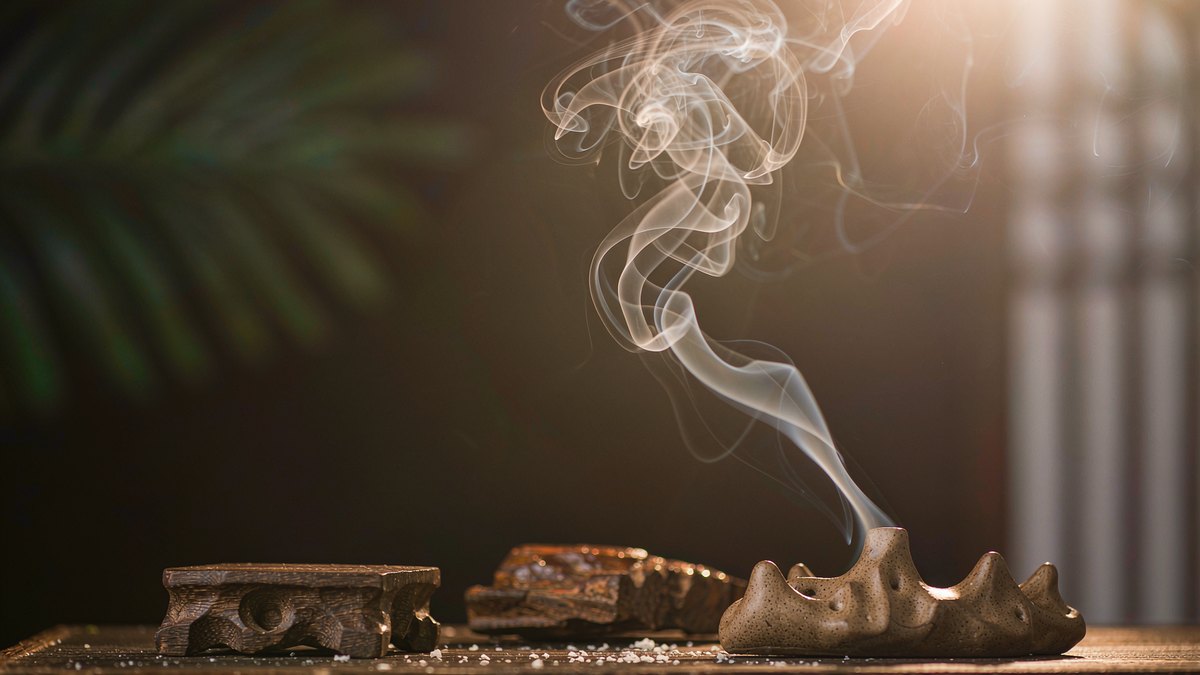
China Guardian Hong Kong • Autumn Auction: Agarwood and Contemporary Incense Making
Source:中国沉香网· 2026-10-04· 中国沉香网· 118 views
The delight of incense lies both in its fragrance and in its appreciation. Agarwood forms because the tree is wounded; as years pass, the wood gradually decays while fragrant resin condenses. Owing to differences in origin, mode of resin formation, and degree of maturation, incense materials also differ in texture, oil content, and aroma profile. From the direct appreciation of natural incense materials to the blending and use of incense sticks and compound incense, a rich and meticulous tradition of incense appreciation has gradually taken shape around a single wisp of fragrance.
China Guardian Hong Kong 2026 Autumn Auctions presents a group of fine incense-related items, encompassing Vietnamese sinking grade agarwood, agarwood oil, ambergris, as well as Fusen red soil, qinan incense sticks, and traditional compound incense. From natural incense materials to contemporary incense making, the multiple facets of refined incense appreciation are presented across different forms.
Natural Incense Materials
Agarwood is first and foremost a natural substance. The incense tree undergoes resin formation over a long period, with resin gradually depositing within the wood, ultimately forming varying colors, grains, and shapes. For the incense appreciator, the value of a piece of uncarved incense material lies not only in the fragrance released when burned, but also in observing its resin accumulation, examining its texture, and appreciating its natural form.
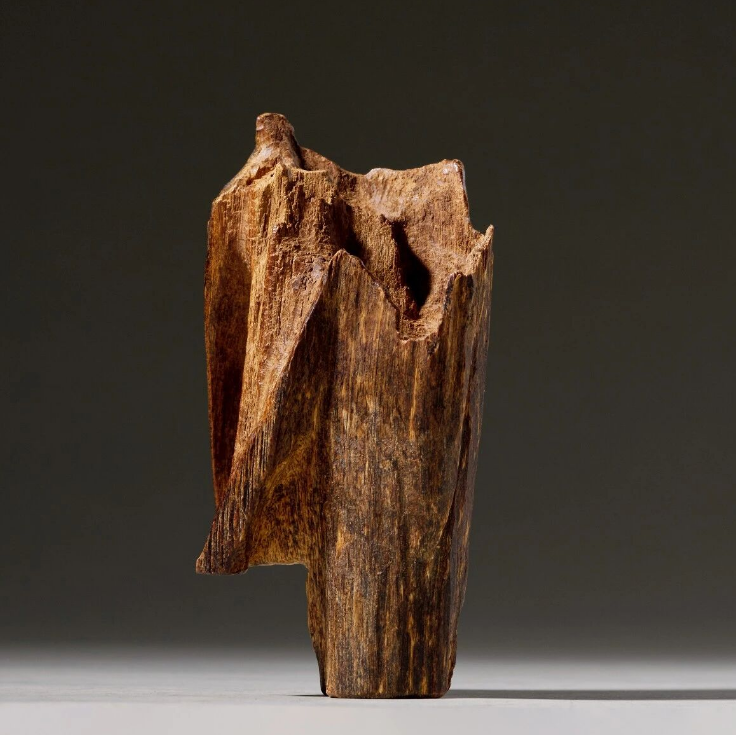
Lot 1623 Old Hui'an Sinking Grade Agarwood, approx. 76g, 9.8×5.5×3.8 cm, HKD 320,000–520,000, Provenance: Yuxiang
This piece is sinking grade and should be the head section of an incense material, possessing value both for appreciation and as a display object. It has high density and rich oil, with a blackish-brown color; especially at the base, plump black oil is visible, and the sweet fragrance upon appreciation is very refined and elegant. Long-term natural growth and oil accumulation have given the surface of this piece a lustrous quality, enhancing the layered quality of its visual appreciation.
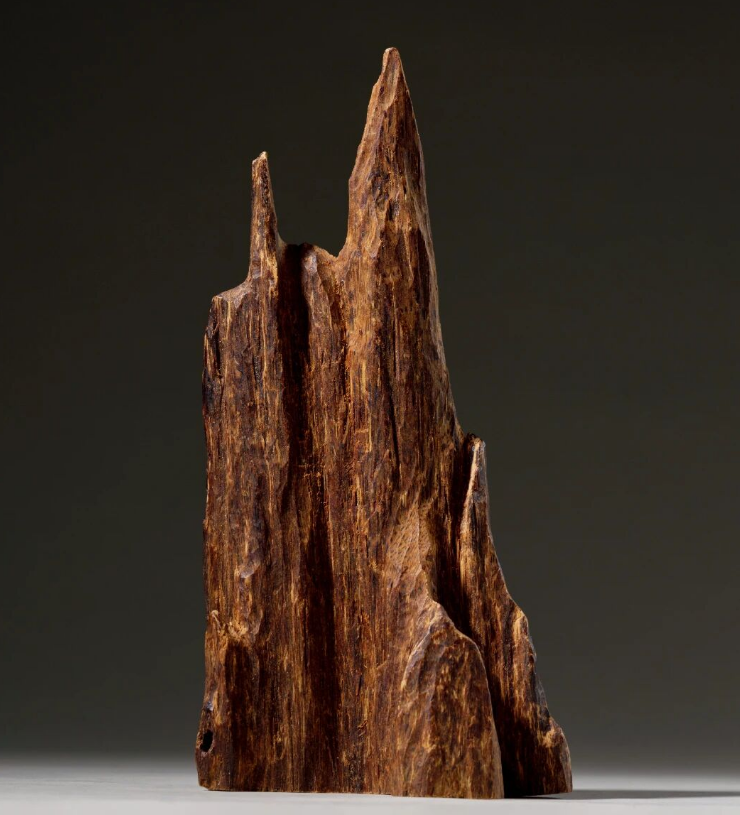
Lot 1624 Vietnamese Sinking Grade Agarwood Mountain-Form Scholar's Object, approx. 129g, 8.3×3.8×17.6 cm, HKD 380,000–580,000, Provenance: Yuxiang
This piece sinks instantly in water and is shaped like a mountain, with a flat-cut base; it is the head section of an incense material. The base is dark in color, with dense resin accumulation visible, and long-term natural growth and oil accumulation have given the surface of this piece a lustrous quality.
Agarwood "gathers the spiritual essence of heaven and earth over a thousand years" and has been esteemed by people since ancient times. A natural incense tree generally requires ten or several decades or more to develop well-developed resin glands and possibly form "resin formation," and the "resin formation" must then undergo a long period before it can truly "mature." This piece is natural in mountain form and is an excellent item for appreciation, incense burning, and Buddhist offerings.
Incense Objects for Refined Appreciation
Starting from complete raw incense material, incense can also enter daily life in another way. By extracting its essence, or blending it with other natural spices, the fragrance emerges from the wood yet presents different forms of use.
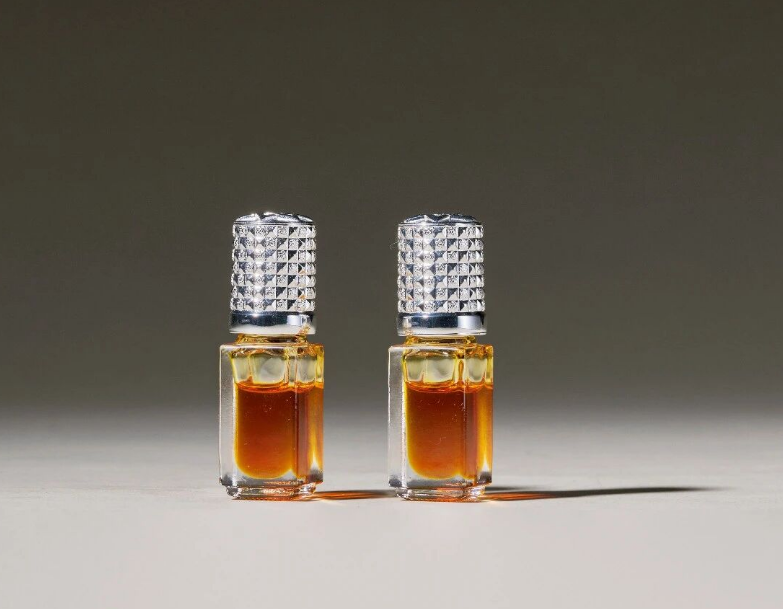
Lot 1625 Two Bottles of Vietnamese Agarwood Oil 3ml each; 6ml total HKD 4,000–6,000 Provenance: Yuxiang
Elegantly packaged with silver caps, each bottle contains three milliliters, making it more practical and an excellent choice for enthusiasts of raw agarwood oil. Suitable for incense ceremony appreciation and olfactory enjoyment, allowing one to experience its subtle and lingering changes in aroma.
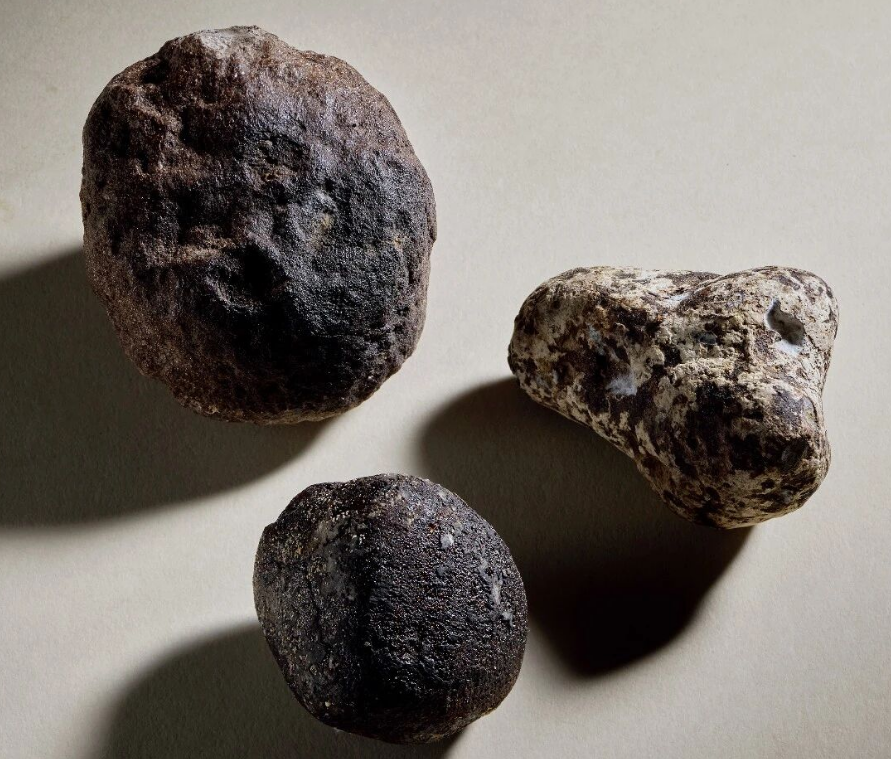
Lot 1626 A Set of Three Pieces of Ambergris Approx. 186g HKD 1,000–2,000
This group of black ambergris consists of three pieces of varying sizes, mostly blackish-brown in color, in solid waxy lumps; when burned, they emit a lasting fragrance.
Ambergris, also known as dragon's belly incense, has been used as a premium spice since ancient times and is also an excellent ingredient in modern incense blending. In Western perfumery, ambergris is also used as a fixative, which can make the fragrance evaporate slowly and steadily.
In China, the discovery of ambergris can be traced back to the Han Dynasty. Fishermen retrieved some fragrant waxy floating substances from the sea—these were finished ambergris that had undergone years of natural transformation. Because it emitted fragrance when burned, local officials presented it as a treasure to the imperial court, and it gradually became a spice used in the palace. In the West, in the 18th century BC, ancient Hebrew women soaked ambergris, cinnamon, and benzoin in fat to make a fragrant ointment for application to the body.
A Thread of Pure Fragrance
If natural incense materials represent the fragrance created by heaven and earth, then incense making adds human choice and craftsmanship on top of natural materials. Selecting materials, grinding, blending, and forming incense—within a single stick of incense, the character of one material can be highlighted, or several materials can be blended together. The several groups of incense sticks and blended incense presented in this autumn sale offer a glimpse into the different approaches of contemporary incense making.
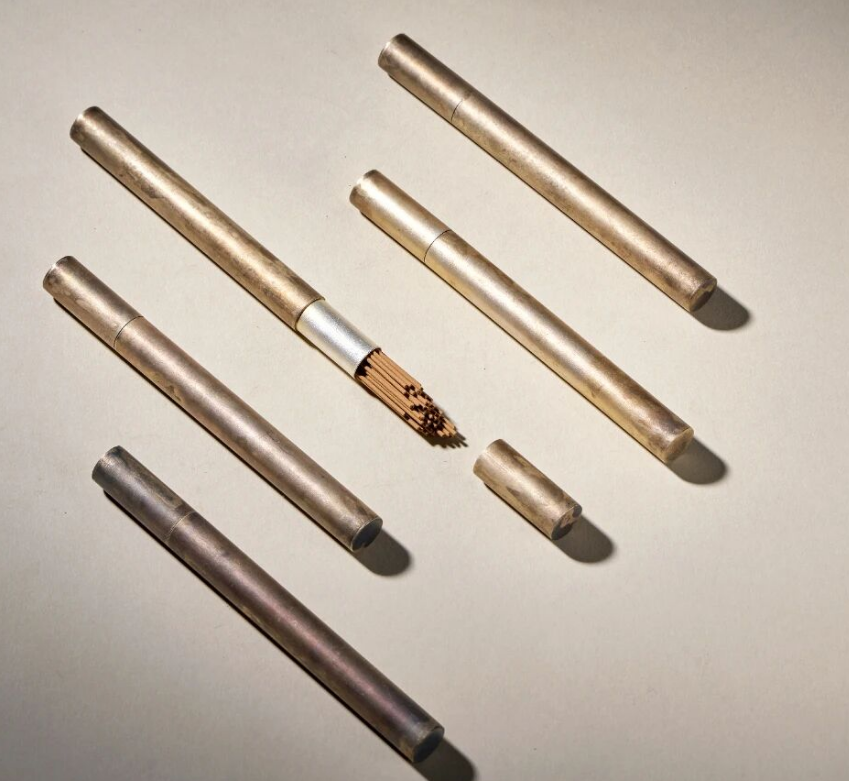
Lot 1627 Made by Lin Chuanfa: Five Sticks of Fusen Red Soil Incense HKD 1,000–2,000
This incense stick contains a small amount of qinan flesh, making it one of the few incense sticks made by Lin Chuanfa that include qinan flesh. When lit, it is clear and uplifting, with a refreshing, thread-like coolness. It is specially stored in a silver incense tube.
The silver incense tube has an antique feel; after use, the remaining incense sticks can still be stored inside, making it convenient to carry, simple, and elegant.
Lin Chuanfa, chairman of the Taipei Agarwood Association, is known in the industry as the “King of Red Soil” for the excellent quantity and quality of his red soil collection. He has conducted in-depth research into the craft of handmade incense sticks using red soil agarwood raw materials, precisely controlling smoke output, burning speed, and the richness and persistence of the aroma layers.
Note: The incense sticks have been stored for many years, and some vary in length. The actual items can be appreciated at the preview.
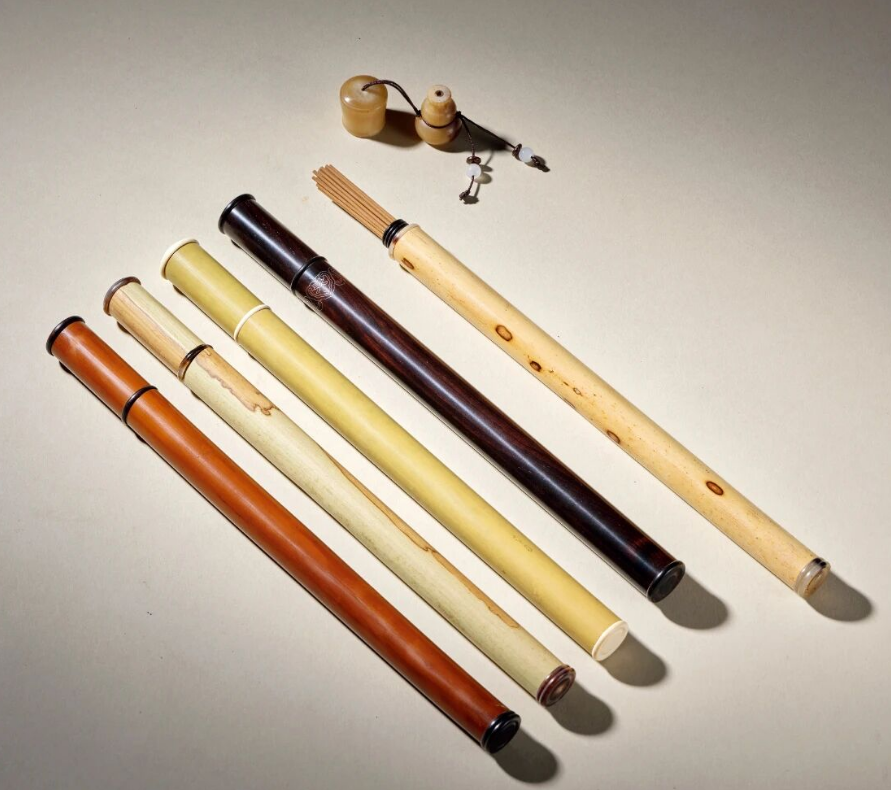
Lot 1628 Made by Zheng Yaojin: Five Rhymes Condensed Fragrance · Vietnamese Qinan Agarwood Incense Sticks, Set of Five HKD 1,000–2,000
Five aromas gathered together, not something a single stick can represent, presenting the complete narrative of incense sticks. Pursat Qinan incense stick: produced in Pursat Province, Cambodia; it releases a clear, soaring floral-honey fragrance at room temperature, with extremely strong diffusing power; orchid fragrance carries honeyed sweetness, bold and elegant. Vietnamese Red Soil Qinan incense stick: Fusen red soil mature resin formation, sweet and mellow with a fruity aroma profile, lingering and long-lasting. Vietnamese Red Soil Agarwood incense stick: matured in the mountain forests of the red soil region, with an intense fragrance, sweetness revealing spiciness, interwoven with almond notes, rich and profound in olfactory sensation. Vietnamese Red Soil Qinan Flesh incense stick: when burned, it uniquely contains a cool watermelon aroma profile, clear, uplifting, and sweet, a uniquely cool-rhyme choice among all incenses. Vietnamese Black Qinan incense stick: Nha Trang material, starting with fruity-honey fragrance, transitioning to floral-honey fragrance, finishing with preserved plum sweetness, with layered transformations and a rich, lingering qinan rhyme.
A set of five sticks forms a complete aromatic genealogy—the boldness of Pursat, the intensity of red soil, the mellowness of qinan, the coolness of qinan flesh, and the depth of black qinan—progressing layer by layer from a striking first impression to a long, lingering finish. Zheng Yaojin is the curator of the Anhui Agarwood Museum, an inheritor of the intangible cultural heritage of Huizhou wood carving and agarwood carving, and an artist of Xitang. He has created a unique agarwood carving technique system including techniques such as “top edge,” “following the grain,” “retaining the skin,” and “assembled joinery,” and has held multiple solo agarwood art exhibitions.
Ancient Blended Incense
Beyond incense sticks, there is another important thread in traditional Chinese incense use—blended incense. The so-called blended incense is not simply mixing several aromatic materials together, but selecting and combining them according to incense formulas. Different aromatic materials and aromatic herbs interact with one another, allowing the fragrance to unfold layer by layer during burning. Incense formulas passed down through the ages have thus preserved the understanding and aesthetics of fragrance in different eras.
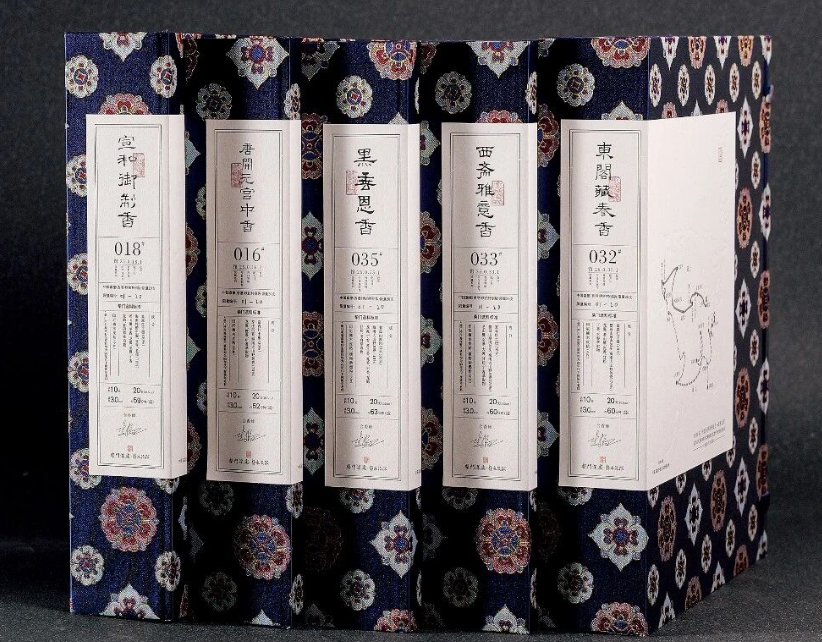
Lot 1629 Ling Kun's Essentials of Incense History · A Set of Ten Boxes, 200 sticks in total (20 sticks per box) HKD 50,000–80,000
Appendix: Certificate from the Kowloon Agarwood Museum
This set of Essentials of Incense History contains ten blended incenses: Xun Ling's Ten-Mile Incense, Western Studio Elegant Intent Incense, Yang Guifei's Curtain Chamber Incense, Lord Li of Jiangnan's Tent Incense, Retro Eastern Pavilion Cloud-Head Incense, Tang Kaiyuan Palace Incense, Eastern Pavilion Spring Storage Incense, Black Chuien Incense, Lord Li's Flower-Soaked Agarwood, and Xuanhe Imperial Incense. Each one, based on incense formulas from successive dynasties, underwent repeated ingredient blending and olfactory evaluation, using many raw materials such as Fusen red soil root, Hainan shell wrapping, Nha Trang white qinan, ambergris, old mountain sandalwood, Scrophularia root, Nardostachys, clove extract, frankincense, shell incense, and bergamot extract, and was repeatedly sampled according to different incense formulas and different compound blends, ultimately achieving a satisfactory olfactory and overall experience.
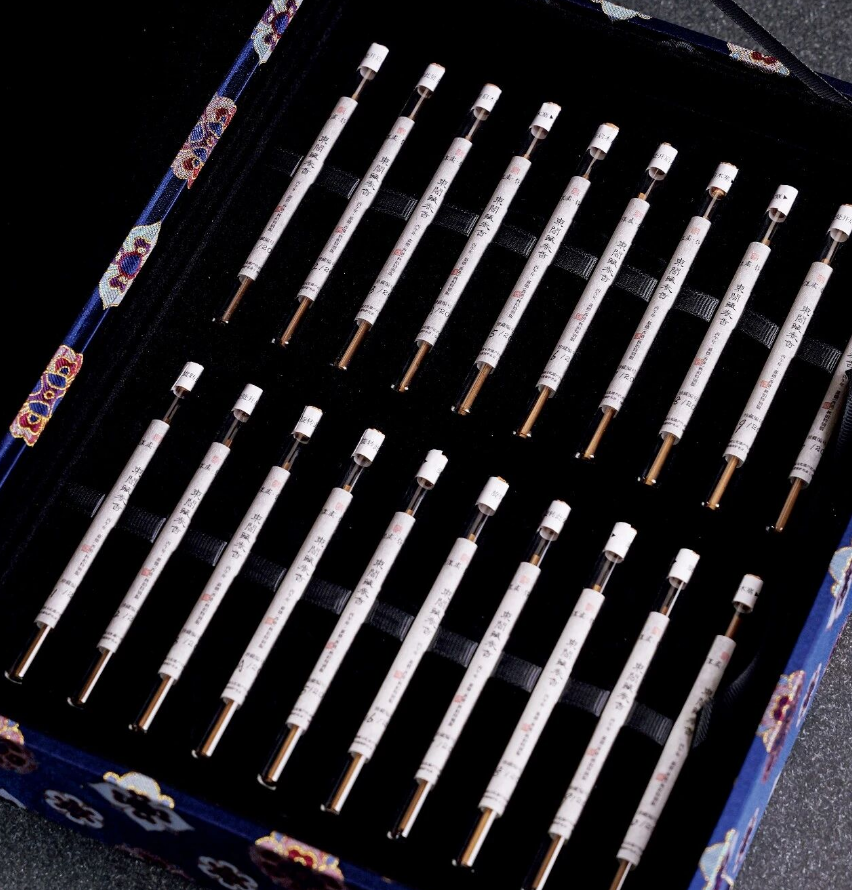
Each type burns for 42 to 70 minutes, and the aroma profile of each type is also different.
Ling Kun is the curator of the Chongqing Kowloon Agarwood Museum and a representative inheritor of the intangible cultural heritage project of traditional blended incense-making techniques in Chongqing. His nine incense-making processes (namely "seeking, selecting, cleaning, processing, grinding, aging, blending, finishing, and cellaring") were also officially included in 2018 in the Chongqing Municipal Intangible Cultural Heritage Representative Project Protection List as "Traditional Blended Incense-Making Techniques—Nine Essentials of Incense Completion."
China Guardian Hong Kong 2026 Autumn Auction
Guanhua—Fine Chinese Works of Art and Classical Furniture Auction: October 6 | 2pm Preview: October 3–5 | 10am–6pm
Hong Kong Convention and Exhibition Centre | Exhibition Hall 1DE
This article was compiled by "Chenxiang Web," original source: https://www.chenxiang123.com/jia-de-hong-kong-qiu-pai-chen-xiang/
Compiled from industry information; not trading or investment advice.
Frequently Asked Questions
What is China Guardian Hong Kong • Autumn Auction?
The delight of incense lies not only in its fragrance but also in its appreciation. Agarwood forms when trees are wounded; over the years, the wood gradually decays while the aromatic resin condenses. Due to differences in origin, formation method, and degree of maturation…
How should I choose agarwood?
Buy from traceable, testable channels and match the form (incense, beads, raw wood) to your use. Avoid exaggerated claims such as "wild" or "sinking grade" without proof, and prefer products with lab reports and origin documentation.
How should agarwood be stored and maintained?
Agarwood dislikes moisture, odours and direct sunlight. Keep it sealed, dark and cool, store different origins separately, and air and inspect long-stored pieces periodically against mould and insects.
How can I tell real agarwood from fake?
Authentication combines sensory checks with technical ones: natural agarwood has a clean, long-lasting, cool-sweet scent and burns with pale, non-pungent smoke. GC-MS analysis of characteristic compounds (chromones, sesquiterpenes) adds objective confirmation. Buying through traceable channels with certificates lowers the risk.
How do agarwood origins differ?
Climate, tree species and resin-induction methods give each origin a distinct scent profile — for example Hainan tends to be clean and elegant, Vietnam sweet and cool, Indonesia deep and full. Origin is a key factor in grading and pricing.
What is the current agarwood market like?
Prices diverge sharply by resin density, origin and form, with both top-end collectibles and entry-level consumer products active. Use actual transactions from legal, testable channels as reference rather than a single quotation.
What is the relationship between agarwood and incense culture?
Agarwood is the core medium of East Asian incense culture, spanning temple offerings, literati gatherings and contemporary lifestyle aesthetics. Understanding this cultural background helps explain its value.
Does agarwood have health benefits?
Traditionally agarwood has been used for calming and sleep-related rituals, but evidence quality and dosage need careful reading. Keep traditional use and scientific evidence clearly separated and follow professional guidance.
This is an aggregated digest. Original source:View original(中国沉香网)
参考资料
Related reading
Related Agarwood Picks
While reading, you might also like these compliant cultivated-agarwood products.
Visit Mall
评论区
评论匿名可浏览,登录后可发表;提交后先审后显。
评论加载中…
Check related market data
Want the reference price for this category? Compare on the market page.
Go to market