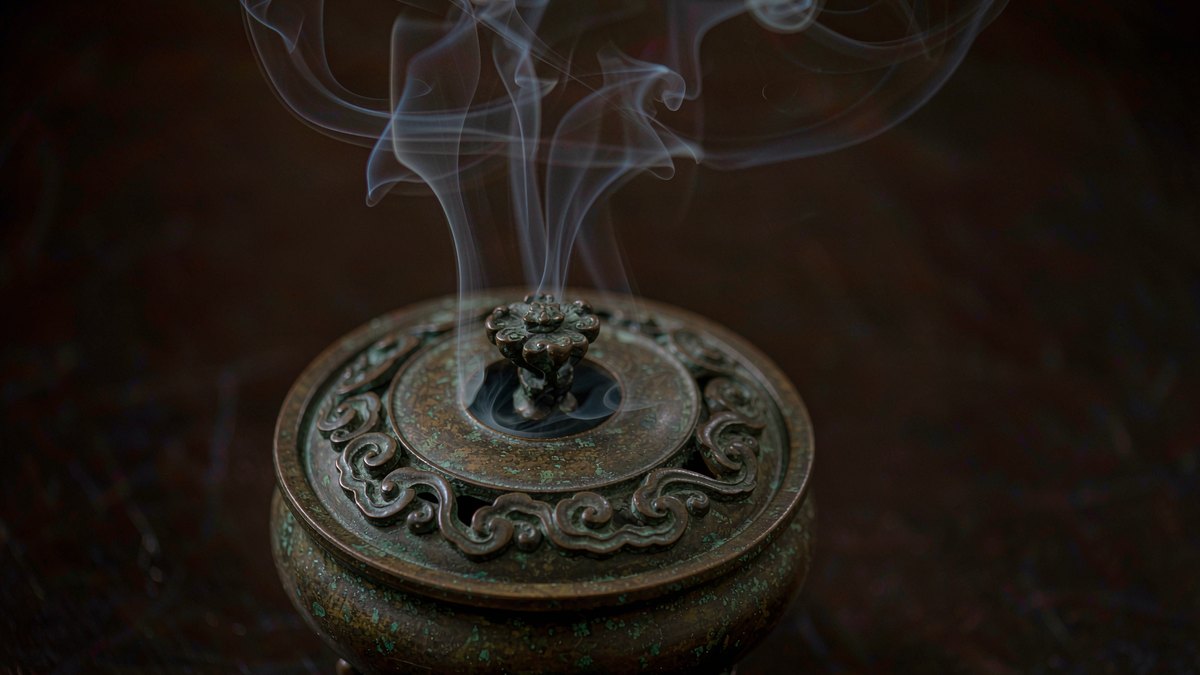
A Brief History of Chinese Incense Culture: From Han-Tang Rite to Ming-Qing Literati
Incense is a long, quiet thread in Chinese civilization. From ritual scent to the literati's study, agarwood was always the precious material. The full arc is in Chinese Incense Studies · Incense Culture History.
Han-Tang: foundation and rite
The Han hill censer ritualized fumigation — scent entered rites, tombs and daily life. Tang maritime trade brought abundant agarwood; temples and court flourished, and incense became a carrier of status and faith.
Song-Ming: zenith and gatherings
Song literati ranked incense with tea, painting and flowers as the "four arts"; incense democratized and aestheticized. The Ming Xiangcheng crowned it a full discipline — the cultural core of the Encyclopedia.
Qing-now: change and revival
Qing court incense was elaborate, folk too; it later declined, then revived in the past two decades' cultural confidence. Agarwood returns to life and gifting. History makes a piece of wood weigh more.
Today's meaning
The value of incense culture is not retro — it offers a "slow" and "calm" anchor in fast modern life.
(This is industry observation and popular-science summary, not investment advice. Buy agarwood through legal channels with traceable, testable sources.)
Compiled for general knowledge; traditional references are cultural notes, not medical advice.
Frequently Asked Questions
What is A Brief History of Chinese Incense Culture?
Incense runs through two millennia of Chinese civilization. This article traces how scent moved from sacrificial vessel to the literati's study — becoming an Eastern medium of calm.
How is agarwood used in incense ceremony?
Traditional practice favours indirect heating: a small chip is placed on mica or silver leaf over low charcoal heat to release aroma slowly. The focus is on layered scent and longevity rather than open burning.
How should I choose agarwood?
Buy from traceable, testable channels and match the form (incense, beads, raw wood) to your use. Avoid exaggerated claims such as "wild" or "sinking grade" without proof, and prefer products with lab reports and origin documentation.
How should agarwood be stored and maintained?
Agarwood dislikes moisture, odours and direct sunlight. Keep it sealed, dark and cool, store different origins separately, and air and inspect long-stored pieces periodically against mould and insects.
How can I tell real agarwood from fake?
Authentication combines sensory checks with technical ones: natural agarwood has a clean, long-lasting, cool-sweet scent and burns with pale, non-pungent smoke. GC-MS analysis of characteristic compounds (chromones, sesquiterpenes) adds objective confirmation. Buying through traceable channels with certificates lowers the risk.
How do agarwood origins differ?
Climate, tree species and resin-induction methods give each origin a distinct scent profile — for example Hainan tends to be clean and elegant, Vietnam sweet and cool, Indonesia deep and full. Origin is a key factor in grading and pricing.
What is the current agarwood market like?
Prices diverge sharply by resin density, origin and form, with both top-end collectibles and entry-level consumer products active. Use actual transactions from legal, testable channels as reference rather than a single quotation.
What is the relationship between agarwood and incense culture?
Agarwood is the core medium of East Asian incense culture, spanning temple offerings, literati gatherings and contemporary lifestyle aesthetics. Understanding this cultural background helps explain its value.
参考资料
You may also like



评论区
评论匿名可浏览,登录后可发表;提交后先审后显。
评论加载中…