Agarwood as "Fragrant Medicine" in the Classics: From Bencao to Xiangcheng
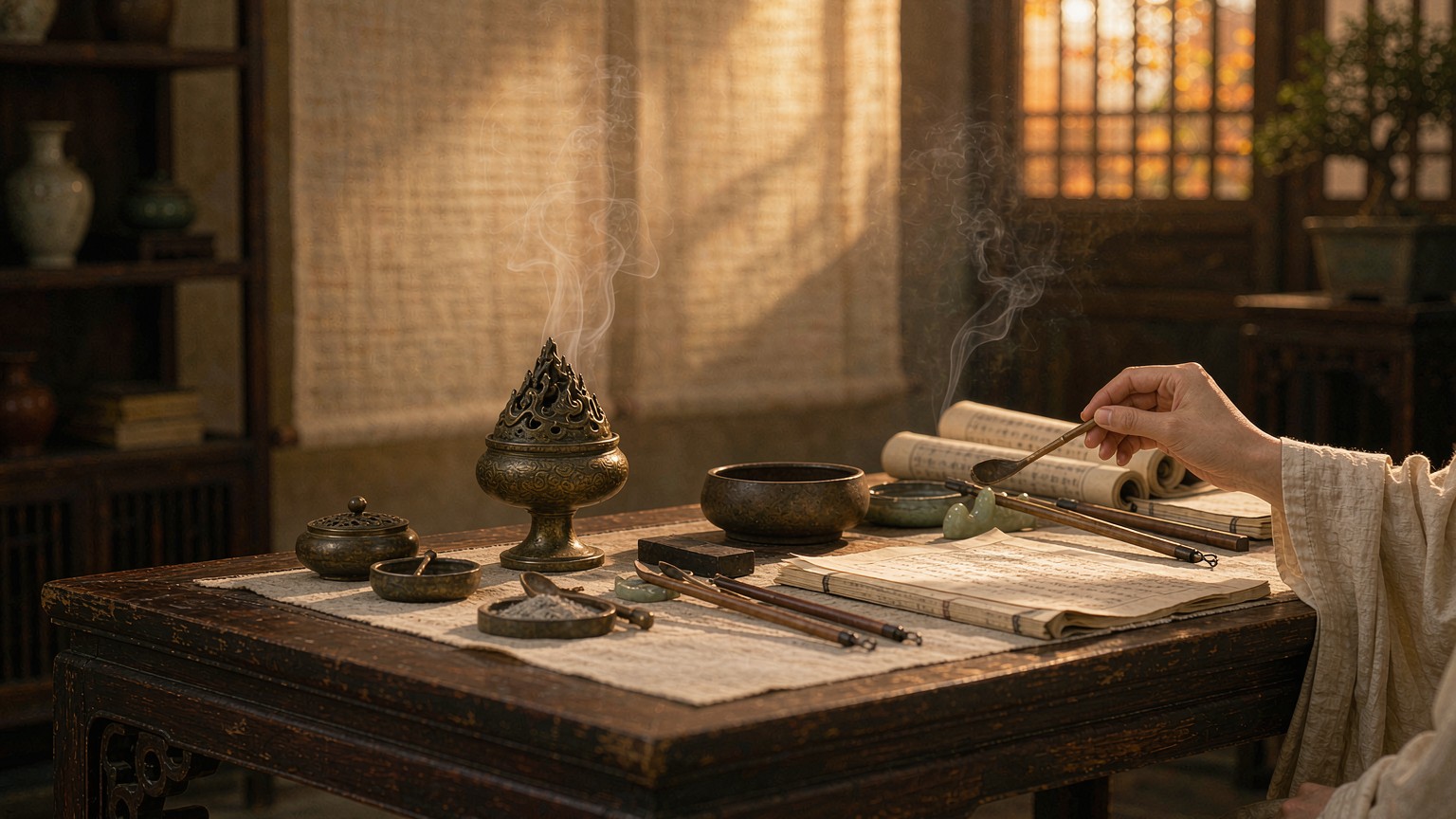
In traditional China, agarwood served as both aromatic and fragrant medicine. The classics are rich with records of it, forming the textual root of Chinese Incense Studies · Incense & Wellness.
The Compendium's placement
Li Shizhen filed agarwood under fragrant woods, noting its "pungent, slightly warm, non-toxic" nature and effects of harmonizing the center, tonifying the viscera and warming the loins — echoing traditional warming qi-moving logic.
Xiangcheng's synthesis
Zhou Jiazhi's Ming-era Xiangcheng is an encyclopedia of incense — recipes, tales and rites — elevating agarwood from "one herb" to "a culture", essential reading for Incense Culture History.
Two cautions when reading classics
First, ancient "medicinal" claims reflect period knowledge, not modern evidence grades — do not self-prescribe. Second, separate "traditional use" from "scientific evidence". See the Encyclopedia.
Modern meaning
The value of the classics is not prescription but context: how scent entered life, rite and medicine, giving today's cultural wellness a lineage.
(This is industry observation and popular-science summary, not investment advice. Buy agarwood through legal channels with traceable, testable sources.)
Compiled for general knowledge; traditional references are cultural notes, not medical advice.
常见问题
Agarwood as "Fragrant Medicine" in the Classics是什么?
In traditional China agarwood was both spice and medicine. This article surveys how the Compendium of Materia Medica, Xiangcheng and other classics recorded it — and how the ancients understood its qi-moving, kidney-nourishing warmth.
沉香怎么选购?
选购沉香应认准可溯源、可检测的渠道,按用途选择形态(线香 / 手串 / 原料),不盲目追高、不轻信「野生」「沉水」等夸大宣传。
沉香如何保养?
沉香怕潮、怕串味、怕暴晒,应密封、避光、阴凉存放,不同产区分开保存;长期不用的香材定期通风检查,防霉防虫。
You may also like
评论区
评论匿名可浏览,登录后可发表;提交后先审后显。
评论加载中…