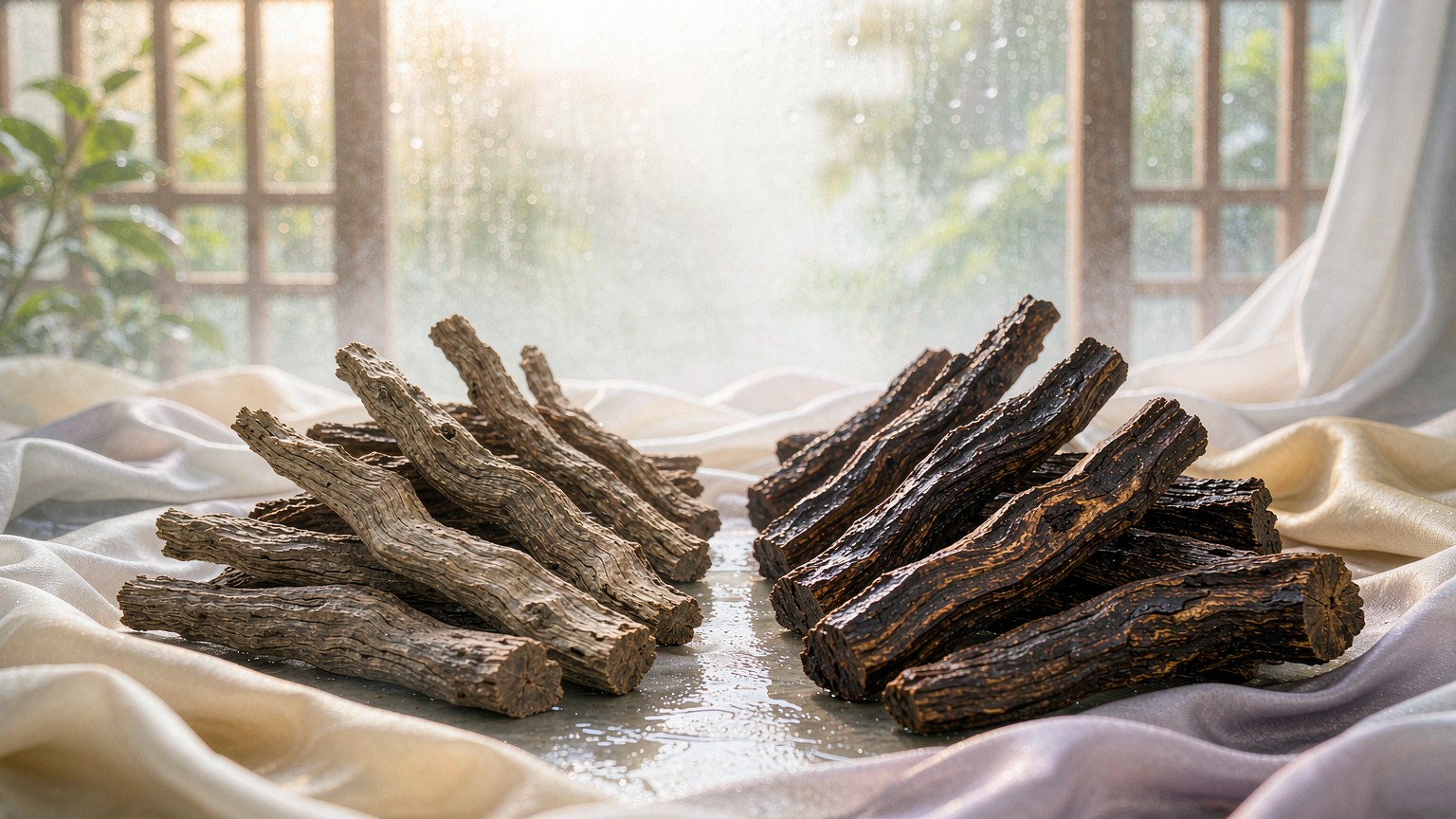
How to Read Agarwood Authentication Certificates: Institution, Items, and Conclusion
This article explains how to interpret agarwood authentication certificates: from the authority of the institution, the scientific nature of test items, to the rigor of conclusion statements. Combined with Chinese incense appraisal knowledge, it helps you avoid certificate traps and rationally judge agarwood authenticity and quality.
1. Authentication Institution: Whose Certificate is Credible?
The first step in reading an agarwood certificate is to confirm the qualifications and credibility of the issuing institution. Currently, domestic agarwood testing institutions fall into three categories: national or provincial quality inspection institutes (such as NGTC, CQC), forestry research institutes (such as the Research Institute of Wood Industry, Chinese Academy of Forestry), and third-party commercial testing companies. Prioritize institutions with CMA (China Metrology Accreditation) or CNAS (China National Accreditation Service) marks, as such certificates have legal effect. Be wary of unqualified 'fly-by-night' institutions or overseas-registered 'international certifications' whose certificates often lack binding force. It is recommended to check the institution whitelist in the Agarwood Identification Pillar Page to avoid being misled by false endorsements.
2. Test Items: Which Indicators Truly Reflect Agarwood Quality?
Test items on a regular certificate usually include: tree species identification (whether it is from the Thymelaeaceae Aquilaria genus), oil content (alcohol-soluble extract), density (sinking or not), microscopic structure (vessels, rays, etc.), and characteristic components (such as 2-(2-phenylethyl)chromones). Among them, tree species identification is fundamental, while oil content and density are key to quality grading. However, note that a certificate is only responsible for the 'submitted sample', not the entire batch. If the certificate items only list subjective aspects like 'appearance' or 'odor', its reference value is limited. For more testing standards, see the Chinese Incense Appraisal · Agarwood Identification topic.
3. Conclusion Statements: How to Understand the Results?
Certificate conclusions usually have three expressions: 'Conforms to agarwood characteristics', 'Agarwood components detected', or 'No agarwood components detected'. The first two indicate the sample is agarwood or contains agarwood components, but do not equate to 'natural wild' or 'high quality'. For example, 'conforms to agarwood characteristics' only means the tree species and basic structure are correct, not excluding artificial induction or compressed agarwood. If the conclusion is vague (such as 'suspected agarwood'), be cautious. In addition, the certificate should include sample photos, number, and test date, and its authenticity can be verified on the institution's official website. For special categories like Kyara, it is recommended to combine with the specific identification points in the Kyara Pillar Page for comprehensive judgment.
4. Common Traps and Countermeasures
Common market issues include: certificate swapping (genuine certificate with fake goods), expired certificates, and one-sided certificates that 'only identify tree species but not resin formation'. Countermeasures: check whether the certificate number matches the physical photo; request the merchant to provide a test report from the same batch as the actual product; for high-priced agarwood, send it to an authoritative institution for testing yourself. Meanwhile, learn basic identification knowledge from the Agarwood Encyclopedia to improve your own judgment and not blindly trust certificates.
(This is industry observation and popular-science summary, not investment advice. Buy agarwood through legal channels with traceable, testable sources.)
Compiled for general knowledge; traditional references are cultural notes, not medical advice.
常见问题
How to Read Agarwood Authentication Certificates是什么?
This article explains how to interpret agarwood authentication certificates: from the authority of the institution, the scientific nature of test items, to the rigor of conclusion statements. Combined with Chinese incense appraisal knowledge, it helps you avoid certificate traps and rationally judge agarwood authenticity and quality.
沉香怎么选购?
选购沉香应认准可溯源、可检测的渠道,按用途选择形态(线香 / 手串 / 原料),不盲目追高、不轻信「野生」「沉水」等夸大宣传;优先选择带检测报告与来源凭证的商品。
沉香如何保养?
沉香怕潮、怕串味、怕暴晒,应密封、避光、阴凉存放,不同产区分开保存;长期不用的香材定期通风检查,防霉防虫。
如何鉴别沉香的真假?
鉴别沉香需综合感官与辅助手段:天然沉香香气清雅、持久、凉甜交织,燃烧烟气清白而非刺鼻;可结合 GC-MS 色谱检测特征成分(色酮、倍半萜)。建议通过可信渠道与可溯源凭证降低风险。
不同产区沉香有什么区别?
各产区因气候、树种与结香方式差异,香韵各具特色(如海南清雅、越南甜凉、印尼醇厚),是沉香分级与定价的重要参考维度。
沉香价格行情如何?
沉香行情随结香程度、产区、形态分化明显,顶级收藏与入门消费两端活跃;建议以合法、可检测渠道的实际成交为参考,勿轻信单一报价。
沉香与香道文化有什么关系?
沉香是东亚香道文化的核心媒介,从礼佛、文人雅集到当代生活美学,承载「静心、慢享」的东方审美,理解文化背景有助于读懂沉香价值。
沉香有健康功效吗?
传统上沉香被用于舒缓、助眠等场景,但证据等级与用量需谨慎看待;把「传统用法」与「科学证据」分开表述,具体以专业指导为准。
参考资料
You may also like
评论区
评论匿名可浏览,登录后可发表;提交后先审后显。
评论加载中…