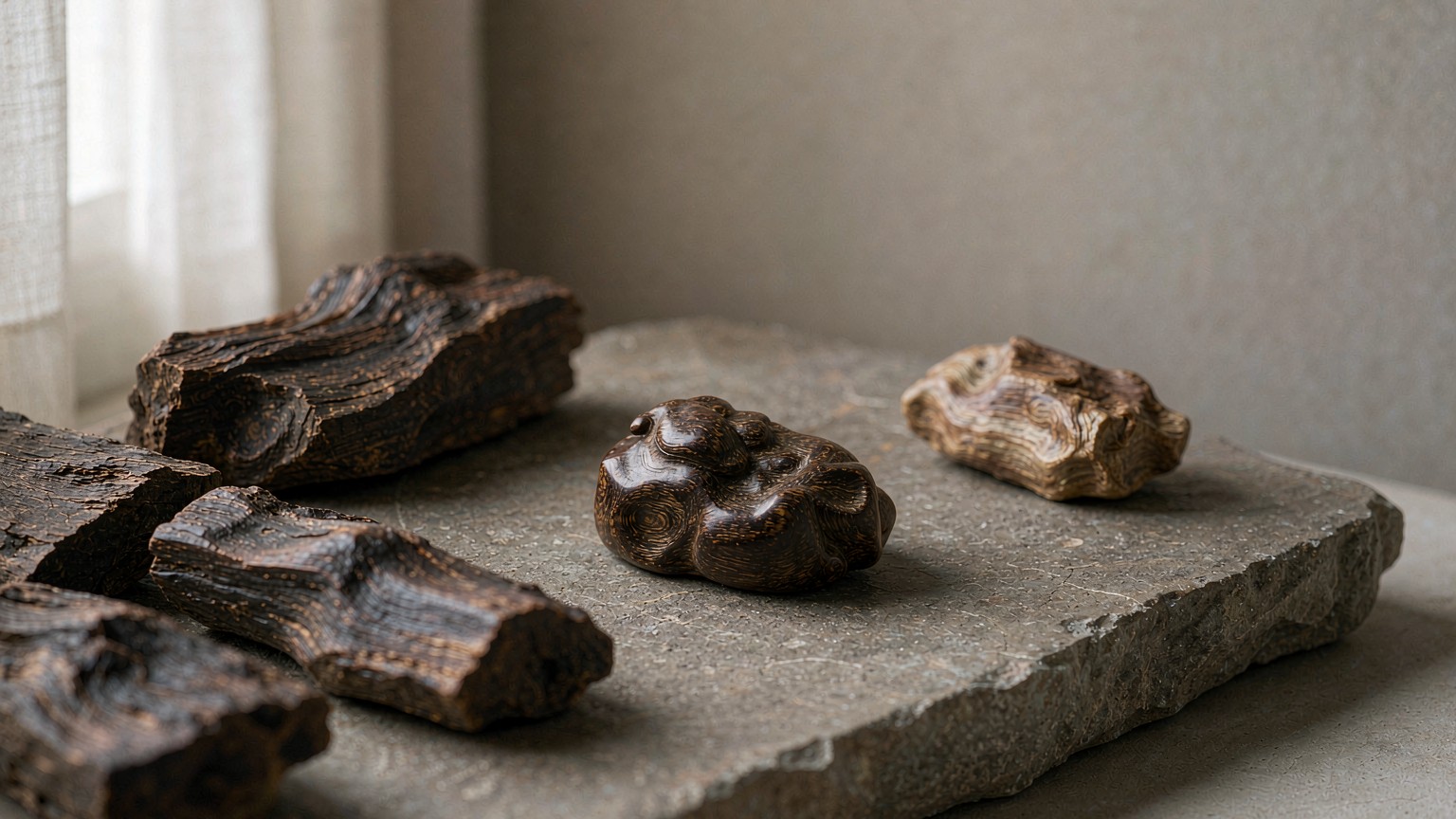
Agarwood Culture Going Global: How Overseas Audiences Perceive Chinese Incense Studies
This article defines the current state of overseas perception of Chinese incense studies, covering cultural communication, identification standards, and the incense knowledge system, with a three-language version and key takeaways.
Three Levels of Overseas Perception of Chinese Incense Studies
Overseas perception of Chinese incense studies is not a single dimension but a gradual process from sensory experience to knowledge system and value recognition. First, at the sensory level, agarwood as a fragrant material has cross-cultural appeal. Markets in the Middle East, Japan, and the West have some awareness of agarwood's aromatic characteristics, but mostly focus on raw material trade and religious use. Second, at the knowledge level, Chinese incense studies emphasize the homology of incense and medicine and the cultivation of qi and nature, which differs from Western aromatherapy and Japanese kodo. Overseas enthusiasts are beginning to learn about the historical context and rituals of Chinese incense studies through systematic resources such as the Agarwood Encyclopedia. Finally, at the value level, the literati spirit and lifestyle aesthetics embodied in Chinese incense studies are gradually spreading through international incense exhibitions, online courses, and cross-border incense gatherings, though overall still in its infancy.
Challenges in Identification Standards and Terminology Translation
A major bottleneck in overseas understanding of Chinese incense studies is the mismatch in identification standards and terminology systems. Chinese incense studies grade agarwood based on resin formation, regional aroma, and knife-feel texture, while international standards focus more on tree species and chemical composition. This difference makes it difficult for overseas consumers to accurately understand concepts such as kyara, board head, and oil line. To address this, the Identification Pillar Page provides image-text comparisons and physical sample libraries to help overseas incense friends build intuitive cognition. Meanwhile, the Chinese Incense Studies · Agarwood Identification section includes translations of historical identification literature, providing references for cross-language exchange. Notably, terminology translation must balance accuracy and cultural context. For example, kyara is often transliterated as Kyara with explanations, and the Kyara Pillar Page systematically organizes its classification and appreciation points, becoming one of the most cited resources by overseas researchers.
Pathways and Cases of Cultural Going Global
Currently, agarwood culture going global relies on three main pathways: first, international incense cultural exchange activities, such as lectures and incense appreciation events in the Middle East and Europe, using experience-first approaches to lower cognitive thresholds; second, digital content dissemination through multilingual websites, short videos, and online courses to systematically export Chinese incense knowledge; third, standards and certification cooperation to align Chinese agarwood identification standards with international organizations and enhance discourse power. Practice shows that overseas audiences are more receptive to the concepts of calming the mind and cultivating virtue in Chinese incense studies, but specific operational norms still require long-term education. In the future, cooperation with international incense institutions should be strengthened, cross-cultural communication talents should be cultivated, and cross-border e-commerce and cultural tourism integration should be leveraged to expand reach.
Key Takeaways
Overseas perception of Chinese incense studies is shifting from raw material trade to cultural understanding, with identification standards and terminology translation being current key obstacles. Through systematic knowledge output, multilingual content development, and international cooperation, agarwood culture going global is expected to form a sustainable communication ecosystem.
(This is industry observation and popular-science summary, not investment advice. Buy agarwood through legal channels with traceable, testable sources.)
Compiled for general knowledge; traditional references are cultural notes, not medical advice.
常见问题
Agarwood Culture Going Global是什么?
This article defines the current state of overseas perception of Chinese incense studies, covering cultural communication, identification standards, and the incense knowledge system, with a three-language version and key takeaways.
沉香怎么选购?
选购沉香应认准可溯源、可检测的渠道,按用途选择形态(线香 / 手串 / 原料),不盲目追高、不轻信「野生」「沉水」等夸大宣传;优先选择带检测报告与来源凭证的商品。
沉香如何保养?
沉香怕潮、怕串味、怕暴晒,应密封、避光、阴凉存放,不同产区分开保存;长期不用的香材定期通风检查,防霉防虫。
如何鉴别沉香的真假?
鉴别沉香需综合感官与辅助手段:天然沉香香气清雅、持久、凉甜交织,燃烧烟气清白而非刺鼻;可结合 GC-MS 色谱检测特征成分(色酮、倍半萜)。建议通过可信渠道与可溯源凭证降低风险。
不同产区沉香有什么区别?
各产区因气候、树种与结香方式差异,香韵各具特色(如海南清雅、越南甜凉、印尼醇厚),是沉香分级与定价的重要参考维度。
沉香价格行情如何?
沉香行情随结香程度、产区、形态分化明显,顶级收藏与入门消费两端活跃;建议以合法、可检测渠道的实际成交为参考,勿轻信单一报价。
沉香与香道文化有什么关系?
沉香是东亚香道文化的核心媒介,从礼佛、文人雅集到当代生活美学,承载「静心、慢享」的东方审美,理解文化背景有助于读懂沉香价值。
沉香有健康功效吗?
传统上沉香被用于舒缓、助眠等场景,但证据等级与用量需谨慎看待;把「传统用法」与「科学证据」分开表述,具体以专业指导为准。
参考资料
You may also like



评论区
评论匿名可浏览,登录后可发表;提交后先审后显。
评论加载中…