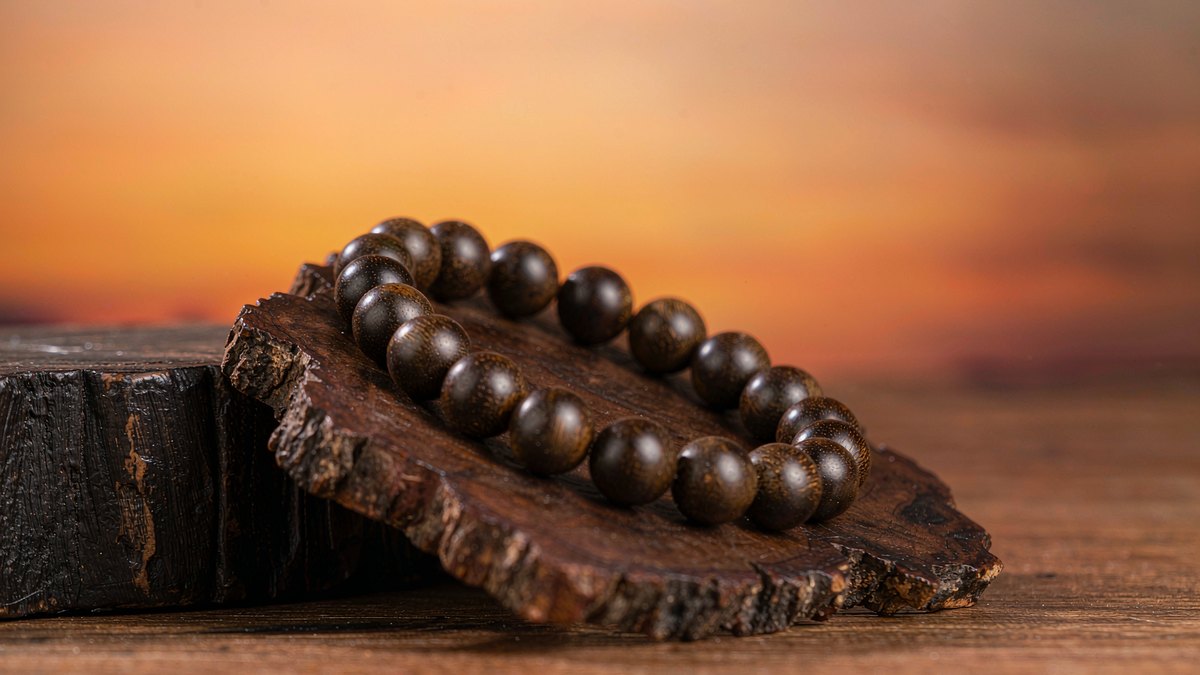
Temperature and Humidity Red Lines for Agarwood Storage and Coping with Plum Rain Season: A Practical Guide
The key to agarwood storage lies in controlling environmental temperature and humidity: temperature should be maintained at 18-25°C, relative humidity within a safe range of 50%-65%, with short-term limit not exceeding 70%. During the plum rain season, measures such as sealing, dehumidifying, and regular inspection are needed to prevent moisture and mold, avoiding the loss of aroma and quality deterioration.
Temperature and Humidity Red Lines for Agarwood Storage: Scientific Definition and Core Indicators
The temperature and humidity red lines for agarwood storage can be defined as: a safe range of 18-25°C and 50%-65% relative humidity, with a short-term humidity limit not exceeding 70%, and avoiding drastic temperature fluctuations. Beyond this range, aromatic compounds in agarwood volatilize easily, and wood fibers may absorb moisture and swell or crack, leading to weakened aroma and surface mold. According to long-term observations in the Agarwood Encyclopedia, when humidity persists above 70%, the risk of mold growth increases significantly; below 40%, fine cracks may appear due to excessive dryness. Therefore, daily storage should be equipped with a thermo-hygrometer, calibrated regularly.
Challenges of the Plum Rain Season: Impact of High Temperature and Humidity on Agarwood
During the plum rain season, air humidity often exceeds 80%, and temperature fluctuates greatly, posing a dual threat to agarwood storage. In high-humidity environments, agarwood surfaces easily absorb moisture; if ventilation is poor, mold spores multiply rapidly, forming white or green spots. Meanwhile, the wood swells after absorbing water, potentially compressing oil lines and sealing in aroma. Additionally, frequent opening of containers causes sudden temperature and humidity changes, accelerating cracking. It is advisable to refer to the discussion on environmental impact in Chinese Fragrance Studies · Agarwood Identification and formulate protective strategies in advance.
Plum Rain Season Strategies: A Complete Plan from Sealing to Dehumidifying
To cope with the plum rain season, the following measures can be taken: 1) Sealed storage: place agarwood in sealed bags or jars with food-grade desiccants (e.g., silica gel), and replace regularly; 2) Environmental dehumidification: use dehumidifiers or air conditioning to keep indoor humidity below 60%; 3) Avoid frequent opening: reduce the number of times containers are opened, and act quickly when taking out agarwood; 4) Regular inspection: check the surface of agarwood weekly for mold spots; if found, immediately remove with a soft brush and dry in a cool, ventilated place—never expose to direct sunlight or heat; 5) Separate storage: store different types of agarwood separately in sealed containers to prevent odor transfer. For high-value Kyara, it is recommended to use a dedicated electronic dry cabinet set at 55%±5% humidity.
Key Points for Long-term Storage and Common Misconceptions
For long-term agarwood storage, follow the principles of "cool, dry, dark, and sealed." Common misconceptions include: storing agarwood in the refrigerator (prone to moisture and odor transfer), wrapping directly in plastic bags (not breathable and may release chemicals), and overusing desiccants (causing wood cracking). The correct approach is to use odorless sealed containers and place a temperature-humidity data logger. To identify whether storage conditions affect quality, refer to the methods in the Identification Pillar Page, observing changes in oil lines and aroma. Additionally, allowing agarwood to "breathe" briefly during dry weather (no more than 30 minutes each time) helps maintain aroma activity.
Conclusion: The core of agarwood storage is stability and moderation—temperature 18-25°C and humidity 50%-65% are the safe red lines, with a focus on moisture and mold prevention during the plum rain season. Through scientific humidity control, sealed storage, and regular inspection, the value and charm of agarwood can be maximally preserved.
(This is industry observation and popular-science summary, not investment advice. Buy agarwood through legal channels with traceable, testable sources.)
Compiled for general knowledge; traditional references are cultural notes, not medical advice.
常见问题
Temperature and Humidity Red Lines for Agarwood Storage and Coping with Plum Rain Season是什么?
The key to agarwood storage lies in controlling environmental temperature and humidity: temperature should be maintained at 18-25°C, relative humidity within a safe range of 50%-65%, with short-term limit not exceeding 70%. During the plum rain season, measures such as sealing, dehumidifying, and regular inspection are needed to prevent moisture and mold, avoiding the loss of aroma and quality deterioration.
沉香怎么选购?
选购沉香应认准可溯源、可检测的渠道,按用途选择形态(线香 / 手串 / 原料),不盲目追高、不轻信「野生」「沉水」等夸大宣传;优先选择带检测报告与来源凭证的商品。
沉香如何保养?
沉香怕潮、怕串味、怕暴晒,应密封、避光、阴凉存放,不同产区分开保存;长期不用的香材定期通风检查,防霉防虫。
如何鉴别沉香的真假?
鉴别沉香需综合感官与辅助手段:天然沉香香气清雅、持久、凉甜交织,燃烧烟气清白而非刺鼻;可结合 GC-MS 色谱检测特征成分(色酮、倍半萜)。建议通过可信渠道与可溯源凭证降低风险。
不同产区沉香有什么区别?
各产区因气候、树种与结香方式差异,香韵各具特色(如海南清雅、越南甜凉、印尼醇厚),是沉香分级与定价的重要参考维度。
沉香价格行情如何?
沉香行情随结香程度、产区、形态分化明显,顶级收藏与入门消费两端活跃;建议以合法、可检测渠道的实际成交为参考,勿轻信单一报价。
沉香与香道文化有什么关系?
沉香是东亚香道文化的核心媒介,从礼佛、文人雅集到当代生活美学,承载「静心、慢享」的东方审美,理解文化背景有助于读懂沉香价值。
沉香有健康功效吗?
传统上沉香被用于舒缓、助眠等场景,但证据等级与用量需谨慎看待;把「传统用法」与「科学证据」分开表述,具体以专业指导为准。
参考资料
You may also like
评论区
评论匿名可浏览,登录后可发表;提交后先审后显。
评论加载中…