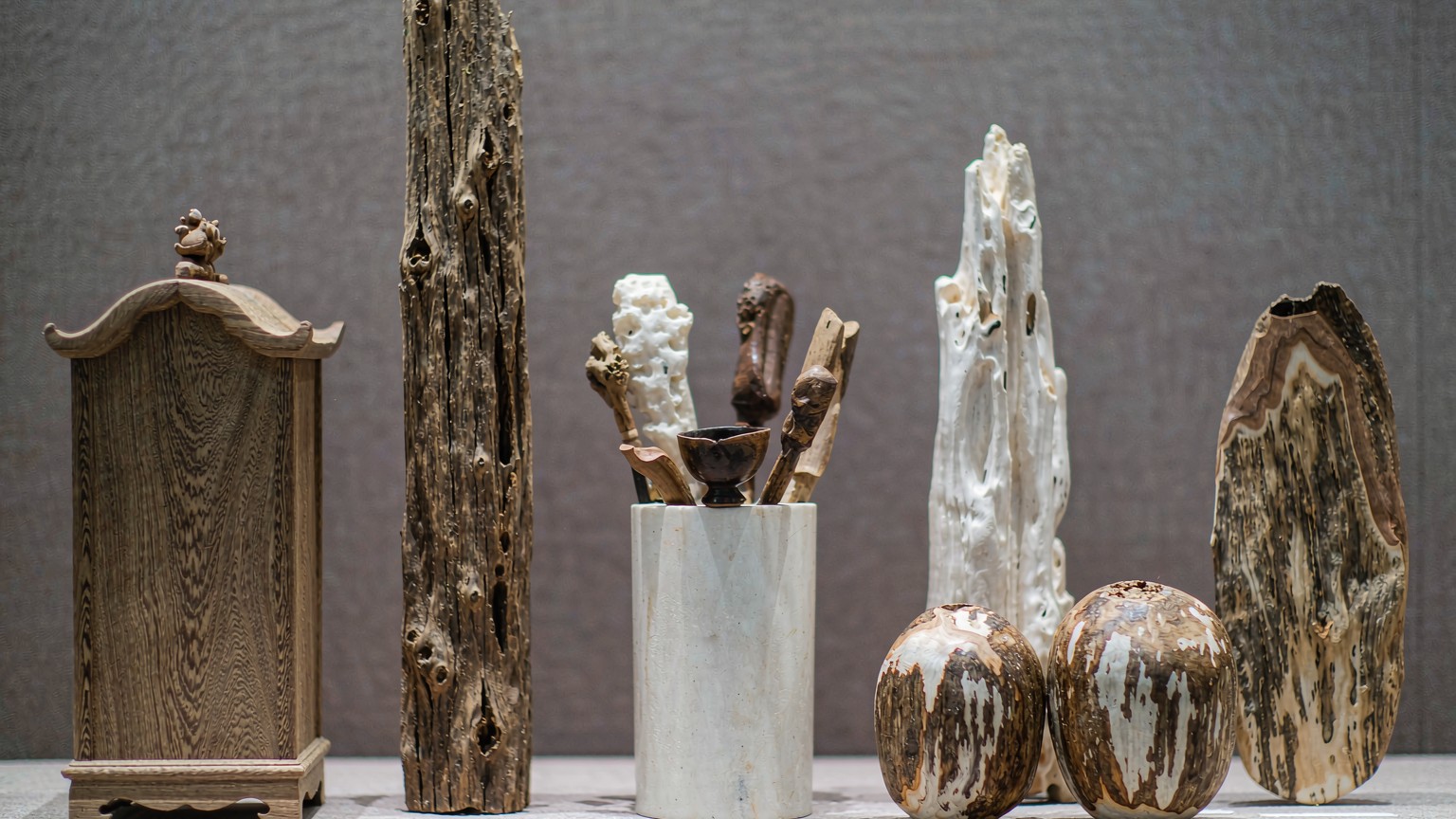
Differences Between Agarwood, Sandalwood, and Thuja: Three Easily Confused Incense Materials for Beginners
This article systematically compares agarwood, sandalwood, and thuja from aspects of origin, aroma, texture, and usage, helping beginners quickly distinguish these three easily confused incense materials and providing practical identification tips.
1. Origin and Formation Mechanism: Essential Differences Among the Three
Although agarwood, sandalwood, and thuja are all precious incense materials, their origins and formation mechanisms are completely different. Agarwood is a solid condensation formed by resin secreted by Aquilaria trees (Thymelaeaceae) after injury or fungal infection, mixed with wood fibers. It is a result of "wounding and resin formation," and not all agarwood trees can produce it. Sandalwood comes from the heartwood of Santalum trees (Santalaceae), an aromatic wood formed naturally during growth without injury, with Indian Mysore sandalwood being the most famous. Thuja belongs to the Cupressaceae family and is a rare tree species growing on cliffs; its aroma mainly comes from the oils in the wood itself, also without injury. Understanding this essential difference is the first step to distinguishing the three. For a deeper understanding of agarwood formation, please refer to the Agarwood Encyclopedia.
2. Aroma Characteristics and Texture: The Key to Identifying by Smell
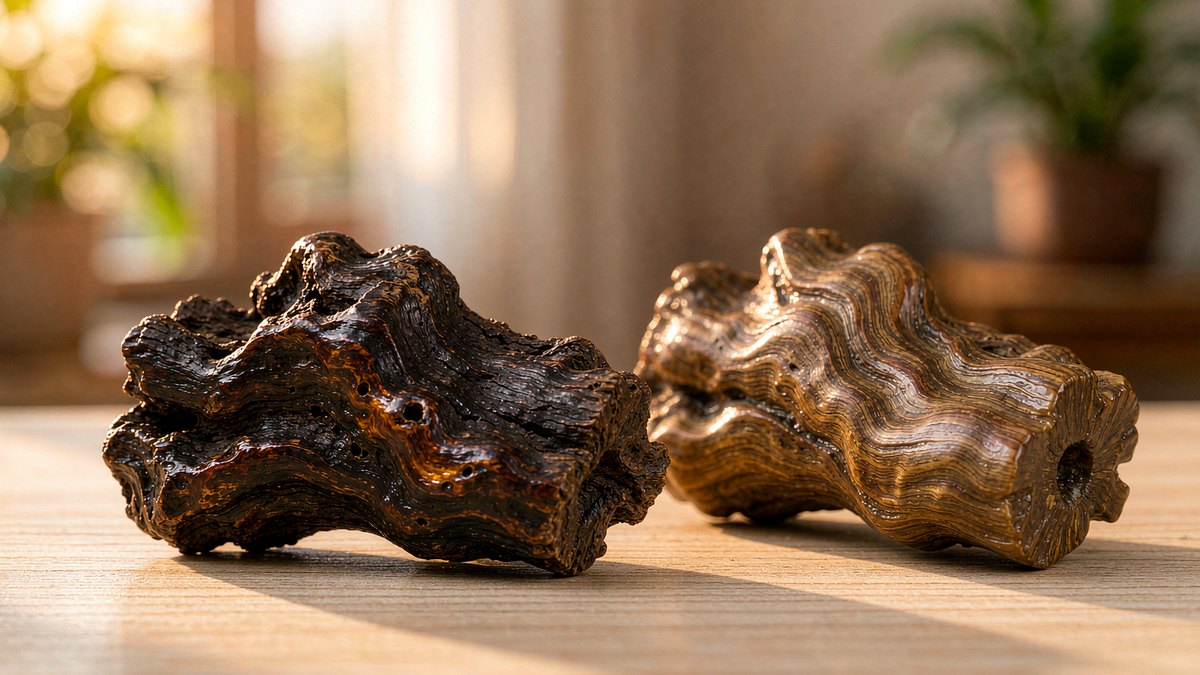
Aroma is the most intuitive dimension for distinguishing the three materials. Agarwood aroma is rich and varied: subtle at room temperature, but when heated, it presents layers of floral, fruity, honey-sweet, milky, and spicy-cool notes, varying significantly by origin and formation method. Top-grade kyara even combines cool sweetness with a transparent feel. Sandalwood aroma is rich and mellow, with milky and woody sweetness, single but lasting, with strong penetration. Thuja aroma leans towards a cool cypress scent with a faint medicinal and sweet note, refreshing to smell. In texture, agarwood usually has uneven density with visible resin lines, and some sinks in water; sandalwood is fine and uniform with higher density; thuja often has burls and gorgeous grain. Beginners can make preliminary judgments by smelling and observing texture. For systematic identification methods, please refer to the Identification Pillar Page.
3. Usage and Value: Market Positioning and Common Misconceptions
The three materials have different focuses in usage and value. Agarwood is mainly used for high-end incense, medicine, and collection. Due to the difficulty of resin formation and resource scarcity, prices are high, especially for kyara and sinking-grade agarwood. Sandalwood is widely used in incense making, carving, and religious rituals, with relatively affordable prices, though high-quality Mysore sandalwood is also valuable. Thuja is mostly used for craft carving and aromatherapy, and prices have risen in recent years due to resource protection. Common misconceptions among beginners include mistaking sandalwood for agarwood (because both contain "incense" in their names), or mistaking thuja burls for agarwood resin lines. In fact, agarwood resin lines are irregular and often accompanied by wood parts, while thuja burls are tree tumor textures. Moreover, agarwood requires a resin formation process, while sandalwood and thuja are naturally aromatic. Understanding these differences helps avoid purchasing mistakes. For more incense knowledge, please visit Chinese Incense Culture · Agarwood Identification.
4. Quick Identification Points and Summary
In summary, agarwood is a resin condensation formed by injury, with rich aroma layers; sandalwood is natural aromatic heartwood with a rich, single aroma; thuja is cliff cypress with a cool, medicinal aroma. Beginners can identify from three aspects: first, look at the origin (whether resin formation is involved), second, smell the aroma (layers and penetration), third, observe the texture (resin lines vs. uniform grain vs. burls). Mastering these points will allow you to easily distinguish the three materials. For readers who want to learn more about top-grade agarwood such as kyara, please visit the Kyara Pillar Page.
(This is industry observation and popular-science summary, not investment advice. Buy agarwood through legal channels with traceable, testable sources.)
Compiled for general knowledge; traditional references are cultural notes, not medical advice.
常见问题
Differences Between Agarwood, Sandalwood, and Thuja是什么?
This article systematically compares agarwood, sandalwood, and thuja from aspects of origin, aroma, texture, and usage, helping beginners quickly distinguish these three easily confused incense materials and providing practical identification tips.
沉香怎么选购?
选购沉香应认准可溯源、可检测的渠道,按用途选择形态(线香 / 手串 / 原料),不盲目追高、不轻信「野生」「沉水」等夸大宣传;优先选择带检测报告与来源凭证的商品。
沉香如何保养?
沉香怕潮、怕串味、怕暴晒,应密封、避光、阴凉存放,不同产区分开保存;长期不用的香材定期通风检查,防霉防虫。
如何鉴别沉香的真假?
鉴别沉香需综合感官与辅助手段:天然沉香香气清雅、持久、凉甜交织,燃烧烟气清白而非刺鼻;可结合 GC-MS 色谱检测特征成分(色酮、倍半萜)。建议通过可信渠道与可溯源凭证降低风险。
不同产区沉香有什么区别?
各产区因气候、树种与结香方式差异,香韵各具特色(如海南清雅、越南甜凉、印尼醇厚),是沉香分级与定价的重要参考维度。
沉香价格行情如何?
沉香行情随结香程度、产区、形态分化明显,顶级收藏与入门消费两端活跃;建议以合法、可检测渠道的实际成交为参考,勿轻信单一报价。
沉香与香道文化有什么关系?
沉香是东亚香道文化的核心媒介,从礼佛、文人雅集到当代生活美学,承载「静心、慢享」的东方审美,理解文化背景有助于读懂沉香价值。
沉香有健康功效吗?
传统上沉香被用于舒缓、助眠等场景,但证据等级与用量需谨慎看待;把「传统用法」与「科学证据」分开表述,具体以专业指导为准。
参考资料
You may also like
评论区
评论匿名可浏览,登录后可发表;提交后先审后显。
评论加载中…