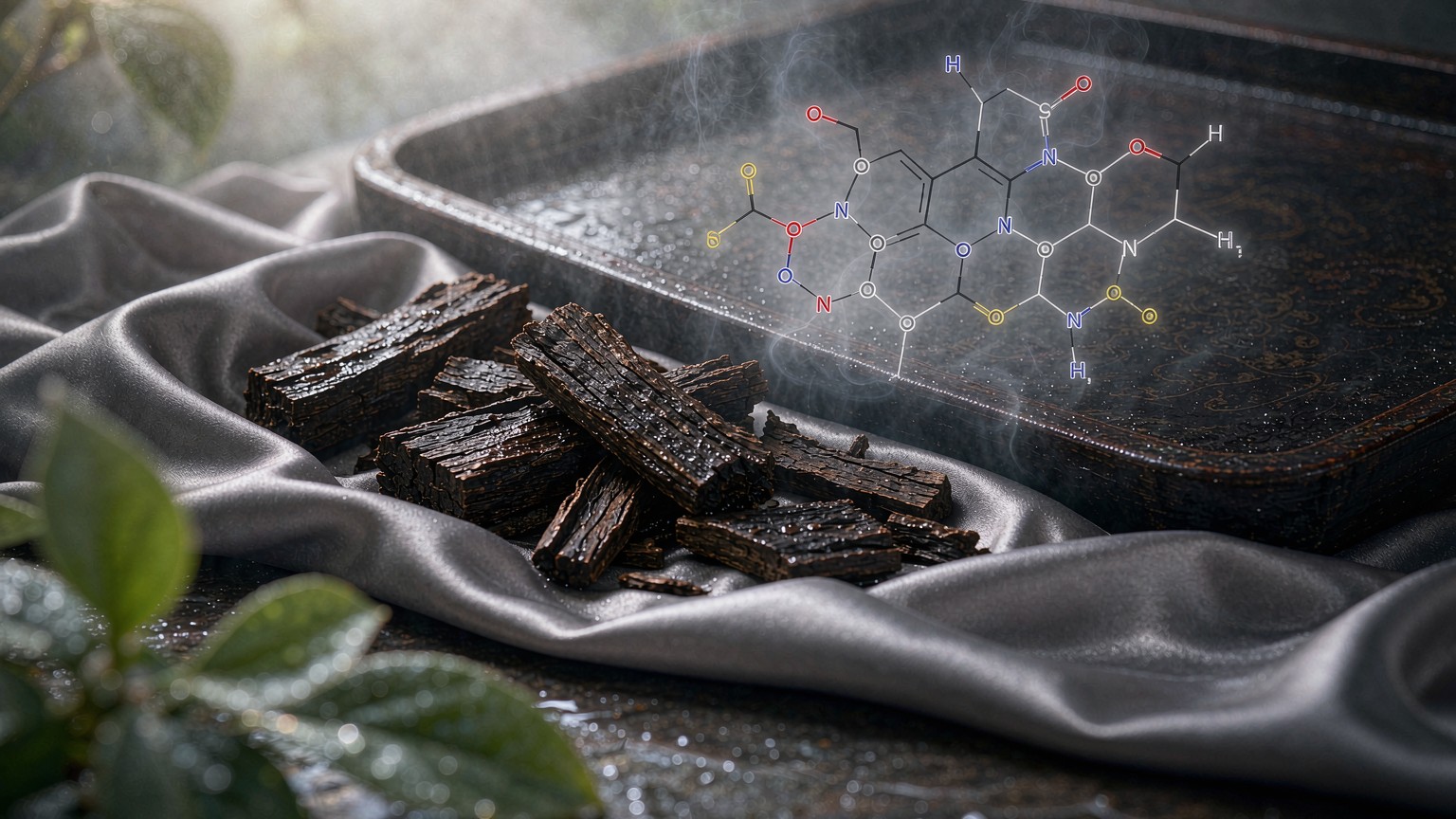
Agarwood Aroma Type Atlas: Sweet, Cool, Floral, Fruity, Medicinal, Milky
Agarwood aromas can be systematically classified into six types: sweet, cool, floral, fruity, medicinal, and milky, originating from different tree species, resin formation mechanisms, and aging environments. This article provides a complete aroma atlas and tasting guide.
Overview of the Six Agarwood Aroma Types
Agarwood aroma is complex and varied, but can be summarized into six core types: sweet, cool, floral, fruity, medicinal, and milky. Sweet notes come from agarwood alcohol and benzoic acid derivatives; cool notes from sesquiterpenes such as agarospirol; floral and fruity notes from esters and aromatic compounds; medicinal notes are often related to resin oxidation products; milky notes are common in specific producing regions and aging stages. Understanding this atlas is fundamental for systematic agarwood appreciation. For more basic knowledge, please refer to the Agarwood Encyclopedia.
Characteristics and Representative Regions of Each Aroma Type
Sweet agarwood is common in the Hue area, such as Nha Trang, Vietnam, sweet but not cloying, with a honey-like feel; cool notes are represented by Hainan and Guangdong agarwood, with strong penetration and a minty coolness; floral types are often seen in Kalimantan and Manila agarwood, resembling orchid or rose; fruity types are obvious in Tarakan, Indonesia, with ripe fruit acidity; medicinal types are common in old Singapore-series wood, with licorice and angelica-like notes; milky types mostly appear in Brunei and some Malaysian agarwood, warm and creamy. For deeper details on each type, see the discussion on aroma layers in the Kyara Pillar Page.
Application in Tasting and Precautions
When tasting, note that aroma types are not isolated; high-quality agarwood often presents complex profiles. It is recommended to use indirect heating or electronic incense heaters at low temperatures to avoid damaging delicate layers. Also, aroma types are influenced by resin formation years, aging environment, and sampling location, and cannot be used alone to determine authenticity. For systematic identification methods, please visit the Identification Pillar Page. Additionally, the Chinese Fragrance Studies · Agarwood Identification section offers a traditional perspective.
Conclusion
Mastering the agarwood aroma type atlas helps enthusiasts describe and appreciate agarwood more precisely, and provides a scientific framework for collection and tasting. It is recommended to smell and record with actual samples to gradually build a personal aroma memory bank.
(This is industry observation and popular-science summary, not investment advice. Buy agarwood through legal channels with traceable, testable sources.)
Compiled for general knowledge; traditional references are cultural notes, not medical advice.
常见问题
Agarwood Aroma Type Atlas是什么?
Agarwood aromas can be systematically classified into six types: sweet, cool, floral, fruity, medicinal, and milky, originating from different tree species, resin formation mechanisms, and aging environments. This article provides a complete aroma atlas and tasting guide.
沉香怎么选购?
选购沉香应认准可溯源、可检测的渠道,按用途选择形态(线香 / 手串 / 原料),不盲目追高、不轻信「野生」「沉水」等夸大宣传;优先选择带检测报告与来源凭证的商品。
沉香如何保养?
沉香怕潮、怕串味、怕暴晒,应密封、避光、阴凉存放,不同产区分开保存;长期不用的香材定期通风检查,防霉防虫。
如何鉴别沉香的真假?
鉴别沉香需综合感官与辅助手段:天然沉香香气清雅、持久、凉甜交织,燃烧烟气清白而非刺鼻;可结合 GC-MS 色谱检测特征成分(色酮、倍半萜)。建议通过可信渠道与可溯源凭证降低风险。
不同产区沉香有什么区别?
各产区因气候、树种与结香方式差异,香韵各具特色(如海南清雅、越南甜凉、印尼醇厚),是沉香分级与定价的重要参考维度。
沉香价格行情如何?
沉香行情随结香程度、产区、形态分化明显,顶级收藏与入门消费两端活跃;建议以合法、可检测渠道的实际成交为参考,勿轻信单一报价。
沉香与香道文化有什么关系?
沉香是东亚香道文化的核心媒介,从礼佛、文人雅集到当代生活美学,承载「静心、慢享」的东方审美,理解文化背景有助于读懂沉香价值。
沉香有健康功效吗?
传统上沉香被用于舒缓、助眠等场景,但证据等级与用量需谨慎看待;把「传统用法」与「科学证据」分开表述,具体以专业指导为准。
参考资料
You may also like
评论区
评论匿名可浏览,登录后可发表;提交后先审后显。
评论加载中…