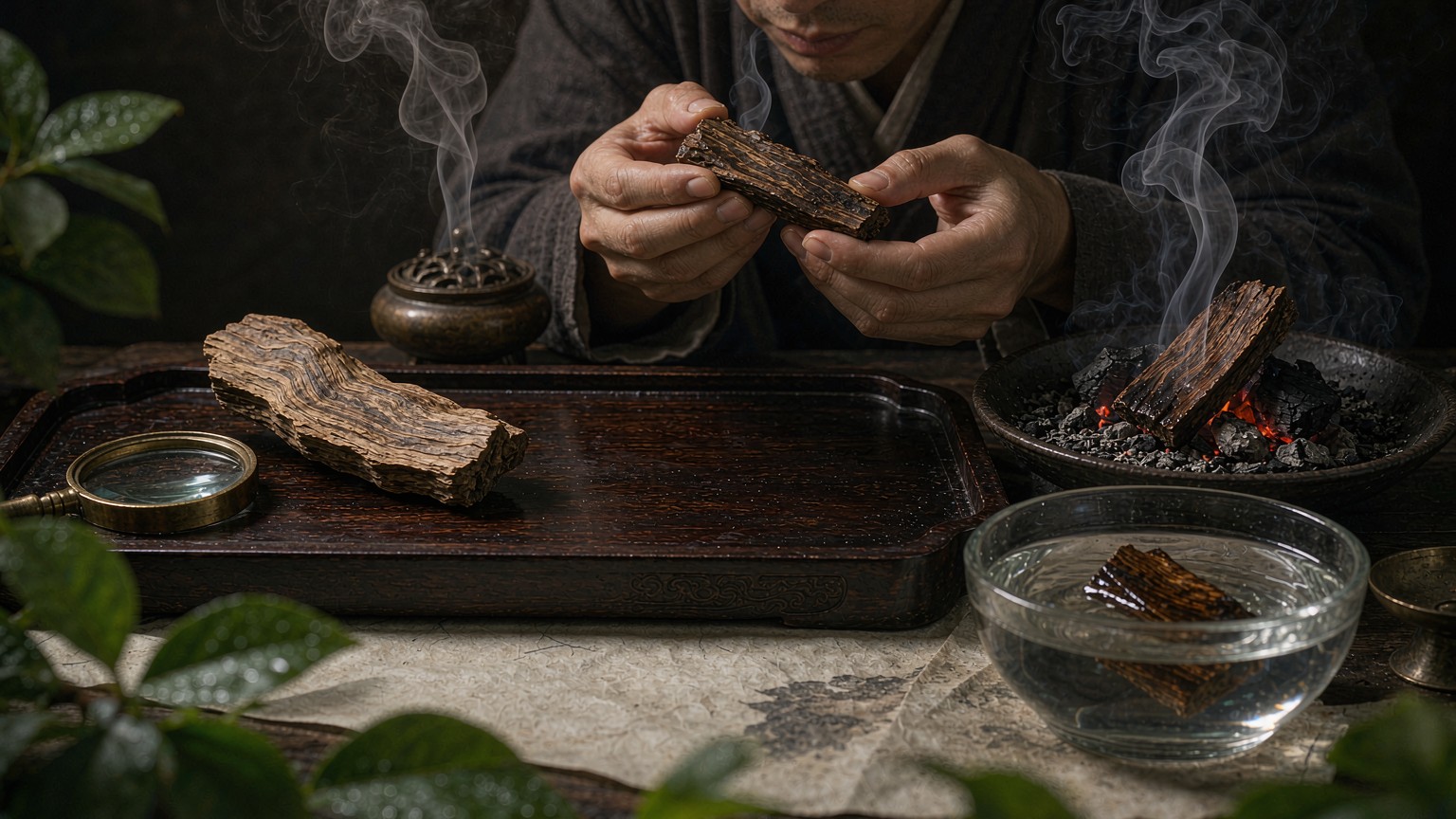
Standard Process of Indirect Incense Burning: From Ash Arrangement to Fragrance Appreciation
Indirect incense burning is a method of heating incense materials indirectly through a mica plate, which gently releases fragrance without scorching. This article details the standard process from ash arrangement, charcoal burying, mica placement to fragrance appreciation, and shares key tips.
Definition and Advantages of Indirect Incense Burning
Indirect incense burning refers to placing a mica plate, silver leaf, or other heat-transferring material between the charcoal and the incense material, so that the incense is heated without direct contact with the fire. Its advantages include controllable temperature and even fragrance release, fully displaying the layers of precious materials like agarwood and kyara without a burnt smell. For those seeking delicate aroma, mastering the standard process is essential. For more basic knowledge on agarwood, please refer to the Agarwood Encyclopedia.
Standard Process: From Ash Arrangement to Fragrance Appreciation
Step 1: Arrange the ash. Use an ash press to gently flatten the incense ash in the burner, keeping it loose and breathable, then dig a charcoal pit in the center. Step 2: Burn the charcoal. Light the incense charcoal, wait until its surface turns white and the interior is red, then place it into the pit and cover with ash, pressing it into a small mound. Step 3: Make a hole. Use incense chopsticks to poke a hole at the top of the charcoal mound to allow air circulation and slow burning. Step 4: Place the mica plate. Put a mica plate or silver leaf over the hole, ensuring it is stable. Step 5: Place the incense. Use an incense spoon to take an appropriate amount of incense material (such as agarwood slices or kyara pieces) and place it on the mica plate. Step 6: Appreciate the fragrance. Wait for the aroma to initially spread, gently fan and sniff with your hand to feel the changes in top, middle, and base notes. Throughout the process, temperature control is key, which can be adjusted by the size of the hole and the thickness of the mica plate. For more on kyara appreciation, please see the Kyara Pillar Page.
Key Tips and Common Issues
Do not press the ash too tightly, or the charcoal may extinguish; the charcoal must be fully burned before burying to avoid smoke. Clean the mica plate regularly to prevent residual aroma from affecting the next session. Use a small amount of incense material, following the principle of "less is more". Keep the environment quiet and ventilated during appreciation, but avoid strong drafts. For systematic learning of agarwood identification and appreciation techniques, visit the Identification Pillar Page and Chinese Incense Culture · Agarwood Identification.
Summary
The core of indirect incense burning is "separating the fire but not the fragrance". Through the five steps of ash arrangement, charcoal burying, mica placement, incense placement, and appreciation, the fragrance is released gently. Mastering the looseness of the ash, the thoroughness of the charcoal, the thickness of the mica plate, and the amount of incense material will allow you to taste the most authentic charm of agarwood.
(This is industry observation and popular-science summary, not investment advice. Buy agarwood through legal channels with traceable, testable sources.)
Compiled for general knowledge; traditional references are cultural notes, not medical advice.
常见问题
Standard Process of Indirect Incense Burning是什么?
Indirect incense burning is a method of heating incense materials indirectly through a mica plate, which gently releases fragrance without scorching. This article details the standard process from ash arrangement, charcoal burying, mica placement to fragrance appreciation, and shares key tips.
沉香怎么选购?
选购沉香应认准可溯源、可检测的渠道,按用途选择形态(线香 / 手串 / 原料),不盲目追高、不轻信「野生」「沉水」等夸大宣传;优先选择带检测报告与来源凭证的商品。
沉香如何保养?
沉香怕潮、怕串味、怕暴晒,应密封、避光、阴凉存放,不同产区分开保存;长期不用的香材定期通风检查,防霉防虫。
如何鉴别沉香的真假?
鉴别沉香需综合感官与辅助手段:天然沉香香气清雅、持久、凉甜交织,燃烧烟气清白而非刺鼻;可结合 GC-MS 色谱检测特征成分(色酮、倍半萜)。建议通过可信渠道与可溯源凭证降低风险。
不同产区沉香有什么区别?
各产区因气候、树种与结香方式差异,香韵各具特色(如海南清雅、越南甜凉、印尼醇厚),是沉香分级与定价的重要参考维度。
沉香价格行情如何?
沉香行情随结香程度、产区、形态分化明显,顶级收藏与入门消费两端活跃;建议以合法、可检测渠道的实际成交为参考,勿轻信单一报价。
沉香与香道文化有什么关系?
沉香是东亚香道文化的核心媒介,从礼佛、文人雅集到当代生活美学,承载「静心、慢享」的东方审美,理解文化背景有助于读懂沉香价值。
沉香有健康功效吗?
传统上沉香被用于舒缓、助眠等场景,但证据等级与用量需谨慎看待;把「传统用法」与「科学证据」分开表述,具体以专业指导为准。
参考资料
You may also like
评论区
评论匿名可浏览,登录后可发表;提交后先审后显。
评论加载中…