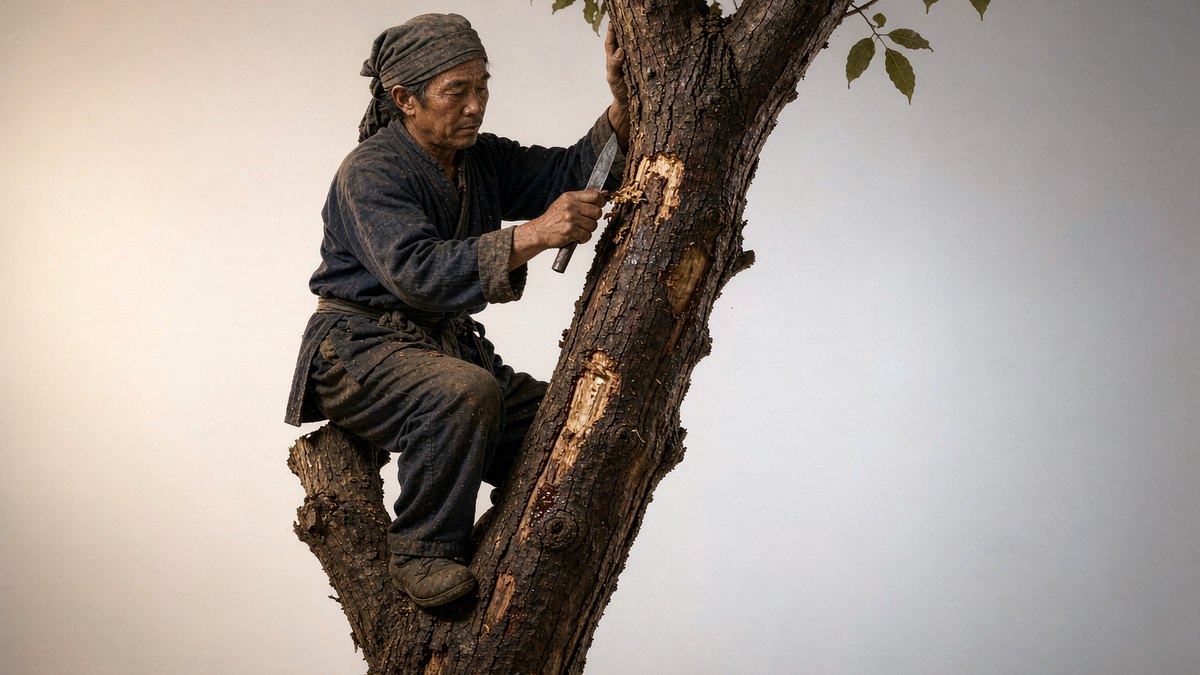
Agarwood and Religion: Differences in Buddhist and Taoist Incense Practices
Agarwood is an important incense in both Buddhism and Taoism, but their philosophies and methods differ significantly: Buddhism emphasizes offering and meditation support, pursuing precepts, concentration, and wisdom; Taoism focuses on communication with deities, exorcism, and health preservation, pursuing harmony with nature and longevity.
1. Buddhist Incense: Offering and Meditation Support
In Buddhism, agarwood is highly revered as a supreme offering to Buddhas and Bodhisattvas. The core practice is "offering incense to the Buddha," expressing devotion and reverence through burning incense, symbolizing pure precepts and the fragrance of wisdom. In meditation, agarwood is also used as a support; its serene fragrance helps to focus the mind and enter samadhi. Buddhist incense practice emphasizes the unity of heart and incense, not clinging to the value of the incense but focusing on purity of intention. For more on the specific applications of agarwood in Buddhist rituals, see the relevant chapters in the Agarwood Encyclopedia.
2. Taoist Incense: Communication with Deities and Health Preservation
Taoism also values agarwood, but with different concepts. Taoism believes that fragrance can ascend to the heavenly realm and serves as a medium for communicating with deities, so agarwood is widely used in Taoist rituals to invoke the presence of gods. Meanwhile, Taoism emphasizes the health benefits of incense, believing that agarwood can ward off evil and dispel impurities, harmonize qi and blood, and aid in internal alchemy and longevity. Taoist incense is often combined with talismans and spells, emphasizing the coordination of incense, ritual, and hand gestures. For traditional methods of identifying agarwood, refer to the Identification Pillar Page.
3. Comparison: Similarities and Differences in Concepts and Methods
The differences between Buddhist and Taoist incense practices are mainly reflected in purpose and method. Buddhist incense focuses on offering and meditation, emphasizing spiritual cultivation with relatively simple rituals; Taoist incense combines communication with deities and health preservation, with more elaborate rituals often combined with magic. In addition, Buddhism tends to use single-origin agarwood, focusing on the natural scent; Taoism may blend agarwood with other aromatic herbs to enhance efficacy. Regardless of Buddhism or Taoism, agarwood is regarded as the finest incense due to its rarity and spiritual nature, holding an important place in Chinese incense culture. To explore more cultural connotations of agarwood in religion, browse the Chinese Incense Studies · Agarwood Identification topic.
4. Conclusion
The incense practices of agarwood in Buddhism and Taoism reflect the unique understanding of incense in these two religious cultures. Buddhism uses incense as an aid to offering and practice, while Taoism uses it as a medium for communicating with deities and health preservation. Together, they enrich the cultural significance of agarwood. Understanding these differences helps us to more comprehensively recognize the value of agarwood in traditional religion and incense studies.
(This is industry observation and popular-science summary, not investment advice. Buy agarwood through legal channels with traceable, testable sources.)
Compiled for general knowledge; traditional references are cultural notes, not medical advice.
常见问题
Agarwood and Religion是什么?
Agarwood is an important incense in both Buddhism and Taoism, but their philosophies and methods differ significantly: Buddhism emphasizes offering and meditation support, pursuing precepts, concentration, and wisdom; Taoism focuses on communication with deities, exorcism, and health preservation, pursuing harmony with nature and longevity.
沉香怎么选购?
选购沉香应认准可溯源、可检测的渠道,按用途选择形态(线香 / 手串 / 原料),不盲目追高、不轻信「野生」「沉水」等夸大宣传。
沉香如何保养?
沉香怕潮、怕串味、怕暴晒,应密封、避光、阴凉存放,不同产区分开保存;长期不用的香材定期通风检查,防霉防虫。
You may also like
评论区
评论匿名可浏览,登录后可发表;提交后先审后显。
评论加载中…