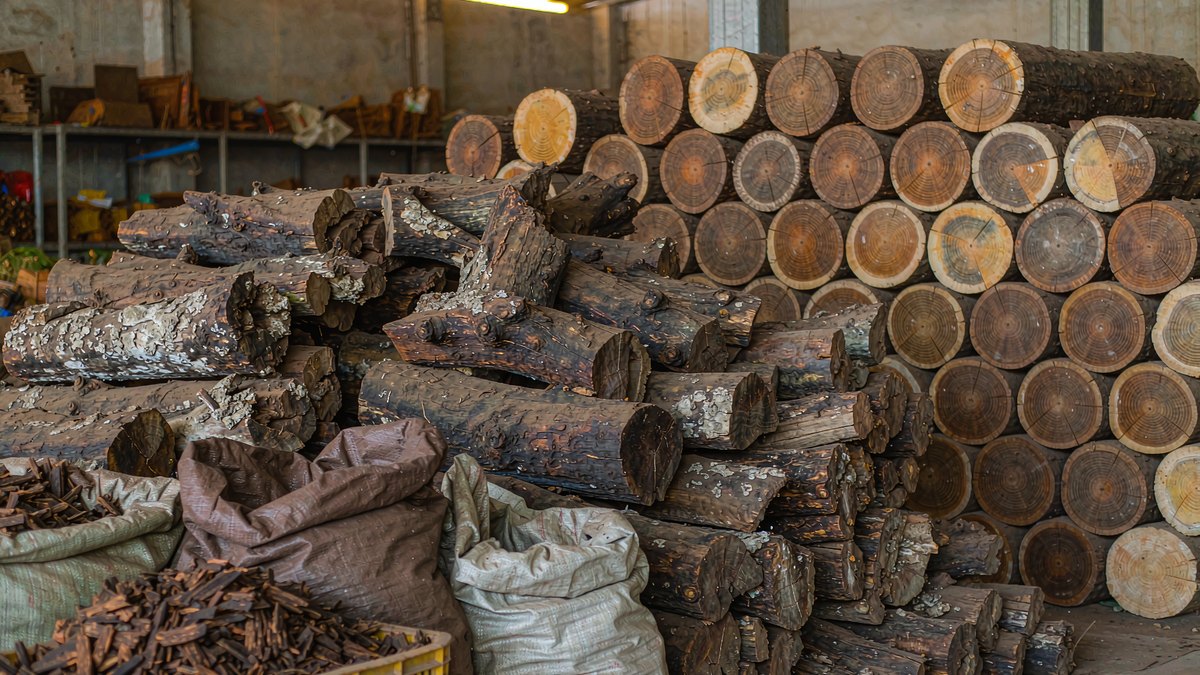
How to Judge Agarwood Oil Content by Scent: Reading Resin Levels Through Aroma Layers
Judging agarwood oil content by scent hinges on the persistence of aroma intensity, the richness of layered notes, and the penetrating sweet-cool sensation. Higher oil content yields deeper, more stable fragrance with strong diffusion and a boiling resin effect when heated.
1. Aroma Intensity and Persistence: Direct Signals of Resin Content
The oil content of agarwood is first reflected in the intensity and persistence of its scent. Low-oil agarwood smells faint at room temperature, requiring close proximity, and fades quickly; high-oil agarwood exudes a mellow aroma even when sitting idle, with significantly longer-lasting fragrance. When smelling, note whether the aroma is "solid"—high-oil agarwood tends to be deep rather than floating, with a sense of weight. For a systematic understanding of the relationship between resin and scent, see the oil chapter in the Agarwood Encyclopedia.
2. Aroma Layers and Changes: Complexity of Aromatic Compounds in Resin
The higher the oil content, the more complex the aromatic compounds, and the richer the scent layers. Low-oil agarwood typically shows only a single sweet or woody note; medium to high oil content reveals distinct top, middle, and base notes—such as an initial coolness, a mid-phase honey sweetness, and a lingering milky or floral finish. Especially when heated, high-oil agarwood releases its aroma layer by layer and lasts. To delve into the characteristics of each layer, refer to the analysis of aroma layers in kyara on the Kyara Pillar Page, which is helpful for understanding high-oil agarwood.
3. Sweet-Cool Sensation and Penetration: Hallmarks of High-Oil Agarwood
High-oil agarwood often exhibits a distinct sweet-cool sensation that is not superficial but penetrating, reaching deep into the nasal cavity and even inducing a sweet aftertaste. The thicker the resin, the more concentrated the sweet-cool feeling and the wider its diffusion. When smelling, compare samples of different oil levels, noting the intensity and duration of the sweet-cool note. Additionally, the boiling resin effect when heated—a sudden burst of aroma with a subtle sizzling sound—is a key indicator of high oil content. For more professional identification methods, see the heating test section on the Identification Pillar Page.
4. Comprehensive Judgment and Precautions
Scent judgment requires combining multiple factors to avoid misjudgment from a single indicator. First, agarwood from different regions has distinct scent profiles, so compare within the same type; second, environmental temperature and humidity affect scent performance, so smell in stable conditions; finally, scent judgment should be combined with visual and tactile methods, such as observing resin lines and testing sinking. For traditional identification wisdom in Chinese incense culture, explore the Chinese Incense Culture · Agarwood Identification topic.
(This is industry observation and popular-science summary, not investment advice. Buy agarwood through legal channels with traceable, testable sources.)
Compiled for general knowledge; traditional references are cultural notes, not medical advice.
常见问题
How to Judge Agarwood Oil Content by Scent是什么?
Judging agarwood oil content by scent hinges on the persistence of aroma intensity, the richness of layered notes, and the penetrating sweet-cool sensation. Higher oil content yields deeper, more stable fragrance with strong diffusion and a boiling resin effect when heated.
沉香怎么选购?
选购沉香应认准可溯源、可检测的渠道,按用途选择形态(线香 / 手串 / 原料),不盲目追高、不轻信「野生」「沉水」等夸大宣传。
沉香如何保养?
沉香怕潮、怕串味、怕暴晒,应密封、避光、阴凉存放,不同产区分开保存;长期不用的香材定期通风检查,防霉防虫。
You may also like



评论区
评论匿名可浏览,登录后可发表;提交后先审后显。
评论加载中…