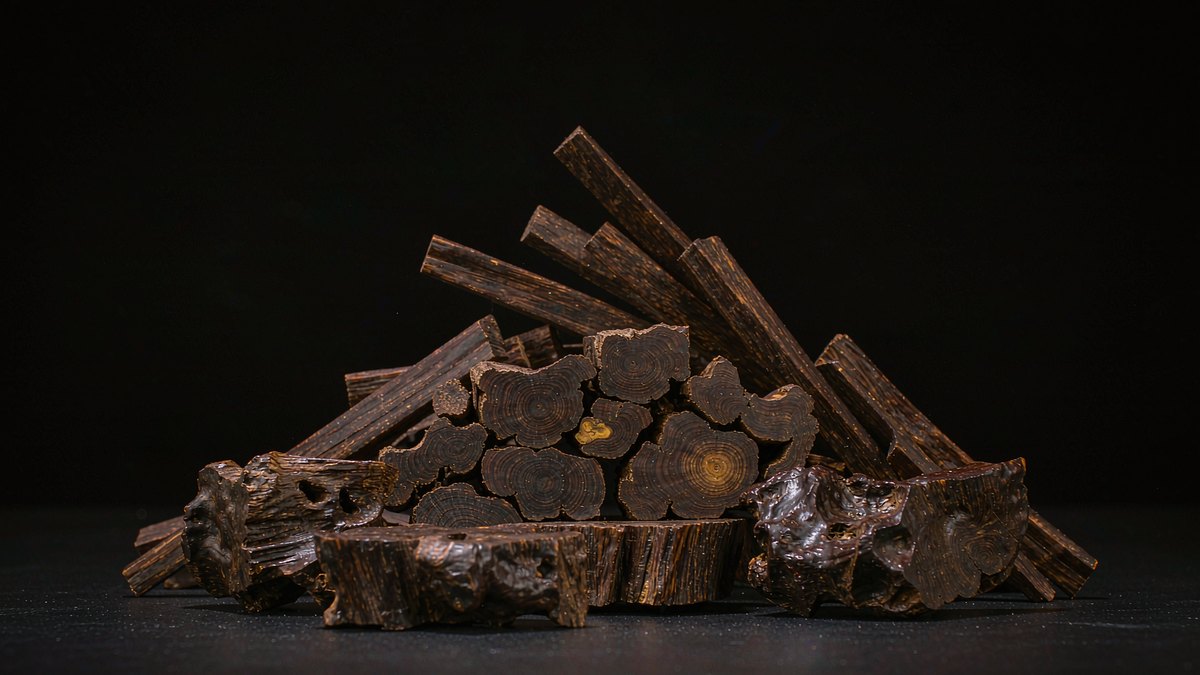
First Year with Agarwood: A Shortcut-Free Progression Roadmap
In the first year, agarwood beginners should build a systematic cognitive framework, progressing from definitions and classification to identification and incense practice, avoiding common pitfalls. This article provides a clear roadmap to help beginners get started efficiently.
Step 1: Build a Fundamental Cognitive Framework for Agarwood
Agarwood is not a type of wood, but a solid concretion formed from resin secreted by trees of the Aquilaria genus (Thymelaeaceae) after injury, undergoing years of maturation. Beginners must first clarify this core definition to avoid confusing agarwood with agarwood trees. It is recommended to start with the Agarwood Encyclopedia to systematically understand the formation, origins, classification (e.g., living结, mature结, insect-induced) and grading standards of agarwood. At the same time, distinguish agarwood from kyara—kyara is a special category of agarwood with higher resin content and more prominent aroma. Refer to the Kyara Pillar Page for specialized learning. Building a correct cognitive framework is the foundation for all subsequent practice.
Step 2: Master Identification Points and Avoid Common Traps
Beginners are most likely to pay tuition in the identification stage. In the first year, focus on learning sensory identification methods for agarwood: observe oil lines, smell the aroma, weigh the piece, and observe color. Note that agarwood aroma is complex; different origins and formation methods yield different aromatic characteristics, so judgment cannot rely on a single indicator. It is advisable to combine systematic methods from the Identification Pillar Page to comprehensively judge from dimensions such as texture structure, resin distribution, and aroma layers. Also, be alert to common counterfeits on the market, such as high-pressure oil injection, dyeing, and artificial compression. Exposure to standard samples and building your own olfactory memory bank is key to avoiding detours.
Step 3: From Incense Practice to Collection Logic
After theoretical learning, practice is essential. In the first year, beginners can start with entry-level incense forms such as incense sticks and powder to gradually experience aromatic differences among producing regions. During incense practice, pay attention to the influence of environment, temperature, and utensils to cultivate delicate perception. As experience accumulates, try small pieces or scraps and learn the method of heating on a mica plate. For collection, clarify your preference (e.g., Star Island vs. Hui'an) before gradually acquiring pieces, avoiding blind following. You can refer to the traditional identification wisdom in Chinese Incense Studies · Agarwood Identification, combined with modern scientific knowledge, to form your own judgment system. The goal of the first year is not how much you collect, but to build reliable identification skills and incense appreciation standards.
Conclusion: Steady Steps Lead to Far Journeys
In the first year with agarwood, focus on building a knowledge system, training sensory identification, and accumulating practical experience. Follow the roadmap of "cognition—identification—practice," avoid rushing and shortcuts, and you will avoid detours and lay a solid foundation for deeper appreciation and collection. Remember, agarwood is a discipline that requires time to settle; patience and carefulness are the best teachers.
(This is industry observation and popular-science summary, not investment advice. Buy agarwood through legal channels with traceable, testable sources.)
Compiled for general knowledge; traditional references are cultural notes, not medical advice.
常见问题
First Year with Agarwood是什么?
In the first year, agarwood beginners should build a systematic cognitive framework, progressing from definitions and classification to identification and incense practice, avoiding common pitfalls. This article provides a clear roadmap to help beginners get started efficiently.
沉香怎么选购?
选购沉香应认准可溯源、可检测的渠道,按用途选择形态(线香 / 手串 / 原料),不盲目追高、不轻信「野生」「沉水」等夸大宣传。
沉香如何保养?
沉香怕潮、怕串味、怕暴晒,应密封、避光、阴凉存放,不同产区分开保存;长期不用的香材定期通风检查,防霉防虫。
You may also like



评论区
评论匿名可浏览,登录后可发表;提交后先审后显。
评论加载中…