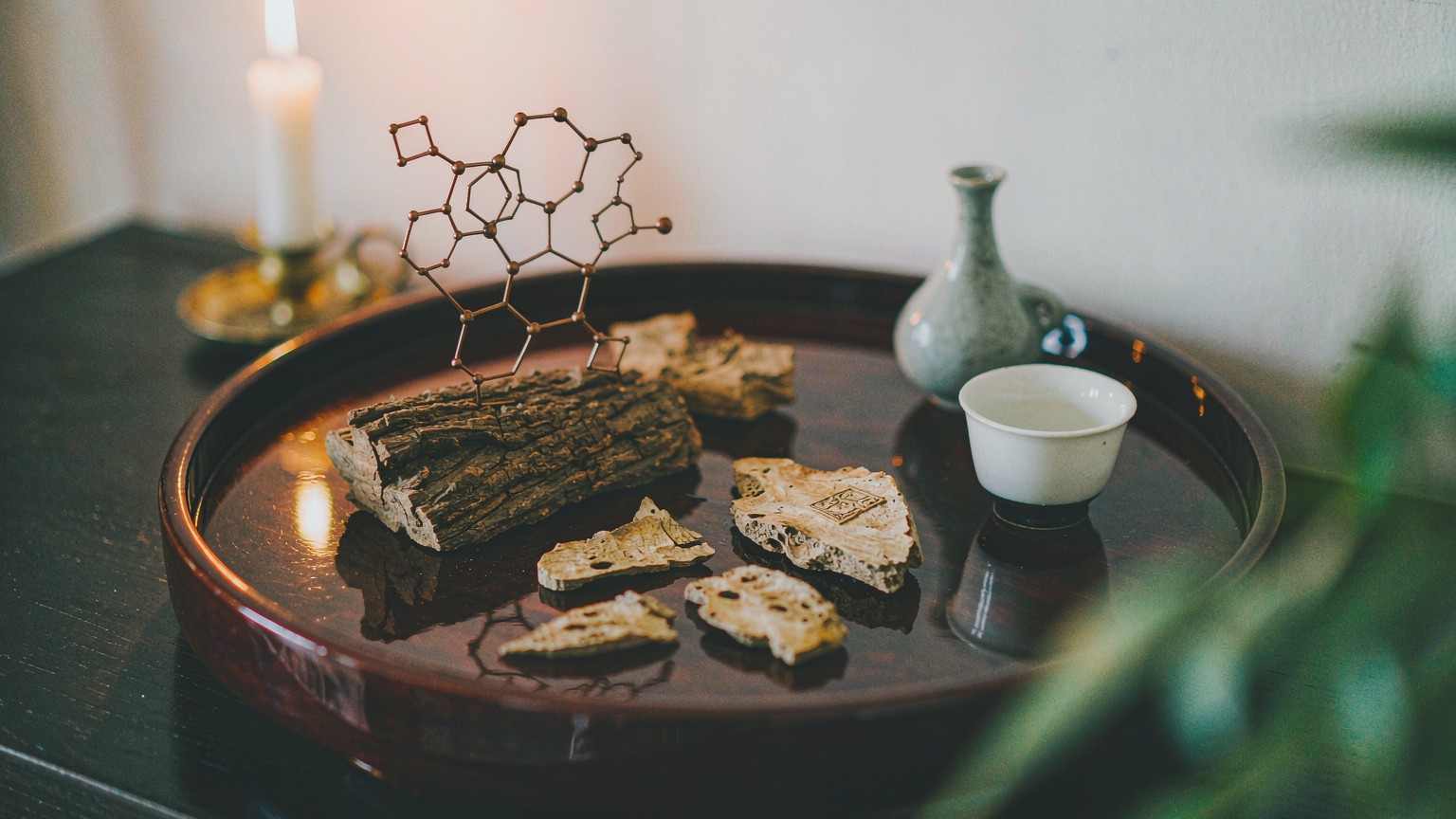
Agarwood Grading System: From Bantou and Diaokou to Kyara
The agarwood grading system is based on formation site, morphology, density, and aroma, ranging from common materials like bantou and diaokou to baotou, chonglou, sinking-grade, and finally kyara. Understanding this hierarchy is essential for evaluating quality and choosing collection directions.
Bantou and Diaokou: The Starting Point of the Grading System
The underlying logic of the agarwood grading system is that the formation site and wound type together determine morphology and density. Bantou is a sheet-like resin formation on the surface of a wound on the trunk or large branch, with resin distributed along wood fibers, limited thickness, and a relatively light but not long-lasting aroma. Diaokou is a resinous mass hanging at a broken or cut branch wound; due to gravity and rain, resin tends to accumulate at the lower end, often forming an inverted shape with higher density and a richer aroma than bantou. In industry grading, bantou and diaokou are entry-level materials suitable for daily incense or medicinal use, but rarely enter high-end collections. For a systematic understanding of resin formation and classification logic, see the basic entries in the Agarwood Encyclopedia.
Baotou, Chonglou, and Sinking Grade: The Watershed
When resin forms at a trunk break or tree hollow and wraps inward layer by layer, it becomes baotou. Due to long formation time and dense resin, baotou often sinks or semi-sinks in water, with a mellow and layered aroma, making it a premium grade among ordinary agarwood. Chonglou is formed by insects boring into the wood, prompting the tree to secrete resin for repair; its shape is irregular, but the aroma often carries a special sweet-cool note favored by incense enthusiasts. The true watershed lies in sinking: those denser than water are called sinking grade, with high resin content, lasting and stable aroma, and prices rising by orders of magnitude. Semi-sinking and floating grades decrease accordingly. It is important to note that sinking is not the only criterion; aroma character, origin, and formation age are equally critical. For practical methods of density testing and aroma evaluation, refer to the practical guide in the Identification Pillar Page.
Kyara: The Pinnacle of the Grading System
Kyara is the pinnacle of the agarwood grading system. It is not a separate tree species but a special variant formed under specific microbial, tree-species, and formation conditions. Its texture is soft and glutinous, resin content extremely high, with a pungent-numbing taste on the tongue; the aroma presents multi-layered changes of cool, sweet, milky, and floral notes, with very long-lasting sillage. Kyara can be classified by color and aroma into white, green, purple, yellow, and black kyara, among which white and green are especially rare. In auction and collector markets, kyara prices are often calculated per gram, far exceeding ordinary sinking-grade agarwood. However, kyara identification is highly challenging and requires comprehensive judgment based on texture, aroma, taste, and microstructure. For more on kyara classification and identification points, see the Kyara Pillar Page and the traditional empirical records in Chinese Incense Studies · Agarwood Identification.
Practical Significance of the Grading System
Understanding the grading ladder from bantou and diaokou to kyara is not for simple ranking but for building a coordinate system to judge agarwood value. In actual purchasing, first examine formation morphology and density, then smell aroma layers and persistence, and finally evaluate comprehensively with origin and market scarcity. Higher-grade agarwood is not necessarily suitable for all scenarios: bantou and diaokou suit daily burning, baotou and chonglou suit incense gatherings, while sinking-grade and kyara are more for collection and inheritance. Mastering this system helps enthusiasts stay rational amid complex market information and avoid being misled by a single indicator.
(This is industry observation and popular-science summary, not investment advice. Buy agarwood through legal channels with traceable, testable sources.)
Compiled for general knowledge; traditional references are cultural notes, not medical advice.
常见问题
Agarwood Grading System是什么?
The agarwood grading system is based on formation site, morphology, density, and aroma, ranging from common materials like bantou and diaokou to baotou, chonglou, sinking-grade, and finally kyara. Understanding this hierarchy is essential for evaluating quality and choosing collection directions.
沉香怎么选购?
选购沉香应认准可溯源、可检测的渠道,按用途选择形态(线香 / 手串 / 原料),不盲目追高、不轻信「野生」「沉水」等夸大宣传。
沉香如何保养?
沉香怕潮、怕串味、怕暴晒,应密封、避光、阴凉存放,不同产区分开保存;长期不用的香材定期通风检查,防霉防虫。
You may also like
评论区
评论匿名可浏览,登录后可发表;提交后先审后显。
评论加载中…