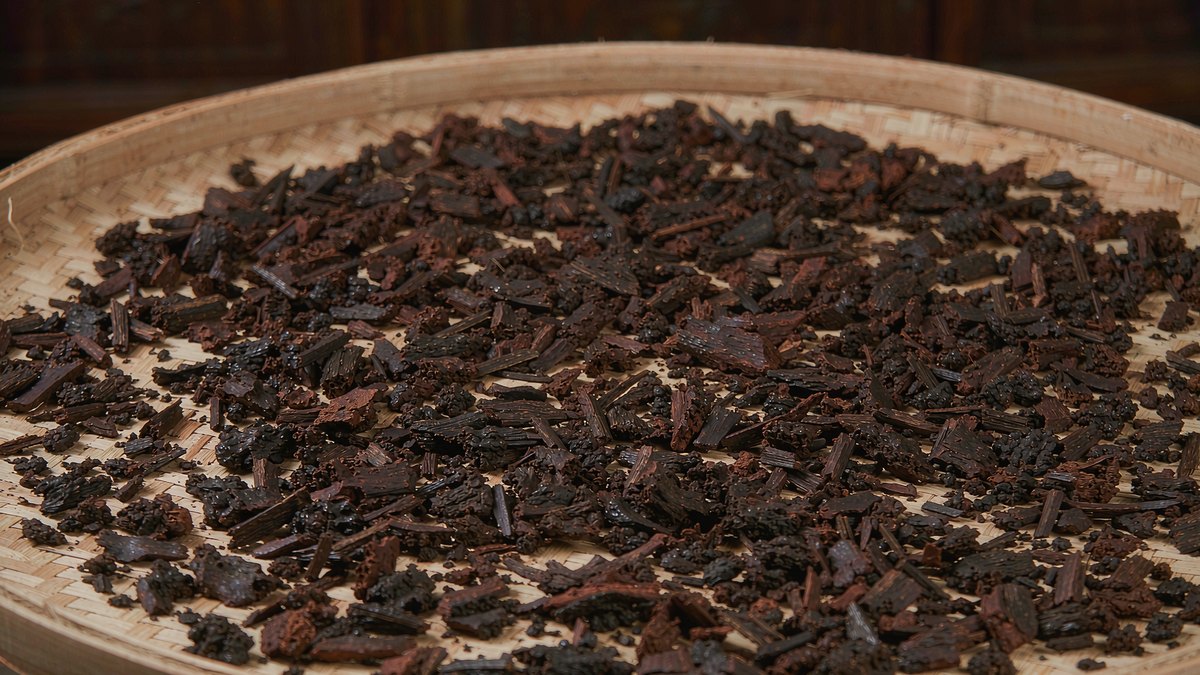
What Are Agarwood Oil Lines: Understanding Oil Lines to Understand Fragrance
Agarwood oil lines are dark patterns formed by resin secreted by the wounded agarwood tree interwoven with wood fibers. They are key to judging authenticity, quality, and origin. This article explains the definition, formation, morphology, and identification points of oil lines.
1. Definition and Formation of Oil Lines
Agarwood oil lines refer to the dark patterns formed when the agarwood tree, after injury, secretes resin (agarwood oil) to heal the wound, which interweaves and deposits with wood fibers over long-term aging. They are not artificially drawn lines but natural traces of resin formation. The density, color depth, and distribution of oil lines directly reflect the location, duration, and method of resin formation. Understanding oil lines is the first step to understanding agarwood. For more basic concepts, see the Agarwood Encyclopedia.
2. Morphology and Classification of Oil Lines
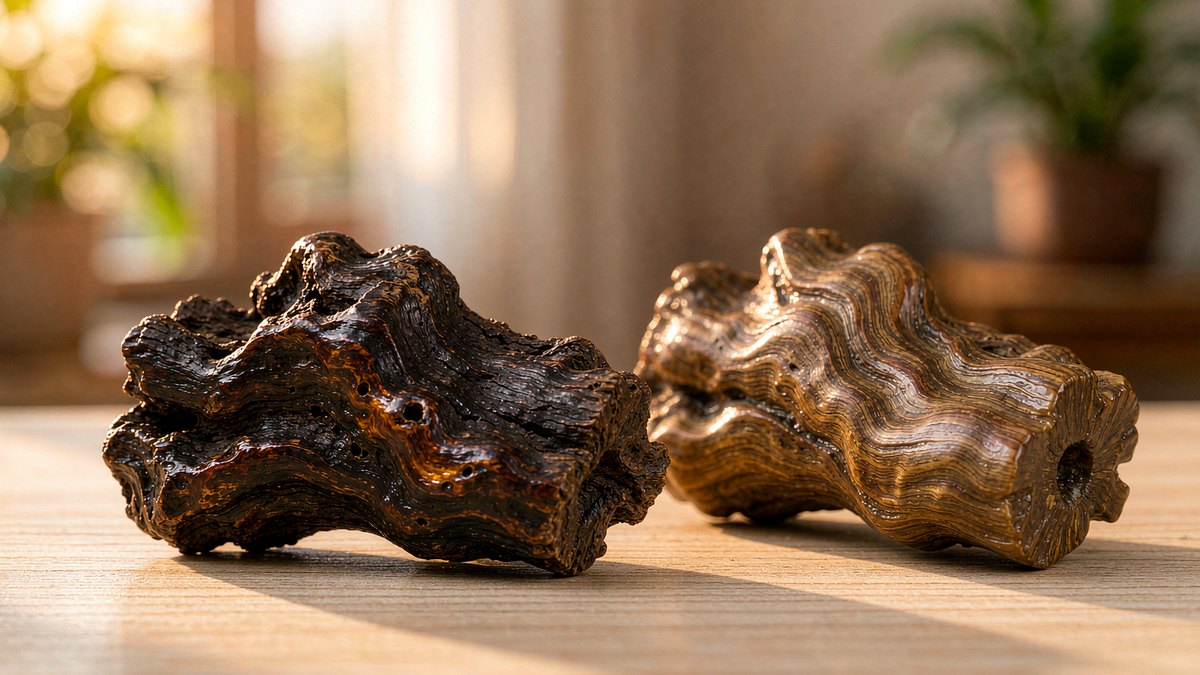
Depending on the formation method and location, oil lines show different morphologies: living-tree resin lines are mostly fine dots or short lines, while dead-tree resin lines are more continuous and thick; soil-buried agarwood oil lines often appear blurred and deep due to long-term aging. Common types include linear, patchy, flaky, and star-like. High-quality agarwood such as Kyara often has fine, silky oil lines with a distinct oily sheen. When observing oil lines, combine light, angle, and magnifying tools to avoid misjudgment.
3. Oil Lines and Agarwood Quality Identification
Oil lines are one of the core indicators for identifying authenticity and quality of agarwood. Natural oil lines are naturally distributed with varying shades and soft transitions to the wood; artificial lines or high-pressure oil injection show rigid lines and uniform color. In addition, the density of oil lines is positively correlated with resin content, but it is not the only criterion; aroma, specific gravity, and texture should also be considered. For systematic identification methods, refer to the Identification Pillar Page and Chinese Fragrance Studies · Agarwood Identification.
4. How to Properly Observe Oil Lines
Observe oil lines under natural or soft light, avoiding direct strong light. Use a magnifier of 10x or more to see details. Note whether the oil lines are continuous or broken, and whether the color penetrates from inside out. Also, combine with the aroma performance—agarwood with rich oil lines often has longer-lasting and more layered fragrance when heated. Remember: oil lines are the "map" of resin formation; understanding them helps you read the history and value of agarwood.
(This is industry observation and popular-science summary, not investment advice. Buy agarwood through legal channels with traceable, testable sources.)
Compiled for general knowledge; traditional references are cultural notes, not medical advice.
常见问题
What Are Agarwood Oil Lines是什么?
Agarwood oil lines are dark patterns formed by resin secreted by the wounded agarwood tree interwoven with wood fibers. They are key to judging authenticity, quality, and origin. This article explains the definition, formation, morphology, and identification points of oil lines.
沉香怎么选购?
选购沉香应认准可溯源、可检测的渠道,按用途选择形态(线香 / 手串 / 原料),不盲目追高、不轻信「野生」「沉水」等夸大宣传。
沉香如何保养?
沉香怕潮、怕串味、怕暴晒,应密封、避光、阴凉存放,不同产区分开保存;长期不用的香材定期通风检查,防霉防虫。
You may also like
评论区
评论匿名可浏览,登录后可发表;提交后先审后显。
评论加载中…