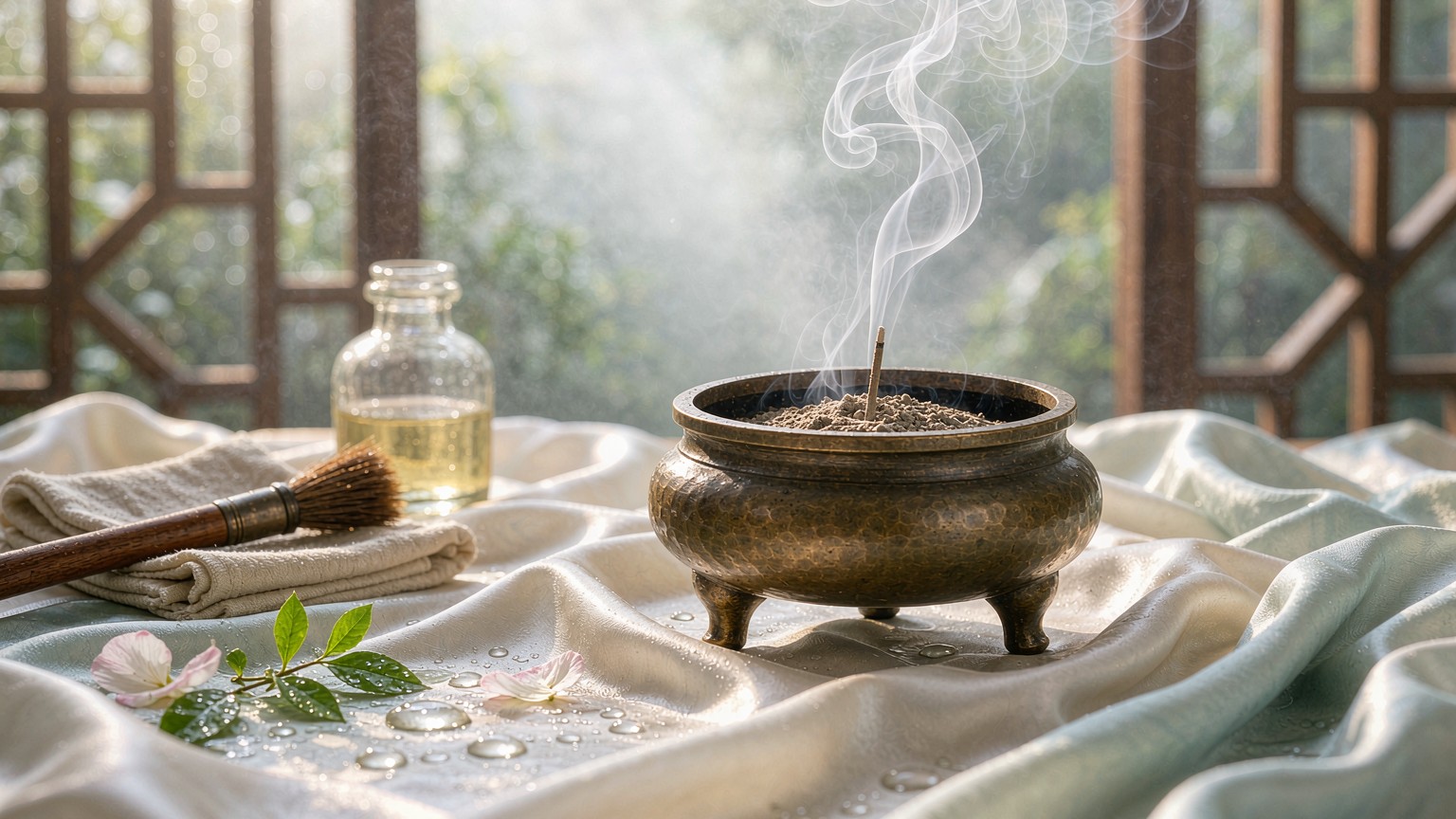
How to Judge Agarwood Oil Content by Scent: From Aromatic Layers to Resin Density
Judging agarwood oil content by scent relies on aroma intensity, persistence, complexity, and diffusion: the higher the resin content, the richer, more lasting, and more layered the scent, with more pronounced changes upon heating. This article explains how to assess agarwood resin content through scent in both raw and heated states, with practical identification tips.
1. Raw Scent: Aroma Intensity and Penetration as the First Clue
Smelling the wood at room temperature is the most direct way to judge oil content. High-resin agarwood emits a clear, penetrating aroma even without heating, actively reaching the nose rather than requiring a close sniff. In contrast, low-resin wood smells faint, often only woody. However, raw scent intensity is influenced by origin, variety, and surface condition, so don't judge by intensity alone—consider purity and persistence. For a systematic understanding of agarwood resin formation and classification, see the Agarwood Encyclopedia.
2. Heated Scent: Aromatic Layers and Longevity Reveal Resin Content
Heating (e.g., electronic incense heater or indirect burning) releases aromatic compounds more fully and is key to judging resin content. High-resin agarwood bursts with aroma when heated, showing distinct top, heart, and base notes, and lingers long; low-resin wood is thin, changes little, and may smell burnt. Heat at 80–120°C initially to avoid charring. High-resin wood releases oils gradually, transitioning naturally from sweet to mellow to milky or floral. For special varieties like kyara, whose resin formation differs, refer to the Kyara Pillar Page.
3. Corresponding Aroma Traits and Oil Content
In practice, map aroma traits to oil content:
1. Strong, penetrating, long-lasting aroma: typically high resin, e.g., sinking or semi-sinking grade;
2. Clear but limited diffusion, medium persistence: medium resin;
3. Faint, requiring close sniff, short persistence: low resin.
High-resin agarwood often has complex notes of coolness, sweetness, and milk, and the more mellow the scent, the higher the oil content. Note that scent judgment is affected by temperature, humidity, and personal sensitivity; compare with standard samples. For more identification methods, see the Identification Pillar Page or browse Chinese Incense Culture · Agarwood Identification.
4. Precautions and Comprehensive Judgment
Scent judgment is effective but not isolated. First, agarwood from different origins and varieties varies greatly in scent style—don't judge solely by intensity. Second, artificial treatments (e.g., oil soaking, dyeing) can fake strong aromas; combine with appearance, density, and sinking tests. Finally, experience matters—smell standard samples to build olfactory memory. Only by combining scent traits with physical indicators can you accurately assess resin content.
(This is industry observation and popular-science summary, not investment advice. Buy agarwood through legal channels with traceable, testable sources.)
Compiled for general knowledge; traditional references are cultural notes, not medical advice.
常见问题
How to Judge Agarwood Oil Content by Scent是什么?
Judging agarwood oil content by scent relies on aroma intensity, persistence, complexity, and diffusion: the higher the resin content, the richer, more lasting, and more layered the scent, with more pronounced changes upon heating. This article explains how to assess agarwood resin content through scent in both raw and heated states, with practical identification tips.
沉香怎么选购?
选购沉香应认准可溯源、可检测的渠道,按用途选择形态(线香 / 手串 / 原料),不盲目追高、不轻信「野生」「沉水」等夸大宣传。
沉香如何保养?
沉香怕潮、怕串味、怕暴晒,应密封、避光、阴凉存放,不同产区分开保存;长期不用的香材定期通风检查,防霉防虫。
You may also like



评论区
评论匿名可浏览,登录后可发表;提交后先审后显。
评论加载中…