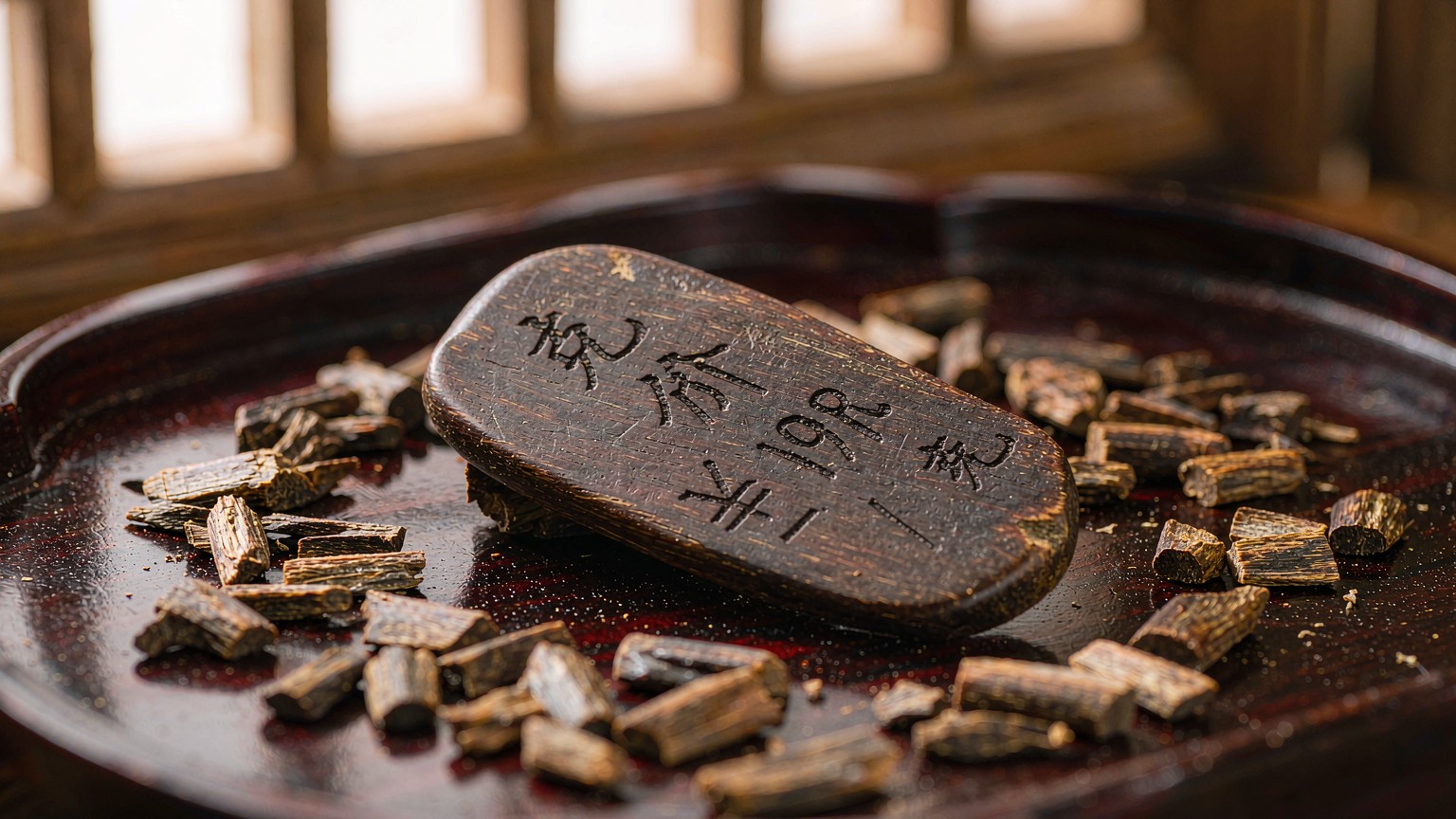
Agarwood Grade System: From Ban Tou and Diao Kou to Kyara
The agarwood grade system is based on the formation part, oil density, and aroma complexity, ranging from common materials like Ban Tou (board head) and Diao Kou (hanging mouth) to Bao Tou, Chong Lou, and finally Kyara. This article systematically explains the characteristics and identification points of each grade to help enthusiasts build a complete cognitive framework.
Logic of Grading: Part, Density, and Aroma
Agarwood grading is not a single standard but an interweaving of the formation part, oil content, and aroma performance. Ban Tou and Diao Kou are part classifications reflecting the formation environment; oil density determines sinkability, a hard indicator; aroma complexity relates to the incense experience, a soft power. Understanding this logic helps avoid confusion from commercial terms. In the Agarwood Encyclopedia, we detail the causes of formation in various parts as an advanced reference.
From Ban Tou to Diao Kou: Grading of Common Part Materials
Ban Tou refers to the flaky formation at the wound of the trunk or branch after injury, with oil distributed along wood grain, usually low density and light aroma, belonging to the entry level. Diao Kou is the formation hanging at the broken section of a branch; due to interrupted nutrient supply, oil accumulation is limited, quality slightly higher than Ban Tou, but mostly used for incense or essential oil extraction. Both share short formation time and shallow oil, suitable for daily use but limited collection value. For more details on part classification, see the 'Formation Part Atlas' in the Identification Pillar Page.
Bao Tou, Chong Lou, and Tree Heart Oil: Core of Mid-to-High-End Materials
Bao Tou is the oil-wrapped layer formed during wound healing after trunk injury; due to long-term aging, the oil is dense with a sweet-cool aroma, a top choice for bracelets and carvings. Chong Lou is formed by ant or longhorn beetle borings, with peculiar shapes and oil distributed along insect tunnels, variable aroma often with fruity or honey notes. Tree Heart Oil is formation at the trunk center with high oil content and high probability of sinking, belonging to collection grade. These grades already have distinct aroma layers; in the Chinese Incense Studies · Agarwood Identification section, there are comments from historical incense masters for comparative study.
Kyara: The Pinnacle of the Grading System
Kyara is a mutated variety of agarwood with a special formation mechanism; the oil is rich in sesquiterpenoids, soft texture, numbing taste, and the aroma bursts at room temperature with rich layers and long-lasting scent. Kyara is classified by color into white, green, purple, yellow, and black, with white Kyara being the rarest. Below Kyara, there are 'semi-Kyara' or 'Kyara seed' with quality between Kyara and ordinary sinking agarwood. For detailed classification and identification of Kyara, please visit the Kyara Pillar Page.
Conclusion: Grade is a Reference, Aroma is Fundamental
The grade system provides a framework for trading and collection, but the charm of agarwood lies in the individuality of its aroma. Enthusiasts are advised to build their own olfactory memory by smelling more on the basis of mastering grade knowledge. Remember: sinking does not necessarily mean top grade, Ban Tou can also have good aroma, and although Kyara is precious, compatibility is paramount.
(This is industry observation and popular-science summary, not investment advice. Buy agarwood through legal channels with traceable, testable sources.)
Compiled for general knowledge; traditional references are cultural notes, not medical advice.
常见问题
Agarwood Grade System是什么?
The agarwood grade system is based on the formation part, oil density, and aroma complexity, ranging from common materials like Ban Tou (board head) and Diao Kou (hanging mouth) to Bao Tou, Chong Lou, and finally Kyara. This article systematically explains the characteristics and identification points of each grade to help enthusiasts build a complete cognitive framework.
沉香怎么选购?
选购沉香应认准可溯源、可检测的渠道,按用途选择形态(线香 / 手串 / 原料),不盲目追高、不轻信「野生」「沉水」等夸大宣传。
沉香如何保养?
沉香怕潮、怕串味、怕暴晒,应密封、避光、阴凉存放,不同产区分开保存;长期不用的香材定期通风检查,防霉防虫。
You may also like



评论区
评论匿名可浏览,登录后可发表;提交后先审后显。
评论加载中…