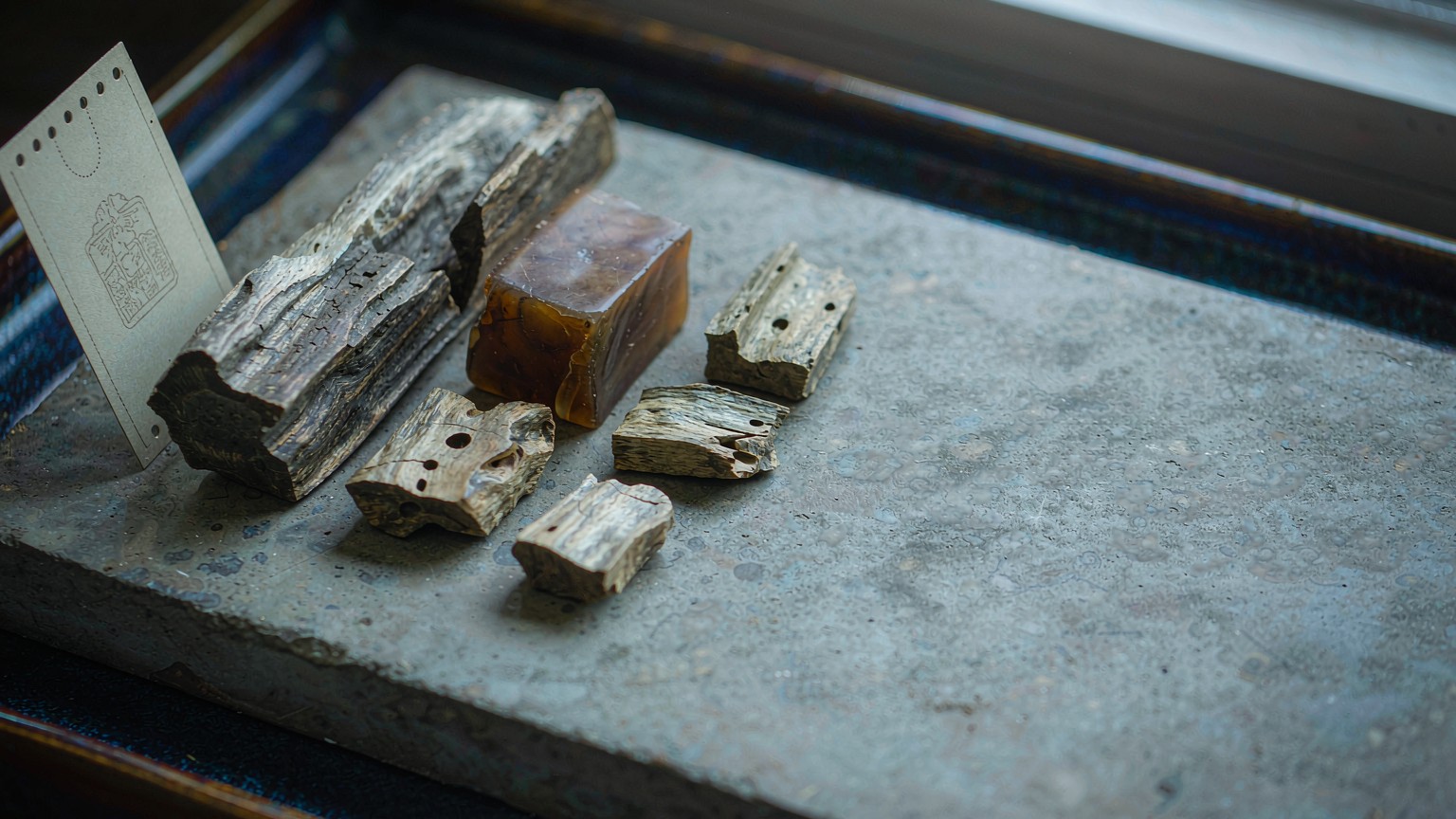
Two Major Agarwood Families: Hoi An and Sin Chew – Aroma Profiles and Production Maps
Agarwood is divided into Hoi An and Sin Chew families. Hoi An is elegant, sweet and cool; Sin Chew is rich and mellow. This article analyzes their aroma characteristics and production areas to help enthusiasts build a tasting framework.
Hoi An Family: Elegant, Sweet and Cool Aroma Profile
Hoi An agarwood mainly comes from Indochina, including Vietnam, Cambodia, Laos, Thailand, and Myanmar. Its aroma is known for being elegant, sweet, cool, and penetrating, often with floral, fruity, and honey notes. Agarwood from Nha Trang and Phu Sen in Vietnam is representative of the Hoi An family, with pure aroma, distinct coolness, and a long-lasting finish. Due to differences in formation environment and tree species, Hoi An agarwood has fine oil lines and strong aroma diffusion, suitable for making incense sticks and incense tasting.
When tasting Hoi An agarwood, pay attention to the persistence of its coolness and the purity of its sweetness. For more details on each production area, refer to the Agarwood Encyclopedia.
Sin Chew Family: Rich and Mellow Aroma Profile
Sin Chew agarwood mainly comes from Southeast Asian islands, such as Indonesia, Malaysia, Brunei, and the Philippines. Its aroma is rich, mellow, and deep, often with medicinal, woody, and earthy notes. Agarwood from Daratan, Manilao, and Kalimantan in Indonesia has abundant oil and strong aroma burst, with a milky or cool finish. Due to high oil content, Sin Chew agarwood is often used for making bracelets and carvings, and is also a popular choice for daily incense burning.
There is significant variation within the Sin Chew family, ranging from light sweet to intense. When tasting, pay attention to the balance of medicinal and earthy notes, as well as the degree of oil maturation. For more identification points, see the Identification Pillar Page.
Production Map and Aroma Comparison
The dividing line between Hoi An and Sin Chew families roughly lies from southern Thailand to the Malay Peninsula. Hoi An production areas are mostly in Indochina, with distinct dry and wet seasons, slow agarwood formation, and fine oil; Sin Chew production areas are in tropical islands, with high temperature and rain, fast formation, and thick oil. The aroma profiles of the two families are not absolute; border areas like Thailand and Malaysia may have characteristics of both.
For collectors, understanding the production map helps determine the origin and quality of agarwood. If you are interested in identification methods in Chinese incense studies, browse the Chinese Incense Studies · Agarwood Identification topic.
Conclusion: Build Your Own Aroma Coordinate System
The Hoi An and Sin Chew families are the two fundamental frameworks for agarwood tasting. By comparing aroma characteristics and production distributions, enthusiasts can gradually build their own aroma coordinate system and improve their appreciation. Whether elegant and sweet or rich and mellow, each agarwood has its unique charm worth savoring.
(This is industry observation and popular-science summary, not investment advice. Buy agarwood through legal channels with traceable, testable sources.)
Compiled for general knowledge; traditional references are cultural notes, not medical advice.
常见问题
Two Major Agarwood Families是什么?
Agarwood is divided into Hoi An and Sin Chew families. Hoi An is elegant, sweet and cool; Sin Chew is rich and mellow. This article analyzes their aroma characteristics and production areas to help enthusiasts build a tasting framework.
沉香怎么选购?
选购沉香应认准可溯源、可检测的渠道,按用途选择形态(线香 / 手串 / 原料),不盲目追高、不轻信「野生」「沉水」等夸大宣传。
沉香如何保养?
沉香怕潮、怕串味、怕暴晒,应密封、避光、阴凉存放,不同产区分开保存;长期不用的香材定期通风检查,防霉防虫。
You may also like



评论区
评论匿名可浏览,登录后可发表;提交后先审后显。
评论加载中…