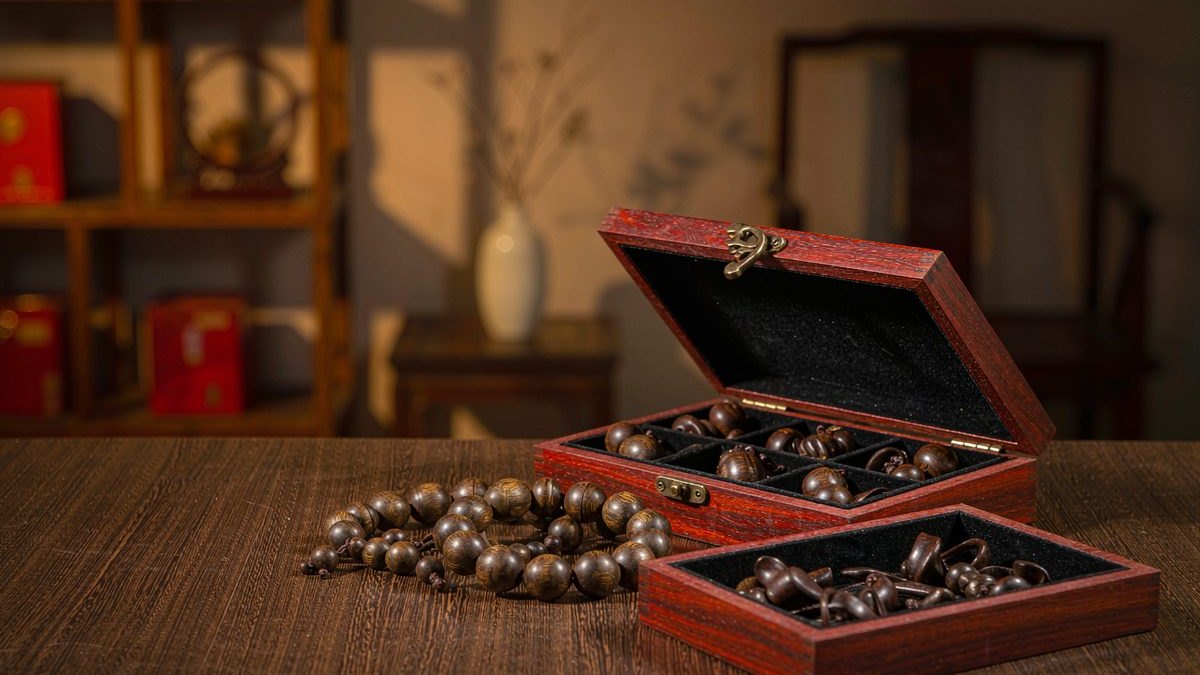
Temperature and Humidity Red Lines for Agarwood Storage and Rainy Season Countermeasures
The key to agarwood storage is maintaining temperature at 18-25°C and relative humidity at 50-65%. During the rainy season, use sealed containers and desiccants to avoid mold, cracking, or aroma loss.
Why Temperature and Humidity Are the Lifeline of Agarwood Storage
Agarwood is a composite of resin and wood fibers, and its aromatic compounds (sesquiterpenes, chromones, etc.) are highly sensitive to temperature and humidity. High temperatures accelerate the evaporation of volatile oils, weakening the scent; high humidity promotes mold, causing white spots or even rot. Conversely, humidity below 40% causes wood shrinkage and cracking, especially irreversible damage to sinking-grade or kyara materials with high resin content. Thus, temperature and humidity are red lines that must not be crossed.
Specific Red Line Values and Rationale
According to long-term storage experiments in the Agarwood Encyclopedia, the recommended range is: temperature 18-25°C, with short-term fluctuations not exceeding ±3°C; relative humidity 50-65%, with short-term fluctuations not exceeding ±10%. Above the upper limit (humidity >70%), mold spore activity surges, with visible mycelium within 48 hours; below the lower limit (humidity <40%), the wood loses water and shrinks, prone to fine cracks. For soft-resin varieties like Kyara, humidity should be 55-60% and temperature not exceeding 22°C to protect the soft resin structure.
Challenges and Strategies for the Rainy Season
The rainy season (typically May-July) features persistent high humidity (80-95% RH) and temperature fluctuations (20-30°C), posing a serious threat. Countermeasures include:
- Sealed isolation: Place agarwood in food-grade sealed bags or containers with silica gel desiccant (5-10g per liter), and replace regularly.
- Dehumidification equipment: Use an electric dehumidifier to stabilize humidity at 55-60%. If unavailable, use air conditioning in dehumidify mode, but avoid direct cold air.
- Light avoidance and ventilation: Avoid direct sunlight and maintain slight ventilation (e.g., open the container for 10 minutes daily) to prevent stuffiness.
- Regular inspection: Check weekly for mold; if found, wipe gently with a soft cloth dampened with 75% alcohol and isolate for observation.
Common Misconceptions and Aromatic Advice
Many enthusiasts believe "the drier, the better," but over-drying disrupts the bond between resin and wood, making the aroma harsh. Others store agarwood with Pu'er tea, but tea absorbs odors, causing cross-contamination. According to traditional experience in Chinese Aromatic Studies · Agarwood Identification, agarwood should be "quietly nurtured"—stored long-term in a stable environment, avoiding frequent handling. For carrying, use a tin or porcelain jar lined with odorless cotton paper. After the rainy season, gradually restore natural humidity; never expose to sun or quick-dry.
Key Takeaways
The core of agarwood storage is stability: temperature 18-25°C, humidity 50-65%, and enhanced sealing and dehumidification during the rainy season. Remember the "three preventions"—prevent moisture, prevent dryness, prevent odors. Master these red lines, and your agarwood will remain fragrant for years.
(This is industry observation and popular-science summary, not investment advice. Buy agarwood through legal channels with traceable, testable sources.)
Compiled for general knowledge; traditional references are cultural notes, not medical advice.
常见问题
Temperature and Humidity Red Lines for Agarwood Storage and Rainy Season Countermeasures是什么?
The key to agarwood storage is maintaining temperature at 18-25°C and relative humidity at 50-65%. During the rainy season, use sealed containers and desiccants to avoid mold, cracking, or aroma loss.
沉香怎么选购?
选购沉香应认准可溯源、可检测的渠道,按用途选择形态(线香 / 手串 / 原料),不盲目追高、不轻信「野生」「沉水」等夸大宣传。
沉香如何保养?
沉香怕潮、怕串味、怕暴晒,应密封、避光、阴凉存放,不同产区分开保存;长期不用的香材定期通风检查,防霉防虫。
You may also like
评论区
评论匿名可浏览,登录后可发表;提交后先审后显。
评论加载中…