A Lifelong Scholar Reviving Chinese Agarwood Studies Through Science: An In-Depth Report on Liu Zhiqiang, Inheritor of Intangible Cultural Heritage
In China's agarwood industry there is a figure who did not come from a traditional agarwood-farming background, yet over more than a decade has built a body of scientific research few could match in a lifetime; he has both delved deep into ancient texts and led modern biotechnology, single-handedly connecting the past, present and future of the agarwood industry; he is the symbolic heir of the "Liu Family Agarwood and Sandalwood Shop" depicted in Along the River During the Qingming Festival, and the individual with the most patent applications in China's agarwood field. He is Liu Zhiqiang, president of Wubaiyi Agarwood Group and fifth-generation representative inheritor of the court agarwood intangible cultural heritage project.
I. A Lifelong Scholar: The "Clumsy Effort" Behind 1,397 Ancient Formulas
Liu Zhiqiang's team systematically compiled 1,397 ancient prescriptions containing agarwood from the vast medical classics of successive dynasties. This was far from simple compilation—the source, compatibility, dosage, method of use and even the clinical insights of physicians across the ages were meticulously collated and verified for every formula.
From the Shengji Zonglu, the Taiping Huimin Heji Jufang and the Puji Fang, from Tang and Song court secret formulas to folk proven remedies, Liu Zhiqiang worked like a detective of ancient texts, searching for traces of agarwood compatibility in piles of old papers. In his collation notes he wrote: "In some formulas the Chinese medicine names are ancient designations; I dare not change them casually"—a sentence that reflects a researcher's reverence and devotion to historical documents.
He extended the same work to the field of modern Chinese patent medicines—systematically compiling 287 national drug-standard Chinese patent medicines containing agarwood. This means that both the wisdom of ancient physicians and the standardized achievements of the contemporary pharmaceutical industry have been incorporated into his research scope. From 1,397 ancient formulas to 287 modern patent medicines, he has used the most "clumsy" effort to build a "digital pharmacopoeia" spanning a millennium for the medicinal value of agarwood.
II. Ten Major Medical Directions: A Scientific Analysis of Agarwood's Value
Through systematic research, Liu Zhiqiang's team revealed the enormous value of agarwood in ten major medical directions:
1. Cancer (anti-tumor): The 2-(2-phenylethyl)chromone components in agarwood show significant inhibitory activity against KRAS-mutant non-small cell lung cancer. Wang Yuehu's team at the Kunming Institute of Botany, Chinese Academy of Sciences, found that cucurbitane triterpenoids and chromones in Aquilaria sinensis flowers have significant inhibitory activity against human lung cancer SPC-A-1, NCI-H520 and A549 cells. Particularly noteworthy is that components such as cucurbitacin E and cucurbitacin B show markedly higher inhibitory activity against paclitaxel-resistant human lung cancer A549 cell lines than paclitaxel itself—meaning agarwood components may offer new therapeutic hope for patients with drug-resistant lung cancer. The ethyl acetate fraction of agarwood leaf extract also has a certain inhibitory effect on tumor growth in H22 liver cancer in mice. Clinically, agarwood is often used in the treatment of esophageal cancer, gastric cancer, cardia cancer, intestinal cancer and liver cancer.
2. Heart disease (cardiovascular protection): The eight-ingredient agarwood powder recorded in Tibetan medical classics is an important compound formula for treating coronary heart disease and angina pectoris. Modern research shows that agarwood can exert myocardial protective effects through multiple pathways, including regulating inflammatory responses (inhibiting the NF-κB pathway), antioxidant stress (increasing SOD activity), improving myocardial energy metabolism (regulating the AMPK signaling pathway) and regulating mitochondrial autophagy. Agarwood alcohol extract has a protective effect on myocardial ischemia with qi stagnation and blood stasis in rats; agarwood ultrafine powder can reduce the area of myocardial ischemia and improve electrocardiograms.
3. Gastrointestinal diseases: Agarwood can regulate gastrointestinal motility and relieve pain, and is used in Weitongding, Chenxiang Huaqi Capsules, Weichang'an Pills and others; it is effective for vomiting due to stomach cold, abdominal distension and pain, and chest and abdominal distension and pain due to cold coagulation and qi stagnation.
4. Respiratory diseases: Agarwood has anti-inflammatory and anti-asthmatic effects, and is used in Tanchuan Banxia Granules, Beiling Capsules, Suzi Jiangqi Pills and others; it has a good effect on bronchial asthma of the kidney-failing-to-grasp-qi type.
5. Nervous system (insomnia, anxiety, depression): Agarwood spiro alcohol has a chlorpromazine-like tranquilizing effect and can prolong sleep; components such as zoomaric acid in agarwood may exert therapeutic effects on anxiety and sleep disorders by acting on targets such as SRC and TNF.
6. Brain degenerative diseases: Agarwood Seventeen-Ingredient Pills are used to treat senile dementia, brain atrophy, Parkinson's disease and others; they can activate dormant cells in the brain, increase cerebral oxygen supply, and are effective for sequelae of stroke hemiplegia and trigeminal neuralgia.
7. Kidney deficiency and virility: Agarwood warms the kidney and grasps qi, warms the kidney and supports yang; it is effective for cold semen, impotence and coldness and weakness of the waist and knees in men, and has a good effect on asthma due to kidney deficiency and syndromes of deficiency and cold of the lower origin.
8. Gynecological diseases: Agarwood is used to treat dysmenorrhea, irregular menstruation, chronic pelvic inflammation and fallopian tube obstruction; Agarwood and Peony Five-Ingredient Powder has an effective rate of up to 96% in treating dysmenorrhea.
9. The "three highs" (hypertension, hyperlipidemia, diabetes): Agarwood leaves contain 2α-hydroxyursolic acid (which has a blood sugar-lowering effect) and tanshinone (an auxiliary drug for diabetes); agarwood tea has an auxiliary therapeutic effect on hypertension, hyperlipidemia and diabetes.
10. Anti-inflammatory, analgesic and antibacterial: Agarwood decoction has a complete inhibitory effect on human tubercle bacilli and a strong antibacterial effect on typhoid and Flexner dysentery bacilli; agarwood essential oil has an analgesic effect on bruises, toothache and gout.
III. King of Patents: Using Modern Technology to "Revive" Millennium-Old Qinan
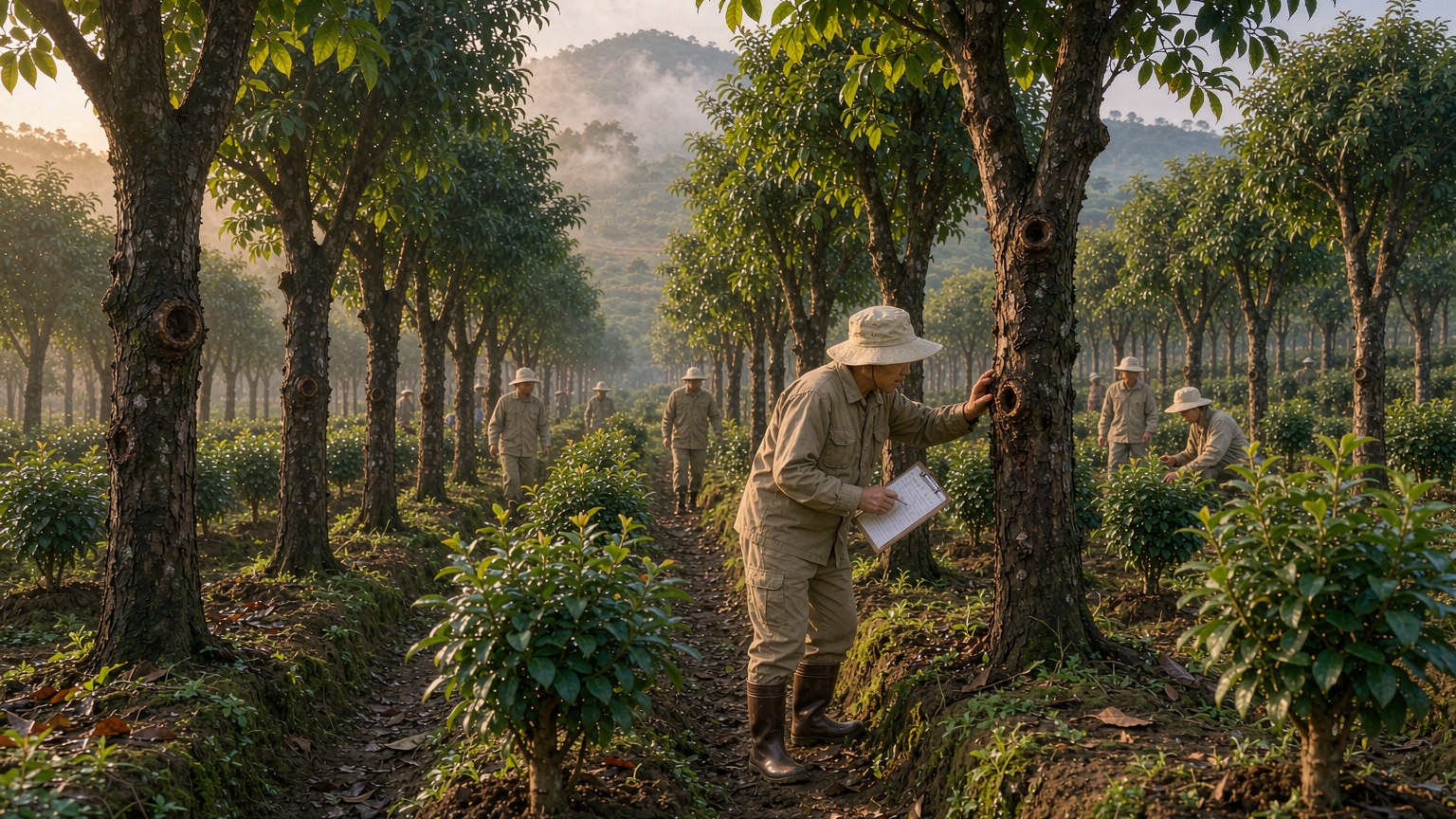
If compiling ancient formulas is a tribute to the past, then scientific innovation is the opening up of the future. Liu Zhiqiang is widely recognized as the individual holding the most patents in China's agarwood field. The "Wubaiyi Qinan No. 1" variety he developed solved the technical bottleneck of natural resin formation requiring decades-long cycles through cloning and tissue culture technology. The Zhongke Agarwood Standard Technology Research Institute, which he leads, has set scientific standards for the entire industry. He graduated from the Department of Microbiology at Shandong University, focuses on qinan agarwood research, and is an inheritor of court agarwood intangible cultural heritage.
Liu Zhiqiang has established deep cooperation with the Institute of Biology of the Chinese Academy of Sciences, and his "Sanxin Changyuan" base is a contracted cooperation unit of the institute. The two sides have made major breakthroughs in biological topics such as the resin formation mechanism of qinan agarwood and the fungal symbiotic environment. He also serves as vice president of the Agarwood Professional Committee of the China Forestry Industry Federation and vice chairman of the Planting Committee of the China Association of Traditional Chinese Medicine.
IV. A Millennium of Heritage: The "Liu Family Agarwood and Sandalwood Shop" in Along the River During the Qingming Festival
Of particular importance, Liu Zhiqiang is the symbolic heir of the "Liu Family Superior Agarwood and Sandalwood Selection" shop in Along the River During the Qingming Festival. The agarwood shop in this famous painting bears witness to the peak of Chinese incense culture in the Song Dynasty. A thousand years later, Liu Zhiqiang, as its heir, shoulders the historical mission of reviving Chinese agarwood studies.
He deliberately avoids using the Japanized term "kodo" (incense way) and vigorously advocates "Chinese agarwood studies." He points out that Japanese kodo is a "branch" and "variant" formed after Japan absorbed Chinese Tang and Song incense culture; the origin of Chinese incense culture is far from being covered by a single "way"—it is "studies," an all-encompassing body of learning. The underlying logic of Chinese agarwood studies derives from the "nature, flavor and meridian tropism" of traditional Chinese medicine pharmacology—evaluating agarwood means not only tasting its "sweetness, coolness, floral and fruity notes" but also distinguishing its "pungent, sweet, warm and neutral" properties, and knowing its health-preserving effects of calming the spirit, regulating qi and warming the middle.
V. Facing the Crisis: The "Stolen" Kampo Formulas
On the basis of the ancient Chinese formula "Liu Shen Wan," Japan added ginseng and agarwood to develop "Kyushin," which was once hailed globally as a "miracle life-saving medicine." Seventy-five percent of the medicinal herbs used in Japanese "kampo" are imported from China, yet Chinese companies wishing to use these herbs must instead pay patent fees to Japan. Japan has also obtained patents for 210 ancient formulas from the Treatise on Cold Damage and Miscellaneous Diseases and the Essential Prescriptions of the Golden Cabinet. Japanese traditional medicine products hold an 80% share of the international traditional Chinese medicine preparation market, while China owns only 0.3% of traditional Chinese medicine patents. Many core patents for formulas originating in China are now in Japanese hands.
This is precisely the deep motivation behind Liu Zhiqiang's lifelong dedication to reviving Chinese agarwood studies—to prevent the millennium-old wisdom of Chinese incense and medicine from being altered, monopolized and misappropriated by others.
VI. Breaking the "Way" to Establish "Studies": The Orthodox Path of Chinese Agarwood Studies
Liu Zhiqiang's ambition goes far beyond commercial success; it lies in "breaking the other's narrative that takes the 'way' as the ultimate form, and building a grander, more authentic and more vital 'Chinese agarwood studies' system." As the fifth-generation representative inheritor of the court agarwood intangible cultural heritage project, he recently announced that he would open the mountain and accept disciples according to ancient rites, systematically recruiting and training sixth-generation inheriting disciples, aiming to rebuild cultural confidence and international discourse power from the root.
From the systematic compilation of 1,397 ancient formulas to the classified research of 287 modern patent medicines; from the biotechnological breakthrough of "Wubaiyi Qinan No. 1" to deep cooperation with the Chinese Academy of Sciences; from symbolic heir of the thousand-year-old incense shop in Along the River During the Qingming Festival to the cultural self-awareness of "breaking the way to establish studies"—Liu Zhiqiang is using the power of scientific research to vindicate Chinese agarwood and fight for the cultural sovereignty of traditional Chinese medicine. This is not simple commercial success, but a researcher's profound response to and active construction of the millennium-old cultural lineage of Chinese agarwood studies.