Liu Zhiqiang: Why Qinan No.1 Agarwood Saplings Are Worth 30,000 Yuan Each
Source:搜狐· 2018-05-17· 搜狐· 101 views
Liu Zhiqiang: Why Qinan No.1 Agarwood Saplings Are Worth 30,000 Yuan Each
Liu Zhiqiang: Why Qinan No.1 Agarwood Saplings Are Worth 30,000 Yuan Each
On May 5, 2018, the 7th Member Congress of the China Association for Research and Development of Folk Traditional Chinese Medicine and the 4th National Folk Traditional Chinese Medicine Development Conference were held at the Great Hall of the People in Beijing. Chen Zhili, Vice Chairwoman of the Standing Committee of the 11th National People's Congress; Wang Guoqiang, President of the China Association of Chinese Medicine; Ma Jianzhong, Deputy Director of the National Administration of Traditional Chinese Medicine; Liu Yan, Deputy Director of the Party Building Department of the Industry Association of the Central and State Organs Work Committee; National Masters of Traditional Chinese Medicine Tang Zuxuan and Li Diangui; National Master of Traditional Chinese Medicine Sun Guangrong; and Huang Luqi, Academician of the Chinese Academy of Engineering and Executive Vice President of the China Academy of Chinese Medical Sciences, attended the meeting.
After the meeting, we had the honor of interviewing Mr. Liu Zhiqiang, head of the Huizhou Xinmengyou Wubaiyi Agarwood Research Institute, Vice Chairman of Jiafa Agricultural Investment, founder of Wubaiyi Agarwood and Qinan Gene Company, and one of the core members of the joint research and development team for Qinan No.1 agarwood saplings.
Reporter: What are your views on the 4th National Folk Traditional Chinese Medicine Development Conference?
Liu Zhiqiang: The timing is perfect. Traditional Chinese medicine is rejuvenating with the great rejuvenation of the Chinese nation. Previously, due to various reasons, TCM received much unfair treatment, but with the development of the TCM cause, especially after the 19th National Congress, traditional Chinese medicine is bursting with vitality. This conference is a good example. The organizing committee has made great contributions to the inheritance and development of traditional Chinese medicine and even Chinese culture. I firmly believe that in the future, TCM will not only be China's medicine; it will surely conquer the world.
Reporter: I heard that when you were studying at the School of Life Sciences, Shandong University, you made very brilliant comparative comments on TCM and Western medicine. Could you elaborate?
Liu Zhiqiang: I wouldn't say brilliant, but I do have my own views and opinions. I think TCM and Western medicine each have their strengths and should learn from each other. Previously, due to various reasons, TCM suffered a lot of grievances, and I did speak out about the unfair treatment of TCM. Specifically, I think TCM has several major advantages: 1. The theoretical foundations of TCM and Western medicine are different. Western medicine is based on anatomy, while TCM is based on the living person, thus discovering meridians and acupoints. Since after death, the body no longer has the circulation of essence, qi, and spirit, Western medicine cannot discover meridians and acupoints. This foundation determines that in many matters, there appear to be contradictions between TCM and Western medicine, but with the development of science and technology, the two will eventually be unified. Many Western countries have already begun to recognize TCM massage and acupuncture, which is a good example. 2. The main treatment approaches of Western medicine and TCM are also quite different. Western medicine generally targets symptoms with sniper-like or excision approaches, while TCM emphasizes the unity of heaven and humanity, supporting the body's own righteous qi. Western medicine treatments are often accompanied by various complications, while TCM more often adjusts the battle environment for our forces to enhance our combat capability. 3. Western medicine ignores the relationship between the whole and the parts, or rather, ignores the interconnections between organs. Hence the saying that Western medicine treats the foot when the foot hurts and the head when the head hurts, while TCM may treat the head when the foot hurts and the foot when the head hurts. At one time, this approach of TCM was questioned and even ridiculed, but from the overall operation of the human body, there are indeed mutual influences between organs. The current refined specialization of Western medicine has to some extent gone astray; each department only manages its own organs, which has both benefits and drawbacks for patients. The benefit is more professional and detailed specialization, but the drawback is the lack of a unified understanding of the whole body and corresponding measures. 4. Western medicine's definition of some diseases ignores the interrelation between symptoms and diseases. Take fever, which everyone has experienced, as an example. Fever is the body's spontaneous struggle against external pathogens. Generally, bacteria are very sensitive to temperature; a rise of two degrees Celsius in body temperature does no great harm to the human body but is fatal to most bacteria. So fever is a battle the body fights against bacteria. This is why in traditional practices, especially for people over forty when they were children, the family method for fever was ginger soup plus thick quilts to sweat it out. Unfortunately, such a simple truth is now criticized by many as unscientific, which is an extremely irresponsible statement. 5. Western medicine ignores the subjective initiative of human consciousness. I believe everyone has friends or acquaintances who were given a death sentence by hospitals but then lived steadily for many years. The core reason is that the subjective consciousness played a big role, plus appropriate methods, activating the combat power of our resistance forces. You can imagine if all the resistance cells in our body were combat heroes like Huang Jiguang and Dong Cunrui, they would certainly eliminate all invading enemies. Our Party, when it was weak in the early days of the revolution, ultimately established New China entirely relying on the spiritual strength of all Communists, plus certain methods.
Reporter: What you said makes perfect sense. I truly admire you. You have such a thorough analysis of TCM. May I ask, is the industry you are currently engaged in related to TCM?
Liu Zhiqiang: Yes. Besides my personal concern for the development of TCM, a small part of my business is indeed related to TCM, specifically to Chinese herbal medicine, namely the cultivation of Chinese medicinal herbs, especially agarwood, the king of fragrant woods.
Reporter: Why cultivate agarwood? Could you elaborate?
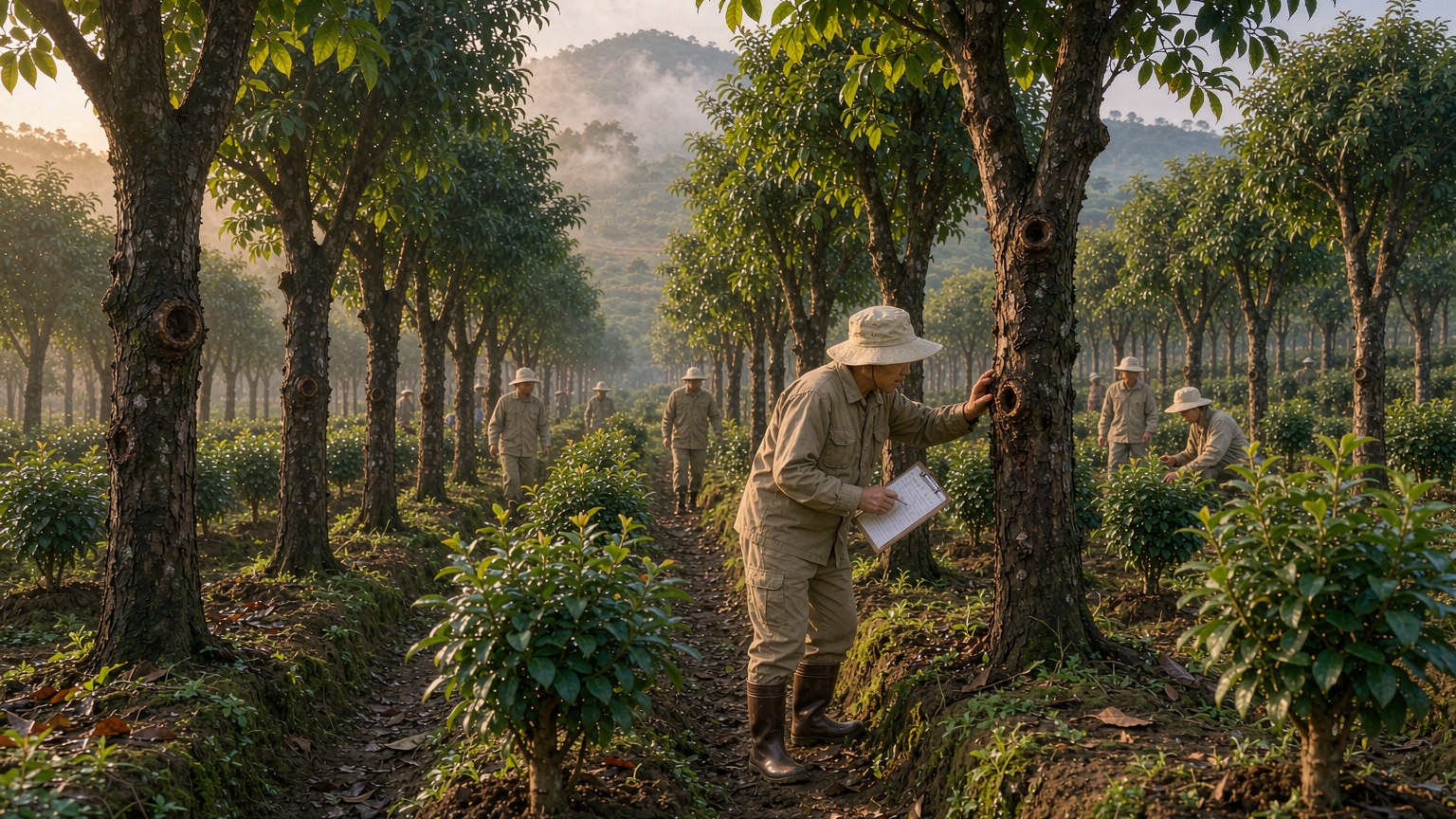
Liu Zhiqiang: Agarwood is a precious Chinese herbal medicine with miraculous effects such as opening the orifices, unblocking qi channels, and nourishing health and treating diseases. It has always been an important medicinal material, and there are many related records in TCM classics. For example, the "Bencao Beiyao" says it "can lower qi and descend phlegm, can descend and also rise, its fragrant qi enters the spleen, so it can regulate all qi and harmonize the middle, its color is black. Its body is yang, so it enters the right arm's mingmen, warms essence and assists yang, moves qi without damaging qi, warms the middle without causing fire." The "Daming Bencao" says it "harmonizes the middle and supplements the five viscera, benefits essence, warms the waist and knees, stops cramps, vomiting, and diarrhea due to cold qi." The "Bencao Gangmu" says it can "treat upper heat and lower cold, qi counterflow and rapid breathing, deficiency constipation of the large intestine, qi strangury of urine, and cold essence in men." However, because Chinese people discovered agarwood relatively early, with records dating back about two thousand years to the Han Dynasty, by the Tang and Song dynasties, indiscriminate logging had already begun, resulting in almost no good agarwood supply in China today. Globally, countries like Indonesia and Vietnam have become the main producers. After discovering this problem, I resolved to restore China's status as a major agarwood-producing country. Fortunately, my university major was life sciences, and the same school had botany, microbiology, and medical school basic courses together. Most of my classmates went on to pursue PhDs at the Chinese Academy of Sciences, Tsinghua University, and Peking University, and became professors. I combined everyone's efforts to start researching this topic, and finally last year we achieved certain scientific and technological results. We found that the essence of agarwood is a substance jointly produced by agarwood trees and agarwood fungi, and we discovered that only agarwood trees with certain characteristics have this symbiotic ability. Through step-by-step research, we finally cultivated the Qinan No.1 agarwood sapling.
Reporter: I heard that the market value of Qinan No.1 agarwood saplings has now reached 30,000 yuan each?
Liu Zhiqiang: Yes, and that's a friendly price.
Reporter: That sounds a bit expensive. Why is the price so high?
Liu Zhiqiang: Actually, it's really not expensive. I don't know if you are aware of the current market price of qinan agarwood; ordinary ones are several thousand yuan per gram. How many grams of agarwood a qinan sapling will produce in the future is not a fixed number, but everyone can make a basic judgment. Even if one gram of agarwood is 2,000 yuan and a tree only produces 100 grams, you can calculate the total price, and it only takes a few years. Moreover, how could a mature tree produce only 100 grams of agarwood? Not to mention a twenty-year-old tree; even a five- or six-year-old tree would far exceed that number.
Reporter: Does every tree produce agarwood?
Liu Zhiqiang: Exactly. Currently, the resin formation rate of Qinan No.1 agarwood saplings is almost 100%. I say almost because all our current planting results show 100% resin formation, but whether a mutation might occur in the future is uncertain. I can only say the probability of such mutation is so low that it can be almost ignored.
Reporter: If I adopt a Qinan No.1 agarwood sapling and encounter the mutation you mentioned, what then?
Liu Zhiqiang: Good question. We will not let our partners bear this probability. The current policy is that in the unlikely event of sapling death or failure to produce resin, we will immediately replace it with a same-sized sapling of the same species. It is better for us to bear this one-in-ten-thousand risk ourselves.
Reporter: Thank you for accepting our interview. I wish your agarwood business smooth sailing. By the way, can I adopt two qinan agarwood saplings now?
Liu Zhiqiang: I should be the one thanking you. However, adopting saplings today really won't work; the first batch of saplings has been completely snapped up, and the second batch still needs a few days to be planted. Please understand.
Reporter: Alright, I hope you can speed up seedling cultivation.
Liu Zhiqiang: Yes, yes, all members of the research team and seedling team are working overtime. Return to Sohu to see more
This article is aggregated and compiled by "China Agarwood Network". Original source: https://www.sohu.com/a/231881478_436456 (Source: Sohu)
Compiled from industry information; not trading or investment advice.
Frequently Asked Questions
What is Liu Zhiqiang?
On May 5, 2018, Liu Zhiqiang, head of the Huizhou Xinmengyou Wubaiyi Agarwood Research Institute and co-founder of the Qinan Gene Company, discussed the value of Qinan No.1 agarwood saplings and the relationship between traditional Chinese medicine and agarwood cultivation in an interview.
How should I choose agarwood?
Buy from traceable, testable channels and match the form (incense, beads, raw wood) to your use. Avoid exaggerated claims such as "wild" or "sinking grade" without proof, and prefer products with lab reports and origin documentation.
How should agarwood be stored and maintained?
Agarwood dislikes moisture, odours and direct sunlight. Keep it sealed, dark and cool, store different origins separately, and air and inspect long-stored pieces periodically against mould and insects.
How can I tell real agarwood from fake?
Authentication combines sensory checks with technical ones: natural agarwood has a clean, long-lasting, cool-sweet scent and burns with pale, non-pungent smoke. GC-MS analysis of characteristic compounds (chromones, sesquiterpenes) adds objective confirmation. Buying through traceable channels with certificates lowers the risk.
How do agarwood origins differ?
Climate, tree species and resin-induction methods give each origin a distinct scent profile — for example Hainan tends to be clean and elegant, Vietnam sweet and cool, Indonesia deep and full. Origin is a key factor in grading and pricing.
What is the current agarwood market like?
Prices diverge sharply by resin density, origin and form, with both top-end collectibles and entry-level consumer products active. Use actual transactions from legal, testable channels as reference rather than a single quotation.
What is the relationship between agarwood and incense culture?
Agarwood is the core medium of East Asian incense culture, spanning temple offerings, literati gatherings and contemporary lifestyle aesthetics. Understanding this cultural background helps explain its value.
Does agarwood have health benefits?
Traditionally agarwood has been used for calming and sleep-related rituals, but evidence quality and dosage need careful reading. Keep traditional use and scientific evidence clearly separated and follow professional guidance.
This is an aggregated digest. Original source:View original(搜狐)
参考资料
Related reading

Related Agarwood Picks
While reading, you might also like these compliant cultivated-agarwood products.
Visit Mall
评论区
评论匿名可浏览,登录后可发表;提交后先审后显。
评论加载中…
Check related market data
Want the reference price for this category? Compare on the market page.
Go to market