Six Records of Agarwood · Tale Five: Grain Rain
Source:收稿桥投稿· 2026-10-25· 伍佰艺编辑部· 4 views
Six Records of Agarwood · Tale Five: Grain Rain
Grain Rain: the rain sprouts a hundred grains, and sprouts a hundred perplexities.
West of Bianliang city, in the Liu family's agarwood and sandalwood shop, the boards were half pried loose, and threads of rain slipped in at a slant, dampening dark patches on the blue-tiled floor. Liu Qichang was bent behind the counter, placing the last piece of incense charcoal into the bronze censer. Wang Wanshu stood on a ladder, taking down from among the ceiling beams a bundle of oil paper, the paper brown and yellowed, the knot tied in the Northern Song manner just as it was. Wen Yi reached out to take and weigh it, and frowned: "And that's it?" "A strand of each of the five incenses — less than three qian in total." Wang Wanshu jumped down from the ladder, her sleeve flicking up sprays of rain. "Qiaojiko hid eight centuries, and this is all that was gathered."
Zhou Huaisha sat by the window, a transcribed copy spread before him — a detail of the small shop at the tail of the "Along the River During the Qingming Festival" scroll kept in the Palace Museum. He pointed at the blurry figure behind the counter in the painting. "Look — this man's left hand is pressed on empty space, his right holds incense, and on the counter six censers are arranged in a semicircle. Everyone in old times thought it was incense lighting; in fact it is incense distribution." He raised his eyes to Liu Shengjinma. "Master Liu Shengjinma, that page of the 'Rules of Incense' your father left — is this also drawn there?"
Liu Shengjinma knelt on a cushion, a lacquered box on his knees. He opened the lid: inside were five small porcelain vials, each marked with a dot of glaze in a single color — white, green, purple, black, and yellow. "When my father retrieved my sister's belongings in Kosovo, this paper was pressed at the bottom of the box." He took out a thin yellowed sheet; on it six censers were drawn in ink lines, with a note in small characters: "The gathering is not a collection; it is a distribution at one time."
"Then the seventh note…" Wen Yi said half a sentence, then fell silent of his own accord.
Liu Qichang stood and took from his breast a perfume ring — the half bearing the character "Keep," its corners smoothed by use. "The seventh note is not an incense." He placed the ring on the counter and fitted it to Wang Wanshu's half bearing the character "Wen"; they matched exactly, without a crack. "It is this ritual itself. Ranggatai is the mother incense, verifying the other five; but the six incenses do not appear in the world at one time — unless burned at one time, and scattered at one time." "And the fingerprints in Shosui?" Wen Yi pressed.
Zhou Huaisha spread another image: the cross-section of the Ranggatai kept in Shosui, Nara, three shallow fingerprints among the wood grains. "I compared the seals on the remaining pages of the 'Record.' One is the Liu family's 'Keep' seal; another is the 'Wen' character mark of the Wen perfume shop; the third—" he paused. "Huang Tingjian's personal seal." "Huang Tingjian?" Wang Wanshu trembled. "When did he go to Japan?" "He never went." Liu Qichang took up the words. "But in the Yuanyou era of Northern Song, a group of incense envoys crossed east with merchant ships, carrying the incense distributed from Ranggatai by the Liu family to Shosui for verification. The chief was of the Liu family, the deputy of the Wen family, and the one who recorded the incense along the way was a disciple of Huang Tingjian. The fingerprints were pressed then, and their meaning — this incense was divided, this covenant was kept."
Liu Shengjinma looked at the five colored vials in the lacquered box and suddenly laughed, a very soft laugh. "My sister always said the great agreement must not remain scattered in ordinary hands. But she did not realize that what is scattered is not the incense — it is the people." He raised his head, rain light in his eyes. "Incense gathered in one place is burned once; people scattered across the quarters keep watch for a lifetime."
The rain suddenly intensified. Liu Qichang arranged the six bronze censers on the counter in a semicircle, and threw into them one after another the crumbs of the five incenses and a small handful of Ranggatai crumbs — the tiny sample scraped in his lifetime by Wang Wanshu's father, Wang Shuchu, from the Shosui copy, and kept since then in a ball of wax. The six censers burned at once; six-colored flames rose — white, green, purple, black, yellow, and the white of Ranggatai — embracing for a moment in the damp air, then separating and burning steadily, each on its own.
"Gathering is a ritual, not a possession," Zhou Huaisha murmured toward the flames. "The people of Chu honored the orchid, and used division to revere the gods. Division is not dispersion — it is each keeping its place." Liu Shengjinma took from his breast a bag of embroidered silk and emptied the last crumbs of what Qiaojiko had hidden, throwing them into the yellow censer. The flame leaped, then quieted. He put his palms together in salute, stepped back, and yielded his place to Wen Yi. Wen Yi stepped forward and threw into the censer the preface of the Record that he had copied from the police archive of the Antiquities Investigation; the paper ash flew, spinning upward with the incense smoke.
Wang Wanshu stepped forward last, and threw into the white censer the half pen her father had left when he restored the "Along the River During the Qingming Festival" scroll. The pen body burned with a faint hum, exactly like the sound of rain on window paper.
When the six censers died down, the ash was still warm. Liu Qichang gathered the ash of the six censers with a bronze spoon into six coarse paper bags, one for each. And when Liu Shengjinma received the ash of the yellow censer, his fingers trembled slightly, but he said nothing; he only bowed deeply, then turned and walked into the rain.
Wen Yi put the bag into the inner pocket of his official uniform and patted Liu Qichang's shoulder. "Next time Qiaojiko comes, I will tell them — the incense is gone; the people remain." Zhou Huaisha folded the transcribed copy and laughed. "I must go back to the museum to revise the research paper. These five words, 'keep the portion, not gather it,' are enough for thirty thousand characters."
The people dispersed. And Liu Qichang and Wang Wanshu closed the door last. The rain had lightened; water dripped from the eaves onto the stone steps, one long, one short. Wang Wanshu suddenly said: "Smell." Liu Qichang turned his head. There was no incense in the air at all, only the smell of rain and earth. But he knew what she meant — eight hundred years ago, Su Dongpo had smelled such a Grain Rain in this shop; and when Zhang Zeduan painted the small shop at the tail of the scroll, the same rain was falling outside the window.
"Keep the portion, not gather it." Liu Qichang separated the two perfume rings again, one to his breast, and one extended to Wang Wanshu. "Disperse, then." Wang Wanshu took the ring, turned toward the alley entrance, and after a few steps turned back, shaking the coarse paper bag in her hand at him: "Next Grain Rain, don't forget to come to the Wen perfume shop for new tea." Liu Qichang waved his hand and closed the shop door. And before the two boards met, he cast one last look at Bianliang in the rain — the towers of the modern age dispersing in the rain to become flying eaves of Northern Song, and that small shop at the tail of the "Along the River During the Qingming Festival" scroll lit by a lamp that never goes out.
The incense dispersed. And those who distinguish incense are scattered across the land, each keeping a quarter — and this is the true keeping.
— "Six Records of Agarwood · Side Tales": full text, concluded
Note on series structure: This installment closes the Bianliang storyline in the side tales. The sixth tale, "Descent of Frost," and the seventh, "Beginning of Winter," continue in the new Quanzhou storyline; the tale is not yet finished — keep reading. As for the main text, its first book runs from Part One to Part Six, and its second book is Parts Eight and Nine; each installment reads independently, and sequential reading reveals the complete picture.
> This is a serialized fictional work of "Six Records of Agarwood"; the characters and plot are fictional. The knowledge of agarwood and aromatics herein is drawn from public sources and does not constitute investment or medical advice.
Compiled from industry information; not trading or investment advice.
常见问题
Six Records of Agarwood · Tale Five是什么?
Grain Rain: six censers burned at once, the crumbs of five distributed and scattered, the keepers dispersed across the land — closing the Bianliang storyline in the side tales.
沉香怎么选购?
选购沉香应认准可溯源、可检测的渠道,按用途选择形态(线香 / 手串 / 原料),不盲目追高、不轻信「野生」「沉水」等夸大宣传;优先选择带检测报告与来源凭证的商品。
沉香如何保养?
沉香怕潮、怕串味、怕暴晒,应密封、避光、阴凉存放,不同产区分开保存;长期不用的香材定期通风检查,防霉防虫。
如何鉴别沉香的真假?
鉴别沉香需综合感官与辅助手段:天然沉香香气清雅、持久、凉甜交织,燃烧烟气清白而非刺鼻;可结合 GC-MS 色谱检测特征成分(色酮、倍半萜)。建议通过可信渠道与可溯源凭证降低风险。
不同产区沉香有什么区别?
各产区因气候、树种与结香方式差异,香韵各具特色(如海南清雅、越南甜凉、印尼醇厚),是沉香分级与定价的重要参考维度。
沉香价格行情如何?
沉香行情随结香程度、产区、形态分化明显,顶级收藏与入门消费两端活跃;建议以合法、可检测渠道的实际成交为参考,勿轻信单一报价。
沉香与香道文化有什么关系?
沉香是东亚香道文化的核心媒介,从礼佛、文人雅集到当代生活美学,承载「静心、慢享」的东方审美,理解文化背景有助于读懂沉香价值。
沉香有健康功效吗?
传统上沉香被用于舒缓、助眠等场景,但证据等级与用量需谨慎看待;把「传统用法」与「科学证据」分开表述,具体以专业指导为准。
参考资料
Related reading

Related Agarwood Picks
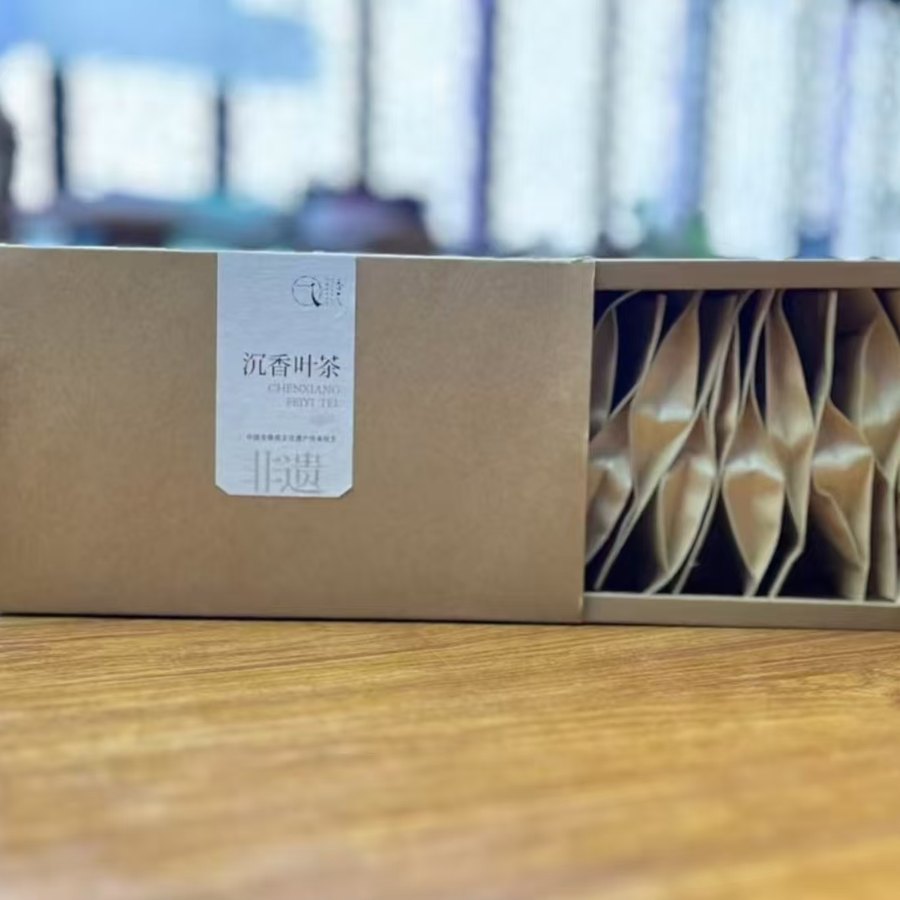
While reading, you might also like these compliant cultivated-agarwood products.
Visit Mall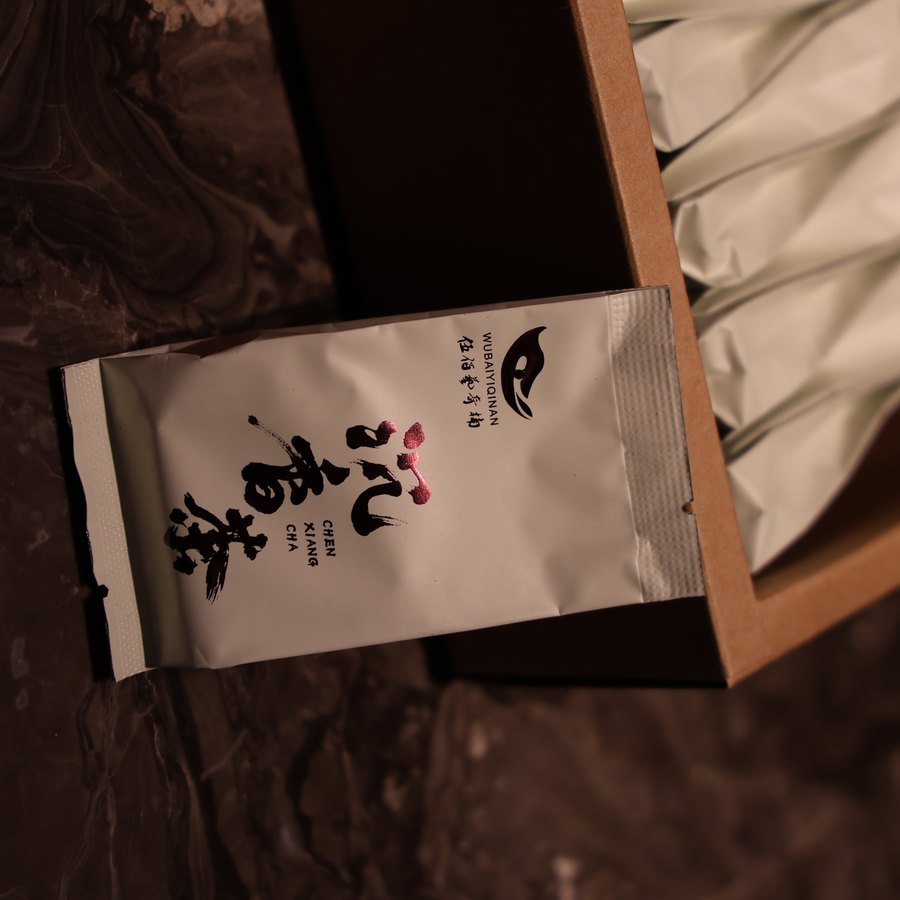
评论区
评论匿名可浏览,登录后可发表;提交后先审后显。
评论加载中…
Check related market data
Want the reference price for this category? Compare on the market page.
Go to market