Extra 21 · The Receipt Book
Source:《沉香六记》原创小说 · 伍佰艺沉香官网「小说」频道首发· 2026-11-07· 刘家沉檀店· 13 views
I.
The rain did not stop until the morning of the third day.
Liu Zhijiang woke first. The hotel window faced the inner harbor, the water surface flat as an old sheet of paper, occasionally a fish jumped, made a sound, then quiet returned. Wang Guanshu's door was closed, light showing beneath the crack. He went downstairs and bought two bowls of misua soup, and when he brought them up, she was already sitting at the table, the photocopy of that half-page of the damaged ledger spread out before her.
"This agarwood and medicine firm," she said, pointing to a line of small characters beside the character 'Lan,' "I looked it up. Deregistered in the twenty-sixth year of the Republic, the proprietor surnamed Wen, Wen Shichang. A collateral branch of Wen An's line."
"Does Wen Ye know?"
"He says it's recorded in the genealogy. Wen Shichang later went to Penang and never came back."
Liu Zhijiang pushed the misua soup toward her. She took it but did not eat, first using a pencil to lightly trace a line along the edge of the water stain around the character 'Wang.'
"We wait for the receipt book," she said.
"We wait."
II.
Wen Ye arrived in the morning and took them to the old docks to find a retired warehouse keeper. The old man's surname was Cai, seventy-eight years old, his hearing still sharp but his eyes failing. The room was very small, a faded wharf floor plan hanging on the wall, marked with red and blue pencil indicating storage bays.
"Twenty years ago?" Old Cai thought for a moment. "The Wen family stored mostly agarwood and medicines. Once, a Mr. Wang came, tall and thin, spoke northern dialect. He brought an iron box himself, not large, about this long." He gestured, roughly a foot and a half. "No writing on the box, tied with a silk ribbon, the ribbon embroidered with grass leaves."
"Orchid?" Wang Guanshu asked.
"Looked like it. I don't know flowers," the old man said. "He told me to store it separately, said he'd retrieve it in three years. He never came. Later, someone from the Wen family came to forward it, so I merged the box with the Wen family batch."
"Forwarded where?"
"The slip said Hong Kong, an agarwood and medicine firm. I don't remember the name."
Wang Guanshu asked about the ribbon's color in great detail: moon-white ground, embroidered with blue thread, the leaf tips tinged with a bit of ochre. The old man said that was right. She lowered her eyes and wrote two characters in her notebook: Father.
III.
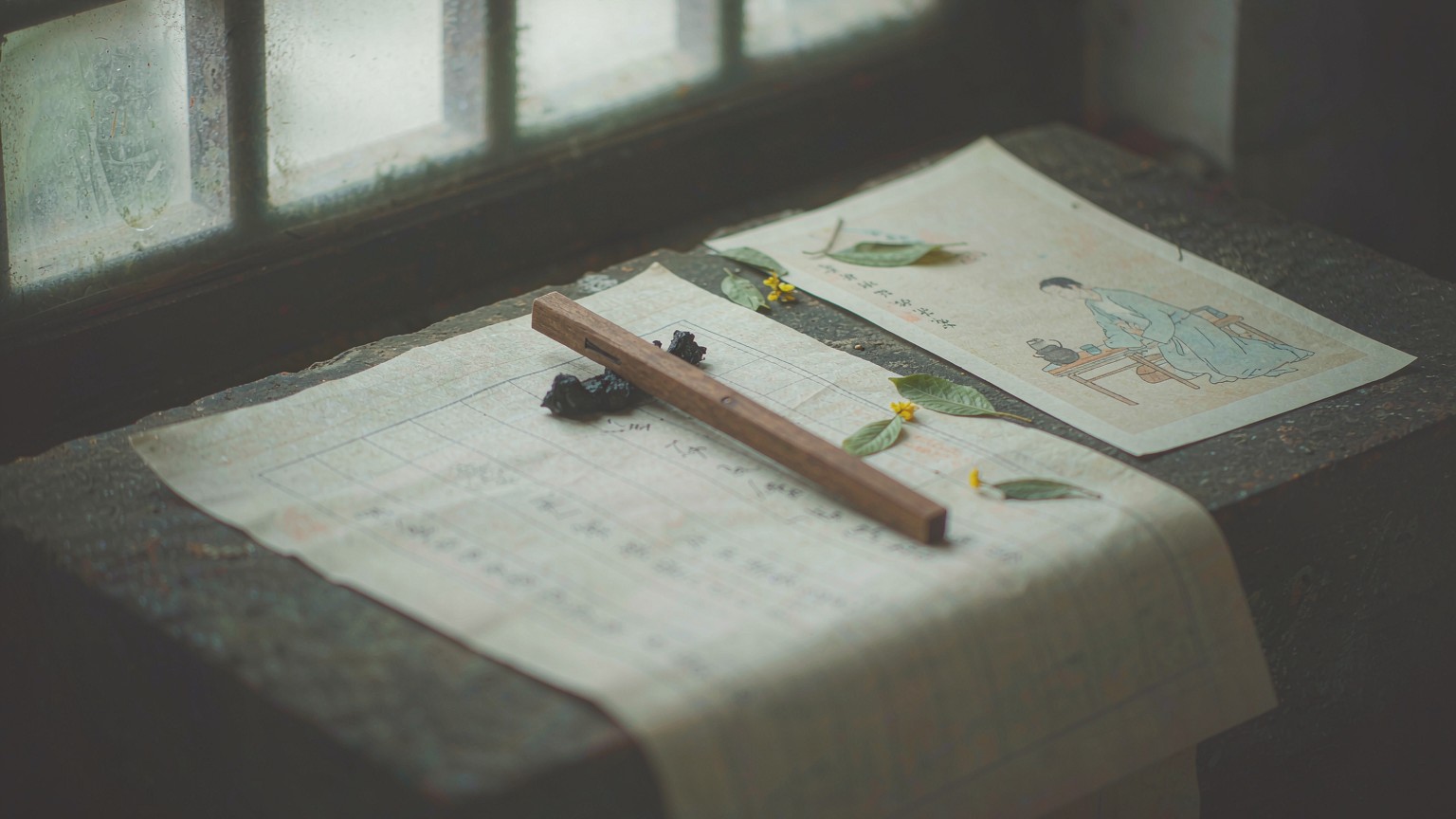
The receipt book was in another warehouse, in a tin cabinet, heavy with damp. Wen Ye put on gloves and turned to that page, pointing it out to them. The water stain had spread from the upper left corner, covering most of the column, leaving only a 'Wang' in the lower right, the strokes hard, the finishing stroke heavy—Wang Shouzhuo's handwriting.
"The date," Liu Zhijiang said.
Wen Ye held the page up to the light. Beneath the water stain there were faintly some numerals, but incomplete. He photographed it with sidelight from his phone, enlarged it, and made out the month and day: March nineteenth. The year had been blotted out by water, but the receipt records on the preceding and following pages were consecutive, making it possible to deduce it was the yihai year.
Wang Guanshu calculated. "Third month of the yihai year, my father hadn't yet gone to Hong Kong. His first trip to Hong Kong was in the sixth month."
"Then what was he doing in Quanzhou in the third month?"
"I don't know," she said. "But he signed with the character 'Wang,' not his full name. Warehouse rules require a full name or a seal for receipt. He wrote only a surname."
Wen Ye turned the book back to the cover and looked at the registration column. The depositor column read "Wang Shouzhuo," but the handwriting differed from the 'Wang' of the receipt—neater, as if filled in by someone else on his behalf.
"Someone handled the procedures for him," Wen Ye said. "This person knew he didn't want to leave his full name."
IV.
On the way back to the hotel, Wang Guanshu walked slowly. Under the arcades of Quanzhou's old streets, dried fish hung out to dry; when the wind passed, the salty rankness mixed with the sandalwood scent of distant agarwood shops.
"March to June, a gap of three months," she said. "In those three months, he came to Quanzhou, stored an iron box, used false procedures, signed a false name. Then he went back to Beijing, and in June went to Hong Kong, taking the route he told his family about."
"Two routes," Liu Zhijiang said.
"At least two. One for the family to see, one he walked himself."
"What's in the iron box?"
She did not answer. After walking a stretch, she said: "The orchid on the ribbon was embroidered by my mother. When she embroidered orchids, the leaf tips always carried ochre—she said that's what made them look like living grass."
Liu Zhijiang thought of the old camphor wood chest in the shop, at the bottom of which was pressed a ribbon with the same embroidery, left by Wang Guanshu's mother. He did not mention it.
V.
That evening Wen Ye called, saying Old Cai had remembered something else: when the iron box was forwarded to Hong Kong, a letter was enclosed with it, unsealed, and the old man had glimpsed the first line—"Lan-hao deposit receipt, enclosed in the box, please forward to..." The rest was folded out of sight.
"Lan-hao," Liu Zhijiang repeated.
"The Shosoin numbering system?" Wen Ye asked.
"No. The Shosoin's Ranjatai numbering is 'Lan' plus a reign year. This 'Lan-hao' is a commercial firm's deposit receipt number," Liu Zhijiang said. "It appeared in my grandfather's ledger—a code used jointly by the Liu and Wen families. A Lan-hao deposit receipt refers to goods stored at the Wen family's agarwood and medicine firm."
"What goods?"
"The ledger only says 'one lot of aromatic materials, to be retrieved by Lan-hao.'"
There were a few seconds of silence on the other end. Wen Ye said: "That Hong Kong agarwood and medicine firm, I checked. It closed in the seventies, the proprietor surnamed Wen, Wen Shichang's son. He may still have old records."
"Hong Kong," Wang Guanshu said softly, having overheard from beside him.
Liu Zhijiang looked at her. She was folding the photocopy of the receipt book and putting it in her bag, her movements very slow.
"My father went to Hong Kong in June, by the open route," she said. "But the iron box he stored in Quanzhou in March was also forwarded to Hong Kong. The same city, two threads."
"You want to go to Hong Kong?"
"First find out whether that agarwood and medicine firm still exists."
Wen Ye said on the phone: "Tomorrow I'll pull the old commercial registration for the Hong Kong side. But there's one thing—" He paused. "Old Cai says that when the iron box was forwarded, the ribbon on the box was taken off and packed separately in an envelope. He remembers there was writing on the envelope, but he can't read, he only recognized one character: 'Wang.'"
"Where's the envelope?"
"Forwarded together with the box."
Wang Guanshu zipped her bag, stood, and walked to the window. The lights of the inner harbor came on one by one, reflected in the water, stretched into long strips.
"The ribbon was embroidered by my mother," she said. "He took it off and sent it separately. The contents of the box—he didn't want the recipient to see the ribbon."
"Or," Liu Zhijiang said, "he didn't want the orchid on the ribbon to be placed together with what was in the box."
She did not turn around. After a long while, she said: "Book the tickets. To Hong Kong."
Outside the window a boat sounded its horn, a low note, as if rising from beneath the water.
—To be continued · Extra 22 follows
Compiled from industry information; not trading or investment advice.
常见问题
Extra 21 · The Receipt Book是什么?
Liu Zhijiang and Wang Guanshu wait in Quanzhou for the receipt book to be retrieved, visiting the old docks and aged agarwood shops over two days. A retired warehouse keeper reveals that twenty years ago Wang Shouzhuo stored an iron box tied with half a silk ribbon bearing an orchid pattern. When th
沉香怎么选购?
选购沉香应认准可溯源、可检测的渠道,按用途选择形态(线香 / 手串 / 原料),不盲目追高、不轻信「野生」「沉水」等夸大宣传;优先选择带检测报告与来源凭证的商品。
沉香如何保养?
沉香怕潮、怕串味、怕暴晒,应密封、避光、阴凉存放,不同产区分开保存;长期不用的香材定期通风检查,防霉防虫。
如何鉴别沉香的真假?
鉴别沉香需综合感官与辅助手段:天然沉香香气清雅、持久、凉甜交织,燃烧烟气清白而非刺鼻;可结合 GC-MS 色谱检测特征成分(色酮、倍半萜)。建议通过可信渠道与可溯源凭证降低风险。
不同产区沉香有什么区别?
各产区因气候、树种与结香方式差异,香韵各具特色(如海南清雅、越南甜凉、印尼醇厚),是沉香分级与定价的重要参考维度。
沉香价格行情如何?
沉香行情随结香程度、产区、形态分化明显,顶级收藏与入门消费两端活跃;建议以合法、可检测渠道的实际成交为参考,勿轻信单一报价。
沉香与香道文化有什么关系?
沉香是东亚香道文化的核心媒介,从礼佛、文人雅集到当代生活美学,承载「静心、慢享」的东方审美,理解文化背景有助于读懂沉香价值。
沉香有健康功效吗?
传统上沉香被用于舒缓、助眠等场景,但证据等级与用量需谨慎看待;把「传统用法」与「科学证据」分开表述,具体以专业指导为准。
参考资料
Related reading
Related Agarwood Picks
While reading, you might also like these compliant cultivated-agarwood products.
Visit Mall
评论区
评论匿名可浏览,登录后可发表;提交后先审后显。
评论加载中…
Check related market data
Want the reference price for this category? Compare on the market page.
Go to market