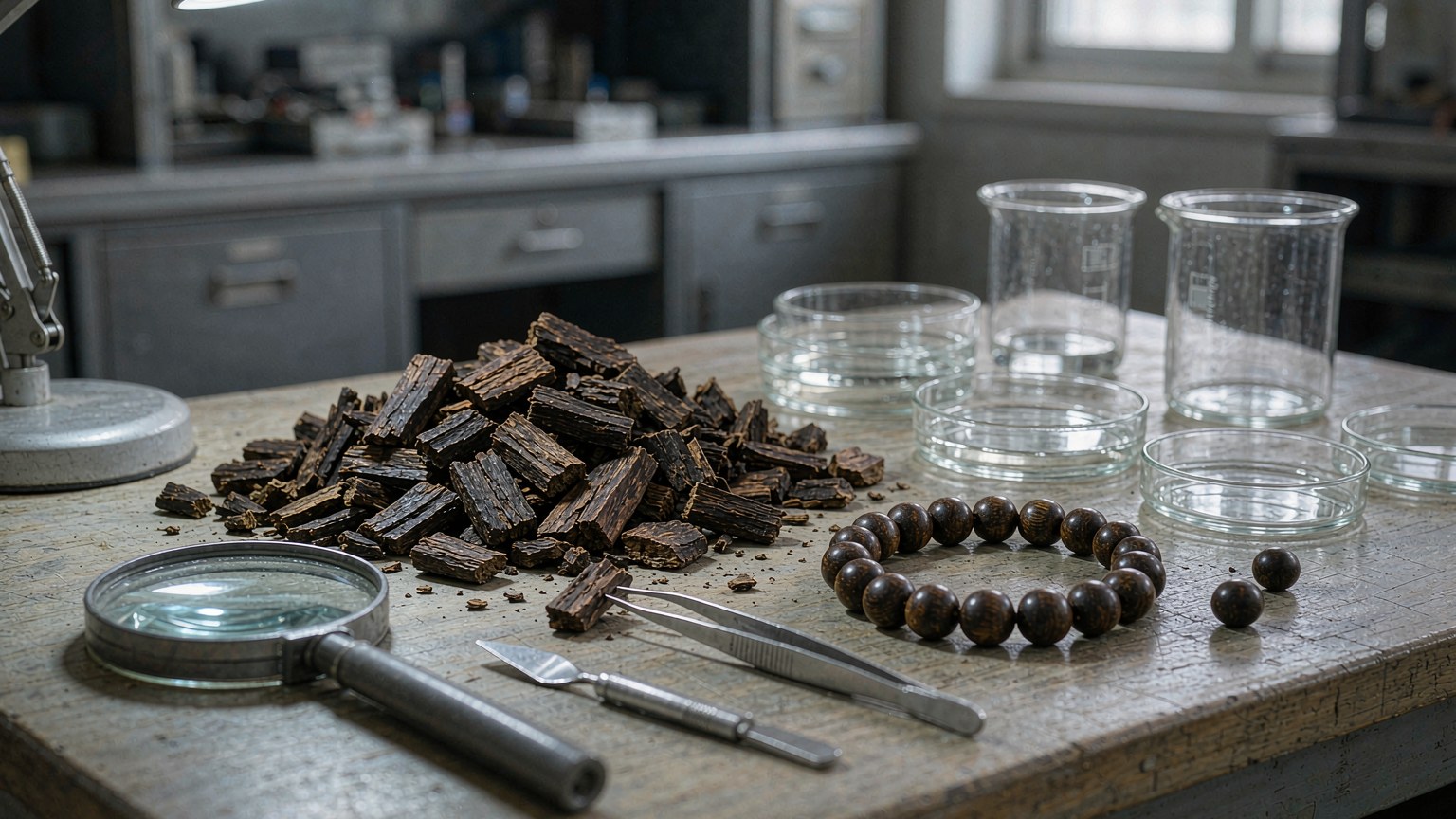
Can Wild Agarwood Be Traded Legally? CITES Appendix II and China's Protected Species List Draw Three Boundaries
· 2026-10-15· 中国沉香网编辑· 2 views
Two Lists: An International Convention and Domestic Protection
Every species in the genera Aquilaria and Gyrinops is included in Appendix II of the Convention on International Trade in Endangered Species of Wild Fauna and Flora (CITES). This means that regardless of whether the material is plantation-grown or wild-harvested, any product of the agarwood genus is subject to the Convention at the cross-border stage — a point expressly recorded in the Chinese forestry industry standard LY/T 2904-2017 Agarwood. Appendix II listing means the species is not currently threatened with extinction, but uncontrolled international trade would rapidly drive it there. China's native tree species, Aquilaria sinensis, is separately listed as a Class II nationally key-protected wild plant.
Three Boundaries: Possession, Carriage and Crossing Borders
First, licensed domestic merchants selling finished agarwood products with complete documentation transact lawfully; if the raw material came from illegally felled wild trees or from smuggled goods without customs formalities, every link in the chain carries legal risk. Second, whether the item is a bracelet, a piece of raw wood or a carved pendant, any movement out of or into the country requires a CITES permit for import or export of endangered species plus customs declaration; carrying or mailing such items without the paperwork is unlawful and may incur criminal liability in serious cases. Third, CITES provides a personal-effects allowance (Resolution Conf. 13.7 Rev. CoP17): per person, up to 1 kg of agarwood chips, up to 24 ml of agarwood oil, and two sets of prayer beads or two necklaces or bracelets. CITES itself acknowledges, however, that many countries do not fully apply this exemption because of stricter national rules — travellers must check the rules of their destination and keep purchase receipts with the goods.
Recent Enforcement Cases and Practical Due Diligence
Recent customs cases offer a direct reminder. Officers at Qianjiang Customs under Hangzhou Customs inspected an inbound parcel and found seven wooden articles with a distinctive odour; professional testing confirmed all seven as Aquilaria wood products with a gross weight of 176.8 grams. At Shenzhen Bay Customs, 30 kilograms of suspected agarwood fragments were found in two pieces of luggage in the boot of an outbound cross-border vehicle, later identified by the Shenzhen Customs animal and plant inspection and quarantine technology centre as Thymelaeaceae Aquilaria wood. Both consignments were referred for further handling because they had not been declared and were not covered by valid wildlife import-export certificates. For consumers, workable checks include: obtaining and keeping the purchase receipt; confirming the supplier can issue a CITES export permit; asking whether the material is wild or plantation-grown and requesting origin traceability documents; requiring a third-party GC-MS test report; and treating any suggestion to split a large order into small parcels to avoid permits as a red flag.
This article is an industry observation and educational compilation. It does not constitute trading or investment advice. Please purchase agarwood through legal channels and look for traceable, testable sources.
Compiled from industry information; not trading or investment advice.
常见问题
Can Wild Agarwood Be Traded Legally? CITES Appendix II and China's Protected Species List Draw Three Boundaries是什么?
All species of Aquilaria and Gyrinops are listed in CITES Appendix II, while China's native Aquilaria sinensis is a Class II nationally protected wild plant. Enforcement focuses on felling wild trees, illegal purchase of raw material and undocumented cross-border movement — not on ordinary consumers possessing or wearing finished agarwood products with proper documentation. Recent customs cases include 176.8 grams of Aquilaria wood products seized in Hangzhou and 30 kilograms of agarwood fragments intercepted at Shenzhen Bay, both referred for further handling for lack of declaration and permits.
沉香怎么选购?
选购沉香应认准可溯源、可检测的渠道,按用途选择形态(线香 / 手串 / 原料),不盲目追高、不轻信「野生」「沉水」等夸大宣传。
沉香如何保养?
沉香怕潮、怕串味、怕暴晒,应密封、避光、阴凉存放,不同产区分开保存;长期不用的香材定期通风检查,防霉防虫。
This is an aggregated digest. Original source:View original()
Related reading
评论区
评论匿名可浏览,登录后可发表;提交后先审后显。
评论加载中…
Check related market data
Want the reference price for this category? Compare on the market page.
Go to market