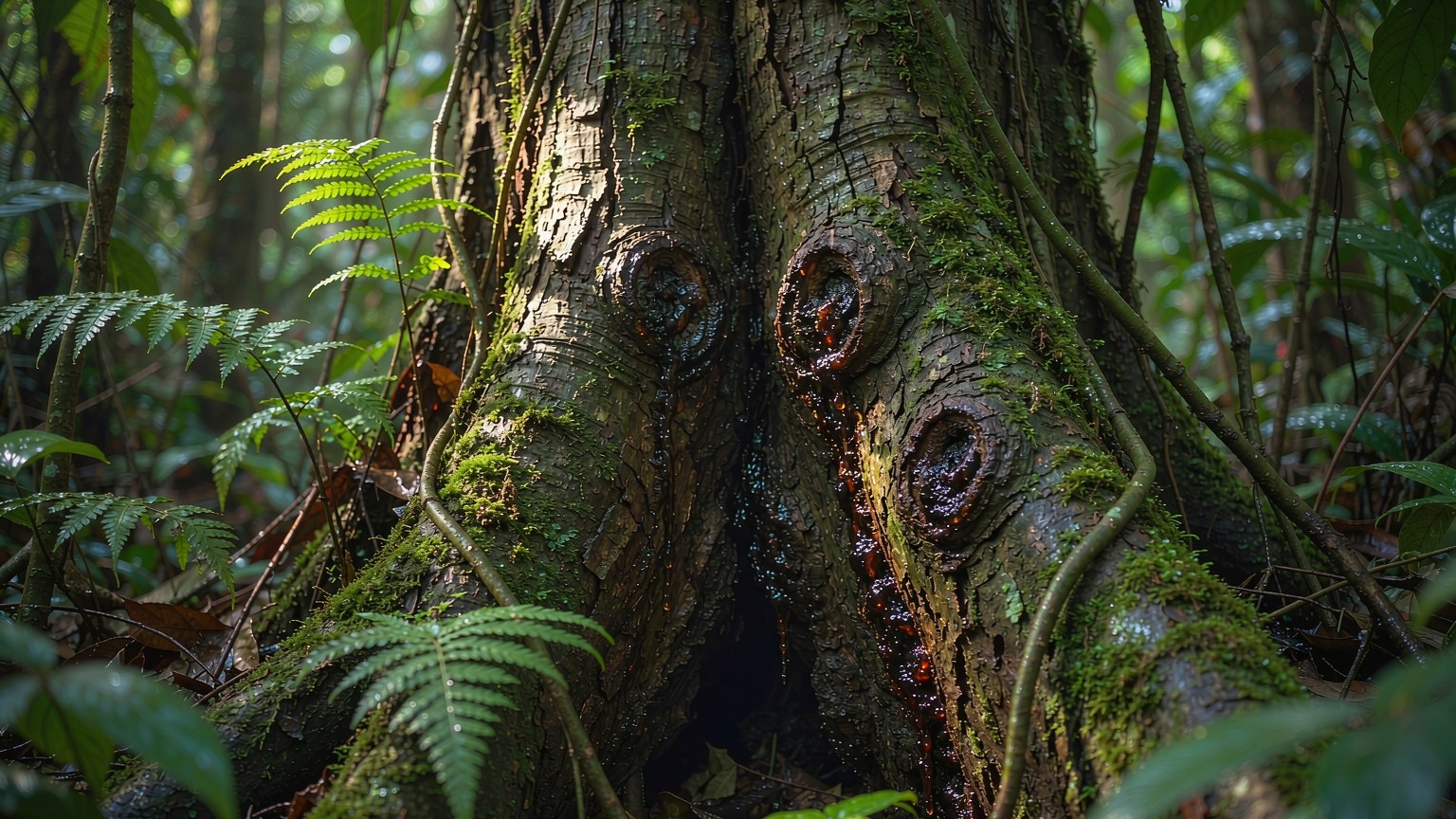
Philippines Lists Agarwood Tree "Lapnisan" as Critically Endangered: Wild Collection, Possession and Trade Require Permits
· 2026-10-14· 中国沉香网编辑· 6 views
Upgraded to Critically Endangered
Philippine media reported on 24 September 2026 that DENR Davao Region issued a public advisory: Aquilaria malaccensis, locally known in parts of the country as lapnisan, is classified as Critically Endangered under DENR Administrative Order No. 2026-20, the Updated National List of Threatened Philippine Plants and Their Categories. DENR stressed that possession, collection from the wild and trading of the species — including its by-products and derivatives — are prohibited without the necessary legal authority, and that propagation is likewise subject to permits. Illegal acquisition may violate Republic Act No. 9147 (Wildlife Resources Conservation and Protection Act) and carries the penalties prescribed by law. Extensive poaching that collapsed wild populations was cited as the reason for the strict stance.
Same Logic as in China: It Regulates Trade, Not Normal Use
Notably, not every agarwood tree naturally contains commercially valuable resin: oleoresin forms as a defence response when the tree is wounded or infected, making resin-rich individuals scarce — which is precisely why prices, and poaching pressure, run so high. Internationally, the species is covered by CITES Appendix II, with a permit system governing its commercial movement. This mirrors practice in China: all Aquilaria and Gyrinops species are listed in CITES Appendix II, and the native Aquilaria sinensis is a Class II nationally protected wild plant. Selling finished agarwood products with complete legal documentation is lawful at home, while carrying or shipping any agarwood item across borders requires the CITES permit and truthful customs declaration.
Observation: Compliance Comes Before International Expansion
From Thailand and Vietnam to Malaysia and Indonesia, producing countries are tightening control over wild resources while promoting plantation material and traceability certification. For businesses this means that being able to produce origin certificates, import-export permits and third-party test reports — rather than simply sourcing cheap material — is becoming the real threshold for cross-border trade. For ordinary buyers, choosing legal channels with traceable and testable goods, and treating claims such as "wild old stock" without documentation as red flags, remains the simplest safeguard.
(This is industry observation and popular-science summary, not investment advice. Buy agarwood through legal channels with traceable, testable sources.)
Compiled from industry information; not trading or investment advice.
常见问题
Philippines Lists Agarwood Tree "Lapnisan" as Critically Endangered是什么?
The Philippine Department of Environment and Natural Resources (DENR) Davao Region has reminded the public that Aquilaria malaccensis, locally called lapnisan, is classified as Critically Endangered under DENR Administrative Order No. 2026-20. Collecting, possessing and trading wild-sourced material is prohibited without legal authority, and the species is also regulated under CITES Appendix II.
沉香怎么选购?
选购沉香应认准可溯源、可检测的渠道,按用途选择形态(线香 / 手串 / 原料),不盲目追高、不轻信「野生」「沉水」等夸大宣传。
沉香如何保养?
沉香怕潮、怕串味、怕暴晒,应密封、避光、阴凉存放,不同产区分开保存;长期不用的香材定期通风检查,防霉防虫。
This is an aggregated digest. Original source:View original()
Related reading
评论区
评论匿名可浏览,登录后可发表;提交后先审后显。
评论加载中…
Check related market data
Want the reference price for this category? Compare on the market page.
Go to market