
Dianbai Targets a Ten-Billion-Yuan Agarwood Industry: Over 106,700 Mu Planted and 4.35 Billion Yuan Output in H1
· 2026-10-11· 中国沉香网编辑· 163 views
A millennium-old aromatic belt heads for ten billion
Agarwood cultivation in Dianbai is documented back to the Sui and Tang periods, more than 1,500 years ago. Figures released during the inspection show that as of end-June 2026 the district had more than 106,700 mu under agarwood cultivation, over 12,000 operating entities and more than 100,000 people employed across the chain. In the first half of 2026, total full-industry-chain output value reached roughly 4.35 billion yuan, of which primary production accounted for about 969 million yuan. The district now produces more than a hundred product types across seven categories including daily chemicals, handicrafts, combustible incense, tea and fragrance compounds, shifting from raw material toward end-consumer goods.
Closing the processing gap and boosting testing credibility
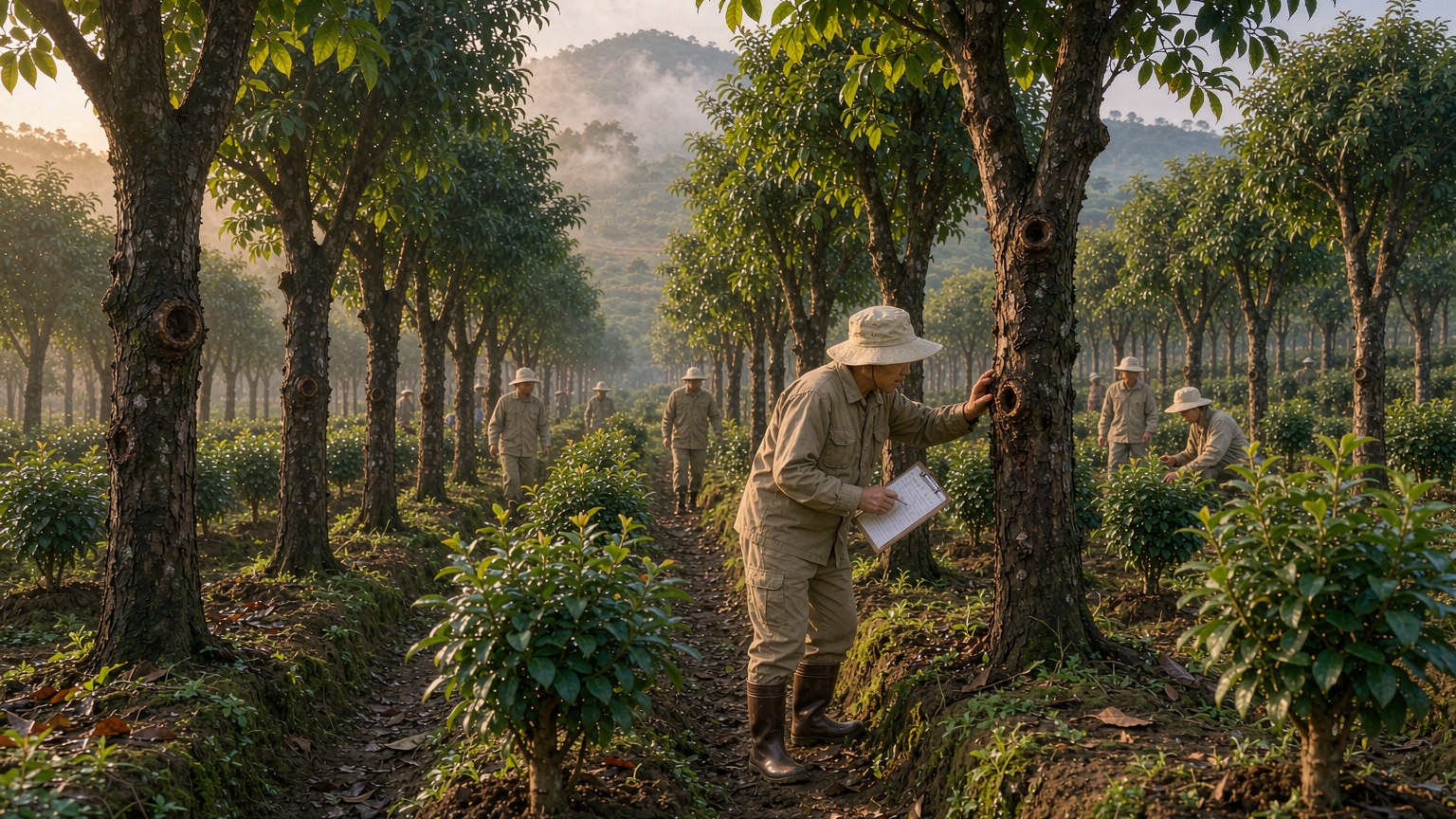
The delegation visited the Heli village planting base in Guanzhu town, the village collective enterprise, the Shadong agarwood centre, the Weidu bead-chain factory and Guangdong Xinhong Agarwood Agriculture, reviewing cultivation, breeding, research, market operations and fine processing. Recommendations included raising technology input, closing the gap in deep processing, scaling up market players, tightening market-order enforcement and industry standards, raising the credibility of the local agarwood testing centre, and accelerating key industrial platforms, alongside deepening incense culture through a "culture plus experience plus consumption" model and using Hong Kong and Macao channels to expand Greater Bay Area and overseas sales. Oversight is advancing too: reports indicate a full-chain supervision plan was issued locally in September 2026, bringing planting registration and origin certification under oversight.
(This is industry observation and popular-science summary, not investment advice. Buy agarwood through legal channels with traceable, testable sources.)
Compiled from industry information; not trading or investment advice.
Frequently Asked Questions
What is Dianbai Targets a Ten-Billion-Yuan Agarwood Industry?
Reported by Nanfang Plus, members of the Dianbai district CPPCC Hong Kong and Macao working groups inspected the local agarwood industry on 29 September 2026. As of end-June 2026, planted area exceeded 106,700 mu across more than 12,000 business entities and over 100,000 workers, with first-half full-chain output value reaching about 4.35 billion yuan.
How should I choose agarwood?
Buy from traceable, testable channels and match the form (incense, beads, raw wood) to your use. Avoid exaggerated claims such as "wild" or "sinking grade" without proof, and prefer products with lab reports and origin documentation.
How should agarwood be stored and maintained?
Agarwood dislikes moisture, odours and direct sunlight. Keep it sealed, dark and cool, store different origins separately, and air and inspect long-stored pieces periodically against mould and insects.
How can I tell real agarwood from fake?
Authentication combines sensory checks with technical ones: natural agarwood has a clean, long-lasting, cool-sweet scent and burns with pale, non-pungent smoke. GC-MS analysis of characteristic compounds (chromones, sesquiterpenes) adds objective confirmation. Buying through traceable channels with certificates lowers the risk.
How do agarwood origins differ?
Climate, tree species and resin-induction methods give each origin a distinct scent profile — for example Hainan tends to be clean and elegant, Vietnam sweet and cool, Indonesia deep and full. Origin is a key factor in grading and pricing.
What is the current agarwood market like?
Prices diverge sharply by resin density, origin and form, with both top-end collectibles and entry-level consumer products active. Use actual transactions from legal, testable channels as reference rather than a single quotation.
What is the relationship between agarwood and incense culture?
Agarwood is the core medium of East Asian incense culture, spanning temple offerings, literati gatherings and contemporary lifestyle aesthetics. Understanding this cultural background helps explain its value.
Does agarwood have health benefits?
Traditionally agarwood has been used for calming and sleep-related rituals, but evidence quality and dosage need careful reading. Keep traditional use and scientific evidence clearly separated and follow professional guidance.
参考资料
Related reading
Related Agarwood Picks
While reading, you might also like these compliant cultivated-agarwood products.
Visit Mall
评论区
评论匿名可浏览,登录后可发表;提交后先审后显。
评论加载中…
Check related market data
Want the reference price for this category? Compare on the market page.
Go to market