Reading an Authoritative Agarwood Test Report: From Microstructure to Ethanol Extract
· 2026-10-10· 中国沉香网编辑· 136 views
Report Header: Filter Out Fake Certificates First
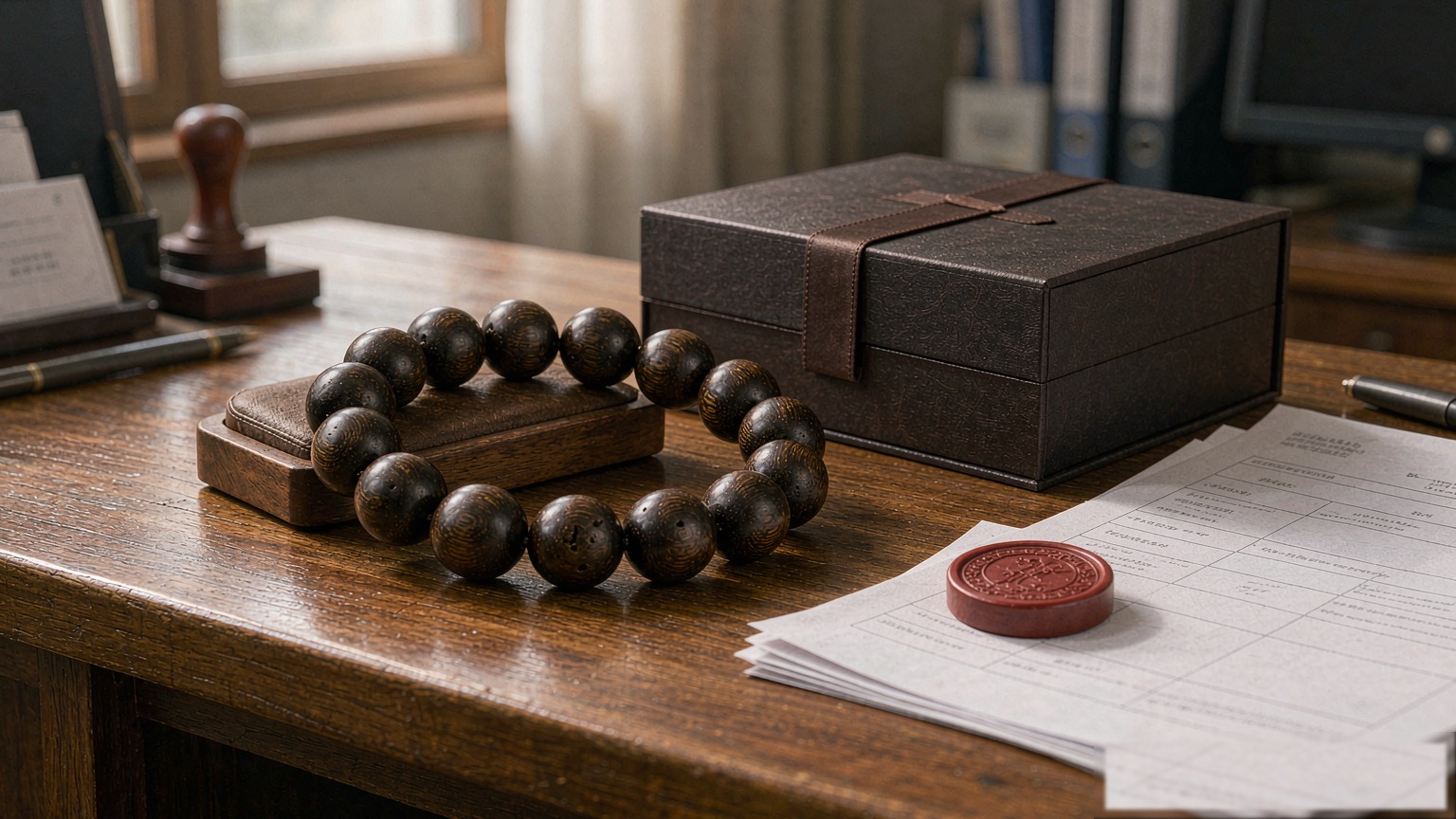
Agarwood combines fragrance, wearability, and collectibility, and market enthusiasm stays high, yet oil-injected, dyed, and spliced fakes keep emerging. The naked eye only offers a preliminary check; a professional third-party test report is the hard evidence for verifying authenticity and grading quality. A legitimate report should clearly state the report number, client, sample name, receipt and testing dates, and the testing institution's information, with a dedicated inspection seal; reports lacking a seal, with blurry information, no clear execution standard, or unauthorized alteration are invalid.
Two core tests form the watershed between genuine and fake, and between quality tiers. First, microscopic structure: true agarwood has predominantly uni-seriate rays and abundant included phloem, forming a porous island-type structure; fakes may mimic oil lines but cannot replicate internal microstructure under the microscope, and oil-injected fakes have their vessels and phloem covered by foreign oil, exposed directly by microscopy. Second, the ethanol extract—it represents the ethanol-soluble aromatic resin content (sesquiterpenes, chromones, and other core aroma compounds); industry standards mandate an ethanol extract of ≥10.0% to qualify as genuine agarwood, with higher values indicating fuller oleoresin formation and stronger fragrance expression. Additionally, GC-MS and HPLC can lock in the "molecular fingerprint" of sesquiterpenes and chromones to further confirm natural origin.
For purchasing, sensory checks (smell, oil-line texture, weight) are only a first pass; high-simulation processed material is hard for laypeople to distinguish, so the safe approach is to require the merchant to support re-inspection by authoritative bodies such as CMA, and to verify the testing institution's qualifications and capacity for local destructive testing. Whether wild, sinking, or cultivated agarwood, as long as it has not undergone compression or oil injection and retains its natural oleoresin essence, it is a reliable, quality product.
This article is an industry observation and science-popularization compilation and does not constitute any trading or investment advice; please purchase agarwood through legal channels and insist on traceable, testable sources.
Compiled from industry information; not trading or investment advice.
Frequently Asked Questions
What is Reading an Authoritative Agarwood Test Report?
As agarwood counterfeiting grows sophisticated, a compliant third-party test report has become the core proof of authenticity. Under standards such as LY/T 2904-2017, microscopic structure and ethanol-extract content are the key discriminators.
How should I choose agarwood?
Buy from traceable, testable channels and match the form (incense, beads, raw wood) to your use. Avoid exaggerated claims such as "wild" or "sinking grade" without proof, and prefer products with lab reports and origin documentation.
How should agarwood be stored and maintained?
Agarwood dislikes moisture, odours and direct sunlight. Keep it sealed, dark and cool, store different origins separately, and air and inspect long-stored pieces periodically against mould and insects.
How can I tell real agarwood from fake?
Authentication combines sensory checks with technical ones: natural agarwood has a clean, long-lasting, cool-sweet scent and burns with pale, non-pungent smoke. GC-MS analysis of characteristic compounds (chromones, sesquiterpenes) adds objective confirmation. Buying through traceable channels with certificates lowers the risk.
How do agarwood origins differ?
Climate, tree species and resin-induction methods give each origin a distinct scent profile — for example Hainan tends to be clean and elegant, Vietnam sweet and cool, Indonesia deep and full. Origin is a key factor in grading and pricing.
What is the current agarwood market like?
Prices diverge sharply by resin density, origin and form, with both top-end collectibles and entry-level consumer products active. Use actual transactions from legal, testable channels as reference rather than a single quotation.
What is the relationship between agarwood and incense culture?
Agarwood is the core medium of East Asian incense culture, spanning temple offerings, literati gatherings and contemporary lifestyle aesthetics. Understanding this cultural background helps explain its value.
Does agarwood have health benefits?
Traditionally agarwood has been used for calming and sleep-related rituals, but evidence quality and dosage need careful reading. Keep traditional use and scientific evidence clearly separated and follow professional guidance.
参考资料
Related reading
Related Agarwood Picks
While reading, you might also like these compliant cultivated-agarwood products.
Visit Mall
评论区
评论匿名可浏览,登录后可发表;提交后先审后显。
评论加载中…
Check related market data
Want the reference price for this category? Compare on the market page.
Go to market