
From GC-MS to AI Identification: How Third-Party Agarwood Testing Exposes "Oil-Injection" Fraud
· 2026-10-08· 中国沉香网编辑· 4 views
The "Gold Standard" for Authenticity: Chemical Composition Testing
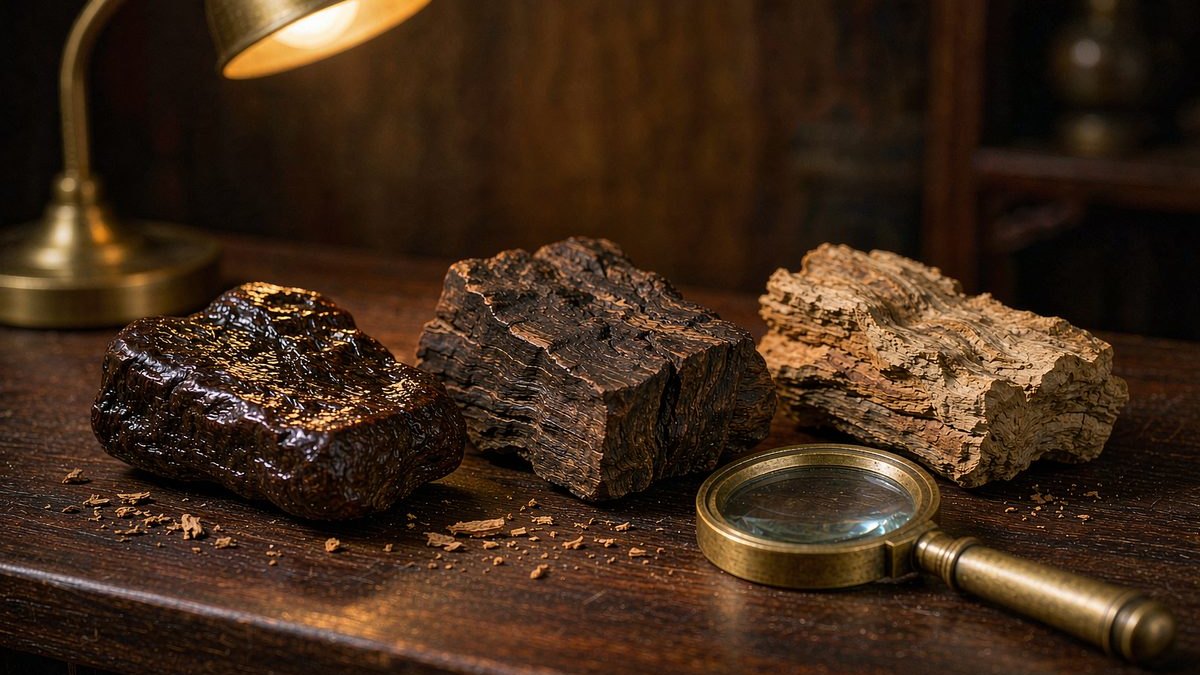
The signature compounds of genuine agarwood are sesquiterpenes (such as agarospirol and aquilaric acid) and chromone compounds, produced by the tree's immune response after injury. Third-party labs use gas chromatography–mass spectrometry (GC-MS) to build characteristic fingerprint spectra — if these compounds are absent, or if camphor alcohol or cedrene from other woods is detected, the sample can be judged fake. Microscopic observation identifies the even resin canals missing in oil-injected wood, while physical metrics (density 0.8–1.2 g/cm³, moisture ≤15%) further rule out weighting and wet oil-injection fraud.
AI and Blockchain: Traceability Enters the Digital Era
The industry frontier has introduced deep-learning-based image recognition systems (accuracy above 90%) and blockchain traceability solutions that put test data on-chain for full lifecycle tracking via "one item, one code." For high-value pieces, it is recommended to send samples to CMA/CNAS-accredited institutions and retain test certificates confirming "consistency between sample and object" to protect rights through scientific means.
It should be noted that any credible test report must clearly state the standard it relies on (such as GB/T 26773-2011 "Agarwood"). This article is an industry observation and science-popularization compilation and does not constitute any trading or investment advice; please purchase agarwood through legal channels and insist on traceable, testable sources.
Compiled from industry information; not trading or investment advice.
Related reading

评论区
评论匿名可浏览,登录后可发表;提交后先审后显。
评论加载中…
Check related market data
Want the reference price for this category? Compare on the market page.
Go to market