Kalimantan Agarwood Fully Explained: Why the "Value-King" of the Singapore-System Earns Its Name
Source:收稿桥投稿· 2026-10-25· 伍佰艺编辑部· 6 views
Within the Singapore-system agarwood, Brunei is called "the Hoi An aroma within the Singapore system" (see [文莱沉香全解](brunei-chenxiang-quanjie)), and Dalagan is the "milk-aroma overlord" (see [达拉干沉香全解](dalagan-chenxiang-quanjie)) — but what truly supports half of the Singapore system, and is the first agarwood bracelet for the vast majority of beginners, is Kalimantan.
It is the Singapore system's largest-yield and most widely circulated origin, also known as the "value-king." This article explains Kalimantan thoroughly: geographical scope, aroma differences across its four provinces, price logic, five-step identification, and how to choose between it, Brunei, and Dalagan.
I. Where the "Kalimantan Origin Region" Actually Refers To
Like "Brunei," "Kalimantan agarwood" is also a distribution-hub concept, not simply "agarwood produced on the island of Kalimantan."
Kalimantan (Borneo) is the world's third-largest island, divided among three countries: Indonesia (most of it, comprising West, East, South, North, and Central Kalimantan provinces), Malaysia (Sarawak and Sabah, i.e. "East Malaysia"), and Brunei (a small corner). In the agarwood trade, the "Kalimantan origin region" broadly refers to first-tier material consolidated around the island of Kalimantan as its distribution core and meeting quality standards, including both the four Indonesian provinces and adjacent East Malaysia (Sarawak, Sabah).
| Concept | Coverage | Market role |
|---|---|---|
| Narrow-sense Kalimantan | Authentic-region material from the island itself (four Indonesian provinces) | Quality baseline |
| Broad-sense Kalimantan | Four provinces + adjacent production areas in East Malaysia (Sarawak/Sabah) | Main body of market circulation |
> In one sentence: Dalagan is actually a small island and its surroundings in the northeastern part of Kalimantan island; it belongs to Kalimantan, but because its quality traits are so outstanding it forms its own system. So "Kalimantan" and "Dalagan" are not parallel competitors but a relationship of inclusion.
II. Three-Stage Aroma: Kalimantan's ID Card
The core trait of Kalimantan agarwood is "rich yet not aggressive" — at room temperature you can smell a mellow milk aroma mixed with faint sweetness, with a hint of cooling in the base note, never sharp or showy. Professionally it is broken into three stages:
- **Top note**: sweet like floral-fruity aroma, with an elegant cooling sensation (it has the sweetness of the Hoi An system, but is warmer and softer than Hoi An)
- **Middle note**: floral-milk aroma (floral + milky) blooms richly, described as "an aroma of elegant temperament"
- **Base note**: deep, steady, full-bodied resonance, earthy agarwood character, slightly bitter then sweet-returning, with a strong and lasting aftertaste
But the island of Kalimantan is vast, and the aroma differs markedly across the four provinces — which is why wood all labeled "Kalimantan" can smell different:
| Origin | Main aroma theme | Cooling | Floral sweetness | Herbal character | Suitable for |
|---|---|---|---|---|---|
| West Kalimantan | Cooling-dominant, lightly sweet and clean | ★★★★ | ★★★★★ | ★★ | Beginners, those who prefer fresh scents |
| East Kalimantan | Strong herbal note, full cooling, powerful mid-to-base | ★★★ | ★★ | ★★★★★ | Veteran collectors, those who prefer strong scents |
| South Kalimantan | Heavy medicinal aroma, little sweetness, deep woody | ★★ | ★★ | ★★★★★ | Heavy enthusiasts |
| North Kalimantan | Balanced, obvious floral-fruity, close to Dalagan | ★★★★ | ★★★★ | ★★★ | Those wanting to enter higher tiers |
> North Kalimantan is close to Dalagan island; some material's milk aroma can rival first-tier origins, with especially high value for money; East and South Kalimantan have heavier herbal notes and a richer, more powerful scent.
III. Why It Is Called the "Value-King"
Kalimantan becoming the top choice for beginners is no accident:
1. Large yield, wide circulation: Kalimantan is the Singapore system's largest-yield origin, with stable material supply, unlike Brunei or qinan where a single piece is hard to find.
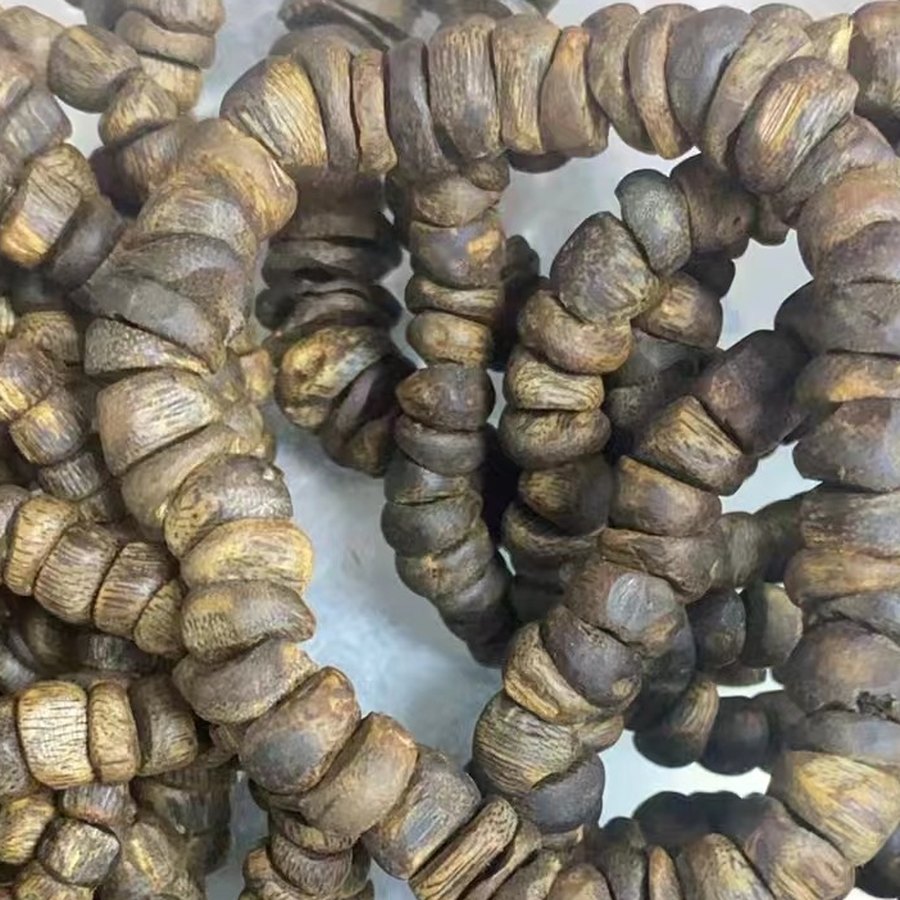
2. Solid material, easy to maintain: clear oil lines, mostly evenly distributed dark brown, warm oily luster after polishing without greasiness, not prone to cracking — worry-free for beginners to wear and care for.
3. Low price threshold: you can buy a good-looking bracelet without spending a lot; unobtrusive for daily wear, suitable for both men and women.
4. Inclusive aroma: rich yet not aggressive, neither bland nor domineering — a "universal" type.
Precisely because of this, many people's first agarwood bracelet on the market is Kalimantan. But note: overly cheap Kalimantan bracelets (a few hundred yuan) are mostly oil-soaked fakes; natural entry-level Kalimantan bracelets cost no less than a thousand yuan (see the price ranges below and [六类假货鉴别](shenxiang-jianding-liulei)).
IV. Price Ranges: from Entry to Collection
Kalimantan agarwood prices vary widely; even within the same origin they can range from 1,500 yuan to tens of thousands, depending mainly on oil content, degree of resin formation, aroma layers, and whether it is wild old stock.
| Tier | Category | Market retail reference | Note |
|---|---|---|---|
| Entry | Kalimantan bracelet (ordinary resin formation) | about 1,000–5,000 yuan/strand | First choice for beginners, medium-to-high oil |
| Advanced | High-oil / sinking-float bracelet | about 5,000–15,000 yuan/strand | Thick black oil lines, three-dimensional aroma |
| High-end | North Kalimantan near-Dalagan material, wild old stock | 15,000 yuan–tens of thousands/strand | Aroma rivals first-tier, scarce |
> Note on scope: the table above is consumer retail reference pricing. For per-specification market quotes on a "raw material/origin" basis, refer to the site's market column "[国外原料和传统白木香](/market)" — Brunei bracelets in that column are about 4,200–15,000 yuan/strand, Malaysia about 720–2,800 yuan/strand, and Kalimantan sits between the two overall, with a lower entry end. Do not confuse the two scopes.
V. Five-Step Identification (avoid oil-soaked and tech agarwood)
Kalimantan is a disaster zone for fakes, especially low-priced bracelets. Four practical identification points (for a more systematic classification of fakes see [六类假货鉴别](shenxiang-jianding-liulei)):
| Step | What to look at | Natural traits | Fake flaws |
|---|---|---|---|
| 1 Smell | Raw aroma | Floral/cooling/sweet transitions naturally, not sharp | Strong, sharp synthetic fragrance; unnatural top and base notes |
| 2 Oil lines | Oil grain | Black-yellow interlaced, naturally varied in thickness, with depth | Overly uniform color, straight oil lines with an artificial feel |
| 3 Burn | On heater/lighted | Little smoke, mild, not choking, long-lasting scent | Heavy sharp smoke, fixed aroma with no layers |
| 4 Touch | Surface feel | Hard with a slight oily feel | Dead feel, dry at dyed areas |
| 5 Price | Whether reasonable | Entry ≥1,000 yuan | A few-hundred-yuan "Kalimantan" is basically oil-soaked |
VI. Kalimantan vs Brunei vs Dalagan: How to Choose
Reading the three together makes the Singapore-system origin map clear:
| Dimension | Kalimantan | Brunei | Dalagan |
|---|---|---|---|
| Positioning | Value-king, first choice for beginners | Hoi An aroma within the Singapore system, top-tier | Milk-aroma overlord, first-tier high-end |
| Aroma | Rich yet not aggressive, mellow milk aroma | Sweet floral + cooling + milk aroma in three stages, elegant | Strong milk-aroma burst, cooling impact |
| Price | 1,000–tens of thousands/strand | 4,200–15,000/strand | On the high side, collector-grade |
| Suitable for | Beginners for daily wear | Veteran collectors who value layers | Those who love a showy aroma |
> Selection logic: beginners practicing should choose Kalimantan; those pursuing elegant layers should choose Brunei; those who like domineering milk aroma should choose Dalagan. The three overlap (North Kalimantan is near Dalagan; broad-sense Brunei includes northern Kalimantan); budget and aroma preference are the decisive factors.
FAQ
Q1: What is the relationship between Kalimantan and Dalagan?
A: Dalagan is a small island and its surroundings in the northeastern part of Kalimantan island; it is a type of Kalimantan agarwood that forms its own system due to outstanding quality. The two are in an "included and including" relationship, not parallel origins.
Q2: Why does wood all called Kalimantan smell so different?
A: Kalimantan spans four Indonesian provinces plus East Malaysia, and each province has a different aroma (West Kalimantan is cooling, East Kalimantan is heavily herbal, South Kalimantan is deep medicinal, North Kalimantan is near Dalagan); materials are also often mixed during consolidation, so wood all labeled "Kalimantan" can smell completely different.
Q3: Can I buy a few-hundred-yuan Kalimantan bracelet?
A: Basically no. Natural entry-level Kalimantan bracelets cost no less than a thousand yuan; a few hundred yuan is mostly oil-soaked or tech agarwood. It is recommended to check against [六类假货鉴别](shenxiang-jianding-liulei).
Q4: Is Kalimantan agarwood suitable for collection?
A: Ordinary resin-formation material is mainly for wearing; North Kalimantan near-Dalagan material and wild old stock have collection value, with prices reaching tens of thousands of yuan and continuing to rise as wild resources become scarcer.
Q5: How to distinguish Kalimantan from "domestically planted" agarwood?
A: Kalimantan belongs to imported raw materials, under the site's market column "国外原料和传统白木香"; domestic planting (Hainan, Dianbai and other plantations) falls under the "国产种植" column. The two differ in origin, aroma, and price system; do not confuse them when purchasing.
Data Sources and Scope Notes
- Origin and aroma traits are synthesized from Baidu Baike's "印尼沉香," Sogou Baike's "加里曼丹岛沉香," and publicly available industry materials.
- Price ranges are market retail references, not transaction prices; per-specification raw-material quotes are subject to the site's market column "国外原料和传统白木香."
- Identification methods are general experience; the final standard is the physicochemical indicators of the agarwood item in the [2025 edition of the Chinese Pharmacopoeia](yadian-2025-chenxiang) (agarotetrol ≥0.10%, alcohol-soluble extractives ≥10.0%) and testing by professional institutions.
- This article does not constitute investment advice; prices fluctuate greatly with grade, oil content, and channel.
Compiled from industry information; not trading or investment advice.
常见问题
Kalimantan Agarwood Fully Explained是什么?
Kalimantan is the largest and most widely circulated Singapore-system origin, spanning four Indonesian provinces and East Malaysia. This guide covers its geography, aroma differences across provinces, price logic, five-step identification, and how it compares with Brunei and Dalagan.
沉香价格行情如何?
沉香行情随结香程度、产区、形态分化明显,顶级收藏与入门消费两端活跃;建议以合法、可检测渠道的实际成交为参考,勿轻信单一报价。
沉香怎么选购?
选购沉香应认准可溯源、可检测的渠道,按用途选择形态(线香 / 手串 / 原料),不盲目追高、不轻信「野生」「沉水」等夸大宣传;优先选择带检测报告与来源凭证的商品。
沉香如何保养?
沉香怕潮、怕串味、怕暴晒,应密封、避光、阴凉存放,不同产区分开保存;长期不用的香材定期通风检查,防霉防虫。
如何鉴别沉香的真假?
鉴别沉香需综合感官与辅助手段:天然沉香香气清雅、持久、凉甜交织,燃烧烟气清白而非刺鼻;可结合 GC-MS 色谱检测特征成分(色酮、倍半萜)。建议通过可信渠道与可溯源凭证降低风险。
不同产区沉香有什么区别?
各产区因气候、树种与结香方式差异,香韵各具特色(如海南清雅、越南甜凉、印尼醇厚),是沉香分级与定价的重要参考维度。
沉香与香道文化有什么关系?
沉香是东亚香道文化的核心媒介,从礼佛、文人雅集到当代生活美学,承载「静心、慢享」的东方审美,理解文化背景有助于读懂沉香价值。
沉香有健康功效吗?
传统上沉香被用于舒缓、助眠等场景,但证据等级与用量需谨慎看待;把「传统用法」与「科学证据」分开表述,具体以专业指导为准。
参考资料
Related reading

Related Agarwood Picks
While reading, you might also like these compliant cultivated-agarwood products.
Visit Mall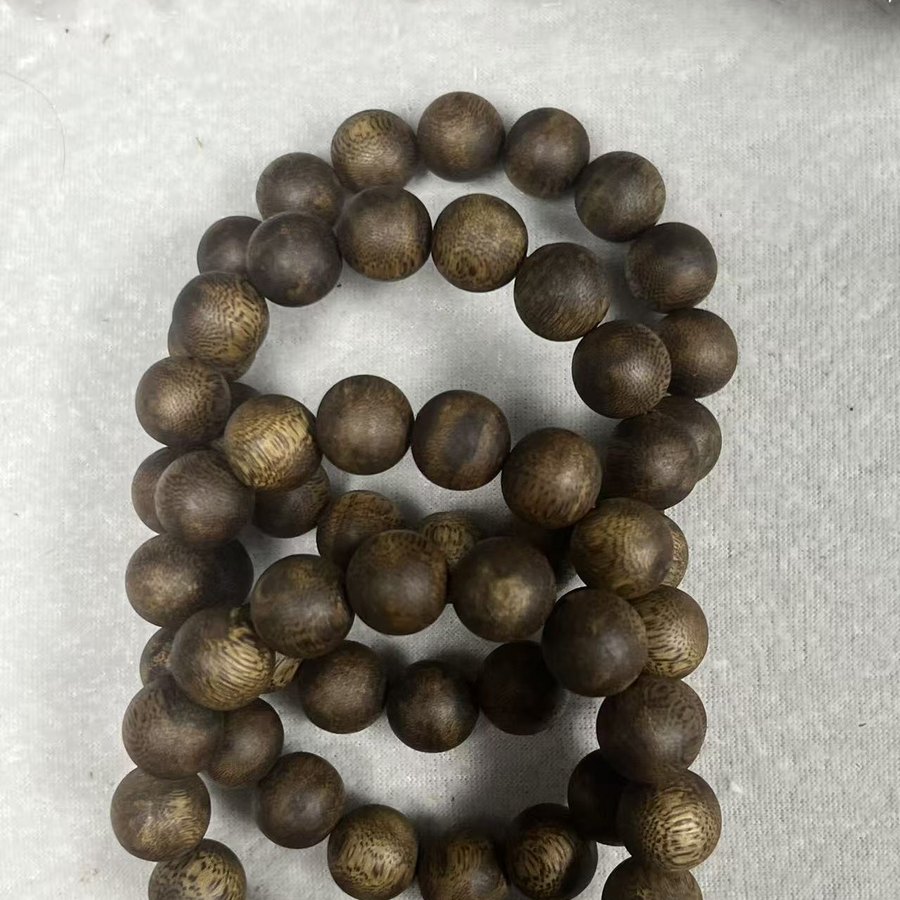
评论区
评论匿名可浏览,登录后可发表;提交后先审后显。
评论加载中…
Check related market data
Want the reference price for this category? Compare on the market page.
Go to market