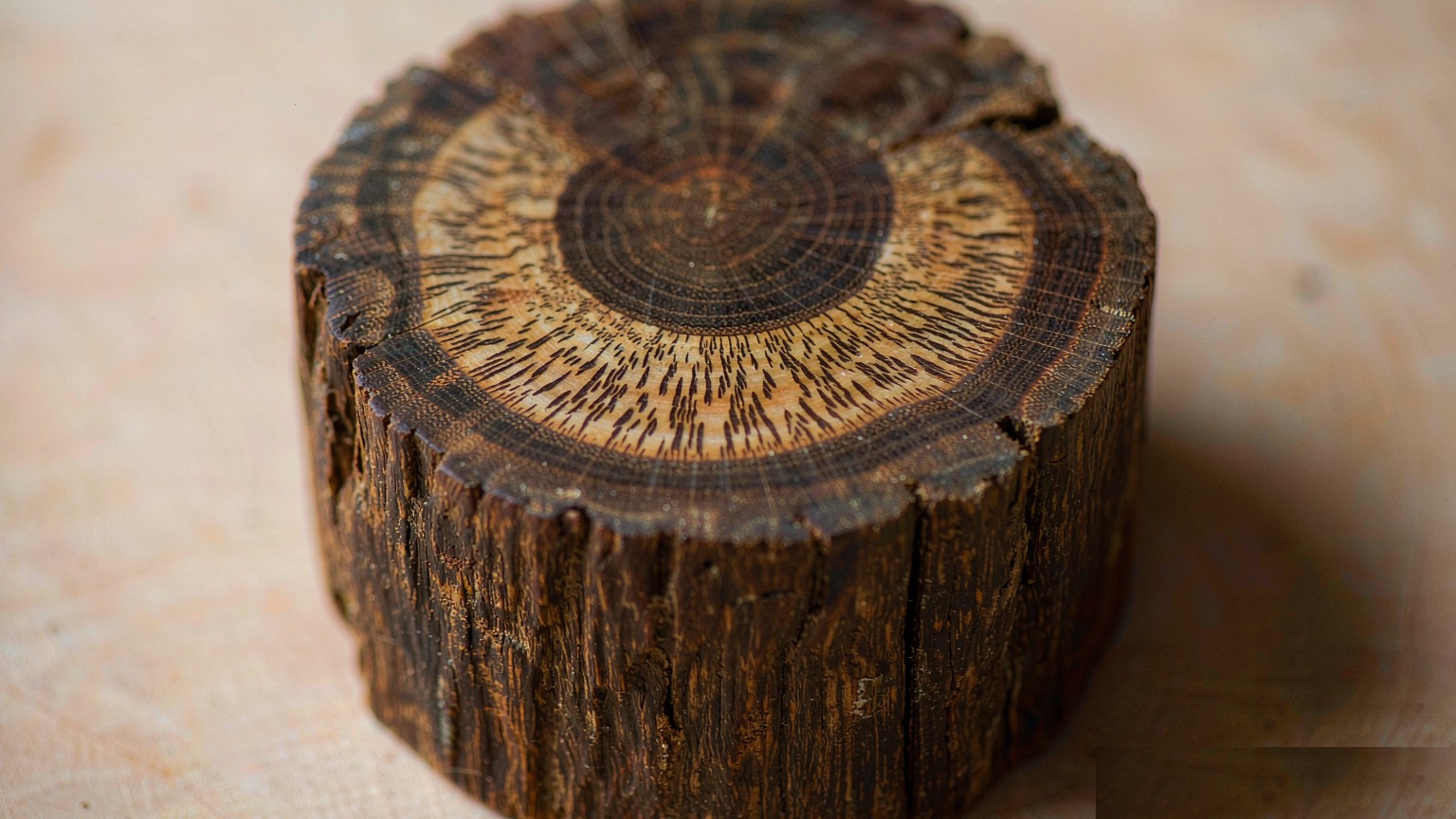
Differences Between Agarwood, Sandalwood, and Thuja: Three Aromatic Woods Beginners Often Confuse
Agarwood is a resinous deposit formed when Aquilaria trees are wounded and infected; sandalwood is the natural heartwood of Santalum trees; thuja (BaiMU) is a variety of Platycladus orientalis. They differ in species, formation mechanism, and aroma. Beginners can distinguish them by oil origin, scent profile, and burning behavior.
1. Fundamental Difference: How Each Wood Is Formed
Agarwood is not a normal wood but a pathological product: when an Aquilaria tree (family Thymelaeaceae) is wounded or infected by fungi, it secretes resin that combines with wood fibers to form a dense, fragrant mass. Sandalwood, in contrast, is the natural heartwood of Santalum trees (family Santalaceae) and carries fragrance without injury—a physiological product. Thuja is a variant of Platycladus orientalis (family Cupressaceae), whose aroma comes from essential oils in the wood itself. Thus, agarwood is valued for its “resin formation,” sandalwood for its “tree age,” and thuja for its “grain and oil content.”
2. Aroma and Burning Behavior: The Easiest Clues for Beginners
Agarwood’s scent is complex and layered: mild at room temperature, it reveals floral, fruity, honey-like, or medicinal notes when heated, and burns with clear, non-irritating smoke. Sandalwood is rich and uniform, with distinct creamy and woody tones, producing thick smoke when burned. Thuja smells primarily of cool camphoraceous cypress with a resinous touch, and its smoke is dense and slightly pungent. For systematic identification methods, see the Identification Pillar Page.
3. Common Confusion Scenarios and Tips to Avoid Pitfalls
In the market, thuja is sometimes sold as agarwood, or sandalwood powder is mixed into agarwood incense. Beginners should remember: agarwood contains oil lines (phloem) and is often denser than water; sandalwood has no oil lines and a uniform grain; thuja shows clear growth rings and a cypress-like aroma. Always ask for the scientific name and origin, and consult traditional experience in Chinese Incense Culture · Agarwood Identification. For high-grade kyara, refer to the Kyara Pillar Page.
4. Quick Recap
Agarwood = wounded resin; sandalwood = natural heartwood; thuja = cypress oil aroma. Agarwood’s scent varies; sandalwood is creamy and direct; thuja is cool and resinous. When buying, check the scientific name and oil features to avoid confusion.
(This is industry observation and popular-science summary, not investment advice. Buy agarwood through legal channels with traceable, testable sources.)
Compiled for general knowledge; traditional references are cultural notes, not medical advice.
常见问题
Differences Between Agarwood, Sandalwood, and Thuja是什么?
Agarwood is a resinous deposit formed when Aquilaria trees are wounded and infected; sandalwood is the natural heartwood of Santalum trees; thuja (BaiMU) is a variety of Platycladus orientalis. They differ in species, formation mechanism, and aroma. Beginners can distinguish them by oil origin, scent profile, and burning behavior.
沉香怎么选购?
选购沉香应认准可溯源、可检测的渠道,按用途选择形态(线香 / 手串 / 原料),不盲目追高、不轻信「野生」「沉水」等夸大宣传。
沉香如何保养?
沉香怕潮、怕串味、怕暴晒,应密封、避光、阴凉存放,不同产区分开保存;长期不用的香材定期通风检查,防霉防虫。
You may also like



评论区
评论匿名可浏览,登录后可发表;提交后先审后显。
评论加载中…