
Harvesting and Processing of Planted Agarwood
Harvesting and Processing of Planted Agarwood
I. Harvesting of Agarwood
Agarwood trees form agarwood only after injury from natural factors (lightning strikes, fire, insect borers, etc.) or human factors (drilling, infusion, inoculation, etc.). How the wood is harvested is also crucial.
If agarwood is harvested before it reaches the proper stage, or if the wrong part is taken, the quality will fail to meet standards, which easily leads to a flood of inferior and counterfeit agarwood products on the market.
How can one tell whether an agarwood tree has undergone resin formation?
The Qing dynasty Qiong Li Customs Illustrations · Agarwood Collecting records: “Sinking grade agarwood is conceived and formed within the belly of ancient trees, growing deep in the mountains, sometimes hidden and sometimes visible; its wondrous nature is unfathomable, as if it did not wish to be known to people.
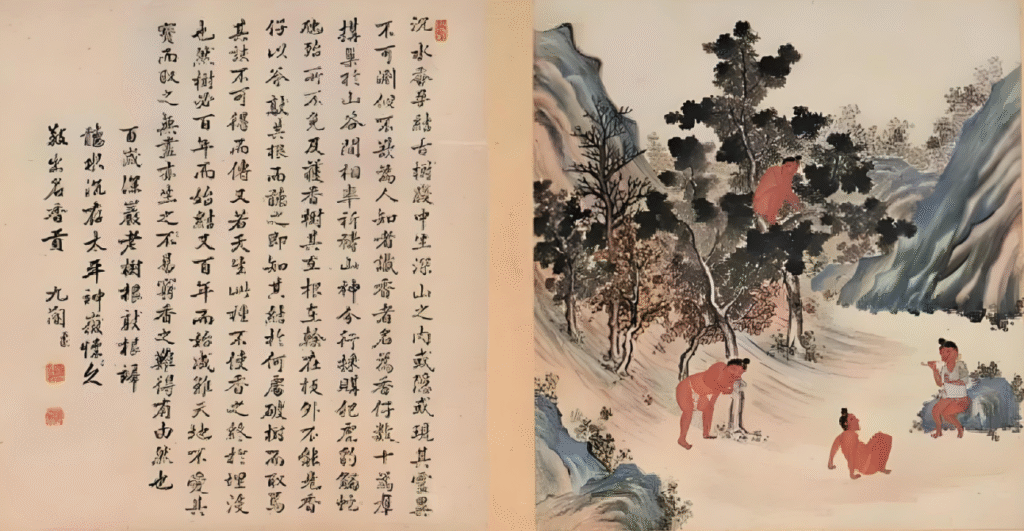
Those who know agarwood are called xiangzai; in groups of dozens they build nests in the valleys and together pray to the mountain gods… When they find an agarwood tree, whether the resin lies in the root, trunk, or branches cannot be seen from the outside. The xiangzai tap its roots with an axe and listen, and thereby know where the resin has formed, then split the tree to take it… Thus agarwood is hard to obtain for good reason.”
This passage describes how ancient xiangzai harvested wild agarwood by experience, using keen ears and the technique of “tapping its roots with an axe and listening” to locate the resin-bearing parts. With growers' growing familiarity with agarwood formation, experienced growers first observe whether the trunk has wounds, decay, broken branches, snapped trunks, or lightning damage; then they look at the tree's vigor. Under normal conditions, if branches and leaves grow less vigorously, turn yellow, or die back locally, it can mostly be concluded that resin has formed.
Generally, the longer the resin formation time, the better the agarwood quality and the higher the yield. Growers can judge harvest timing according to different resin formation methods. For artificial physical methods (such as hole drilling, wounding, and nail driving), harvest is generally after 1–2 years; scrape open the resin layer with a hook knife, and if the scraped resin feels sticky, it can be harvested. For superior quality, harvest after 3–5 years; only after more than 10 years can relatively good agarwood be produced.
High-efficiency resin formation technologies, represented by whole-tree resin formation technology, begin to show results after about 3 months, allow agarwood harvest after 12–18 months, with 18–24 months being the optimal harvest period.
Agarwood can be harvested in all four seasons, but for chemical-induced and artificial inoculation resin formation, spring harvest is preferable, so that after harvest the fungal strains can continue to grow.
The specific harvest method is to select the trunk portions condensed with dark brown or brown aromatic resin, cut them into sections, and the remaining living tree can still continue to form resin; if resin formation extends from the trunk down to the roots, the roots should be dug up as well.
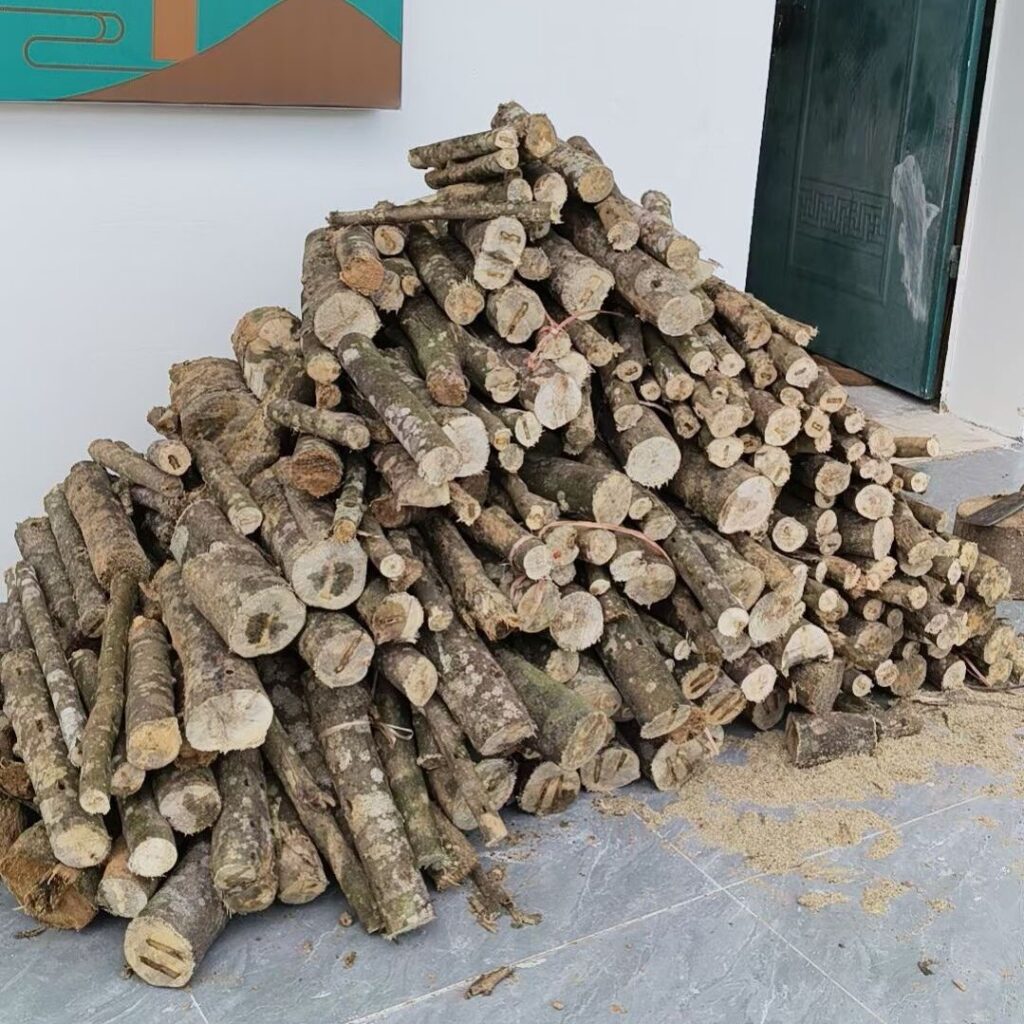
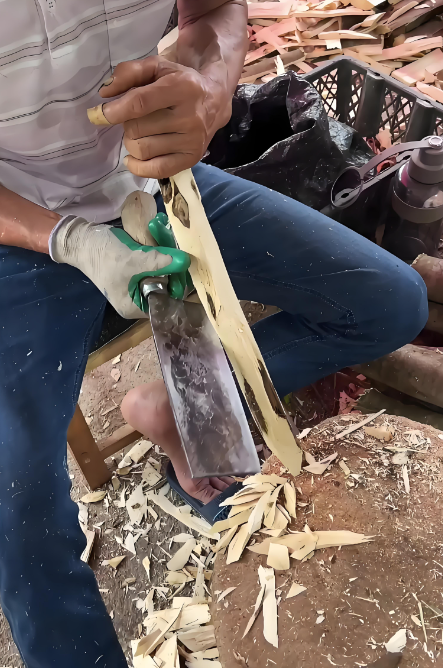
The harvested trunks or roots are first roughly trimmed with a sharp knife to remove the white wood and decayed parts, then carved and dug out with small chisels and carving knives with semicircular blades to remove the white, light, resin-free wood and rotten wood, leaving the black, hard wood, which is dried in the shade; the fragments are made into agarwood powder and agarwood dust.
Whole-tree resin formation technology produces a large resin-bearing area. For trees with a diameter at breast height (DBH) of less than 15 cm, the tree is generally dug out directly for harvest, either whole with roots, or the trunk is first sawn off while retaining the root portion, and then the roots are dug out; for trees with a DBH over 15 cm, the tree is sawn for harvest, cutting the trunk 10–20 cm above the ground, as shown in the figure, and the stump can be retained to continue resin formation or to form a forest and then undergo resin formation again.
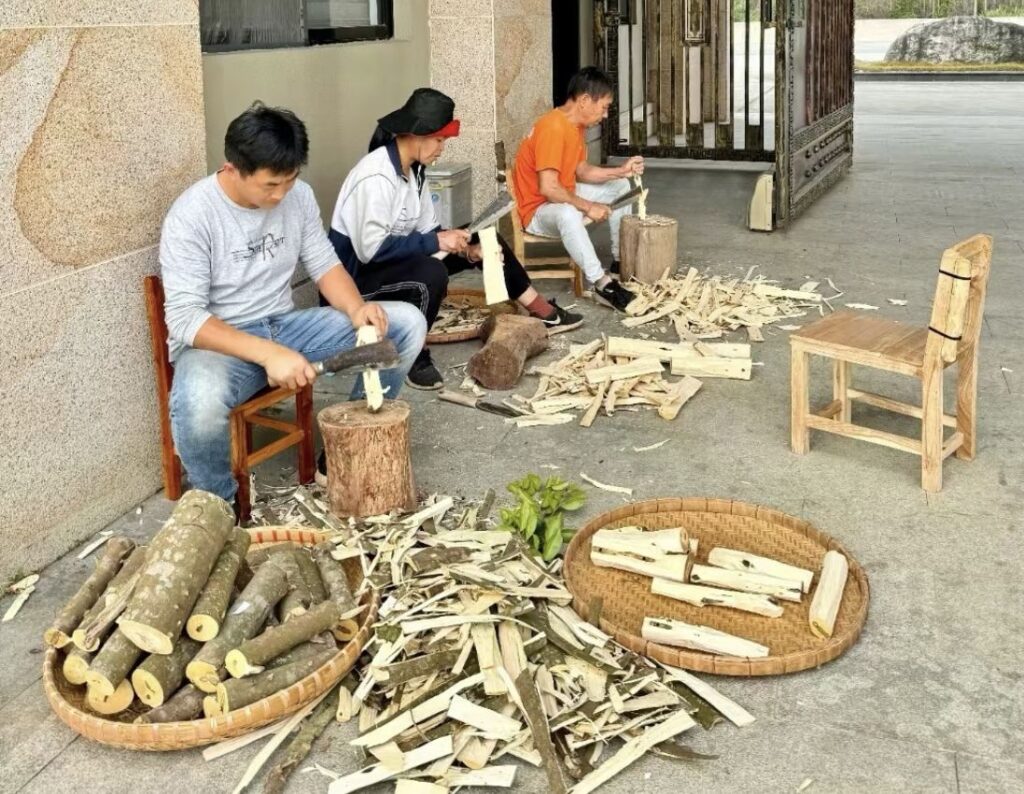
Generally, when harvesting agarwood, both white wood and rotten wood are removed; however, Liao Ge et al. found that the decayed layer contains large amounts of chromone compounds, with a total relative content of 70.25%, and can be used to make incense sticks or extract essential oil.
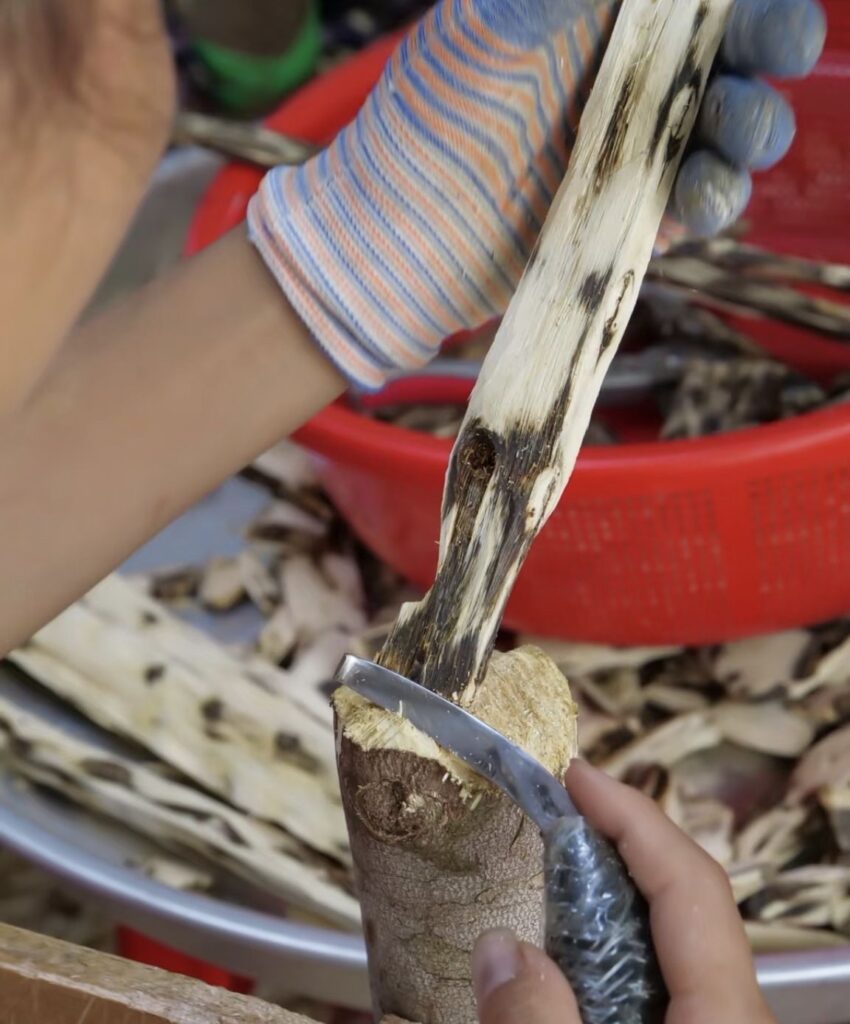
Therefore, when harvesting agarwood obtained by the whole-tree resin formation method, only the white wood needs to be scraped off; the decayed layer and the agarwood layer can be harvested separately for different uses.
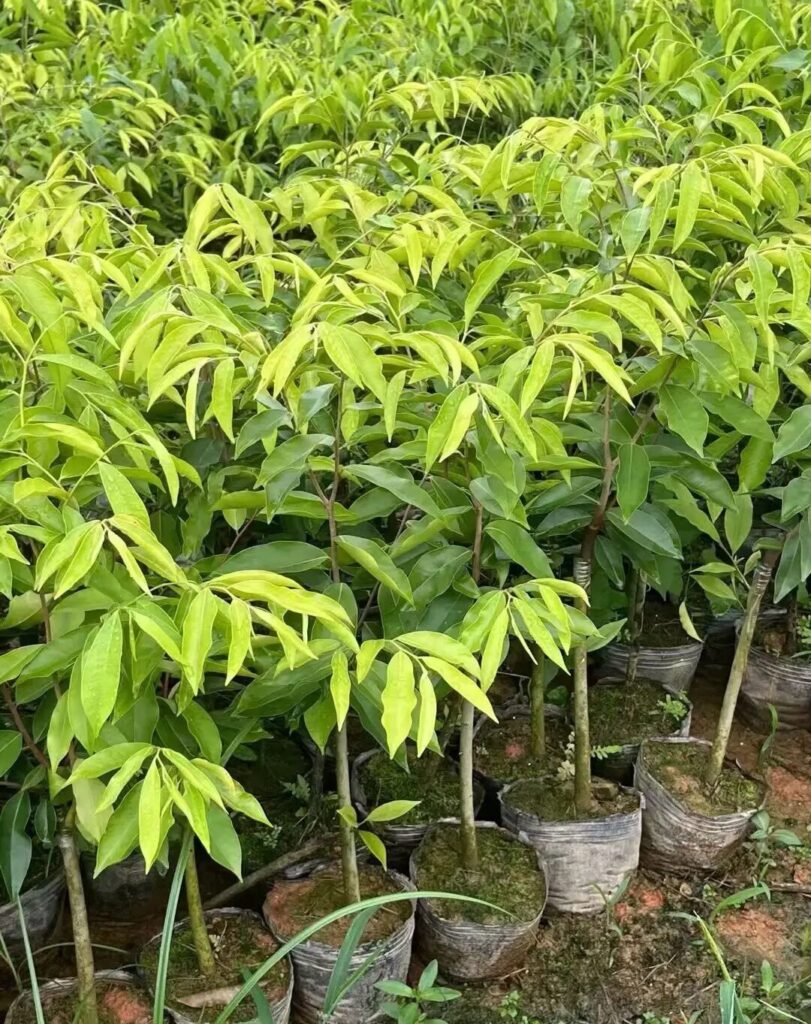
Qinan agarwood cultivation features early resin formation, easy resin formation, and high yield. It generally uses cold drilling or saw cuts to induce resin formation; planting for 3–4 years begins resin formation, and after 2–3 years of resin formation it can be harvested. The harvest method is the same as for ordinary agarwood—digging out the tree or sawing off the trunk (or branches) for harvest; because the wood is relatively soft, harvesting is comparatively easy.
II. Processing of Agarwood
As the area of planted agarwood and agarwood output continue to increase, agarwood processing has become a key link driving the development of the agarwood industry. In 2022, the national output value of the agarwood processing industry reached 10 billion yuan.
At present, the market is dominated by primary processing, mainly distributed in Putian, Fujian and Maoming, Guangdong, mostly by small and micro enterprises, mainly producing agarwood bracelets, incense sticks, and handicrafts, with a market share of 68.2%. There are relatively few deep-processing enterprises for agarwood medicines, essential oils, high-end cosmetics, and related daily chemical products. Well-known enterprises in agarwood deep processing mainly include Taiji Group Chongqing Tongjunge Pharmaceutical Factory (main product: Chenxiang Huaqi Tablets), Inner Mongolia Tianqi Sino-Mongolian Pharmaceutical (main product: Chenxiang Huazhi Pills), and Hainan Nagu Fang Agarwood Technology Co., Ltd. (more than 70 daily chemical products such as agarwood essential oil, agarwood perfume, and agarwood incense patches). Among them, the largest output value is Taiji Group's Chenxiang Huaqi Tablets, with an annual output value of 1 billion yuan.
(1) Primary processing of agarwood
China's agarwood processing industry is mainly primary processing of agarwood incense sticks, bracelets, handicrafts, etc. Putian, Fujian is the country's largest production base for agarwood handicrafts, mainly processing Buddha statues, ornaments, pendants, bracelets, etc.
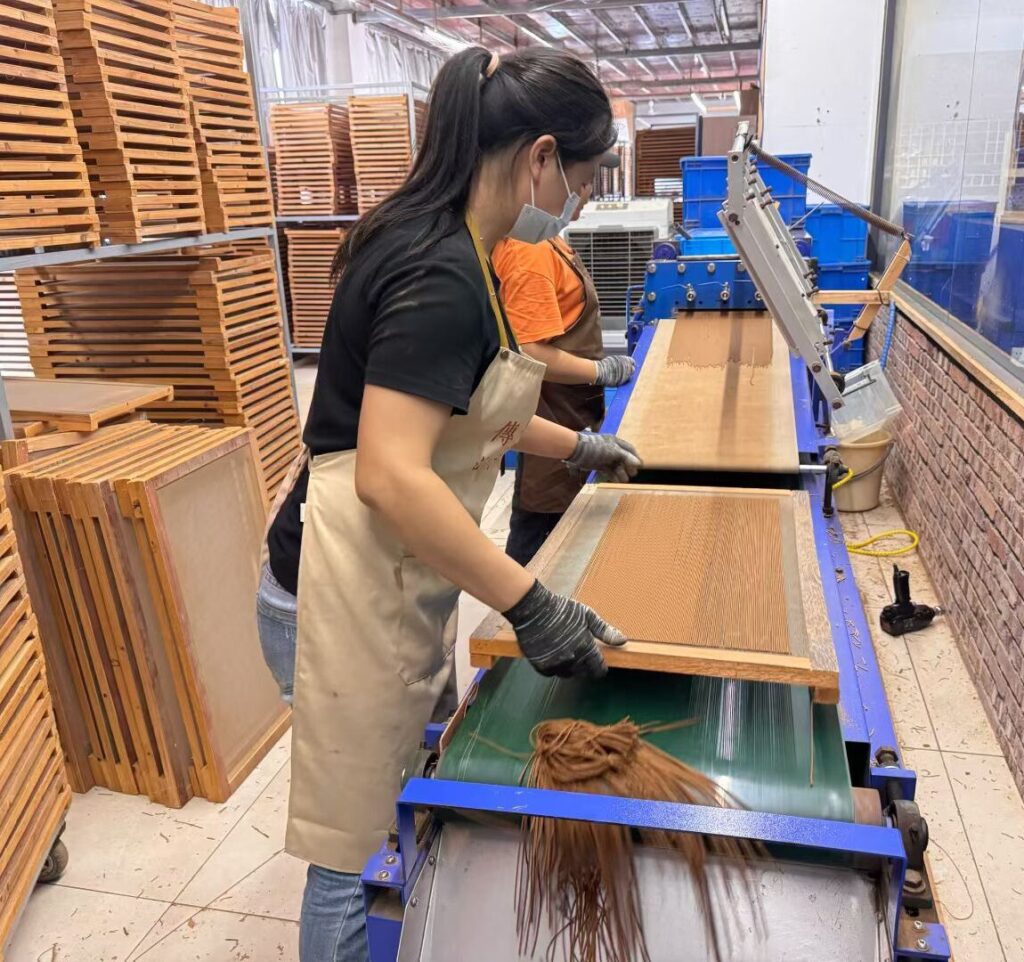
Guangdong has the largest number of agarwood enterprises, accounting for 18.5% of the country; among them, Maoming is the main distribution center for agarwood raw materials, driving the development of primary processing such as agarwood slices, agarwood powder, and agarwood incense sticks. Below is an introduction to the common processing flows for agarwood bracelets and agarwood incense sticks.
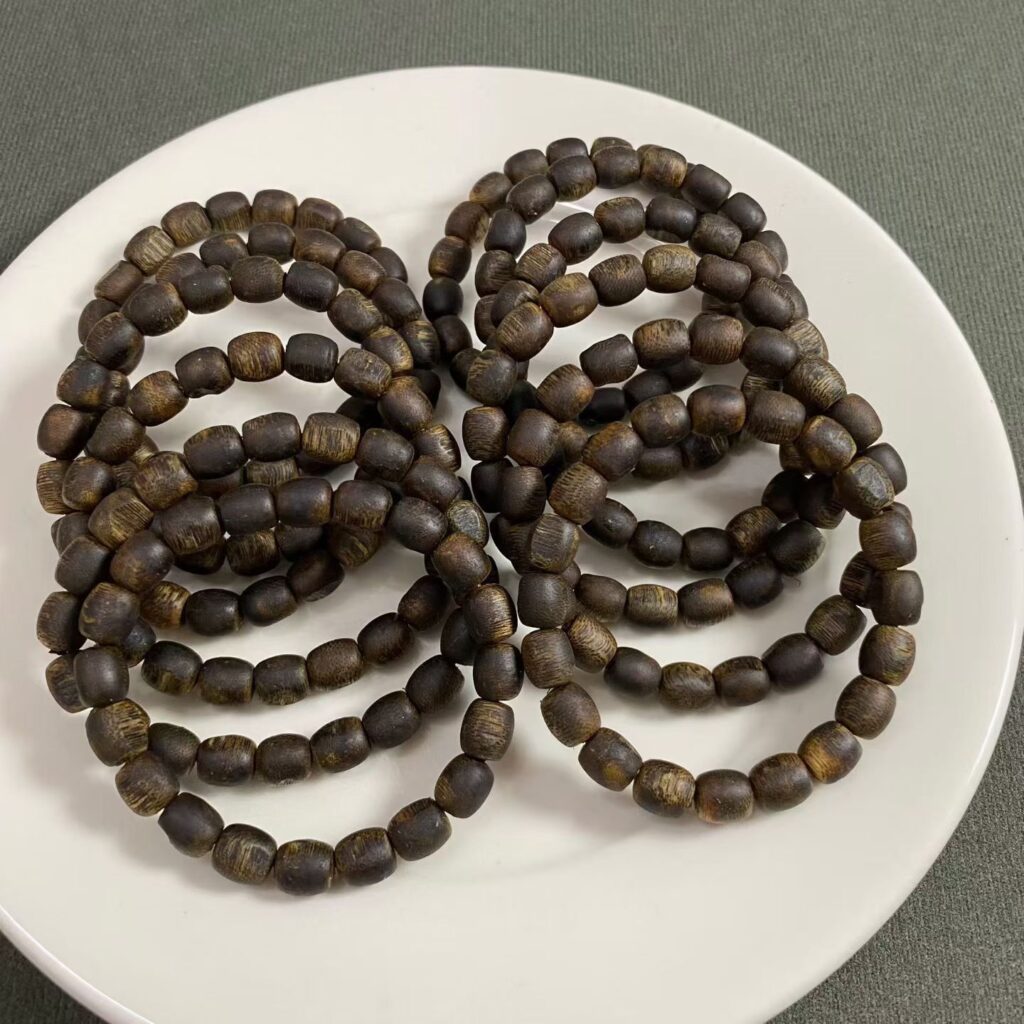
1. Agarwood bracelet processing. Bracelet processing is one of the important ways to utilize agarwood; the process includes material selection, cutting, drilling, grinding, polishing, and other stages.
Material selection: Select agarwood raw materials suitable for making bracelets.
Cutting: Saw the selected agarwood raw material into small square blocks.
Grinding: Generally, shape by water grinding machine; a hanging grinder can also be used with rapidly rotating coarse sandpaper (100-grit sandpaper) to grind into round shapes.
Polishing: Use fine sandpaper (400-grit sandpaper) to trim and polish the beads just ground into round shapes.
Stringing: String the polished beads together.
Compiled for general knowledge; traditional references are cultural notes, not medical advice.
Frequently Asked Questions
What is Harvesting and Processing of Planted Agarwood?
An overview of harvesting timing and methods for planted agarwood and qinan, plus primary processing flows for bracelets and incense sticks.
How should I choose agarwood?
Buy from traceable, testable channels and match the form (incense, beads, raw wood) to your use. Avoid exaggerated claims such as "wild" or "sinking grade" without proof, and prefer products with lab reports and origin documentation.
How should agarwood be stored and maintained?
Agarwood dislikes moisture, odours and direct sunlight. Keep it sealed, dark and cool, store different origins separately, and air and inspect long-stored pieces periodically against mould and insects.
How can I tell real agarwood from fake?
Authentication combines sensory checks with technical ones: natural agarwood has a clean, long-lasting, cool-sweet scent and burns with pale, non-pungent smoke. GC-MS analysis of characteristic compounds (chromones, sesquiterpenes) adds objective confirmation. Buying through traceable channels with certificates lowers the risk.
How do agarwood origins differ?
Climate, tree species and resin-induction methods give each origin a distinct scent profile — for example Hainan tends to be clean and elegant, Vietnam sweet and cool, Indonesia deep and full. Origin is a key factor in grading and pricing.
What is the current agarwood market like?
Prices diverge sharply by resin density, origin and form, with both top-end collectibles and entry-level consumer products active. Use actual transactions from legal, testable channels as reference rather than a single quotation.
What is the relationship between agarwood and incense culture?
Agarwood is the core medium of East Asian incense culture, spanning temple offerings, literati gatherings and contemporary lifestyle aesthetics. Understanding this cultural background helps explain its value.
Does agarwood have health benefits?
Traditionally agarwood has been used for calming and sleep-related rituals, but evidence quality and dosage need careful reading. Keep traditional use and scientific evidence clearly separated and follow professional guidance.
参考资料
You may also like



评论区
评论匿名可浏览,登录后可发表;提交后先审后显。
评论加载中…