"King of Spices" Agarwood: More Than Just Fragrance
Agarwood has long been known as the "king of spices." Its aroma calms and soothes the mind, and it is also an effective medicinal herb with distinctive properties: it moves qi and relieves pain, and helps the kidneys grasp qi to ease asthma.
Once so rare it was worth its weight in gold, today agarwood is used to make teas, burned as incense to aid sleep, and worn to support vitality.
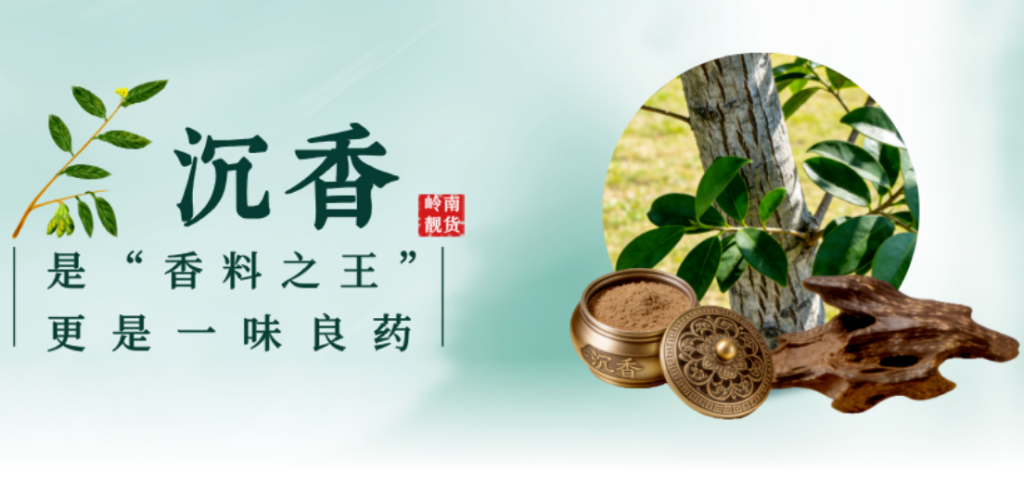
As agarwood quietly becomes part of everyday life, Chenxiang123.com today takes you closer to agarwood.
King of Spices: Where Does Agarwood Come From?
Agarwood takes its name from the saying that "the heartwood sinks when placed in water." It is also known as honey fragrance, chicken-bone fragrance, zhanxiang, huangshuxiang, and suxiang. Unlike sandalwood or pine and cypress, agarwood is not a wood that naturally contains fragrance. Rather, it is a solid concretion of resinous and woody material that Aquilaria trees produce to repair themselves after being stimulated or injured.
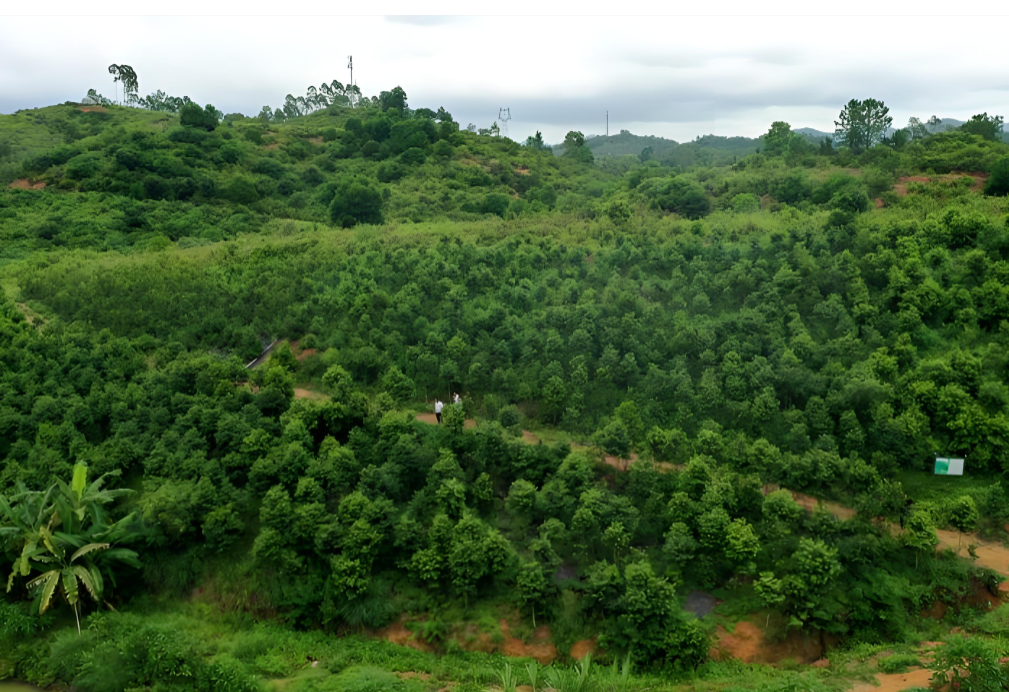
Among these, the agarwood produced by Aquilaria sinensis is renowned for its clear, bright sweetness and long-lasting aroma profile. It is the representative of traditional Chinese agarwood and is often called "national fragrance." Maoming in Guangdong and Sanya in Hainan are the most suitable regions for growing Aquilaria sinensis.
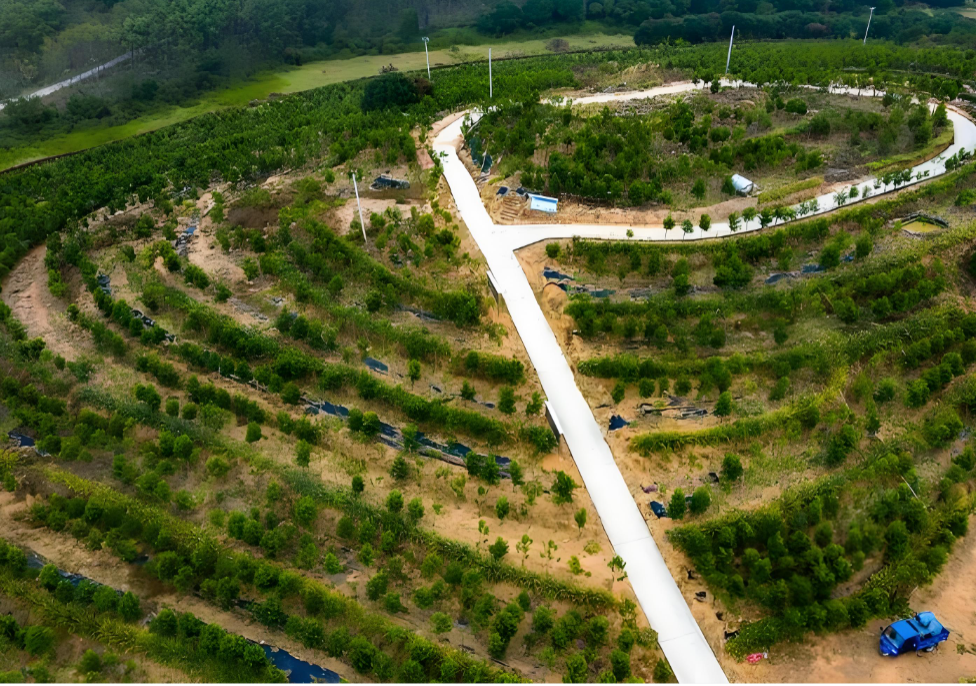
Agarwood Plantation in Dianbai, Maoming, Guangdong
Maoming, Guangdong, as a core production area of natural agarwood in China, has a history of 1,500 years. In recent years, the local government has made the agarwood industry an important lever for implementing the "Hundred Counties, Thousand Towns, Ten Thousand Villages" project and promoting coordinated urban-rural development. It has driven the agarwood industry from traditional planting and processing toward high-quality development featuring standardization, branding, and a complete industry chain. A wide range of agarwood products has been developed, including medicinal devices, edible health products, daily chemical and personal care items, aromatic products for enjoyment, craft collectibles, Buddhist ritual items, and collectible wealth-preserving pieces. Agarwood is gradually "flying into the homes of ordinary people."
Overview of Agarwood's Benefits
As a traditional Chinese medicine, agarwood was first recorded in the *Mingyi Bielu* and listed as a superior-grade herb. It can "treat wind-water toxic swelling and dispel foul qi." The *Bencao Gangmu* records that agarwood "treats upper heat and lower cold, qi counterflow and panting, deficiency-type constipation, qi strangury with urinary difficulty, and cold essence in men."
The 2025 edition of the *Chinese Pharmacopoeia* records that agarwood is acrid, bitter, and slightly warm. It moves qi and relieves pain, warms the middle and stops vomiting, and helps the kidneys grasp qi to ease asthma. It is used for chest and abdominal distension, fullness, and pain; vomiting and hiccups due to stomach cold; and asthma and rapid breathing due to kidney deficiency and qi counterflow.
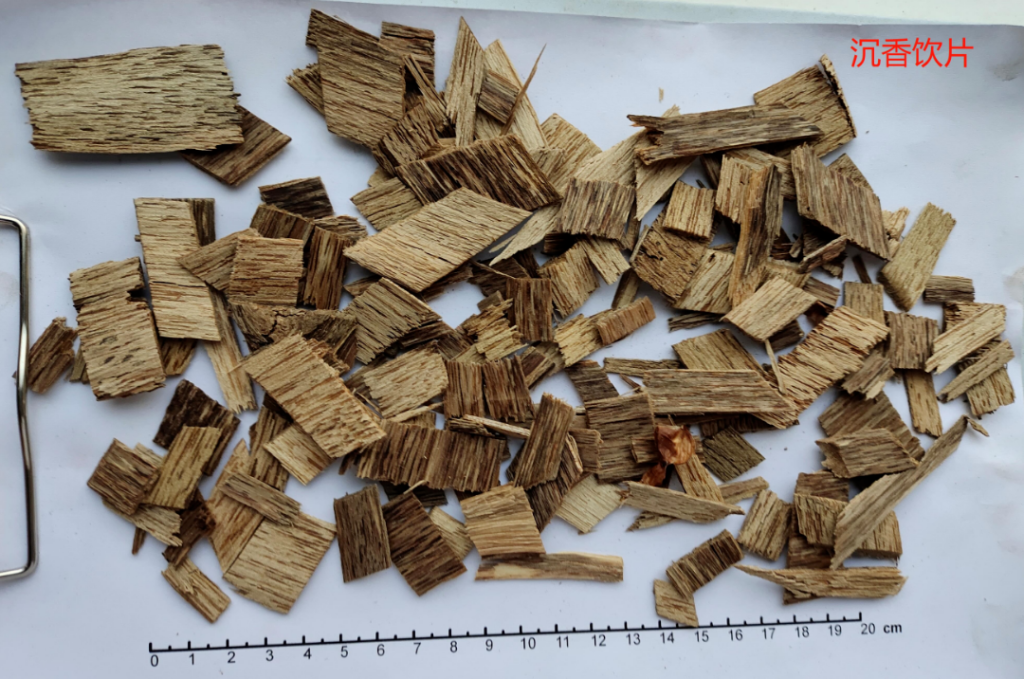
Agarwood Medicinal Material and Decoction Pieces
Specifically, agarwood's benefits include: Moving qi and relieving pain. Chest tightness and stomach or abdominal distension and pain are sometimes related to "poor qi movement." Agarwood is acrid and aromatic, with a dispersing nature; it can resolve qi stagnation and relieve chest and abdominal pain. A classic formula is "Agarwood Four-Grind Decoction," often combined with Lindera root and areca seed, specifically for qi stagnation. Warming the middle and stopping vomiting. Stomach cold easily leads to vomiting and persistent hiccups. Agarwood is bitter in taste and heavy in nature and can "descend counterflow and stop vomiting." For example, for hiccups due to stomach cold, it is often used with clove and persimmon calyx. Helping the kidneys grasp qi and easing asthma. This is a distinctive feature of agarwood. Many people think asthma is only a lung problem, but it is also related to the kidneys. When the kidneys are deficient and cannot "grasp qi," deficiency-type asthma occurs. Agarwood warms and tonifies the lower origin, helping to hold the breath and improve asthma due to kidney deficiency and qi counterflow. Inhibitory effect on the central nervous system. Modern pharmacological research also shows that agarwood has pharmacological effects on the digestive and central nervous systems. In particular, it has a strong psychoactive effect and is used to calm the mind and spirit. In addition, agarwood is used medicinally to treat mental disorders such as neurosis, obsessive-compulsive disorder, schizophrenia, and neurasthenia.
How to Combine Agarwood for Enhanced Effects
Agarwood can be taken internally. Grind agarwood medicinal material into a fine powder and take it with warm water, rice water, or lightly salted water. The powder can also be sprinkled into warm porridge or soup and stirred well. It is suitable for people with spleen-stomach deficiency cold and qi stagnation, or kidney deficiency unable to grasp qi with deficiency-type asthma.
Note: use with caution in cases of yin deficiency with fire hyperactivity; it is not suitable for those with qi deficiency and sinking. Pregnant and breastfeeding women should use it under the guidance of a traditional Chinese medicine practitioner.
01 Agarwood with Donkey-Hide Gelatin
Agarwood can secure and grasp kidney qi and calm asthma and cough; donkey-hide gelatin can nourish lung yin and stop bleeding.
Used together, one descends and one tonifies. Agarwood is acrid and aromatic with a dispersing nature, which prevents donkey-hide gelatin from being overly cloying. It can be used to treat cough and hemoptysis caused by lung deficiency and yin depletion, with fire scorching the lung collaterals.
02 Agarwood with Musk
Agarwood is warm in nature and aromatic in qi; it can calm and descend upward counterflow qi and also resolve damp turbidity. Musk is acrid, warm, and aromatic, with a strong dispersing nature; it can penetrate upward and downward and remove stasis and turbid pathogenic qi.
Used together, they can be used for vomiting and hiccups in children caused by damp turbidity obstruction and spleen-stomach qi stagnation.
03 Agarwood with Aconite
Agarwood can suppress the upward rising of kidney fire to treat the branch; aconite is sweet in taste and very hot in nature, can strengthen the fire of the life gate, expel cold phlegm, and treat the root.
Used together, they can free yin and yang and resolve fever. They are used to treat cold phlegm with deficiency heat, and various types of consumption-related conditions with either cold or heat.
04 Agarwood with Red Poria
Agarwood can warm the kidneys and move qi, guiding water dampness out through urination; red poria can help the kidneys transform dampness and promote urination, separating clear from turbid (allowing the small intestine to absorb the refined substances from food and drink, while food residue and fluids are excreted through the large intestine and bladder).
Used together, they can be used to treat turbid urine resembling white pulp, unsmooth urination, or accompanying pain.
More Than Medicine: N Ways to Use Agarwood
In addition to decoction and consumption, agarwood can also be used externally by burning, wearing, or applying.

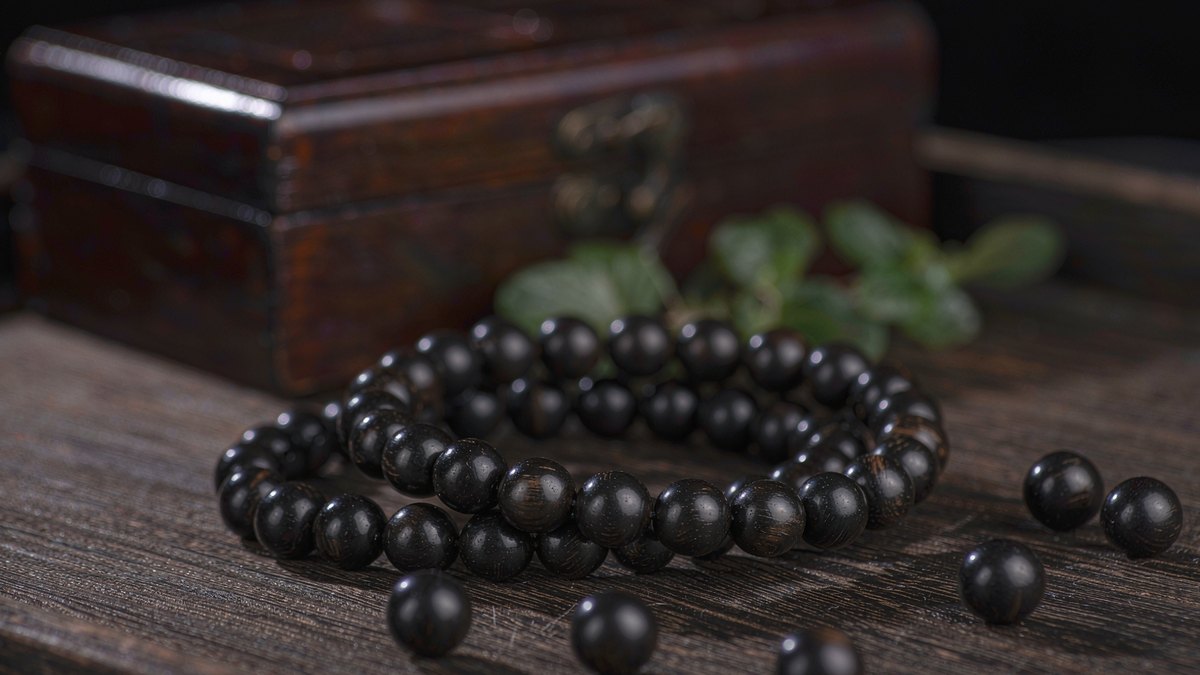
Agarwood bead bracelets and similar products: Agarwood is a premium raw material for high-end crafts and ornaments and is often made into Buddhist beads, bracelets, and other collectible items. Agarwood bead bracelets have a clear, distant aroma; wearing them can calm the mind and help with sleep.
Agarwood Aromatic Products
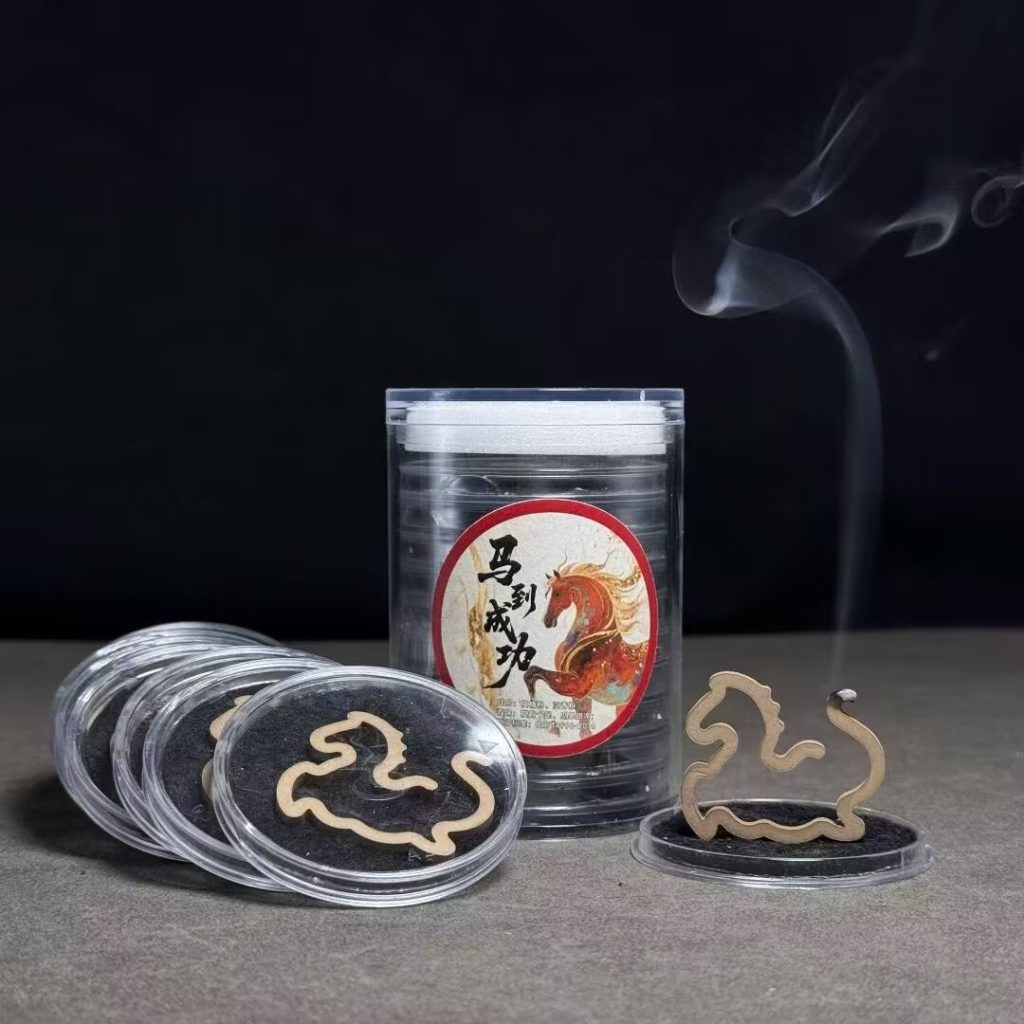
Agarwood aromatic products are diverse, commonly including agarwood incense sticks, auspicious-cloud incense, aromatic ornaments, and sachets. Agarwood's aroma can help open the orifices and refresh the mind, soothe tension, and create a tranquil atmosphere.
Agarwood Essential Oil Products
Agarwood essential oil has hemostatic and analgesic effects on skin burns and scalds; it also has a good calming effect on the nerves and can effectively improve sleep quality.
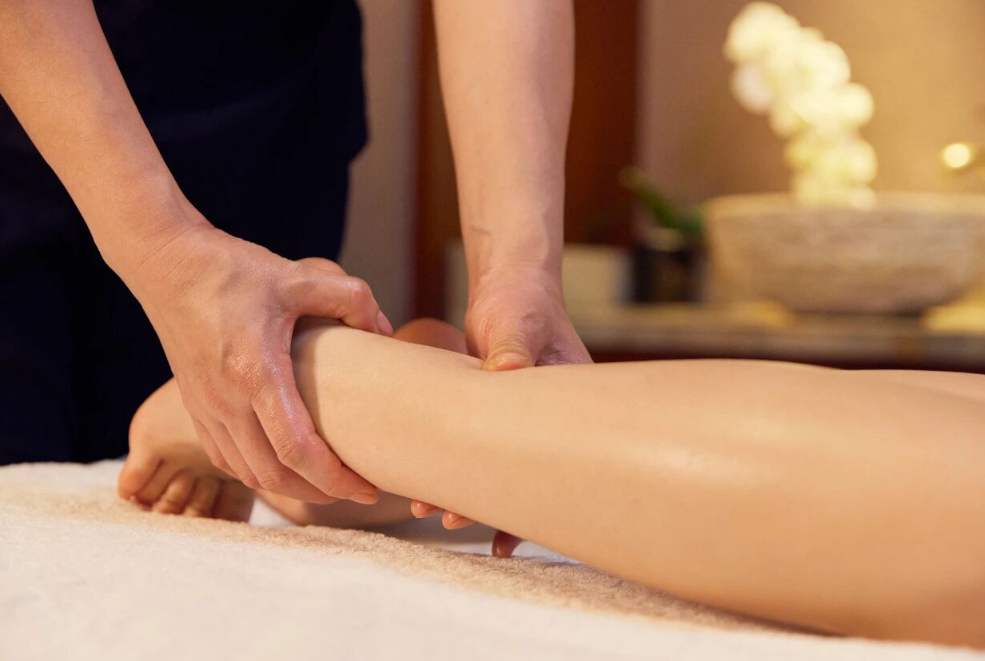
In addition, massaging the skin with agarwood essential oil helps promote local blood circulation, relieve physical fatigue, and ease muscle soreness. It also has an auxiliary effect on improving cold hands and feet.
With continuous advances in cultivation and development technology, agarwood's applications have been further expanded. Various personal care products have been developed, including agarwood shampoo, conditioner, soap, skincare lotion, toothpaste, and facial cleanser, as well as daily items such as agarwood pillows.
Compiled for general knowledge; traditional references are cultural notes, not medical advice.
Frequently Asked Questions
What is "King of Spices" Agarwood?
Agarwood, long prized as the "king of spices," calms the mind and serves as a potent medicinal herb for moving qi, relieving pain, and easing asthma. Once prohibitively rare, it now features in teas, incense, and daily wellness products.
How should I choose agarwood?
Buy from traceable, testable channels and match the form (incense, beads, raw wood) to your use. Avoid exaggerated claims such as "wild" or "sinking grade" without proof, and prefer products with lab reports and origin documentation.
How should agarwood be stored and maintained?
Agarwood dislikes moisture, odours and direct sunlight. Keep it sealed, dark and cool, store different origins separately, and air and inspect long-stored pieces periodically against mould and insects.
How can I tell real agarwood from fake?
Authentication combines sensory checks with technical ones: natural agarwood has a clean, long-lasting, cool-sweet scent and burns with pale, non-pungent smoke. GC-MS analysis of characteristic compounds (chromones, sesquiterpenes) adds objective confirmation. Buying through traceable channels with certificates lowers the risk.
How do agarwood origins differ?
Climate, tree species and resin-induction methods give each origin a distinct scent profile — for example Hainan tends to be clean and elegant, Vietnam sweet and cool, Indonesia deep and full. Origin is a key factor in grading and pricing.
What is the current agarwood market like?
Prices diverge sharply by resin density, origin and form, with both top-end collectibles and entry-level consumer products active. Use actual transactions from legal, testable channels as reference rather than a single quotation.
What is the relationship between agarwood and incense culture?
Agarwood is the core medium of East Asian incense culture, spanning temple offerings, literati gatherings and contemporary lifestyle aesthetics. Understanding this cultural background helps explain its value.
Does agarwood have health benefits?
Traditionally agarwood has been used for calming and sleep-related rituals, but evidence quality and dosage need careful reading. Keep traditional use and scientific evidence clearly separated and follow professional guidance.
参考资料
You may also like



评论区
评论匿名可浏览,登录后可发表;提交后先审后显。
评论加载中…