The World's Finest Fragrance: Ranjatai — A National Treasure of Japan and a Witness to Sino-Japanese Exchange
In Todai-ji Temple in Tokyo, Japan, there is a piece of wood that is not only hailed as a Japanese national treasure but also serves as a witness to the historical exchanges between China and Japan. This wood is the world's finest fragrance: Ranjatai, a piece of agarwood bestowed by Emperor Yang of the Sui Dynasty to a Japanese envoy.

So why did Emperor Yang of Sui give a piece of wood to the Japanese? What makes this piece of wood so special? And how do the Japanese cherish it? Let us explore the mysterious veil of this piece of history together.
In 607 AD, China was in the prosperous era of the Sui Dynasty, while Japan at that time was relatively backward. In order to learn China's advanced culture and technology, Japan sent an envoy, Ono no Imoko, to Chang'an to pay homage to Emperor Yang of Sui.
However, an unexpected situation arose during this homage. After meeting Emperor Yang of Sui, Ono no Imoko read out a congratulatory message from the Japanese emperor to Emperor Yang of Sui. The first sentence of the message was: "The Son of Heaven in the land where the sun rises addresses the Son of Heaven in the land where the sun sets." This meant that because Japan is located to the east of China, the Japanese emperor sees the sun earlier than Emperor Yang of Sui. To Emperor Yang of Sui, this was extremely rude and provocative. He believed that Japan was a vassal state of China and had no right to be on equal footing with China, let alone mock China. He flew into a rage on the spot and wanted to punish Ono no Imoko. Fortunately, someone intervened in time, and Ono no Imoko quickly reported the matter to the Japanese emperor. Upon learning of this, the Japanese emperor was also very alarmed and hurriedly wrote another letter to Emperor Yang of Sui to explain and apologize.
After some twists and turns, the incident was finally settled. When Ono no Imoko was about to return to Japan, according to custom, Emperor Yang of Sui was to bestow some gifts on him. Considering the previous misunderstanding and conflict, Emperor Yang of Sui decided to give Ono no Imoko a special gift to show magnanimity and friendliness. This gift was Ranjatai.
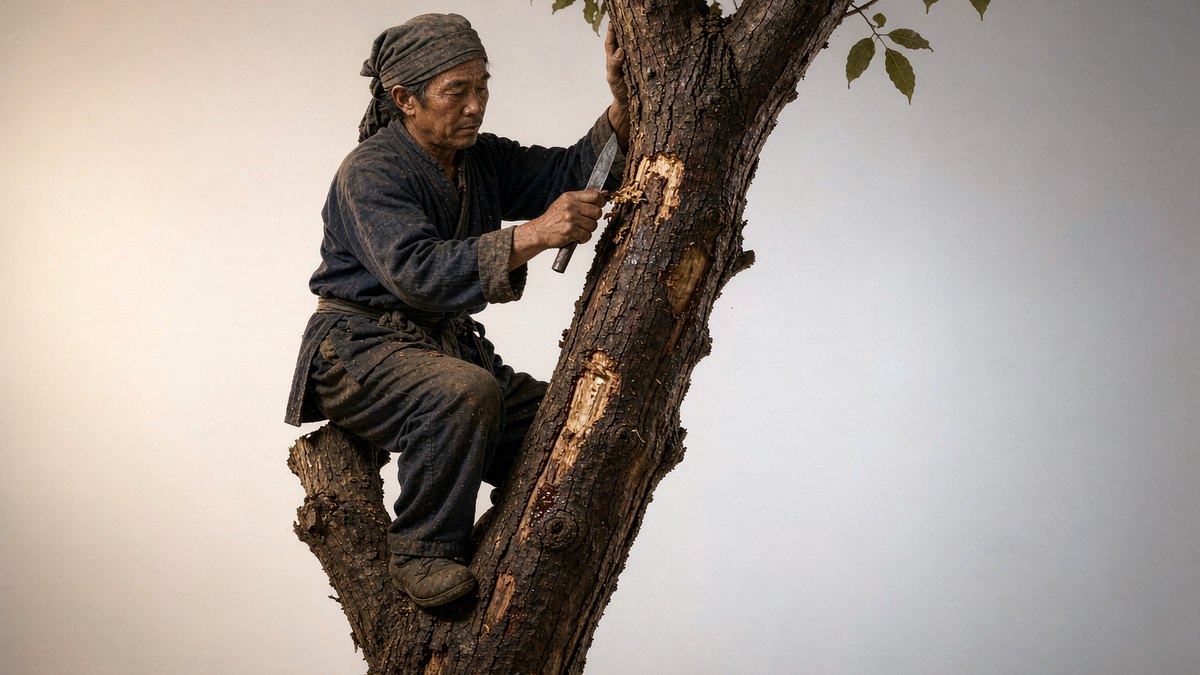
Ranjatai, a treasure-like piece of agarwood. This rare spice and medicinal material originates from the self-repair of trees after being attacked by fungi or insects. Inside the tree trunk, agarwood forms a unique wood with a rich aroma, deep color, and extremely high density.

Among them, the highest grade "black agarwood" is precisely the variety of Ranjatai. Ranjatai is 156 cm long and weighs 11.6 kg, shaped like a swimming fish. Its surface is smooth like black jade, and its interior is fine and reddish-brown like silk.
The elegant and lasting aroma emitted by agarwood can purify the air, calm the mind, ward off evil and avoid misfortune, and enhance immunity. It can be said to integrate health preservation, decoration, and enjoyment.
Agarwood, a rare plant with rich medicinal value. It can cure various diseases, such as rheumatism, gout, stomach problems, skin diseases, etc., and as time goes by, its aroma and medicinal effects only become more pronounced.
During the Sui Dynasty, Ranjatai was an incomparably precious treasure. Even Emperor Yang of Sui had given it as a precious gift to the Japanese. It is said that Emperor Yang of Sui even used agarwood to make a 36-meter-tall Buddha statue to display his luxury and majesty.
This Buddha statue once stood in Daxingshan Temple in Daxing City and was the tallest Buddha statue in the world at that time. However, this luxurious work of the emperor was later demolished by Emperor Taizong of Tang, Li Shimin.
Ono no Imoko intercepted Ranjatai within Japan and was deeply moved by this treasure. He brought it back to Japan and presented it to the emperor. Upon seeing this treasure, the emperor was greatly shocked and awed.
He believed that this was a special gift from Emperor Yang of Sui to Japan, expressing deep goodwill. To show respect for Emperor Yang of Sui, he even performed a kneeling salute to Emperor Yang of Sui. Subsequently, the emperor named Ranjatai "the finest of all things, Ranjatai," meaning that the most beautiful item is Ranjatai. He regarded Ranjatai as a Japanese national treasure and entrusted it to Todai-ji Temple for safekeeping. From then on, Ranjatai became the highest symbol of Japan, and only the emperor and the shogun had the right to use it. Whenever Ranjatai was used, the user needed to leave a note on it stating their identity and the time of use.
According to records, Ranjatai has been used three times.
Among them, in 1469 AD, Ashikaga Yoshimasa, in order to pray for national peace, cut a small piece from Ranjatai and left the four characters "Ashikaga Yoshimasa cut incense" on it.

In 1574, Oda Nobunaga, in the name of authority and prestige, cut a small piece from Ranjatai and left the mark "Oda Nobunaga cut incense."

In 873, Emperor Meiji commemorated the success of the Meiji Restoration and also cut a small piece from Ranjatai, leaving the mark "Cut by imperial order in the tenth year of Meiji."

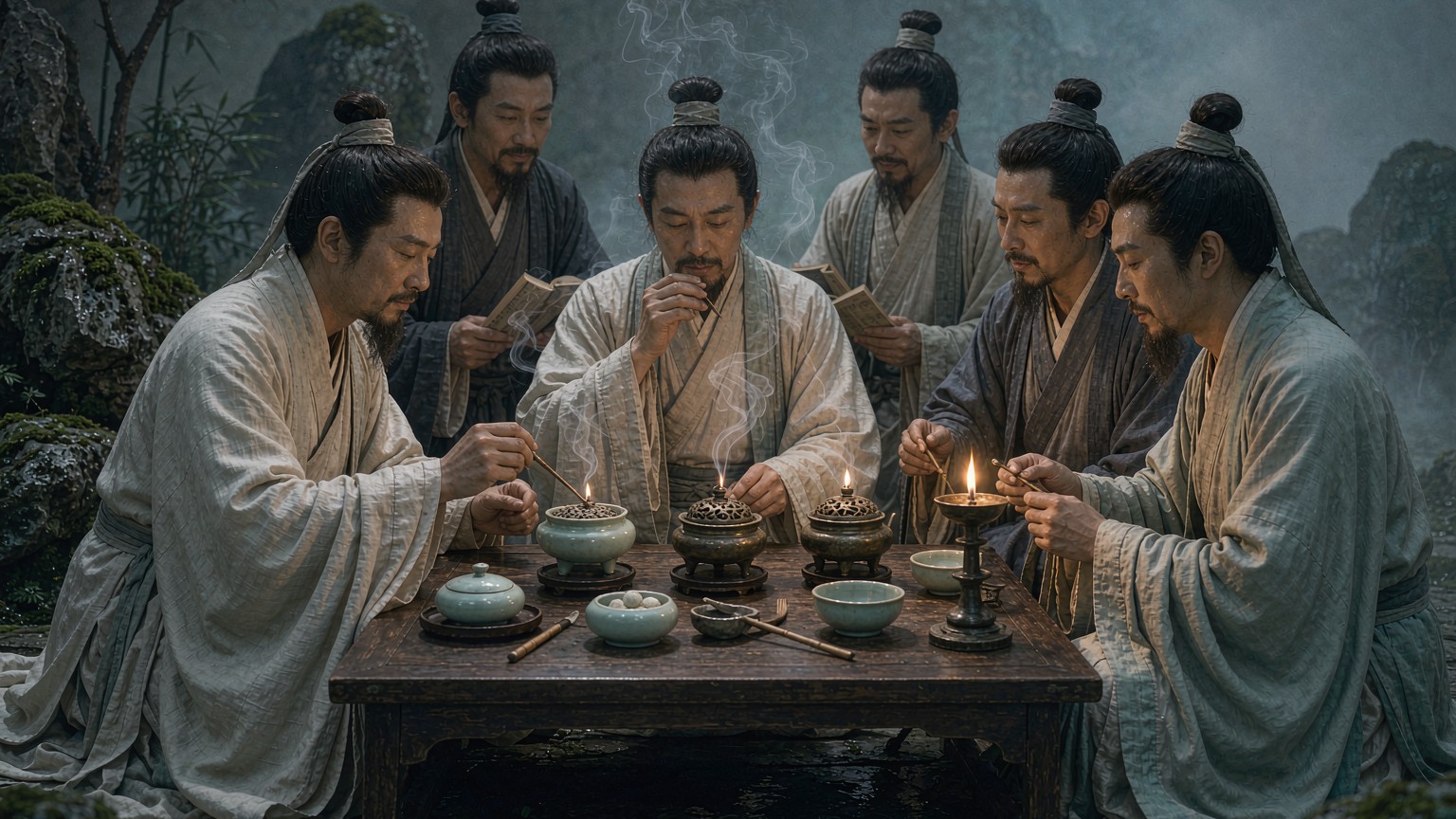
Apart from these two instances, no one dared to touch Ranjatai, including the emperor and the shogun, and it was used only on special occasions. The traditional Japanese ceremony "Listening to Incense" involves burning various spices among a group of people, and participants identify the type and quality of the spices by smelling them. It is a game that tests spice knowledge and appreciation ability.
Those who can identify the fragrance of Ranjatai are the highest-level incense listeners.
Ranjatai, a Japanese national treasure, is an indispensable part of Japanese culture. It has left a deep imprint on art, literature, religion, etiquette, and many other aspects.

Let us appreciate the charm of Ranjatai through the following examples. In the field of art, Ranjatai is regarded as a symbol of beauty. Whether its shape or aroma, it is highly praised and imitated.
For example, there is a traditional Japanese painting style called "Ranjatai painting," which takes Ranjatai as its theme, depicting the image of Ranjatai in ink or color, or using the aroma of Ranjatai as inspiration to create abstract patterns.
This painting style has produced many famous artists in Japanese history, such as Fujiwara no Teika, Yamaguchi Sodō, and Ike no Taiga, whose works all express respect and love for Ranjatai.
In the field of literature, Ranjatai is also frequently used as a cultural symbol in poetry and stories. For example, the "Song of Ranjatai" written by the Heian period poetess Ono no Komachi describes the mystery and charm of Ranjatai.
The lyrics are as follows: Ranjatai, your fragrance fills the air, your petals are as bright as the moon. You bloom in spring, you wither in autumn, you are an eternal poem.

Overall, Ranjatai is a treasure of Japanese culture, and its beauty, fragrance, and form are deeply imprinted in the hearts of the Japanese people. Whether in art or literature, Ranjatai is an important element of traditional Japanese culture and a unique symbol of Japanese culture.
This song expresses the poet's deep yearning and sense of mystery toward Ranjatai, while also implying a passionate desire for love and loneliness. In the Edo period, Ihara Saikaku wrote a famous novel titled "The Tale of Ranjatai," which takes Ranjatai as its theme and interweaves elements of love, power, conspiracy, and revenge. It is recognized as a classic masterpiece in the history of Japanese literature.
In the religious field of Japan, Ranjatai is endowed with sacred and sublime significance, regarded as an incarnation of Buddhas and Bodhisattvas that can bring blessings and inspiration. For example, in Todai-ji Temple, there is a Buddha statue called "Eleven-Faced Kannon," which was transformed from another national treasure bestowed by the Sui Dynasty to Japan—the gilt-bronze Eleven-Faced Kannon statue.
This Buddha statue has a small hole ingeniously embedded in its head, containing Ranjatai, intended to give the statue a fresh fragrance and enhance its divine charm and solemnity. In addition, in temples and shrines across Japan, Ranjatai, together with statues and ritual implements, is a symbol of sublime faith, such as at Horyu-ji Temple, Kasuga Taisha, and Byodo-in Temple.
In Japanese etiquette culture, Ranjatai is regarded as a symbol of nobility and respect and is often used on solemn occasions such as audiences, sacrifices, and weddings. The incense culture represented by Ranjatai has always been one of the essences of Japanese tradition.
In incense ceremonies, people cultivate their perception and cultivation of beauty and morality by appreciating the aroma, shape, and color of spices, thereby enhancing their own character and taste.
This ceremony has been passed down since ancient times, with many schools and rules, such as the Sakurai-ryu, Kobori-ryu, and Takeda-ryu. In these schools, Ranjatai, with its unique status, has become the most noble and sacred spice, and only on the most special occasions can it be offered.
From the above examples, it is not difficult to see that Ranjatai plays a pivotal role in Japanese culture. It has transcended the category of agarwood and become a symbol containing spiritual and symbolic significance.
This article was compiled by "Chenxiang Web" and the original source: https://www.chenxiang123.com/tinaxiadiyixiang-lanshedai/
Compiled for general knowledge; traditional references are cultural notes, not medical advice.
Frequently Asked Questions
What is The World's Finest Fragrance?
In Todai-ji Temple in Tokyo, Japan, there is a piece of wood not only revered as a Japanese national treasure but also a witness to historical exchanges between China and Japan. This wood is the world's finest fragrance: Ranjatai, a piece of agarwood bestowed by Emperor Yang of Sui to a Japanese env
How should I choose agarwood?
Buy from traceable, testable channels and match the form (incense, beads, raw wood) to your use. Avoid exaggerated claims such as "wild" or "sinking grade" without proof, and prefer products with lab reports and origin documentation.
How should agarwood be stored and maintained?
Agarwood dislikes moisture, odours and direct sunlight. Keep it sealed, dark and cool, store different origins separately, and air and inspect long-stored pieces periodically against mould and insects.
How can I tell real agarwood from fake?
Authentication combines sensory checks with technical ones: natural agarwood has a clean, long-lasting, cool-sweet scent and burns with pale, non-pungent smoke. GC-MS analysis of characteristic compounds (chromones, sesquiterpenes) adds objective confirmation. Buying through traceable channels with certificates lowers the risk.
How do agarwood origins differ?
Climate, tree species and resin-induction methods give each origin a distinct scent profile — for example Hainan tends to be clean and elegant, Vietnam sweet and cool, Indonesia deep and full. Origin is a key factor in grading and pricing.
What is the current agarwood market like?
Prices diverge sharply by resin density, origin and form, with both top-end collectibles and entry-level consumer products active. Use actual transactions from legal, testable channels as reference rather than a single quotation.
What is the relationship between agarwood and incense culture?
Agarwood is the core medium of East Asian incense culture, spanning temple offerings, literati gatherings and contemporary lifestyle aesthetics. Understanding this cultural background helps explain its value.
Does agarwood have health benefits?
Traditionally agarwood has been used for calming and sleep-related rituals, but evidence quality and dosage need careful reading. Keep traditional use and scientific evidence clearly separated and follow professional guidance.
参考资料
You may also like

评论区
评论匿名可浏览,登录后可发表;提交后先审后显。
评论加载中…