Su Dongpo's "Ode to the Agarwood Mountain"
"Ode to the Agarwood Mountain" was a 60th-birthday gift from Su Shi (Su Dongpo) to his younger brother Su Zhe.
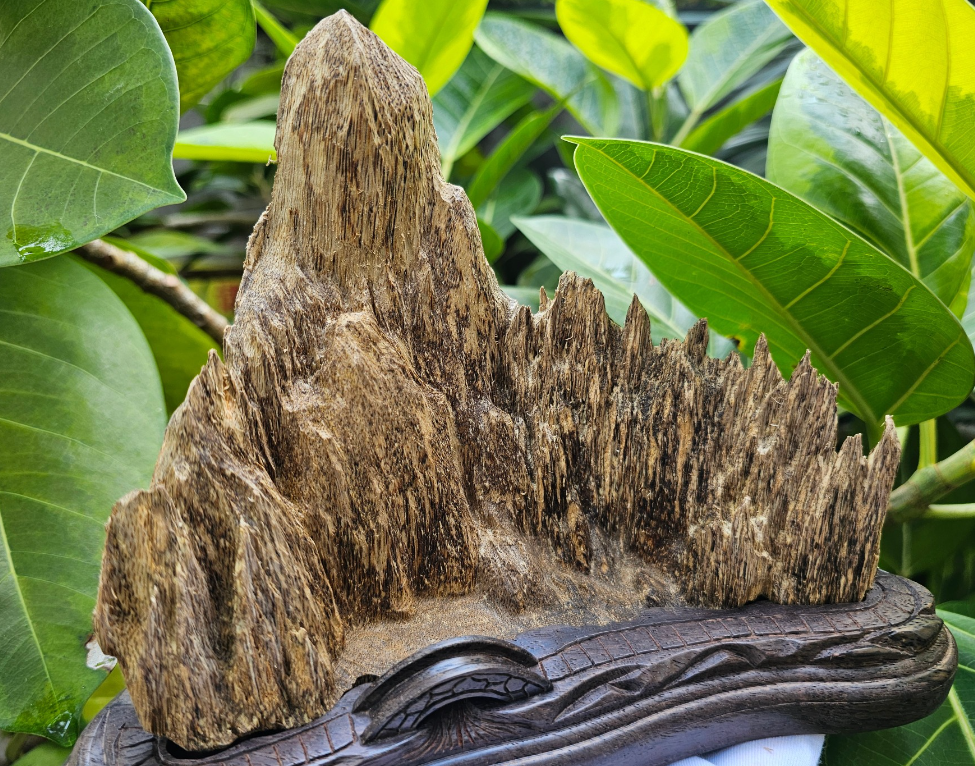
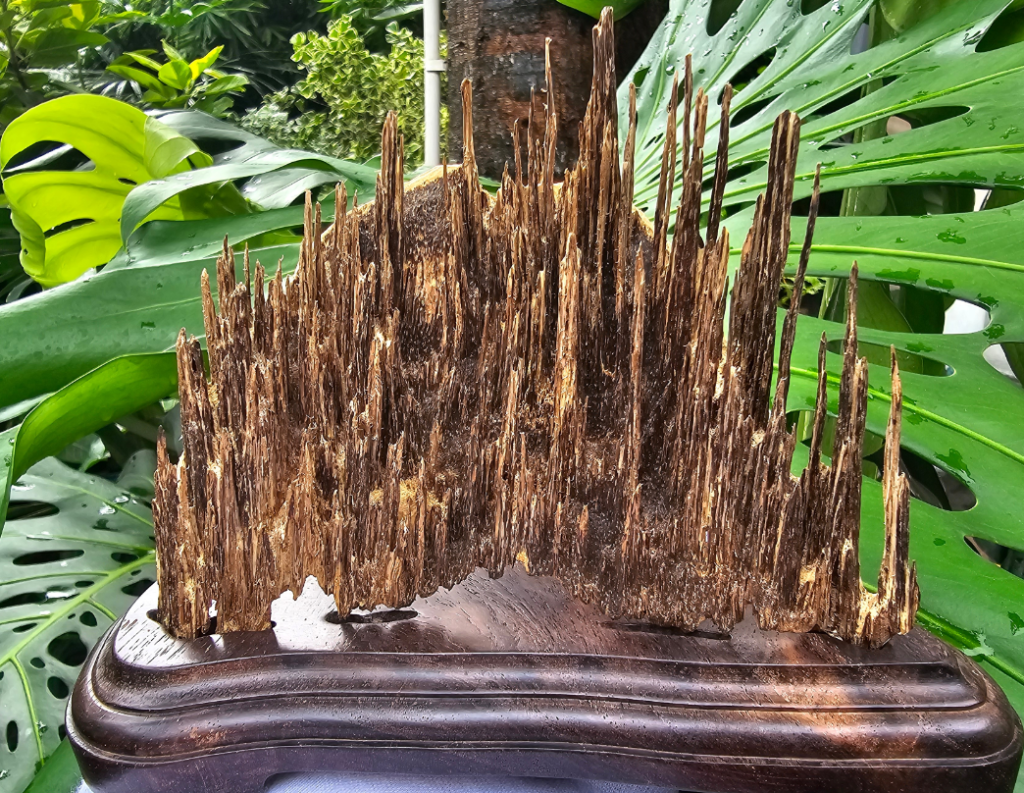
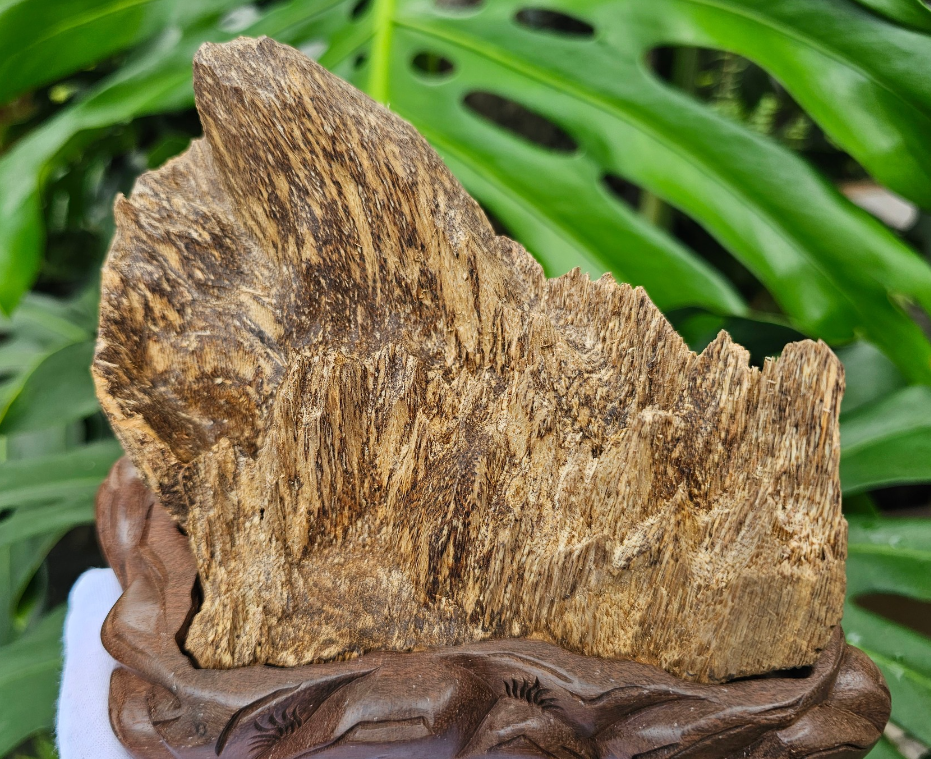
On the twentieth day of the second month of the first year of Yuanfu (1098), Su Zhe turned 60. His elder brother Su Shi gave him a piece of Hainan agarwood mountain and, in a style brilliant as brocade, wrote "Ode to the Agarwood Mountain" as a birthday gift; today the ode, with its fusion of thought and scene and its state of forgetting self and object, has become the foremost literary piece promoting Hainan agarwood. "How much more the rare product of Dan and Ya, truly transcendent and unmatched. Hard as gold yet smooth as jade, with crane's bone and dragon's sinew. Only because the resin is full within does it fill the hand with weight." Agarwood from Hainan differs from all other aromatic materials, standing transcendent and unmatched; its texture is as hard as gold and as oil-rich and smooth as fine jade, and its form is rugged and steep, full of spirit, like crane's bone and dragon's sinew. Sinking-grade agarwood is brimming with resin inside, so it is heavy, sitting weightily in the palm. This passage describes the virtues of agarwood and also figures the virtue of the gentleman; through praise of agarwood, Su Shi, in a humorous and teasing tone, urges his brother to be a scholar-official of firm character and transcendent spirit.
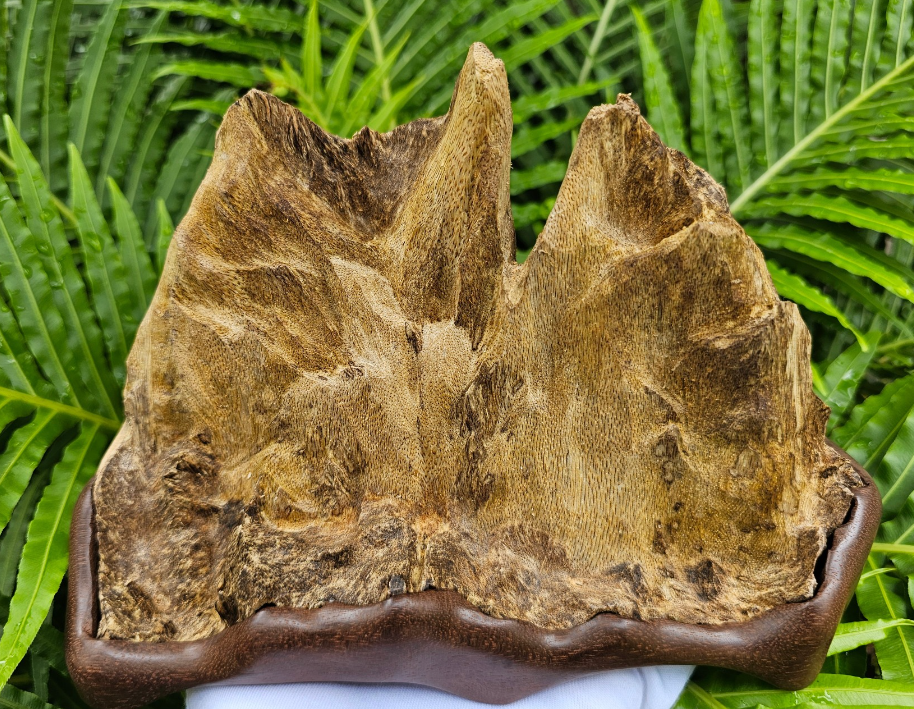
In other words, the fragrance of agarwood is a peerless beauty achieved only after suffering hardship and injury, after rebirth in fire like the phoenix. The same is true of human life: tribulations, setbacks, even illness—one should not sink into hopelessness but face them with a sunny, optimistic outlook, drawing insight and tempering from setbacks; in the end the victor is oneself, and the mind heals accordingly.
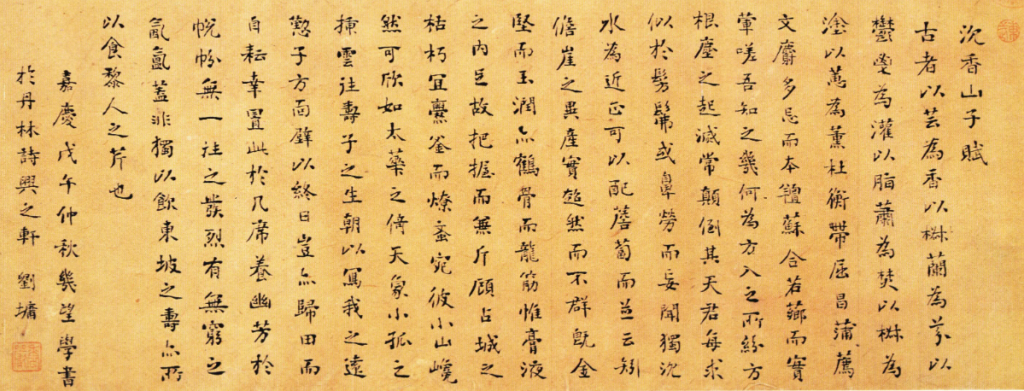
Original text of "Ode to the Agarwood Mountain"
The ancients took yun as incense and lan as fragrance; they used yuchang for libation, burned zhi-xiao, coated with pepper, and perfumed with hui. Duheng was worn, and calamus offered as ornament. Musk is much avoided and inherently rank; suhe seems fragrant but is in fact pungent. Alas, how little we know, divided as we are by the six entrances. As root and dust arise and cease, the heavenly sovereign is ever inverted. Each time we seek a likeness in the vague, or the nose tires and hears falsely. Only sinking-grade agarwood comes near the true, fit to be paired with zhanbo and named together with it. How much more the rare product of Dan and Ya, truly transcendent and unmatched. Hard as gold yet smooth as jade, with crane's bone and dragon's sinew. Only because the resin is full within does it fill the hand with weight. As for the withered wood of Champa, it is fit only for the stove and for smoking mosquitoes. Yonder little mountain, steep and delightful. Like Taihua leaning on heaven, like Xiaogu piercing the clouds. I send it to congratulate your birthday, to express my aged diligence. You face the wall all day—do you also think of returning to the fields to till? Happily place this on your desk, to nourish quiet fragrance in your kerchief. It has no sudden violent blaze, but endless misty richness. It is not only to drink Dongpo's birthday wine, but also to taste the wild celery of the Li people.
Chenxiang.com: Translation
The ancients took yun as incense and lan as fragrance. To obtain fragrance, they opened the yuchang wine, burned zhi-xiao, coated walls with pepper mud, scorched hui grass with fire, wore duheng on their clothes, and adorned their doors with calamus. Musk is much disliked and inherently rank; suhe seems to have the fragrance of the five grains but is in fact pungent and foul. We sigh that we understand so little, our wisdom scattered by the nature of things. The arising and ceasing of the six roots and six dusts often turns the mind upside down and unclear. Each time what we obtain seems true but is in fact wrong; sometimes the nose smells without discerning. Only agarwood comes near the true flavor and can coexist with zhanbo. Moreover, agarwood is a specialty of Hainan, truly surpassing all incenses and not ordinary. Not only is it hard as gold and smooth as jade, but its substance is like crane's bone and dragon's sinew. Sinking-grade agarwood sinks because resin fills its body; though its size is slender, it sits weightily in the hand. Look at those withered agarwood logs from Vietnam—they should be used to fuel the stove and smoke out mosquitoes. The small, exquisite agarwood mountain, its steep height delights the heart. It is like Huashan leaning on the blue sky, like Xiaogu reaching into the clouds. I use it as a birthday gift to congratulate you, to express my deep regard. You read facing the wall every day—do you still think of returning to farm? Happily you may place it on your desk, letting faint fragrance perfume your kerchief. It will not suddenly emit a strong odor, yet it has endless hidden fragrance. Do not only drink the birthday wine Dongpo offers; you should also taste the wild specialty of the Li people of Hainan.
After Su Shi wrote "Ode to the Agarwood Mountain" for Su Zhe, Su Zhe wrote a matching piece, "Harmonizing with Zizhan's Ode to the Agarwood Mountain (with preface)"
The original text follows:
In mid-spring, at the middle rest, Ziyou was born. The old man of Dongpo, living in Hainan, sent him a mountain of sinking-grade agarwood, showed him an ode, and said: "Take this as your birthday gift." So he harmonized and replied, saying:
I was born on this morning, and have lived sixty years. Heaven bored six openings, to let things in and out. A spirit dwells there, serene and still. The six serve as matchmakers, betrothed with six things. They rush about in confusion, not keeping to their dwelling. Dazzled by favor, pressed by sorrow. Youth once gone, teeth loosen and hair falls. One misstep and I fell, north of the South Sea. In extreme bitterness I awoke, and in a snap of fingers sighed. All dharmas are empty—what gain or loss is there? Forms and sounds race across, scents and tastes gather. I did not receive them at first—whom would you rob? I withdraw sight and look within, sitting all day. Across the sea, fragrant wood is planted. Mountains high and valleys deep, a hundred arm-spans, a thousand feet. Wind and rain destroy it, mud and flood erode it. Skin and hide rot away; what remains is bone. A steep lone peak, rising from the rocky cave. Heavy like stone, glossy like wax. Burn one zhu, and its fragrance covers the whole country. What princes and lords sell, they do not regard gold or silk. I am just now plowing in person, daily paired with Jie and Ni. The nose does not seek nourishment; orchids and angelica are cast aside. The men of Yue are shorn and naked—where would the ceremonial cap fit? Dongpo teases me—would he not understand me fully? After a long while I laugh at myself: I have found the trace of the Way. Sound heard in samadhi, thunder drums are all shut out. Would I not protect myself, yet reject the Buddha? Delusion and truth, though two, originally emerge from the same reality. To be glad at attaining truth, to tremble at holding delusion. Knocking at the door, that is all—one has not entered the room. Within delusion there is truth, neither two nor one. What ignorance dusts is the cave of true suchness. The perfected of old wore grass and ate wheat. Humans and gods came to offer, gold and jade piled like mountains. I was originally without mind, neither seeking nor demanding. Empty the mind—why discard the full belly? Weaken the will—why discard strong bones? Do not let Dongpo hear of me and scoff. I hold the fragrant mountain, bowing to immortals and Buddhas. Forever with Dongpo, together I attest the Way.
This article was compiled and organized by "Chenxiang.com"; original source: https://www.chenxiang123.com/sudongpo-chen-xiang-shan-zi-fu/
Compiled for general knowledge; traditional references are cultural notes, not medical advice.
Frequently Asked Questions
What is Su Dongpo's "Ode to the Agarwood Mountain"?
"Ode to the Agarwood Mountain" was a 60th-birthday gift from Su Shi (Su Dongpo) to his younger brother Su Zhe, centered on a piece of Hainan agarwood.
How should I choose agarwood?
Buy from traceable, testable channels and match the form (incense, beads, raw wood) to your use. Avoid exaggerated claims such as "wild" or "sinking grade" without proof, and prefer products with lab reports and origin documentation.
How should agarwood be stored and maintained?
Agarwood dislikes moisture, odours and direct sunlight. Keep it sealed, dark and cool, store different origins separately, and air and inspect long-stored pieces periodically against mould and insects.
How can I tell real agarwood from fake?
Authentication combines sensory checks with technical ones: natural agarwood has a clean, long-lasting, cool-sweet scent and burns with pale, non-pungent smoke. GC-MS analysis of characteristic compounds (chromones, sesquiterpenes) adds objective confirmation. Buying through traceable channels with certificates lowers the risk.
How do agarwood origins differ?
Climate, tree species and resin-induction methods give each origin a distinct scent profile — for example Hainan tends to be clean and elegant, Vietnam sweet and cool, Indonesia deep and full. Origin is a key factor in grading and pricing.
What is the current agarwood market like?
Prices diverge sharply by resin density, origin and form, with both top-end collectibles and entry-level consumer products active. Use actual transactions from legal, testable channels as reference rather than a single quotation.
What is the relationship between agarwood and incense culture?
Agarwood is the core medium of East Asian incense culture, spanning temple offerings, literati gatherings and contemporary lifestyle aesthetics. Understanding this cultural background helps explain its value.
Does agarwood have health benefits?
Traditionally agarwood has been used for calming and sleep-related rituals, but evidence quality and dosage need careful reading. Keep traditional use and scientific evidence clearly separated and follow professional guidance.
参考资料
You may also like
评论区
评论匿名可浏览,登录后可发表;提交后先审后显。
评论加载中…