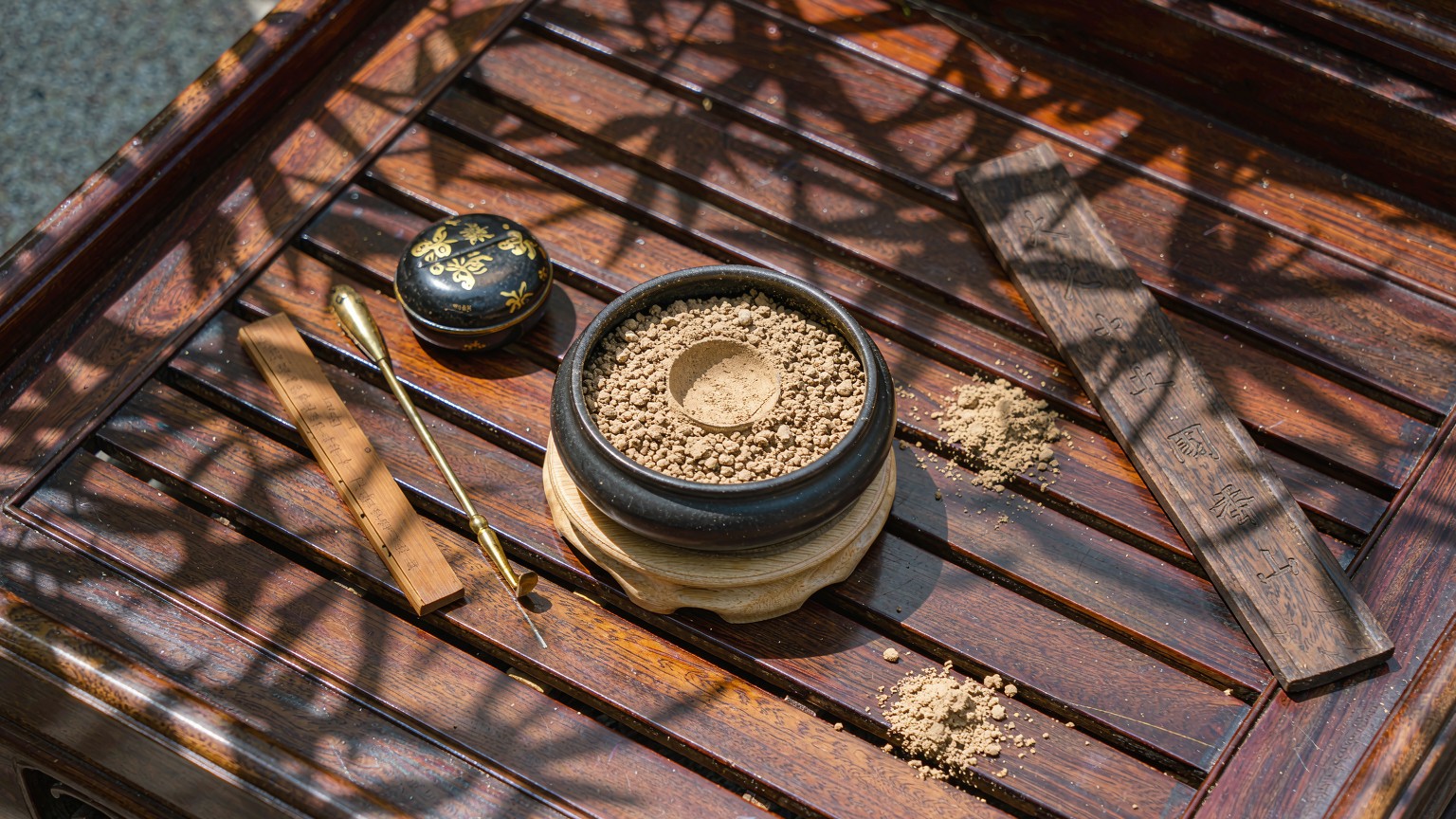
Qiongzhi Tianxiang: Hainan Agarwood, the Finest Under Heaven
Hainan agarwood, also known as "Yaxiang" and "Qiongzhi Tianxiang." Volume One of the Xiangcheng, in the Baishi Huibian, records: "Generally, sinking grade agarwood from Wandong is the first grade," and further records: "Among the four prefectures around the island, that collected in Wan'an Jun is the absolute finest—rich, full, and lingering; when burned on all sides, the fragrance persists even after the embers fade, and its place of origin prices it equal to silver."

Volume One of the Xiangcheng, in Fan Chengda's Guihai Yuheng Zhi, records: "The superior grade comes from the Li caves of Hainan; another name is soil agarwood; large pieces are rare... It is said that Wan'an Mountain lies due east of the island, gathering the qi of the morning sun, so its fragrance is especially rich and beautiful. Generally, the aroma of Hainan agarwood is clear and pure like lotus, plum blossom, goose pear, and honeycomb; burn a small amount in a Boshan censer and the whole room fills with fragrance; turn it and all sides are fragrant; even when the coal is spent, the qi is not scorched." This passage accurately describes the aroma profile of Hainan agarwood. The phrase "clear and pure" expresses how Hainan agarwood is limpid and clean, with virtually no off-notes. It carries the floral sweetness of lotus and plum blossom, as well as the sweet fragrance of goose pear and honey; only a tiny amount placed in a Boshan censer fills the room with fragrance, and the aroma is long-lasting. It can be re-burned repeatedly, and even when the charcoal itself has burned out, the fragrance still carries no scorched note.
Volume One of the Xiangcheng, in the Chen Pu, records: "Water sinking agarwood comes from the South Seas... today it is also found in the steep cliffs of Lingnan, but it does not match that of Hainan in clarity and grace." Water sinking agarwood is produced in many varieties in the South Seas; today it is also found among the towering mountains of Lingnan, but its aroma is simply not as clear and graceful as that produced in Hainan. The countries of the South Seas used fragrant wood to make feeding troughs for raising chickens and dogs. Thus the poet Zheng Wenbao wrote: "Sinking and sandalwood fragrant woods grow at the ends of the earth, cheap as the floating logs on the Jing and Heng waters. They may not become troughs to feed chickens and dogs, but better to burn them to embers in the homes of the wealthy."

In the Tianxiang Zhuan, Pei E praised the agarwood produced on Limu Mountain as the finest under heaven, saying: "In the territory of Qiongguan, Limu Mountain stands paramount; the four districts all rest at the mountain's foot, and much incense comes from this mountain, surpassing all under heaven." The Tianxiang Zhuan also records: "Champa produces stack sinking agarwood in great quantity; its people trade it, some entering Panyu, some entering Dashi. Precious sinking and stack agarwood are valued at the price of gold... Then taking that from the northern shore of the sea, they burned it on the spot; its smoke drifted far, as if drawing in the eastern seas, rich and dense, like silk congealing into lacquer, its fragrant qi lasting longer and growing ever better. The great ships' crews were thus utterly humbled." The Champa region produces stack agarwood and agarwood in especially great quantity... In the Western Regions, agarwood and stack agarwood are extremely precious, equal in price to gold. An old villager told a story: "In recent years, foreign merchant ships arrived, delayed by hurricanes, and lodged here. The ship's captain showed off his wealth, holding great banquets all day, extremely extravagant. We locals knew they were richer than us, but looking at the incense they burned, the fragrance was ordinary, not rich enough, and the smoke was not fine—far inferior to our local incense. So we burned the agarwood produced on the northern shore of our local island for them to see: the fragrance was rich and long-lasting, and so they stopped showing off."

Today, although Hainan agarwood is mostly plantation material and its quality is far inferior to former times, wild Hainan agarwood remains deservedly the number one incense, commanding a high market price. Black oil grade is among the better quality Hainan agarwood; its basic color is dark brown with slight light yellow intermingling, its markings in irregular flakes or clumps, and its pores dot-shaped—a characteristic difficult to counterfeit. On first smelling, the fragrance is mild and pure, relatively distinct; when burned it becomes more fragrant, sweet, and full-bodied, heavy yet not dense, highly cohesive, very mellow, and refreshing to the heart, matching its deep appearance—it is called the gentleman among agarwood.
Incense enthusiasts who have encountered wild Hainan agarwood are invariably amazed by its aroma profile, praising Hainan agarwood as truly worthy of the title "the finest under heaven," the number one incense in the world.
This article was compiled by "Chenxiang Wang"; original source: https://www.chenxiang123.com/qiongzhitianxiang-hainanchenxiang-guanjuetianxia/
Compiled for general knowledge; traditional references are cultural notes, not medical advice.
Frequently Asked Questions
What is Qiongzhi Tianxiang?
Hainan agarwood, also known as 'Yaxiang' and 'Qiongzhi Tianxiang,' is recorded in classical Chinese incense texts as the finest agarwood, prized for its clear, pure aroma profile.
How should I choose agarwood?
Buy from traceable, testable channels and match the form (incense, beads, raw wood) to your use. Avoid exaggerated claims such as "wild" or "sinking grade" without proof, and prefer products with lab reports and origin documentation.
How should agarwood be stored and maintained?
Agarwood dislikes moisture, odours and direct sunlight. Keep it sealed, dark and cool, store different origins separately, and air and inspect long-stored pieces periodically against mould and insects.
How can I tell real agarwood from fake?
Authentication combines sensory checks with technical ones: natural agarwood has a clean, long-lasting, cool-sweet scent and burns with pale, non-pungent smoke. GC-MS analysis of characteristic compounds (chromones, sesquiterpenes) adds objective confirmation. Buying through traceable channels with certificates lowers the risk.
How do agarwood origins differ?
Climate, tree species and resin-induction methods give each origin a distinct scent profile — for example Hainan tends to be clean and elegant, Vietnam sweet and cool, Indonesia deep and full. Origin is a key factor in grading and pricing.
What is the current agarwood market like?
Prices diverge sharply by resin density, origin and form, with both top-end collectibles and entry-level consumer products active. Use actual transactions from legal, testable channels as reference rather than a single quotation.
What is the relationship between agarwood and incense culture?
Agarwood is the core medium of East Asian incense culture, spanning temple offerings, literati gatherings and contemporary lifestyle aesthetics. Understanding this cultural background helps explain its value.
Does agarwood have health benefits?
Traditionally agarwood has been used for calming and sleep-related rituals, but evidence quality and dosage need careful reading. Keep traditional use and scientific evidence clearly separated and follow professional guidance.
参考资料
You may also like
评论区
评论匿名可浏览,登录后可发表;提交后先审后显。
评论加载中…