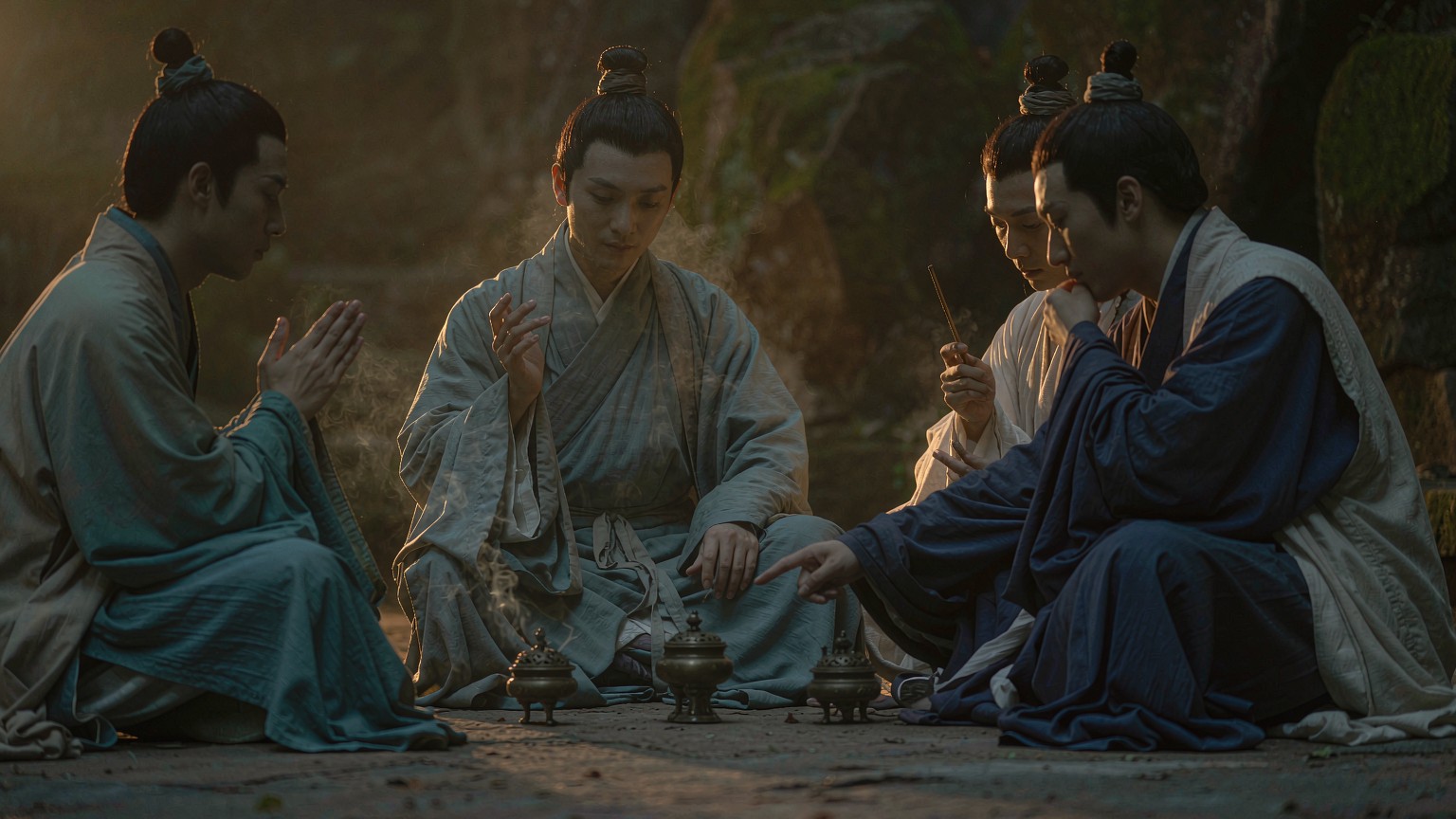
The Role of Qinan Agarwood in Treating Malignant Tumors
Agarwood is a traditional Chinese medicine. The medicinal use of agarwood dates back to ancient times, and the role of agarwood in treating malignant tumors is highly notable. Qinan agarwood, as a pro-oxidant supplement with a simple oxidative stress mechanism, has become a drug for treating drug-resistant cancers.
Qinan agarwood is the finest grade of agarwood. Regarding qinan agarwood, Ding Wei and Cai Tiao of the Song Dynasty, and Chen Rang and Qu Dajun of the Ming Dynasty, among others, all recorded: "It is found scattered among the mountains overseas; its nature is warm in all cases. Thus it is hollowed by large ants; the stone honey eaten by the large ants leaves traces soaked into the fragrant wood, and over the years gradually permeates it. The wood receives the stone honey, its qi mostly congeals and becomes firm and moist—thus qinan is formed." "Qinan is the male of Aquilaria sinensis; its taste is pungent and its qi is sweet; its fragrance bursts forth, and its nature can close the two excretions and treat wind-water toxic swellings and severe diseases." As early as the Six Dynasties period, it was listed as a superior medicine. In 1163 AD, Zhou Qufei of the Song Dynasty stated in Volume 7 of “Lingwai Daida”: "If within a thousand-year-old withered trunk there is something like stone, like a pestle, like a fist, like an elbow, like rare birds and tortoises and snakes, like cloud qi and human figures—burn one zhu and the fragrance fills half a li. The product from Qiong is called tujia, also known as qiongzhi."

In the seventh year of the Hongzhi era of the Ming Dynasty (1495 AD), Chen Rang's “Haiwai Yishuo” confirmed that "the five types of agarwood from Hainan—Yingge Green, Orchid Resin, Sugar Resin, Golden Silk Resin, and Iron Resin—are qiejian" (i.e., qinan). "Its qi rises, so when the elderly wear it, they urinate less. For wind-water toxic swellings, it can prolong life." At the end of the Ming Dynasty, Qu Dajun of Guangdong devoted a special passage to "qiejian" in “Guangdong Xinyu"; in the early Qing Dynasty, Mao Pijiang of Jiangsu wrote: "Qiejian, first grade, is not recorded in the materia medica; by its form and flavor, one imagines it is even more extraordinary. Chen [agarwood] uses the movement of force to act on movement and stoppage; qi [qinan] uses the movement of force to act on stoppage and movement of the body. Within the body it establishes function; within function it embodies the body. Female and male, yin and yang, manifest mutually; before and after can be silently understood." All these indicate that qinan agarwood, as male agarwood, is yang in body and yin in function; in ancient times, human diseases belonged to yin and were mostly severe diseases.
Accordingly, research and development has been carried out on the medicinal use of qinan agarwood in treating malignant tumors. Recently, clinical research has been conducted on the difficult problem that, in cancer patients who have already been treated, subsequent anticancer drug therapy produces drug resistance, and cancer recurrence and spread become more invasive, causing greater harm to patients. It was found that qinan agarwood, as a pro-oxidant supplement with a simple oxidative stress mechanism, becomes a drug for treating drug-resistant cancers. This is because the compound contained in qinan incense—chromone, a heterocyclic compound whose core is benzopyranone—specifically its 2-(2-phenylethyl)chromone, is a precursor of vitamin K and can exert astonishing effects by making cancer cells self-destruct and preventing cancer growth and metastatic spread.

Qinan agarwood 2-(2-phenylethyl)chromone, in humanized mouse animal experiments, can through an ingenious mechanism significantly alleviate the growth of diseased cancer cells in mice, and through the lipid marker "PI(3)P," affect the "recycling" process of cancer cells, ultimately causing the diseased cancer cells to "self-destruct." It is like clearing the cargo labels from all stored goods at a transport hub: no one knows where any of the goods are to be sent, the entire logistics system collapses, and the transport hub "explodes." This is the process by which qinan agarwood 2-(2-phenylethyl)chromone causes diseased cancer cells to die. For a long time it has been said that medicinal agarwood has an antioxidant effect and is believed to be able to prevent the occurrence of cancerous lesions. Whether Chinese or foreign pharmaceutical research institutions, or traditional Chinese medicine and Western medicine, all use antioxidant effects to prevent cancerous lesions.

In 2001, the SELECT trial conducted by a globally renowned research institution proved that antioxidants simply cannot achieve the expected effect of preventing cancerous lesions; instead, they caused more people to develop cancer. For this reason, the research team, through verification of the ordered aroma energy field of qinan agarwood, can make full use of the "oxidative stress" effect of the ordered aroma energy field. Normally, diseased cancer cells, in order to survive, need to continuously carry out self-repair and "recycling" of substances in the human body through specific mechanisms. When this process is disrupted, diseased cancer cells cannot maintain survival and will self-disintegrate. 2-(2-phenylethyl)chromone precisely enhances the oxidative stress of the ordered aroma field, interferes with the recycling mechanism of diseased cancer cells, causes cancer cells to explode and fragment, and be annihilated and killed by NK immune cells in the human body. This completely overturns the previous understanding that antioxidants are the "miracle drug" for treating cancer; instead, pro-oxidants may be more effective therapeutic means.

The ordered aroma energy field of qinan agarwood will prove the correctness of the thousand-year medical practice of ancient Chinese medical scholars that agarwood can treat "wind-water toxic swellings" (cancer).
Friendly reminder:
Agarwood should be used medicinally under the guidance of a licensed physician. If you feel unwell, please consult alegitimate hospital for diagnosis and treatment.
This article was compiled by "Chenxiang Web" and the original source is: https://www.chenxiang123.com/qinan-chenxiang-zhiliao-zhongliu-zuoyong/
Compiled for general knowledge; traditional references are cultural notes, not medical advice.
Frequently Asked Questions
What is The Role of Qinan Agarwood in Treating Malignant Tumors?
Agarwood is a traditional Chinese medicine with a long history of medicinal use, and its role in treating malignant tumors is highly notable. Qinan agarwood, as a pro-oxidant supplement with a simple oxidative stress mechanism, has become a drug for treating drug-resistant cancers.
How should I choose agarwood?
Buy from traceable, testable channels and match the form (incense, beads, raw wood) to your use. Avoid exaggerated claims such as "wild" or "sinking grade" without proof, and prefer products with lab reports and origin documentation.
How should agarwood be stored and maintained?
Agarwood dislikes moisture, odours and direct sunlight. Keep it sealed, dark and cool, store different origins separately, and air and inspect long-stored pieces periodically against mould and insects.
How can I tell real agarwood from fake?
Authentication combines sensory checks with technical ones: natural agarwood has a clean, long-lasting, cool-sweet scent and burns with pale, non-pungent smoke. GC-MS analysis of characteristic compounds (chromones, sesquiterpenes) adds objective confirmation. Buying through traceable channels with certificates lowers the risk.
How do agarwood origins differ?
Climate, tree species and resin-induction methods give each origin a distinct scent profile — for example Hainan tends to be clean and elegant, Vietnam sweet and cool, Indonesia deep and full. Origin is a key factor in grading and pricing.
What is the current agarwood market like?
Prices diverge sharply by resin density, origin and form, with both top-end collectibles and entry-level consumer products active. Use actual transactions from legal, testable channels as reference rather than a single quotation.
What is the relationship between agarwood and incense culture?
Agarwood is the core medium of East Asian incense culture, spanning temple offerings, literati gatherings and contemporary lifestyle aesthetics. Understanding this cultural background helps explain its value.
Does agarwood have health benefits?
Traditionally agarwood has been used for calming and sleep-related rituals, but evidence quality and dosage need careful reading. Keep traditional use and scientific evidence clearly separated and follow professional guidance.
参考资料
You may also like
评论区
评论匿名可浏览,登录后可发表;提交后先审后显。
评论加载中…