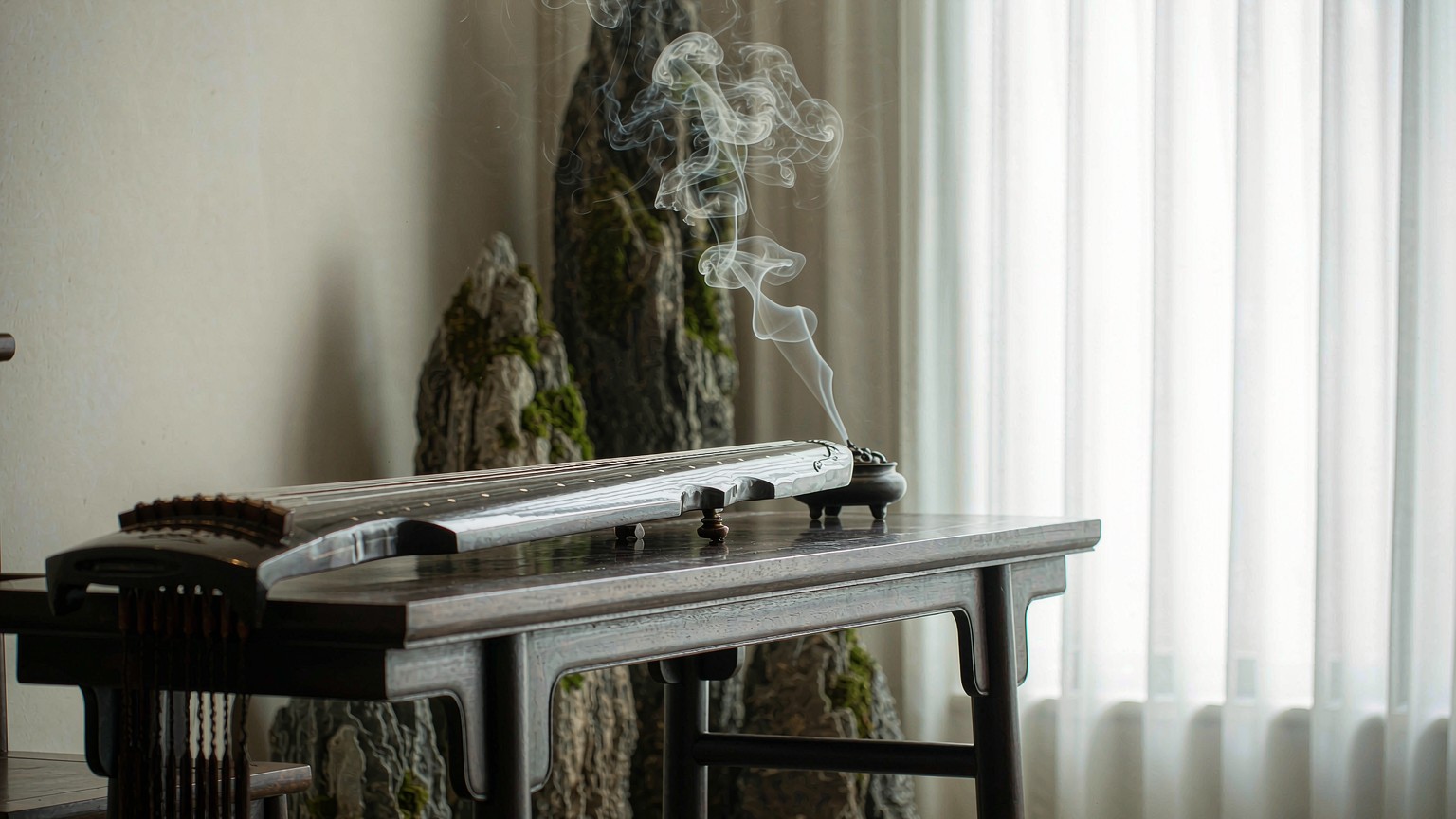
Why Agarwood, the 'Diamond of Woods,' Keeps Rising in Value
Agarwood, a scarce natural resource, has seen its agarwood prices trend steadily upward in recent years; at times, top-grade agarwood has exceeded gold on a per-gram basis, making it a hard asset in collector markets.

The scarcity of agarwood is the fundamental reason its price remains high. Agarwood trees grow mostly in tropical rainforest regions of Southeast Asia, such as Vietnam, Laos and Indonesia, but due to overlogging and long growth cycles, global agarwood tree resources are shrinking sharply, and some producing areas are nearing depletion. In addition, agarwood's formation process is highly unusual, requiring decades or even centuries, which makes true wild agarwood almost non-renewable. Against a backdrop of continuously expanding market demand, agarwood prices naturally rise.
At the same time, gold's value has also been rising steadily. As a traditional safe-haven asset, gold is often favored by investors during global economic volatility. However, compared with agarwood, gold's supply is relatively ample, and its price is affected by multiple factors, including the global economic situation and monetary policy.
Looking at future trends, the linkage between agarwood and gold may continue to strengthen. On one hand, with the revival of traditional Chinese culture and rising spending power among high-net-worth individuals, demand for agarwood is expected to expand further. On the other hand, uncertainty in the global economic situation may also push investors toward assets with scarcity and value-preserving characteristics, such as agarwood and gold.

However, investors also need to remain cautious when participating in the agarwood and gold markets. Price disparities in the agarwood market are large and are affected by many factors, including origin and supply channels; investors need identification skills and should choose legitimate channels.
At the same time, changes in the global economic situation may also affect the prices of agarwood and gold, and investors need to closely monitor market dynamics and make sound investment decisions.
Scarcity and collectible value: The formation of agarwood takes decades or even centuries; top-grade qinan agarwood can appreciate 20%–30% per year, with some premium pieces reaching 10,000–30,000 yuan per gram, far exceeding gold.

Cultural demand as a driver: With the revival of incense culture in 2025, high-end agarwood has become a status symbol, the collector base is expanding, and the market is shifting from investment to a balance of consumption and collecting.
Constrained supply: Wild agarwood resources are depleted, and artificially cultivated agarwood cannot replace high-quality aged agarwood in the short term, leaving collectible-grade agarwood with "a market but no price." In short, acquire agarwood in a timely manner, choosing the right merchant is key, and enjoy and treasure it while you can!
This article was compiled by "Chenxiang Web"; original source: https://www.chenxiang123.com/muzhongzuanshi-chenxiangjiage-shangzhang/
Compiled for general knowledge; traditional references are cultural notes, not medical advice.
Frequently Asked Questions
What is Why Agarwood, the 'Diamond of Woods,' Keeps Rising in Value?
Agarwood is a scarce natural resource whose price has climbed steadily in recent years, with top-grade material at times exceeding gold per gram and becoming a hard asset in collector markets.
How should I choose agarwood?
Buy from traceable, testable channels and match the form (incense, beads, raw wood) to your use. Avoid exaggerated claims such as "wild" or "sinking grade" without proof, and prefer products with lab reports and origin documentation.
How should agarwood be stored and maintained?
Agarwood dislikes moisture, odours and direct sunlight. Keep it sealed, dark and cool, store different origins separately, and air and inspect long-stored pieces periodically against mould and insects.
How can I tell real agarwood from fake?
Authentication combines sensory checks with technical ones: natural agarwood has a clean, long-lasting, cool-sweet scent and burns with pale, non-pungent smoke. GC-MS analysis of characteristic compounds (chromones, sesquiterpenes) adds objective confirmation. Buying through traceable channels with certificates lowers the risk.
How do agarwood origins differ?
Climate, tree species and resin-induction methods give each origin a distinct scent profile — for example Hainan tends to be clean and elegant, Vietnam sweet and cool, Indonesia deep and full. Origin is a key factor in grading and pricing.
What is the current agarwood market like?
Prices diverge sharply by resin density, origin and form, with both top-end collectibles and entry-level consumer products active. Use actual transactions from legal, testable channels as reference rather than a single quotation.
What is the relationship between agarwood and incense culture?
Agarwood is the core medium of East Asian incense culture, spanning temple offerings, literati gatherings and contemporary lifestyle aesthetics. Understanding this cultural background helps explain its value.
Does agarwood have health benefits?
Traditionally agarwood has been used for calming and sleep-related rituals, but evidence quality and dosage need careful reading. Keep traditional use and scientific evidence clearly separated and follow professional guidance.
参考资料
You may also like
评论区
评论匿名可浏览,登录后可发表;提交后先审后显。
评论加载中…