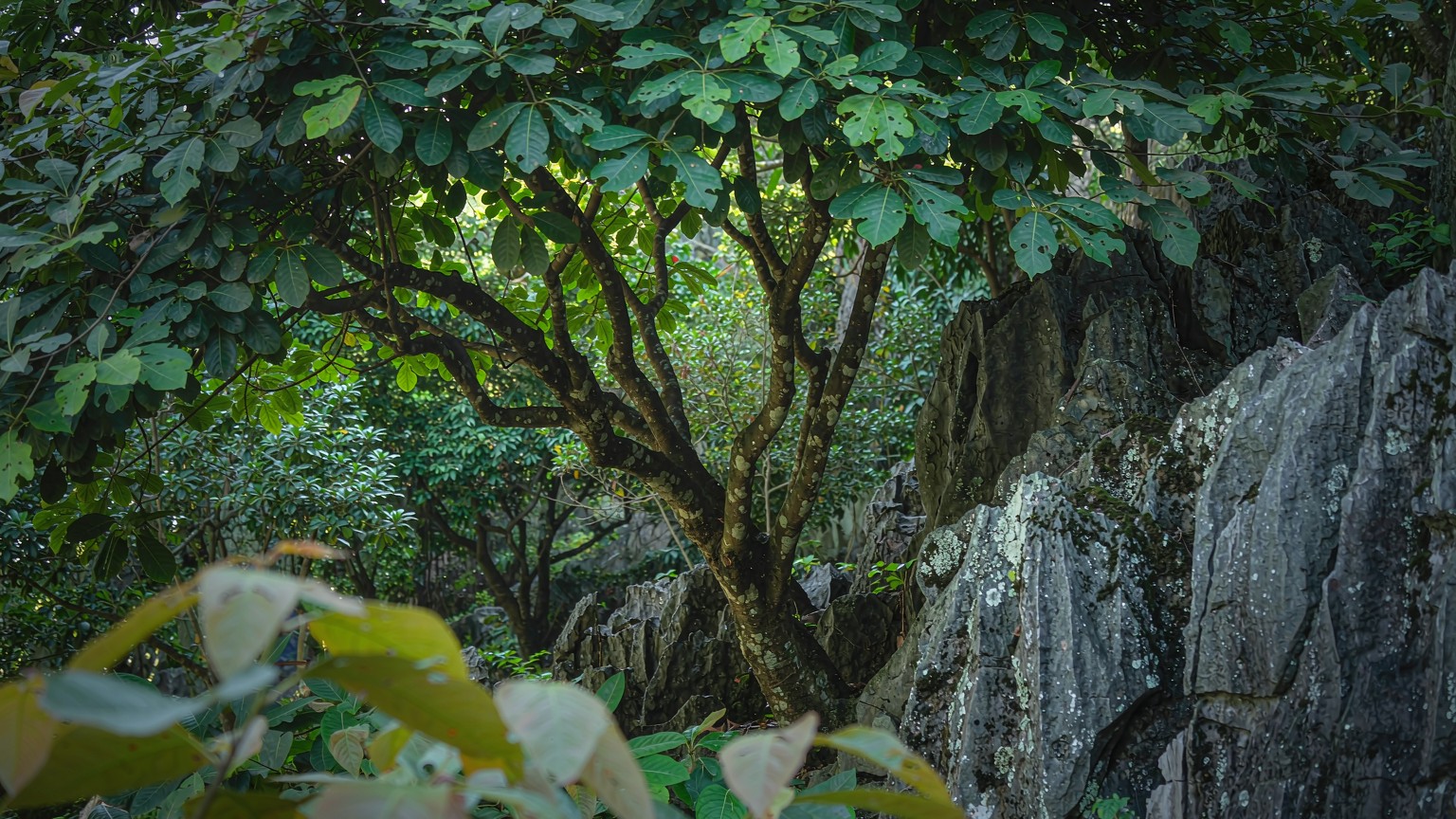
Unveiling Hainan Huanghuali and Hainan Agarwood
Huanghuali and agarwood are two cultural calling cards unique to Hainan. From ancient times to the present, stories about Hainan Huanghuali and Hainan agarwood have never ceased. Join us as we unveil Hainan Huanghuali and Hainan agarwood.
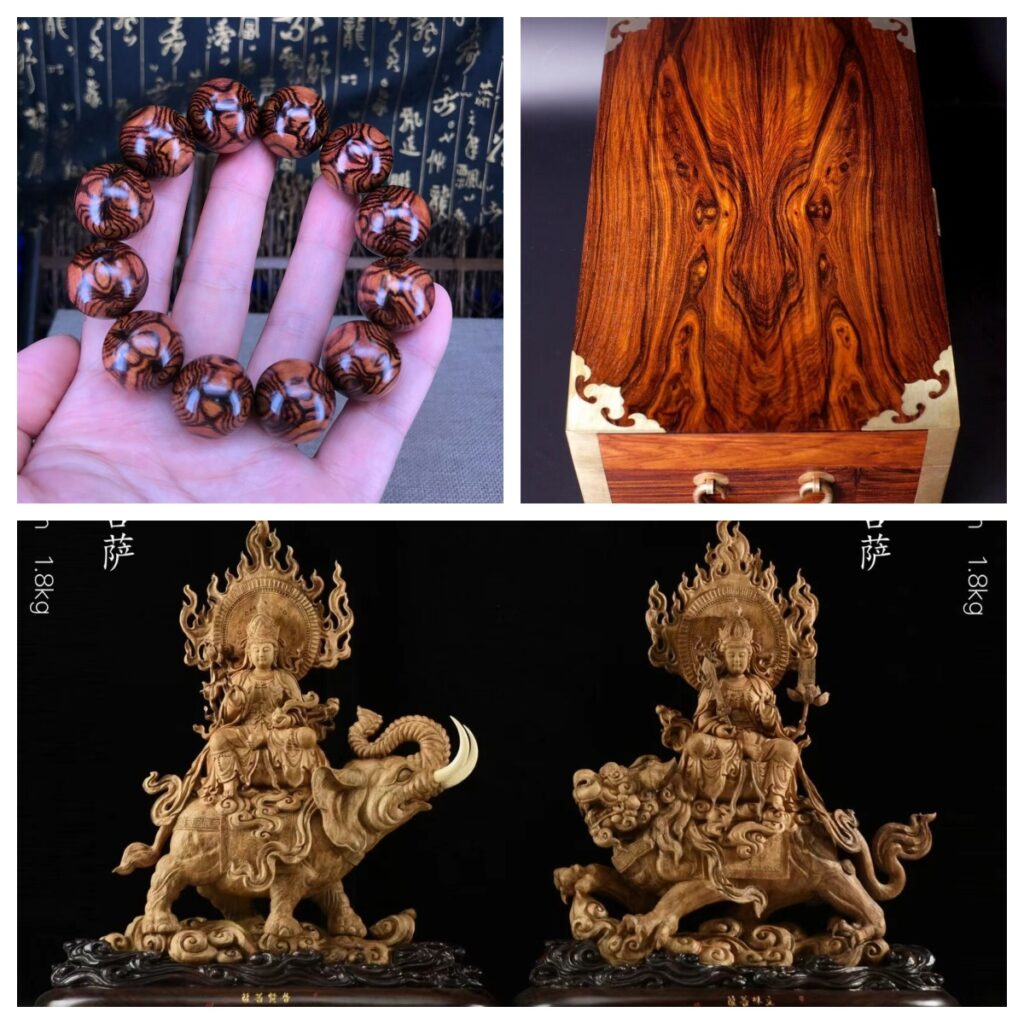
Huanghuali is a treasure among hardwoods, and agarwood is the finest of aromatic materials; those produced on Hainan Island are the most highly regarded by the world. As early as the Tang Dynasty, Hainan agarwood was presented to the imperial court as a local tribute; by the Ming Dynasty, Hainan Huanghuali furniture had become famous and represented Ming-style furniture; in the Qing Dynasty, Huanghuali was a precious material for imperial and aristocratic furniture, and the Qing court established a dedicated agency to manage agarwood to ensure the regulation of royal incense use… From ancient times to the present, stories about Hainan Huanghuali and agarwood have never ceased.
Botanical Profile of Hainan Huanghuali

Hainan Huanghuali, whose scientific name is Dalbergia odorifera, is a premium wood unique to Hainan. It is a national second-class key protected rare and endangered plant and has now been introduced to Guangdong, Guangxi, Yunnan, Fujian and other places. Because of its rich oils, fresh fragrance, deep color, exquisite grain, fine fibers, solid wood, moderate hardness, and resistance to insects and decay, it ranks among the five famous woods and is deeply loved by literati. It has become the preferred material for Chinese classical furniture, especially high-end Ming Dynasty furniture and scholar's studio utensils.
Hainan Huanghuali Has Been Famous Since Ancient Times
Hainan Huanghuali is generally called "huali" or "hualü" in ancient books. Chen Zangqi of the Tang Dynasty said in Bencao Shiyi: "Hualü comes from Annam and Hainan; used for beds and tables, it resembles rosewood but is red in color and firm and good in nature." The Qing Qiongzhou Fuzhi records: "Huali wood is purplish-red, similar to jiangzhenxiang, with a slight fragrance, produced in the Li mountains." From the late Ming Dynasty to the mid-Qing Dynasty, Huanghuali was the main material for making high-end palace furniture. Ming and Qing furniture made from the heartwood of Hainan Huanghuali is simple and elegant, durable, and can emit a quiet fragrance for a long time, possessing very high collectible value.
Hainan Huanghuali Is a Precious Material for Making Utensils
Huanghuali wood, together with rosewood, chicken-wing wood and ironwood, is known as one of the four famous woods of ancient China and is listed first among Hainan's five special-class timbers. Generally speaking, Huanghuali begins to form heartwood 10 years after planting, and only after 30 years can it form commercial timber. The older the tree, the larger the heartwood and the higher the value. The heartwood of Hainan Huanghuali is mostly reddish-brown, solid and heavy, not easily deformed, with diverse patterns like flowing clouds and water. It is an excellent material for making high-end furniture, handicrafts, musical instruments, and carving, inlay and decorative art.
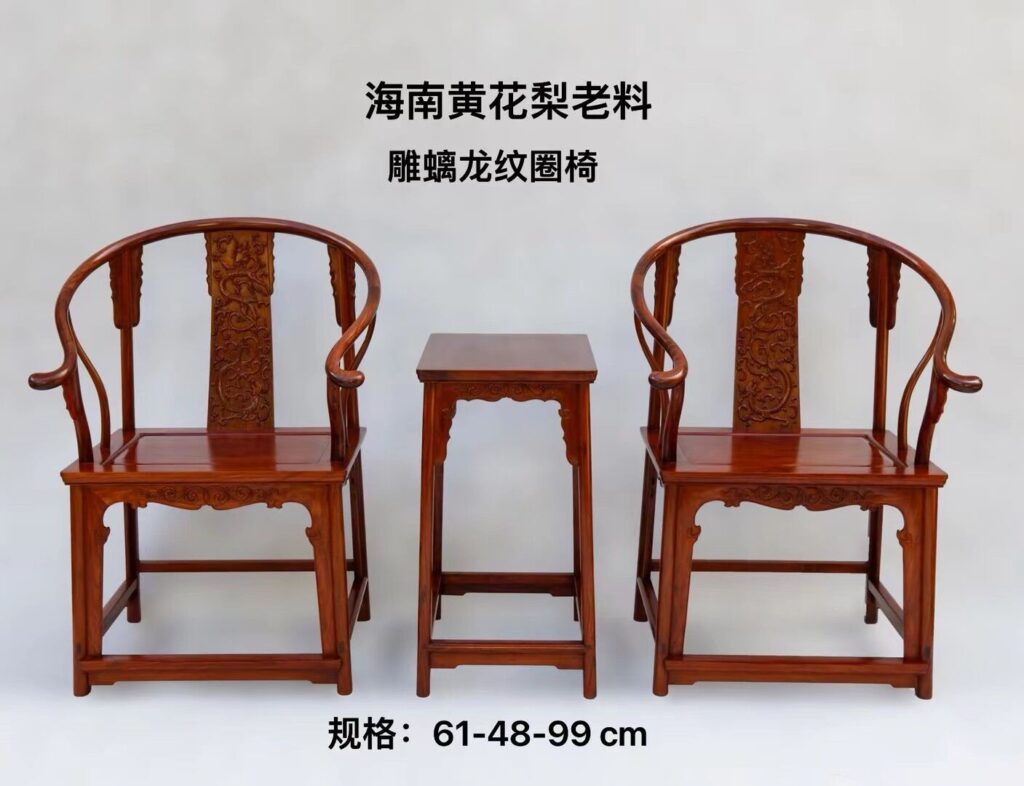
At present, the price of old Hainan Huanghuali material ranges from 2,000 to 20,000 yuan per jin, while new material ranges from 100 to 1,000 yuan per jin. Huanghuali heartwood with a diameter of more than 30 cm and a length of more than 3 m commands a higher market price.
Hainan Huanghuali Is Also a Precious Southern Medicinal Material
In addition to making utensils, Huanghuali can also be used as medicine. It is a precious southern medicinal material recorded in the national pharmacopoeia. The medicinal part is called hualige or jiangxiangmu, mainly referring to the heartwood of the trunk and roots. According to industry insiders, the jiangxiang oil obtained by distilling Huanghuali wood has the effects of promoting qi and relieving pain, stopping bleeding and invigorating blood. It can be used for chest tightness and pain, stabbing pain in the epigastrium and hypochondrium, and externally for traumatic bleeding. It is the main raw material of commonly used clinical preparations such as Guanxin Danshen Tablets, Rujie Xiaosan Tablets and Compound Jiangxiang Capsules, and is also a precious fixative in the fragrance field, playing an important role in both the food industry and the pharmaceutical industry.
Hainan Huanghuali Is Valued for Its "Ghost Face"
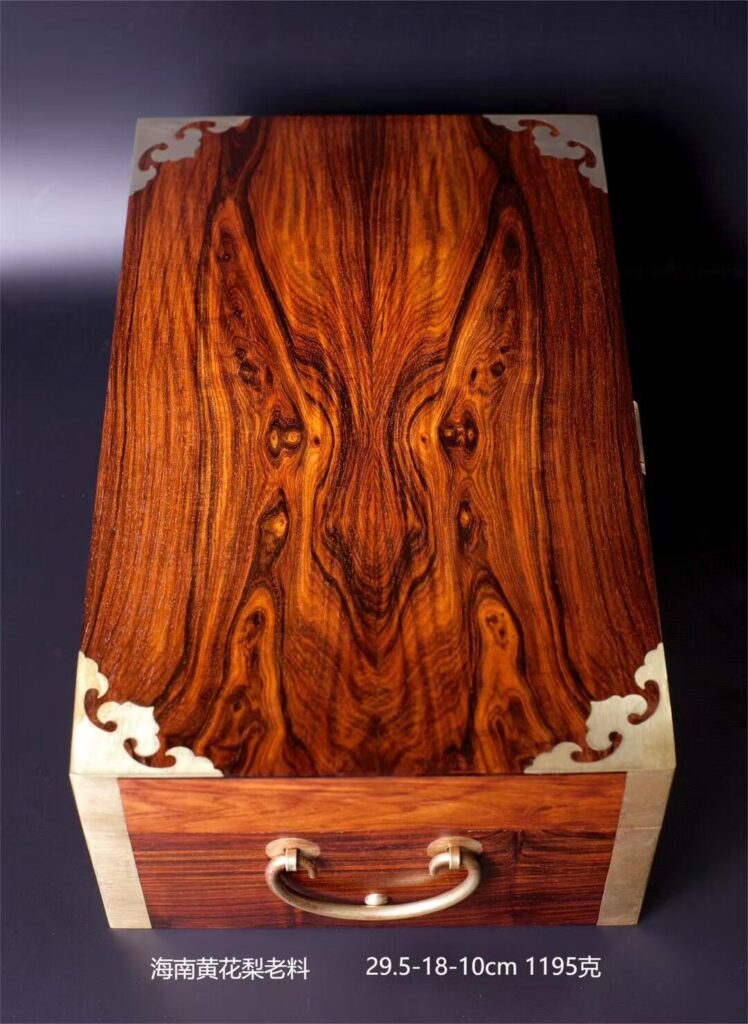
The presence and number of ghost-face patterns are important factors in measuring the quality of Huanghuali wood. The ghost-face pattern of Hainan Huanghuali is clearly different from the knot patterns of ordinary trees: ordinary tree knot patterns follow rules and are relatively regular, while "ghost faces" are vivid and disorderly, unpredictable; "ghost faces" are mostly formed by live knots or root knots; the knots of many trees (such as cypress) are live and will fall out after loosening, but "ghost faces" will not; they are flat and do not crack, which is conducive to making exquisite furniture. In short, among the scarce and precious heartwood of Hainan Huanghuali, those with "ghost faces" are the most valuable.
Dongfang Is Known as the "Hometown of Chinese Huali"
To develop tropical characteristic industries, Hainan vigorously promotes the planting of native precious tree species including Huanghuali. Dongfang alone has planted more than 10 million Huanghuali trees. The city has been awarded the title "Hometown of Chinese Huali" by the state.
Botanical Profile of Hainan Agarwood
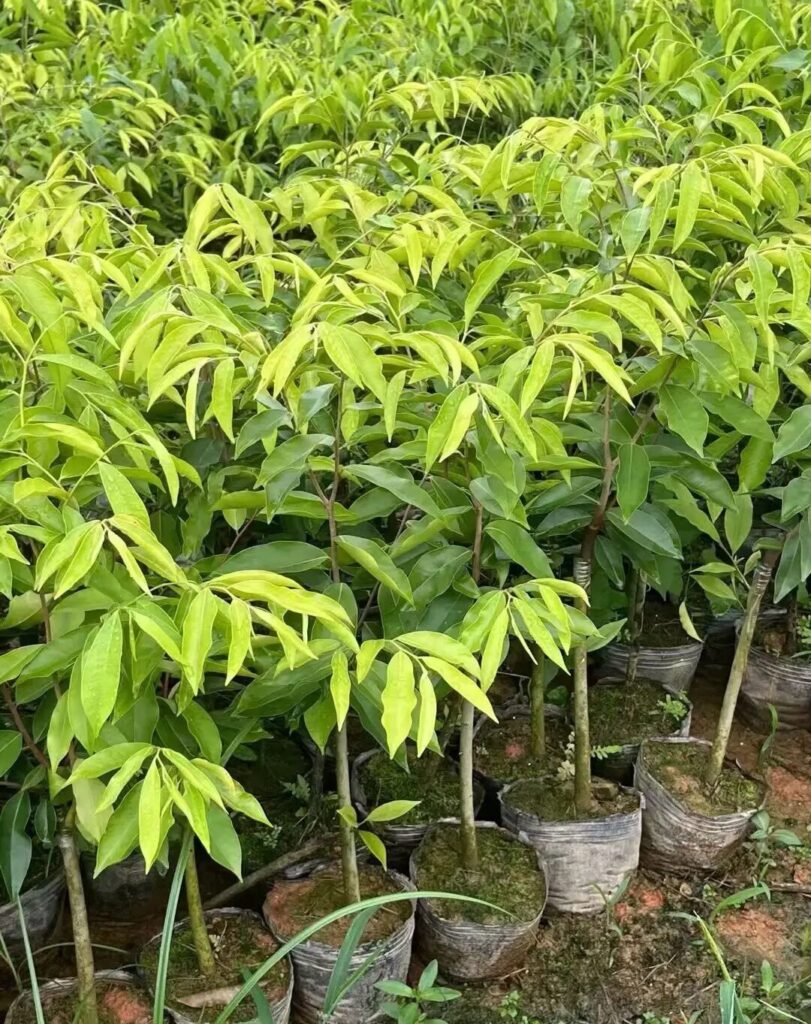
Agarwood is the king of incense and the diamond among woods. Since ancient times, China has had the saying "chen, tan, long, she" (agarwood, sandalwood, dragon agarwood and musk). Agarwood ranks first among all incenses, with elegant fragrance, unique aroma and rarity. Plants that can produce agarwood include 21 species of the genus Aquilaria and 7 species of the genus Gyrinops in the family Thymelaeaceae. Since the Ming and Qing dynasties, this precious aromatic material produced in the Hainan Island region, together with Huanghuali wood from deep in the Li mountains, has been presented to the palace as an important tribute. A large number of scholar's studio items made of agarwood are highly praised for their fine workmanship and materials.
Placed in Water, It Is Called "Chenxiang" (Sinking Fragrance)
The Book of Liang, completed in the ninth year of the Zhenguan era of the Tang Dynasty, records: "The sinking wood is cut down by the local people and accumulated over years; it decays but the heart node alone remains; placed in water it sinks, hence the name chenxiang." It can be seen that agarwood is called chenxiang because of its characteristic of sinking in water. Agarwood is the crystallization of nature, which can be seen from its formation. Wild agarwood, also known as natural agarwood, is agarwood produced by plants of the genera Aquilaria and Gyrinops after natural wounds such as insect damage, bird and animal pecking, disease and decay, wind damage, lightning strikes and fire, or under conditions of flooding, burial in soil or swamp environments.
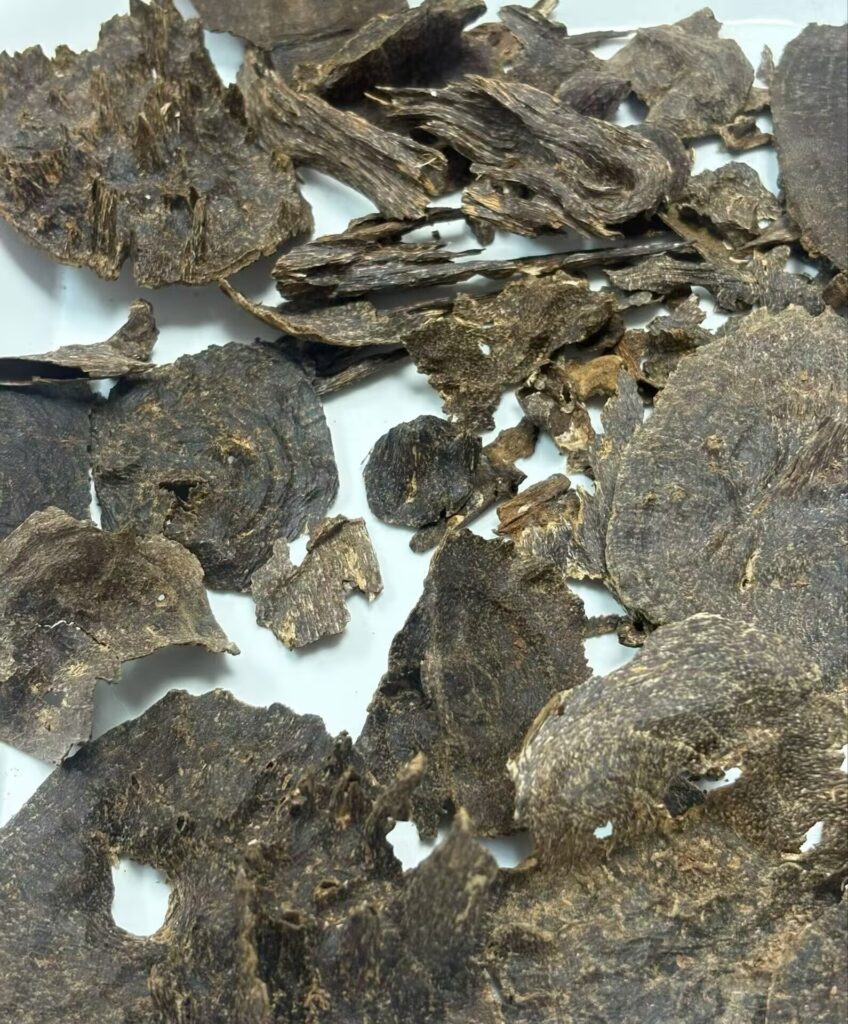
It is understood that the factors determining agarwood quality mainly include oil content, taste, origin and finished product size. The best agarwood is qinan agarwood; its oil content is generally higher than that of ordinary agarwood, its aroma is sweeter and richer, and it can emit a cool, sweet scent even when not burned.
Hainan Agarwood Is Unrivaled in the World
During his exile in Hainan in the Northern Song Dynasty, Ding Wei wrote Tianxiang Zhuan, which introduced the history of Chinese agarwood use and the standards for appreciating and evaluating incense, and clarified the status of Hainan agarwood. Over the following centuries, Hainan agarwood gradually gained the reputation of being "unrivaled in the world." The best agarwood comes from Hainan Island, and many famous people throughout the dynasties praised Hainan agarwood. The great writer Su Dongpo once praised Hainan agarwood: "Firm as gold, moist as jade, bones of a crane, sinews of a dragon, fully filled with resin." Li Shizhen of the Ming Dynasty said in Bencao Gangmu: "Unrivaled in the world, it is called Hainan agarwood, a single piece worth ten thousand coins."
Legend Has It That Xiangshui Bay Was Named After Agarwood
Hainan also has a place named after agarwood, namely Xiangshui Bay. According to legend, in ancient times the Niuling Mountain area around Xiangshui Bay was covered with Aquilaria sinensis trees. Some Aquilaria sinensis trees died of old age or withered and fell; the decayed fragments and broken pieces were washed by rivers into the sea, making the entire bay fragrant, and Xiangshui Bay was thus named. However, because the price of agarwood has become increasingly high, mature Aquilaria sinensis trees are now rarely seen in the wild.
Geographical Indication for Hainan Agarwood Approved

Hainan is the native distribution area of Aquilaria sinensis. Hainan agarwood has been the leader among all incenses from ancient times to the present, and the development of the agarwood industry has good natural conditions and cultural foundations. In July 2022, the China National Intellectual Property Administration announced that it intended to make an exception and approve the application for the "Hainan agarwood" geographical indication certification trademark.
This article was compiled by "Chenxiang.com". Original source: https://www.chenxiang123.com/jiemi-hainan-huanghuali-chenxiang/
Compiled for general knowledge; traditional references are cultural notes, not medical advice.
Frequently Asked Questions
What is Unveiling Hainan Huanghuali and Hainan Agarwood?
Huanghuali and agarwood are two cultural calling cards unique to Hainan. From ancient times to the present, stories about Hainan Huanghuali and Hainan agarwood have never ceased.
How should I choose agarwood?
Buy from traceable, testable channels and match the form (incense, beads, raw wood) to your use. Avoid exaggerated claims such as "wild" or "sinking grade" without proof, and prefer products with lab reports and origin documentation.
How should agarwood be stored and maintained?
Agarwood dislikes moisture, odours and direct sunlight. Keep it sealed, dark and cool, store different origins separately, and air and inspect long-stored pieces periodically against mould and insects.
How can I tell real agarwood from fake?
Authentication combines sensory checks with technical ones: natural agarwood has a clean, long-lasting, cool-sweet scent and burns with pale, non-pungent smoke. GC-MS analysis of characteristic compounds (chromones, sesquiterpenes) adds objective confirmation. Buying through traceable channels with certificates lowers the risk.
How do agarwood origins differ?
Climate, tree species and resin-induction methods give each origin a distinct scent profile — for example Hainan tends to be clean and elegant, Vietnam sweet and cool, Indonesia deep and full. Origin is a key factor in grading and pricing.
What is the current agarwood market like?
Prices diverge sharply by resin density, origin and form, with both top-end collectibles and entry-level consumer products active. Use actual transactions from legal, testable channels as reference rather than a single quotation.
What is the relationship between agarwood and incense culture?
Agarwood is the core medium of East Asian incense culture, spanning temple offerings, literati gatherings and contemporary lifestyle aesthetics. Understanding this cultural background helps explain its value.
Does agarwood have health benefits?
Traditionally agarwood has been used for calming and sleep-related rituals, but evidence quality and dosage need careful reading. Keep traditional use and scientific evidence clearly separated and follow professional guidance.
参考资料
You may also like



评论区
评论匿名可浏览,登录后可发表;提交后先审后显。
评论加载中…