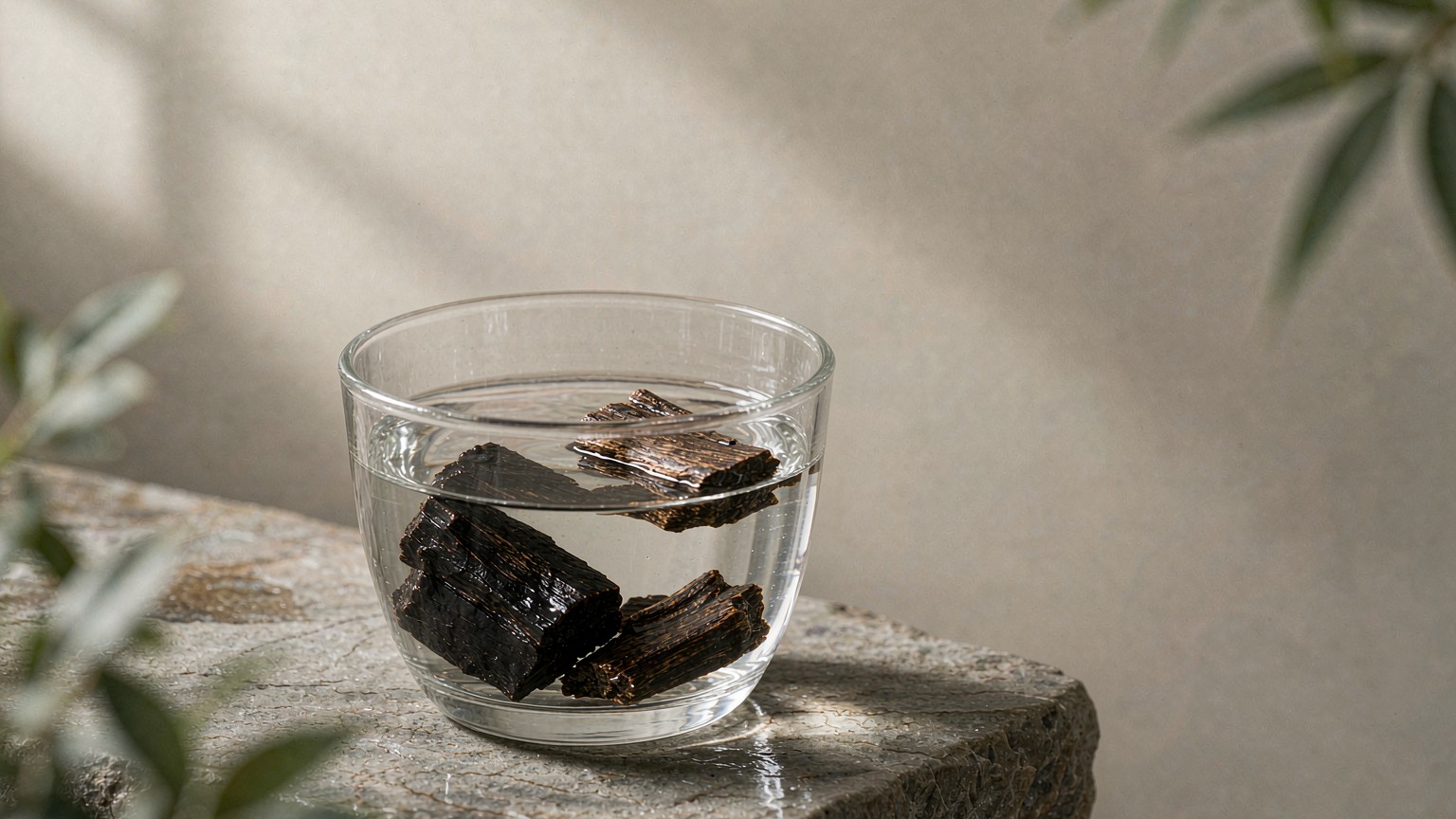
Hainan Agarwood: Why Is the 'Heavenly Fragrance of Qiongzhi' Unrivaled?
Hainan agarwood has enjoyed a distinguished reputation since ancient times and is widely recognized as the "finest fragrance under heaven" and the "national fragrance," the heavenly fragrance of Qiongzhi—the pinnacle of all aromas, and since antiquity worth ten thousand coins per piece, unrivaled across the world.
During the Western and Eastern Han dynasties, administrative governance was first established on Hainan Island with the Zhuyai Commandery; in the Tang dynasty and Northern Song it was reorganized as Yazhou; and in the Yuan, Ming, and Qing dynasties it was established as Qiongzhou. In the agarwood trade, to distinguish places of origin, ancients by convention called agarwood produced in Hainan "Yaxiang" or "Qiongzhi."
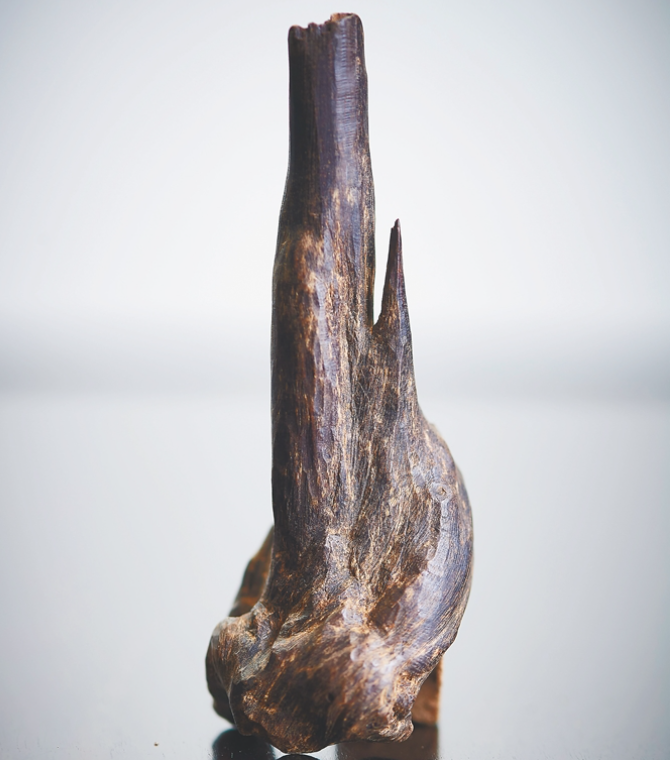
Literati and scholars praise agarwood
Su Shi, one of the Eight Great Prose Masters of the Tang and Song and a leading literary figure of the Northern Song, during his exile to Danzhou, Hainan, wrote the brilliantly ornate "Ode to the Agarwood Mountain" (Chenxiang Shanzi Fu), praising Hainan incense: "How much more the rare produce of Dan and Ya, truly transcendent and unmatched. It is firm as gold and smooth as jade, with the bone of a crane and the sinew of a dragon. Only because the resin is sufficient within does it fill the grasp and weigh heavy." Poems and prose using Hainan agarwood to depict objects and express feelings are countless through the ages, yet they pale before the literary brilliance of Su Shi, whose brushstrokes startle wind and rain. The Ode to the Agarwood Mountain, with its fusion of thought and scene and its blending of self and object, became the foremost beautiful essay of ancient China promoting Hainan agarwood.
Li Shizhen, the Ming dynasty physician, in the Compendium of Materia Medica, quoted a fine passage from Cai Tao's (younger son of Northern Song minister Cai Jing) "Congtan of Tiewei Mountain," settling the reputation of Hainan agarwood once and for all: "Champa (Vietnam) is not equal to Chenla (Cambodia), and Chenla is not equal to the Li峒 of Hainan. Among the Li峒, the eastern峒 of Limu Mountain in Wan'an is unrivaled across the world; it is called Hainan chen, worth ten thousand coins per piece."
Ding Wei, a Northern Song prime minister, during his exile in Yazhou, wrote the famous Yaxiang piece "Tianxiang Zhuan" (Biography of Heavenly Fragrance). Ding Wei likened Yaxiang to heavenly fragrance, with three meanings: first, Yaxiang can be called the finest fragrance under heaven; second, Yaxiang is an immortal fragrance perceptible to celestial beings; third, Yaxiang is a sacred fragrance for the emperor's exclusive use.
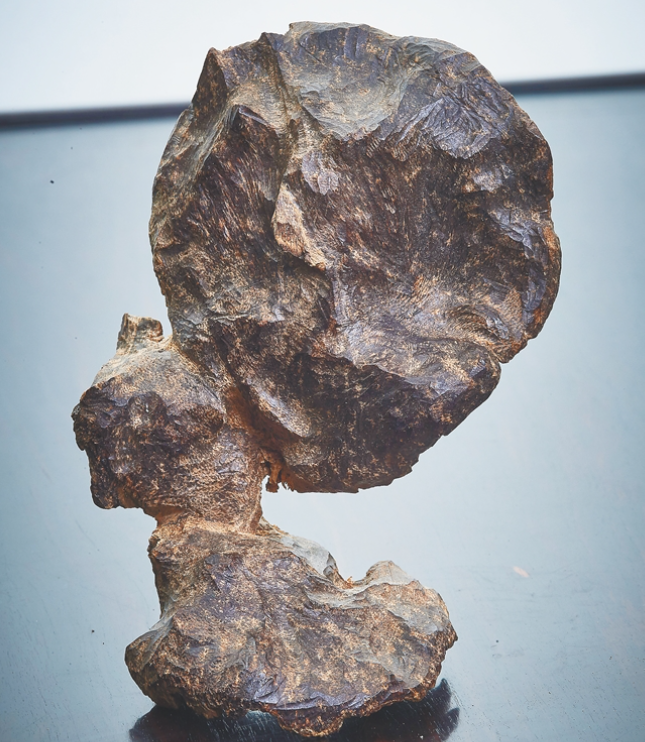
The most moving quality of Hainan agarwood is its "sinking"—the quality of sinking immediately upon entering water—and also its "fragrance": calm and restrained, fragrant without being showy, rich without being vulgar; when the aroma passes, one is instantly calmed like still water.
According to research and analysis by Dr. Dai Haofu of the Institute of Tropical Bioscience and Biotechnology, Chinese Academy of Tropical Agricultural Sciences, Hainan agarwood is rich in two most important components: one is chromones, and the other is sesquiterpenoids. The simultaneous presence of these two important components in agarwood formed by Aquilaria sinensis is both the main marker distinguishing Aquilaria sinensis from other tree species and a key factor supporting agarwood's pharmacological effects in traditional Chinese medicine therapy, such as opening the orifices with aroma and regulating qi and calming the mind.
Agarwood plays a principal role in traditional Chinese medicine formulations for its "calming and quieting" effect. The precious quality of the agarwood tree, which lies hidden in mountain forests all its life solely for resin formation, indirectly echoes the cultural depth of Hainan agarwood—calm, restrained, and of orchid-like virtue—and manifests the moral integrity of literati and outstanding talents who cultivate both virtue and art and hold noble aspirations, interpreting a state of mind clear as water, pure and serene. The virtue it reveals is like fine jade quietly emitting a warm luster, possessing beautiful literary grace without ostentation! It also accords with the social aspiration and trend of the times for harmonious coexistence and peaceful clarity in today's world.
The culture embodied in agarwood
During the Song dynasties, literati regarded "flower arranging, hanging paintings, tea contests, and incense appreciation" as the "four elegant pursuits" for self-cultivation. This reflects the profound influence of agarwood on culture at that time.
The world's three major religions—Buddhism, Christianity, and Islam—over a thousand years of vicissitudes have influenced human progress and world history through different cultural beliefs. Although the three faiths differ, their doctrines share one common sacred object: agarwood.
The great Tang dynasty monk Jianzhen, in 748 CE, while crossing to Japan, was driven by a typhoon to Zhenzhou (now Sanya City) in Hainan, where he stayed for a year. Upon leaving Hainan, local Buddhist circles presented Jianzhen with Hainan agarwood. Thus Jianzhen spread Hainan agarwood and Chinese incense culture to Japan, where its influence endures to this day.
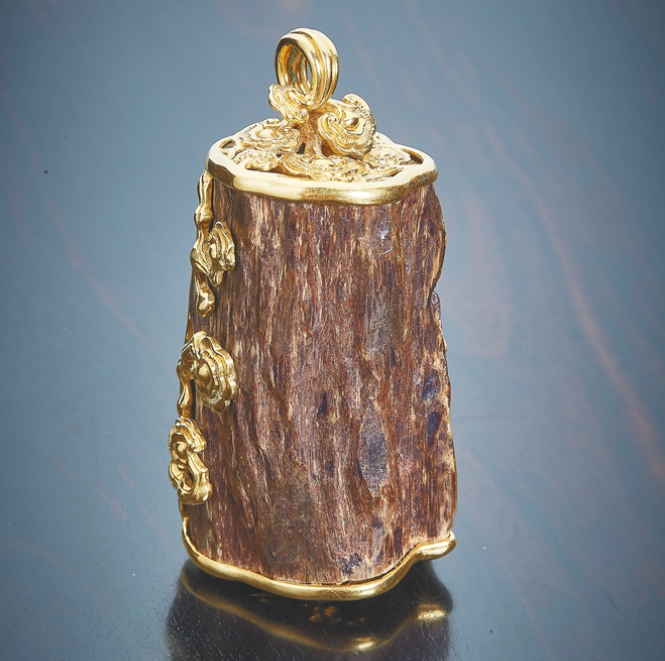
Hainan agarwood is clear, elegant, and pure, vivid and dynamic; its floral fragrance soars, cool and sweet and translucent; it draws from afar with sincerity and depth, embodying virtue and literary grace. For over a thousand years, the reason Hainan agarwood has been unrivaled and highly favored is mainly that it resonates with the pulse of traditional Chinese culture. At every major festival, we use incense as a medium to express remembrance of our ancestors and reverence for nature—this is in fact the gratitude culture unique to the Chinese nation.
The agarwood spirit of resolve and perseverance
The Book of Changes says: "As heaven maintains vigor through movements, a gentleman should constantly strive for self-improvement!" The agarwood tree endures lightning strikes and wind destruction, scorching sun and burning fire, ant bites and insect gnawing, knife splits and axe cuts, suffering all injuries; as its life nears its end, the incense is formed and the tree withers, leaving its fragrance to the world. This is precisely the agarwood spirit of resolve and perseverance.
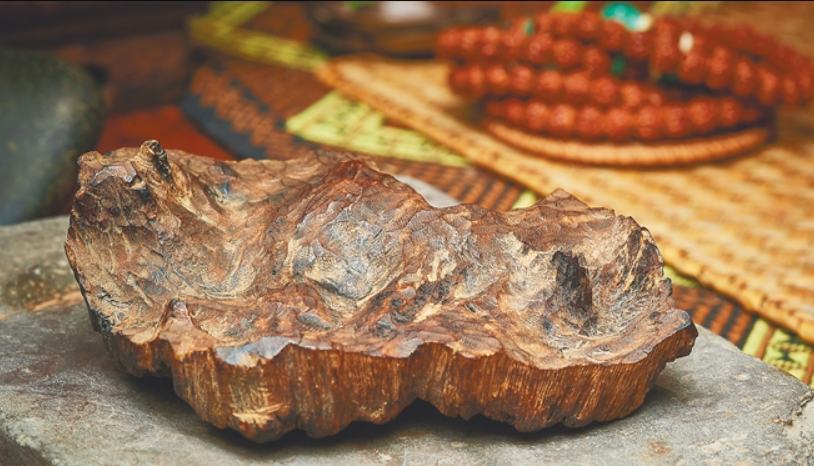
As is well known, after the agarwood tree is injured, it self-repairs at the wound, and the exuded sap accumulates over time to form fragrant resin—what we call agarwood.
The Indian poet Tagore, in his poetry collection Stray Birds, has a famous line: "The world has kissed my soul with its pain, asking for its return in songs!" The Chinese poet Ma De altered this line into a completely different excellent verse: "The world has kissed my soul with its pain, I ask for its return in songs!" You see, the poet elevates a passive, negative attitude toward life into a sunny, proactive, positive, and spirited optimism.
People, coming into this world, inevitably experience various hardships and difficulties, wind and frost, rain and snow. Some may struggle with illness their entire lives and cannot experience the sunny happiness of ordinary people; some may, after a single failed investment, never recover and languish; others may, after a single romantic disappointment, become despondent and gloomy all day. Yet others may adopt a completely different attitude toward life, turning difficulties into motivation, pain into tempering, and failure into a new starting point in life.
Hainan Province, in its development, has experienced the hardships of reform and development and difficult periods of hope and confusion, but we have not paused, not given up, and have kept running for Hainan's beautiful future. Today, Hainan is on the correct path of rapid development, and its achievements have attracted worldwide attention.
In recent years, the Provincial Party Committee and Provincial Government have made the major decision for Hainan to rise through green development. The development philosophy that "lucid waters and lush mountains are invaluable assets" has taken root in people's hearts. The development goal of the "Fourth Tree" will push the agarwood industry onto a track of sustainable and healthy development.
Hainan agarwood is classified by the "four names and twelve forms". Among them, sinking-grade incense, zhanxiang, shengjie (living resin), and shujie (mature resin) are the four fragrance categories, with twelve forms: jigu incense, small douli, qinggui, dinggai, baotou, daojia, diaokou, shuxinge, chonglou, yilou, mati incense, and huangshu incense.
The Guoyu (Discourses of the States) says: "His virtue is sufficient to manifest his fragrance."
Traditional Chinese culture tells us that the highest realm of a gentleman's self-cultivation is to be virtuous in both character and art. A gentleman cultivates literature, and his moral cultivation, like the quality of agarwood, soars with the lone crane, clear and elegant, leaving a lasting fragrance!
According to a field survey by the State Forestry Administration in the 1980s, Hainan Island has more than 370 species of aromatic plants, including herbaceous, woody, and vine types. Fragrant flowers fill the air, competing in beauty.
Zheng He's seven voyages to the Western Seas were also beautifully called the "Maritime Spice Route!" Today, the national "Belt and Road" initiative and the construction of the Hainan Free Trade Port have pushed the Hainan agarwood industry to a new height.
Incense practitioners at home and abroad have long regarded Hainan Island as the agarwood "holy land"; Hainan Island is truly an "island of fragrance."
This article was compiled by "Chenxiang123" (China Agarwood Web); original source: https://www.chenxiang123.com/hainan-chenxiang-qiongzhi-tianxiang-guanjue-tianxia/
Compiled for general knowledge; traditional references are cultural notes, not medical advice.
Frequently Asked Questions
What is Hainan Agarwood?
Hainan agarwood has been celebrated since antiquity as the 'finest fragrance under heaven,' the 'national fragrance,' and the 'heavenly fragrance of Qiongzhi'—the pinnacle of all aromas, once said to be worth ten thousand coins per piece and unrivaled across the world.
How should I choose agarwood?
Buy from traceable, testable channels and match the form (incense, beads, raw wood) to your use. Avoid exaggerated claims such as "wild" or "sinking grade" without proof, and prefer products with lab reports and origin documentation.
How should agarwood be stored and maintained?
Agarwood dislikes moisture, odours and direct sunlight. Keep it sealed, dark and cool, store different origins separately, and air and inspect long-stored pieces periodically against mould and insects.
How can I tell real agarwood from fake?
Authentication combines sensory checks with technical ones: natural agarwood has a clean, long-lasting, cool-sweet scent and burns with pale, non-pungent smoke. GC-MS analysis of characteristic compounds (chromones, sesquiterpenes) adds objective confirmation. Buying through traceable channels with certificates lowers the risk.
How do agarwood origins differ?
Climate, tree species and resin-induction methods give each origin a distinct scent profile — for example Hainan tends to be clean and elegant, Vietnam sweet and cool, Indonesia deep and full. Origin is a key factor in grading and pricing.
What is the current agarwood market like?
Prices diverge sharply by resin density, origin and form, with both top-end collectibles and entry-level consumer products active. Use actual transactions from legal, testable channels as reference rather than a single quotation.
What is the relationship between agarwood and incense culture?
Agarwood is the core medium of East Asian incense culture, spanning temple offerings, literati gatherings and contemporary lifestyle aesthetics. Understanding this cultural background helps explain its value.
Does agarwood have health benefits?
Traditionally agarwood has been used for calming and sleep-related rituals, but evidence quality and dosage need careful reading. Keep traditional use and scientific evidence clearly separated and follow professional guidance.
参考资料
You may also like
评论区
评论匿名可浏览,登录后可发表;提交后先审后显。
评论加载中…