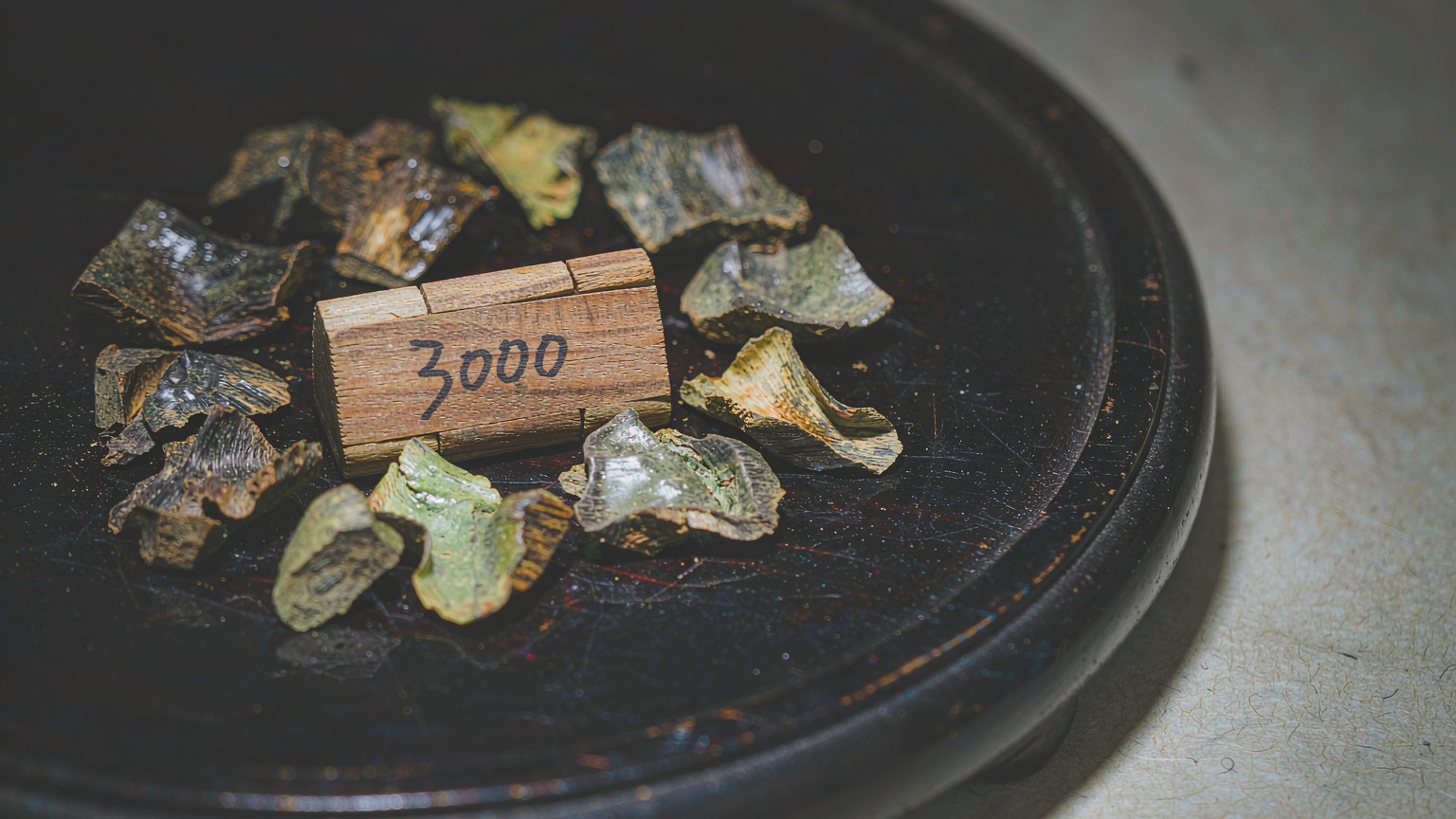
'Xiangjian · Yecheng' Hainan Agarwood Heritage Event Opens in Haikou
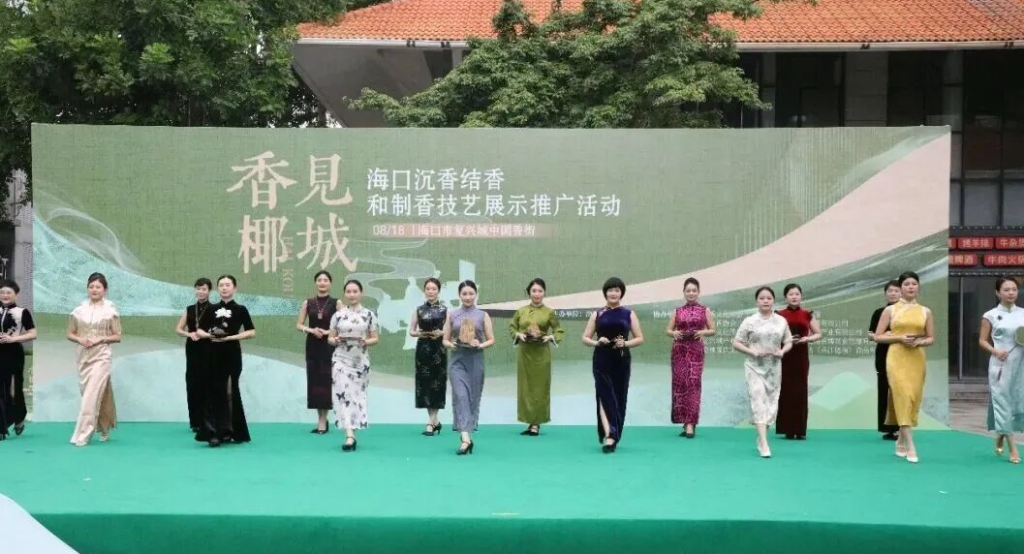
On the morning of August 18, 2026, the "Xiangjian · Yecheng" Haikou agarwood resin formation and incense-making heritage demonstration and promotion event opened at Fuxing City China Incense Street. The event centered on a Chinese-style opening performance, four interactive stamp-collecting zones, an immersive "Fragrance from the Sea" agarwood themed exhibition, and limited-time experiences of the Four Elegant Pursuits of the Song Dynasty, integrating photo-taking, handicrafts, heritage appreciation, and exhibition visits, attracting enthusiastic participation from industry professionals and the general public.
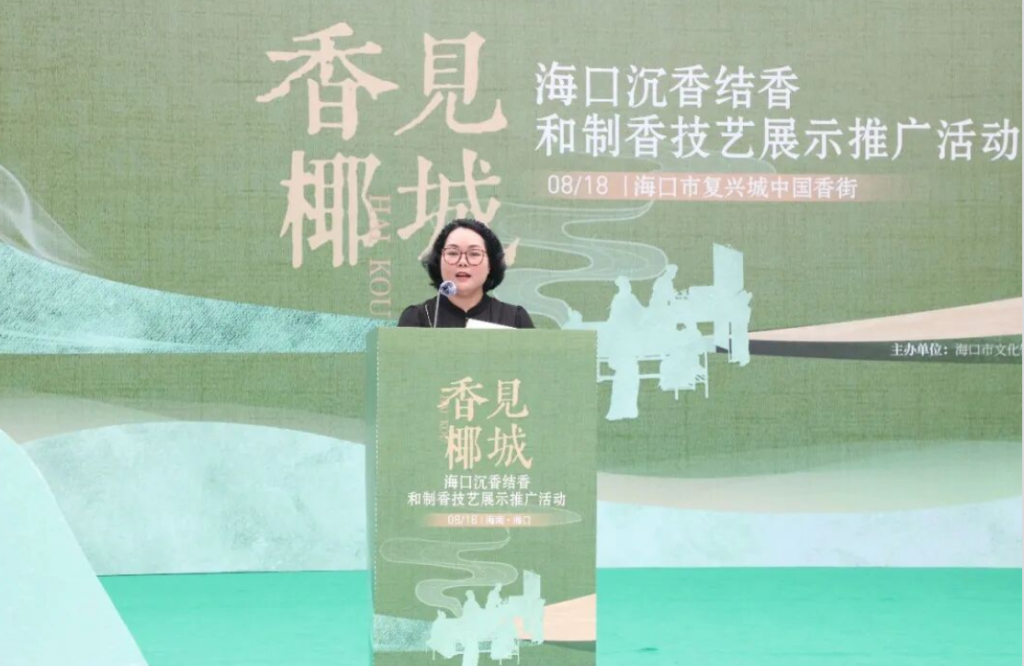
At the opening ceremony, Chen Jianpeng, municipal-level representative inheritor of Haikou agarwood resin formation and incense-making techniques and Secretary-General of the Haikou Agarwood Association, delivered a speech. He stated that Hainan agarwood, anciently known as "Yaxiang," has for thousands of years relied on its unique mountain-and-sea climate and distinctive resin formation conditions to cultivate world-class quality, evolving from a tribute incense of ancient imperial courts and a refined pursuit of scholars into an important intangible cultural heritage carrier embodying Chinese incense culture and representing Hainan's regional cultural lineage.
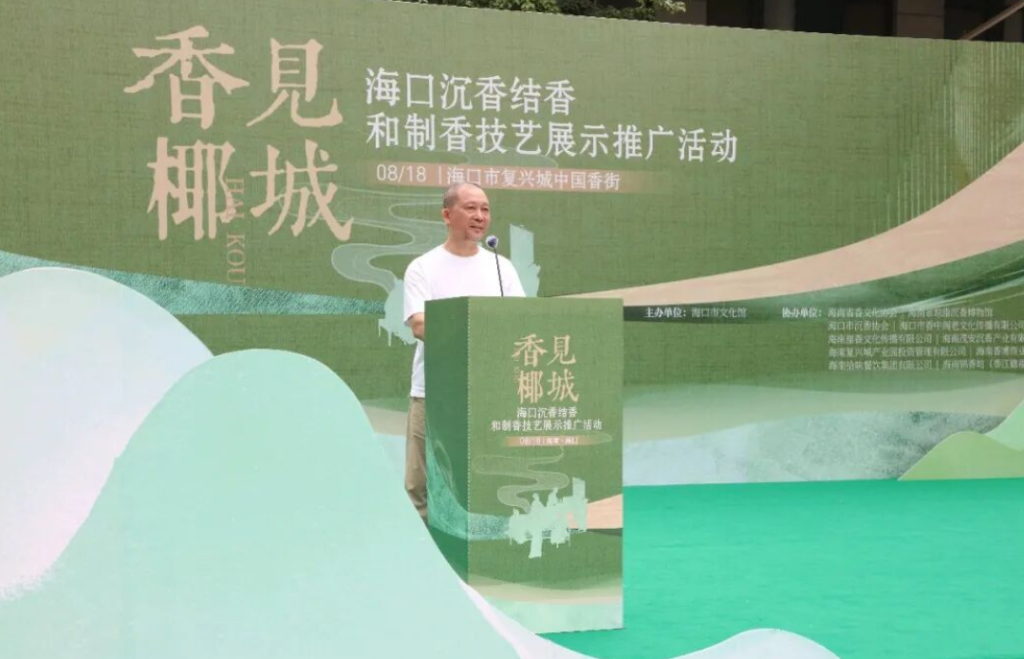
Chen Jianpeng introduced that as the Haikou-based Hainan agarwood intangible cultural heritage protection unit, the Haikou Agarwood Association has consistently upheld the mission of "protecting heritage techniques, transmitting agarwood culture, standardizing industry development, and promoting industrial revitalization," systematically organizing traditional Hainan agarwood techniques and actively cultivating local heritage inheritors. With the discovery and support of the Haikou Cultural Center, the first batch of four agarwood resin formation and incense-making technique representative inheritors in Haikou passed review in 2024, and the city's agarwood resin formation and incense-making heritage inheritors have now grown to nine.
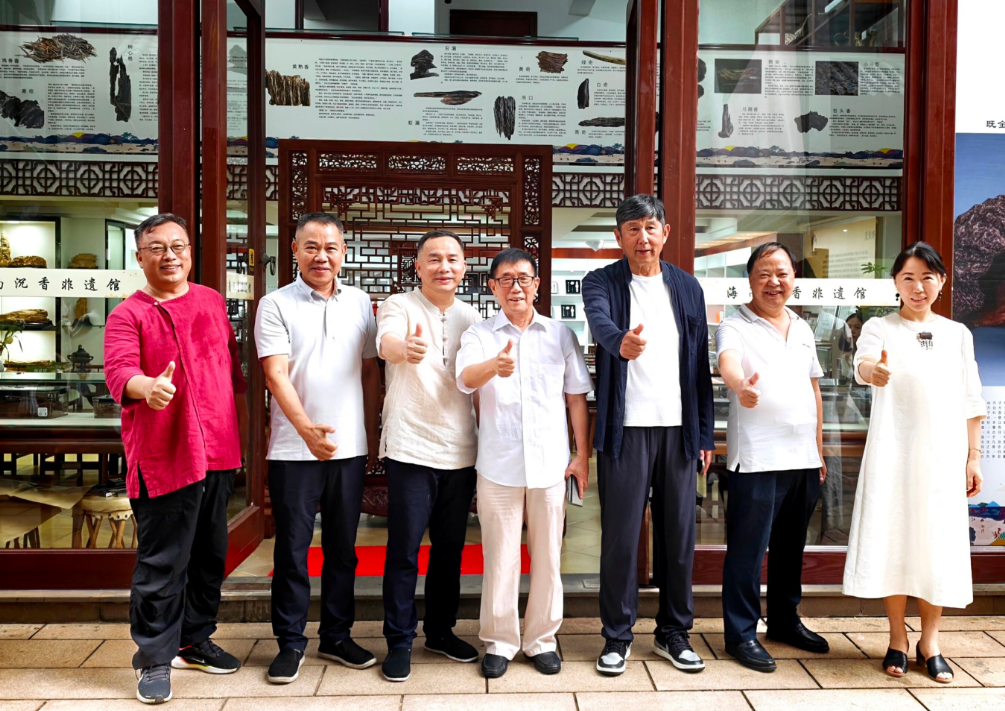
The event venue provider, Fuxing City China Incense Street, was established in 2014. After 12 years of development, it has gathered a group of institutions and practitioners deeply engaged in the agarwood cause, including the Haikou Agarwood Association, the Hainan Incense Culture Association, and the Hainan Qiongzhi Agarwood Museum, and enjoys high prestige in China's agarwood circles. Chen Jianpeng stated that this event is both a concentrated display of agarwood heritage achievements and an industry gathering for transmitting cultural lineage and exchanging development insights. In the future, the Haikou Agarwood Association will collaborate with fellow incense industry colleagues such as the Hainan Provincial agarwood industry Federation and the organizing committee of the Tianxiang Guose Agarwood and Huanghuali International Trade Fair to jointly support the high-quality development of the free trade port's distinctive cultural industry.
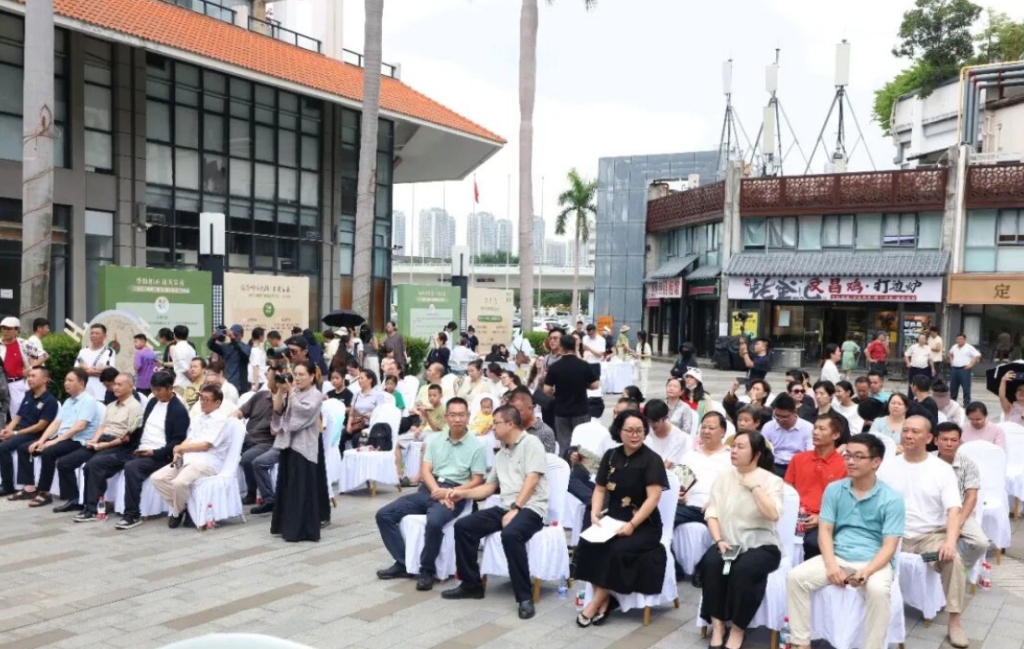
After the launch ceremony, the "Xiangjian · Yecheng" Haikou agarwood resin formation and incense-making techniques provincial and extra-provincial industry exchange symposium was held. Leaders and guests including Yang Bin, Xie Feng, He Xin, Chen Shuai, Tang Xiong, Zhang Xiaowu, Ma Zuiliang, Wang Jun, Li Shaohua, Liu Ping, Zhu Dehong, Wei Xiwang, Feng Yuntian, Chen Jianpeng, Huang Yaosen, Zhan Sixiong, Wang Jing, and Wu Songqing held in-depth discussions on agarwood industry development.
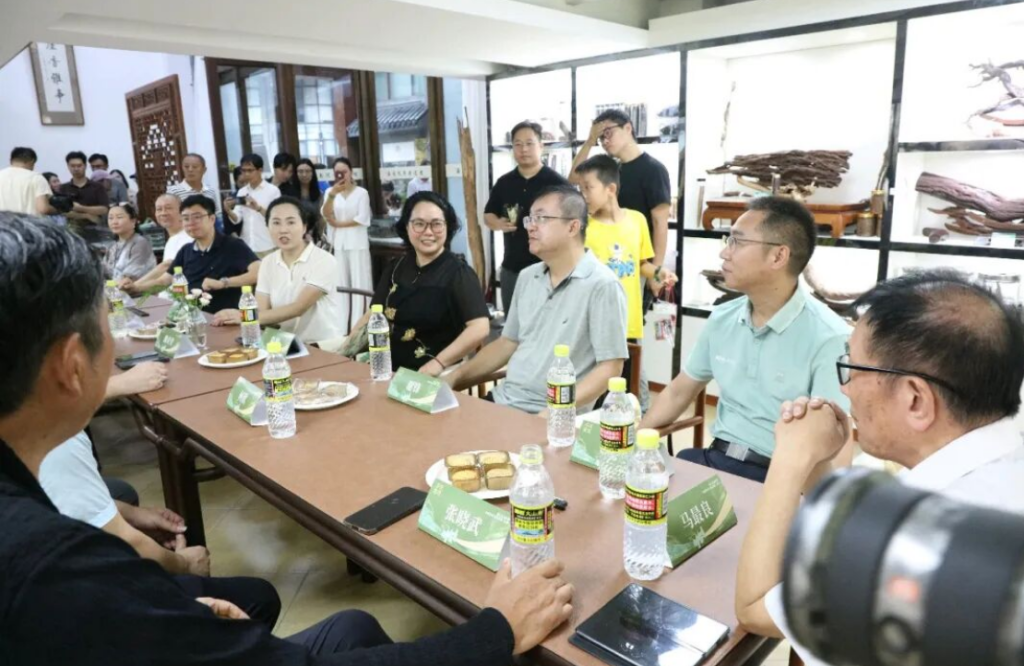
Ma Zuiliang, former Director of the Major Projects Department of the National Development and Reform Commission, noted in an interview that after Hainan's free trade port construction, relying on its profound historical foundation and superior natural environment, the importance of Hainan re-emerging as China's agarwood industry base has become increasingly prominent. Agarwood is not only a precious spice but also an important medicinal material and a core component of incense culture. He emphasized that Hainan's focus on developing distinctive tree species such as Huanghuali and agarwood can spawn diverse industries and products; with AI technology and complete gene maps, it is expected that agarwood-centered biological products and biomedicine can be developed in the future, with broad industry prospects.
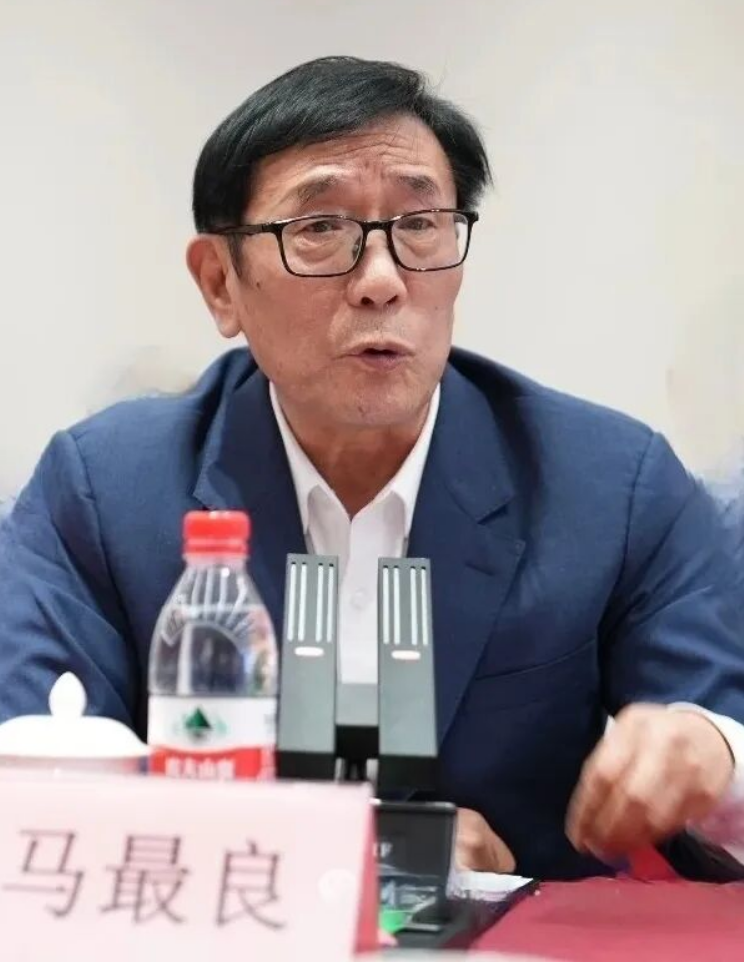
Regarding the current state of the industry, Ma Zuiliang candidly stated that the agarwood industry remains in a disordered state, with insufficient market competition, standards and consensus not yet formed, and most practitioners focusing on arbitrage while neglecting innovation and value-added. He suggested that industry associations strengthen the construction of industry rules and conventions, and that the government play a greater guiding and constraining role, focusing on standardizing incense material standards, planting norms, and harvesting timing to avoid quality decline caused by excessive harvesting. "Only through marketization, an innovative and entrepreneurial spirit, and new products can the industry be advanced." Ma Zuiliang expressed the expectation that Hainan agarwood will "spread its fragrance across the nation, across Asia, and across the world."
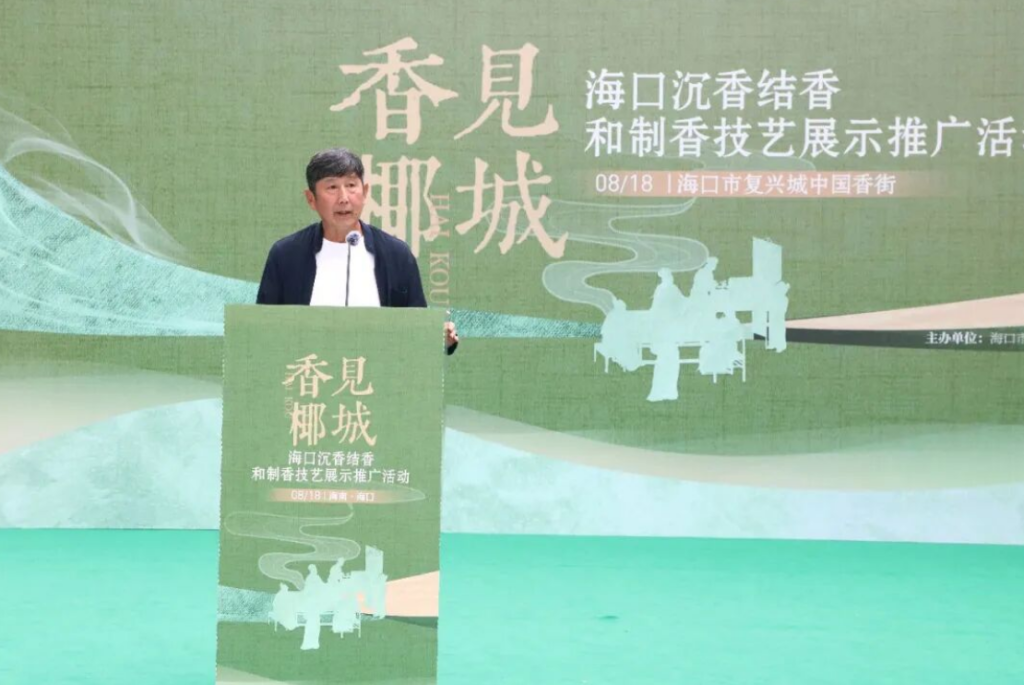
Zhang Xiaowu, renowned agarwood collector, incense scholar, and chief consultant to multiple domestic agarwood associations, shared his experience witnessing over three decades of change in Hainan's agarwood industry. He came to the island and encountered agarwood in 1989, when there were only a few hundred practitioners; today official figures show that practitioners in planting, heritage, incense-making, and retail have reached 80,000 to 100,000. He believes that agarwood is both a precious traditional Chinese medicine and a luxury good popular in the market, with continuously growing demand for bracelets, handicrafts, and home furnishings.
Zhang Xiaowu called on agarwood farmers to uphold their bottom line, produce genuine agarwood, and prevent counterfeit agarwood from damaging the market; he also suggested that the industry should not remain superficial but should deeply explore cultural connotations. He specifically mentioned Ding Wei's Tianxiang Zhuan from the Song Dynasty, Su Dongpo's characterization of Hainan incense, and Li Shizhen's record that "a piece of Hainan agarwood is worth ten thousand coins," emphasizing that "only culture can endure." He stated that Hainan Huanghuali and agarwood are two great treasures, and expressed the hope that Hainan will become the world's agarwood distribution center, exploring more of the cultural value behind agarwood beyond its economic value.
Feng Yuntian, President of the Hainan Incense Culture Association, who has long been dedicated to Hainan agarwood cultural dissemination, expressed the same view in an interview. He stated directly: "An industry without cultural depth has no lasting vitality." Feng Yuntian emphasized that the agarwood industry should deeply explore cultural connotations and take culture as its root to achieve steady and long-term development.
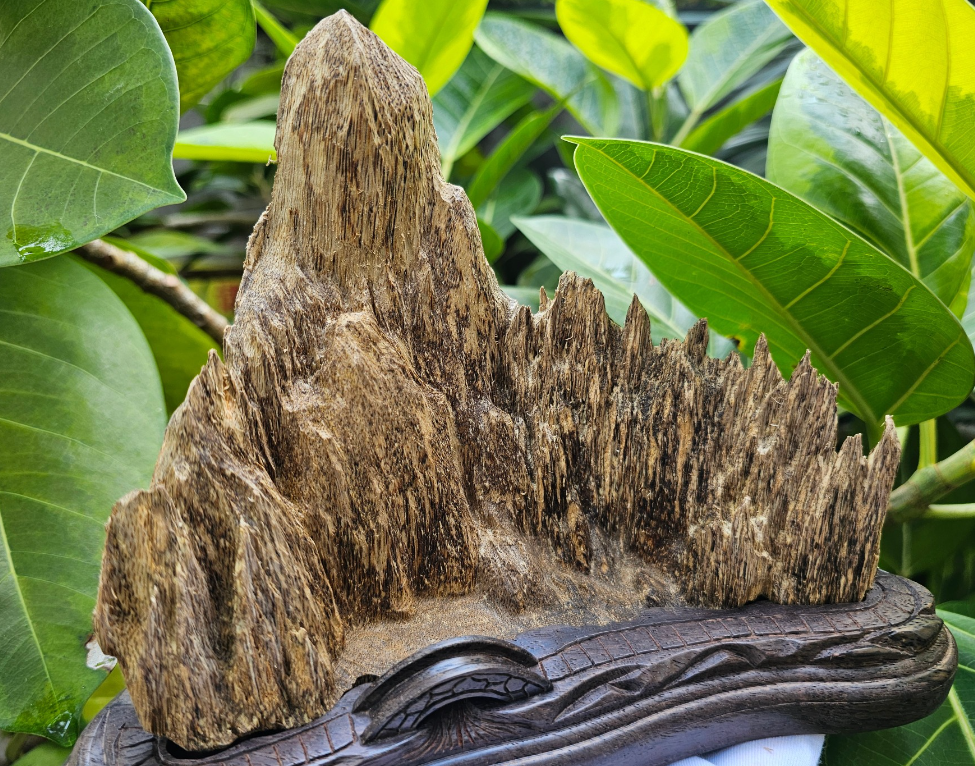
A wisp of Hainan incense, a thousand years of Silk Road sentiment. From the Yaxiang described by Ding Wei as "peerless under heaven" to Su Dongpo's Compiled for general knowledge; traditional references are cultural notes, not medical advice.
Frequently Asked Questions
What is 'Xiangjian · Yecheng' Hainan Agarwood Heritage Event Opens in Haikou?
On August 18, 2026, the 'Xiangjian · Yecheng' Haikou agarwood resin formation and incense-making heritage demonstration event opened at Fuxing City China Incense Street, featuring exhibitions, interactive stamp-collecting zones, and a themed agarwood exhibition.
How should I choose agarwood?
Buy from traceable, testable channels and match the form (incense, beads, raw wood) to your use. Avoid exaggerated claims such as "wild" or "sinking grade" without proof, and prefer products with lab reports and origin documentation.
How should agarwood be stored and maintained?
Agarwood dislikes moisture, odours and direct sunlight. Keep it sealed, dark and cool, store different origins separately, and air and inspect long-stored pieces periodically against mould and insects.
How can I tell real agarwood from fake?
Authentication combines sensory checks with technical ones: natural agarwood has a clean, long-lasting, cool-sweet scent and burns with pale, non-pungent smoke. GC-MS analysis of characteristic compounds (chromones, sesquiterpenes) adds objective confirmation. Buying through traceable channels with certificates lowers the risk.
How do agarwood origins differ?
Climate, tree species and resin-induction methods give each origin a distinct scent profile — for example Hainan tends to be clean and elegant, Vietnam sweet and cool, Indonesia deep and full. Origin is a key factor in grading and pricing.
What is the current agarwood market like?
Prices diverge sharply by resin density, origin and form, with both top-end collectibles and entry-level consumer products active. Use actual transactions from legal, testable channels as reference rather than a single quotation.
What is the relationship between agarwood and incense culture?
Agarwood is the core medium of East Asian incense culture, spanning temple offerings, literati gatherings and contemporary lifestyle aesthetics. Understanding this cultural background helps explain its value.
Does agarwood have health benefits?
Traditionally agarwood has been used for calming and sleep-related rituals, but evidence quality and dosage need careful reading. Keep traditional use and scientific evidence clearly separated and follow professional guidance.
参考资料
You may also like
评论区
评论匿名可浏览,登录后可发表;提交后先审后显。
评论加载中…