
Where Does Dianbai Qinan Agarwood Go From Here?
The thousand-year agarwood heritage of Dianbai, Maoming, continues uninterrupted. As the "Hometown of Agarwood in China," Dianbai has leveraged its exceptional natural conditions and decades of industry cultivation to develop qinan agarwood into a diversified industrial framework encompassing cultivation, processing, trade and cultural tourism.

At this critical juncture of industrial transformation and upgrading, Dianbai qinan agarwood has already established a comprehensive product matrix, opened cross-border export channels, and begun construction on major deep-processing projects.
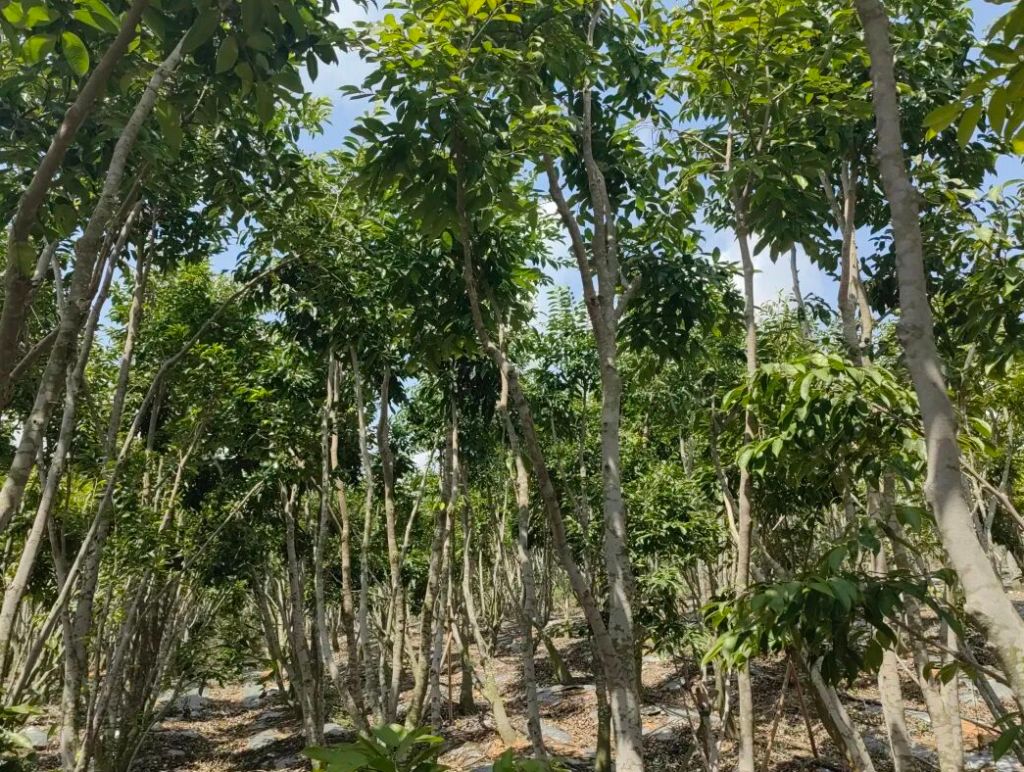
Opportunities and challenges coexist. How Dianbai agarwood can build on its existing foundations, resolve development bottlenecks, and forge a path of standardization, scale, branding and internationalization is the defining question of the era facing the industry.
A rich and diverse product system is the foundational support for the industry's steady and long-term development
After years of iterative development, Dianbai qinan agarwood has built a complete product chain comprising seven major categories and more than 100 products, covering daily chemical products, agarwood handicrafts, traditional incense, agarwood tea, essential oils and fragrances, traditional Chinese medicine decoction pieces, and Chinese patent medicines, among other segments. From craft and collectible products such as bead bracelets and ornamental pieces to daily-use incense such as stick and coil incense; from health consumer goods such as agarwood leaf tea to deep-processed categories such as agarwood essential oil, medicinal decoction pieces and Chinese patent medicines, agarwood has moved beyond its traditional positioning as a single fragrance material and penetrated fields as diverse as mass consumer goods, arts and crafts, and biomedicine.
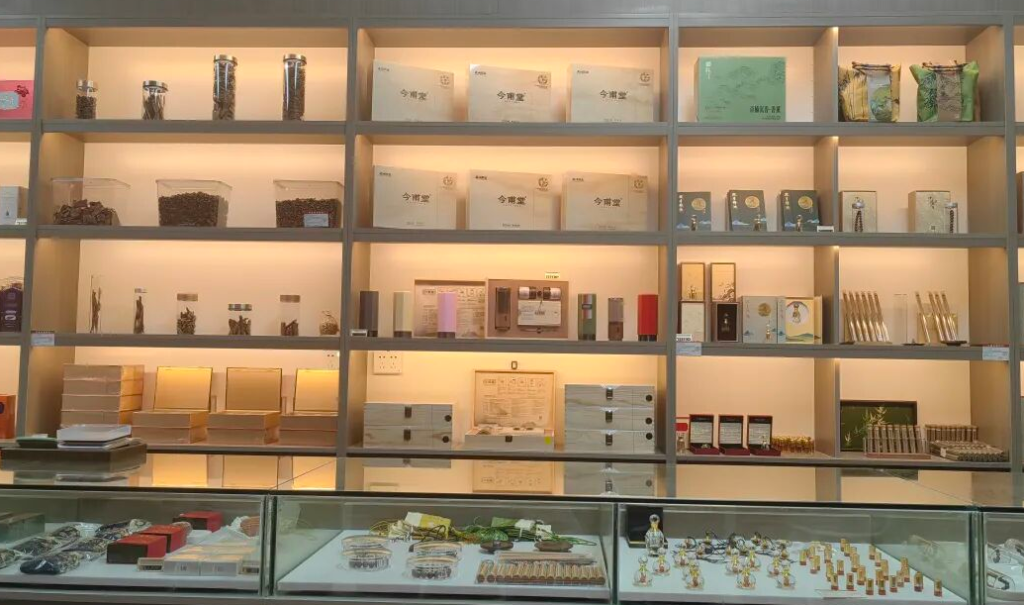
Behind the flourishing diversity of Dianbai qinan agarwood products lie real difficulties. The industry currently comprises numerous small, medium and micro entities, and many enterprises remain at the level of rough processing of raw materials. Product homogenization is pronounced, the supply of high-end original products is insufficient, and the added value of most products has yet to be fully realized. Some categories lack unified industry standards, and uneven market quality constrains the enhancement of consumer trust.
How to shift from "many products" to "many premium products" and convert category advantages into quality advantages and brand advantages is the first question the Dianbai qinan agarwood industry must resolve. Only by adhering to quality as the core, improving quality control across the entire chain, and integrating traditional incense products with modern consumer demand can the rich product matrix be truly transformed into industrial competitiveness.
Opening overseas trade channels is an important breakthrough for expanding the development space of Dianbai agarwood
Agarwood is a protected plant-derived product, and cumbersome import and export procedures have long been a major bottleneck constraining the industry's overseas expansion. Dianbai enterprises and relevant government departments have worked together to gradually open the door to international markets. In September 2024, the Senhai Agarwood Cooperative obtained Dianbai District's first import and export permit for Aquilaria sinensis, securing the first legal passport for local agarwood to go overseas and achieving a breakthrough from zero. In April 2025, Yufeng Company completed the export of 50 kilograms of agarwood wood chips and fragments to Riyadh, Saudi Arabia, while signing a large export order for 1.15 tons of raw materials, a key step toward substantive commercial exports. In December of the same year, Guangken Shuguang Farm completed Dianbai agarwood's first large-volume export, shipping a full ton of agarwood raw materials to the Saudi market, marking the initial formation of a scaled cross-border trade model for Dianbai agarwood.
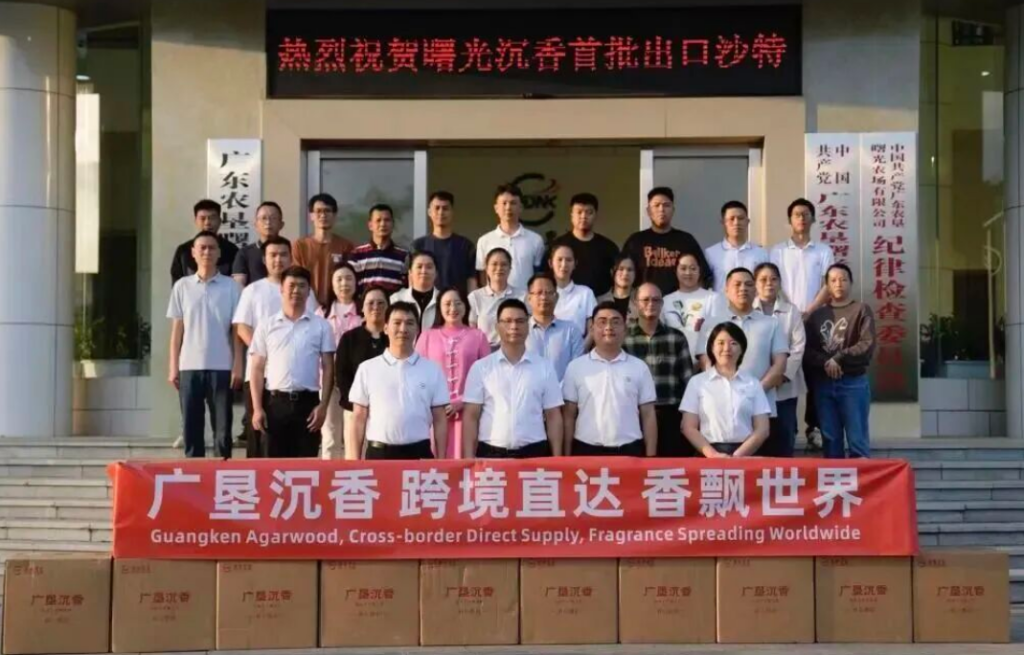
The Middle East has long been a core global market for agarwood consumption, and the completion of several export orders proves that Dianbai's cultivated qinan agarwood raw materials have gained overseas market recognition. Yet the path overseas has only just begun, and multiple tests lie ahead, including origin certification, inspection and quarantine, overseas channel development, and international brand building. Exports currently remain dominated by raw material output, with a relatively low share of high-value-added finished products. Going forward, it is necessary both to continue streamlining trade approval processes and establish a stable, compliant export supply chain, and to promote crafted incense products and daily chemical and wellness agarwood products in international markets, changing the trade structure that relies solely on raw material exports and allowing Dianbai agarwood culture to reach the world alongside its products.
The launch of major industrial projects accelerates Dianbai agarwood's move toward large-scale deep processing
The Maoming agarwood extraction and fragrance manufacturing plant, a key government investment attraction project, is located in the Dianbai Agarwood Provincial Modern Agricultural Industrial Park. The project covers 43.6 mu of construction land with a total floor area of 58,000 square meters and a first-phase investment of 143 million yuan. Adhering to the construction philosophy of "industrial demonstration, energy conservation and environmental protection, and intelligent efficiency," it introduces internationally advanced production equipment and focuses on the production of agarwood essential oil, agarwood hydrosol, agarwood extract and fragrances, while also incubating daily-use beauty products. The project was completed at the end of that year and officially began production the following year; once operational, it will rank among the world's largest and most technologically advanced agarwood deep-processing enterprises.

The project has considerable designed capacity: it can produce 600 kilograms of agarwood essential oil and 15 tons of agarwood fragrance daily, consuming up to 15,000 qinan agarwood logs per day and requiring as many as 5 million logs annually, with the goal of building a leading national agarwood processing production base. The completion and operation of this flagship processing project will fill the deep-processing gap in Dianbai agarwood, change the industry's past reliance on rough processing, provide a standardized processing platform for the entire industry, force quality and efficiency improvements upstream in cultivation, and drive upgrades across the entire chain of raw material cultivation, harvesting, storage and logistics. However, the enormous raw material demand also poses new challenges for local cultivation. The annual consumption of 5 million agarwood logs requires a stable, sustainable and standardized qinan agarwood cultivation system as backing, placing higher demands on seedling selection and breeding, standardized cultivation, scientific resin formation, and forest land supply.
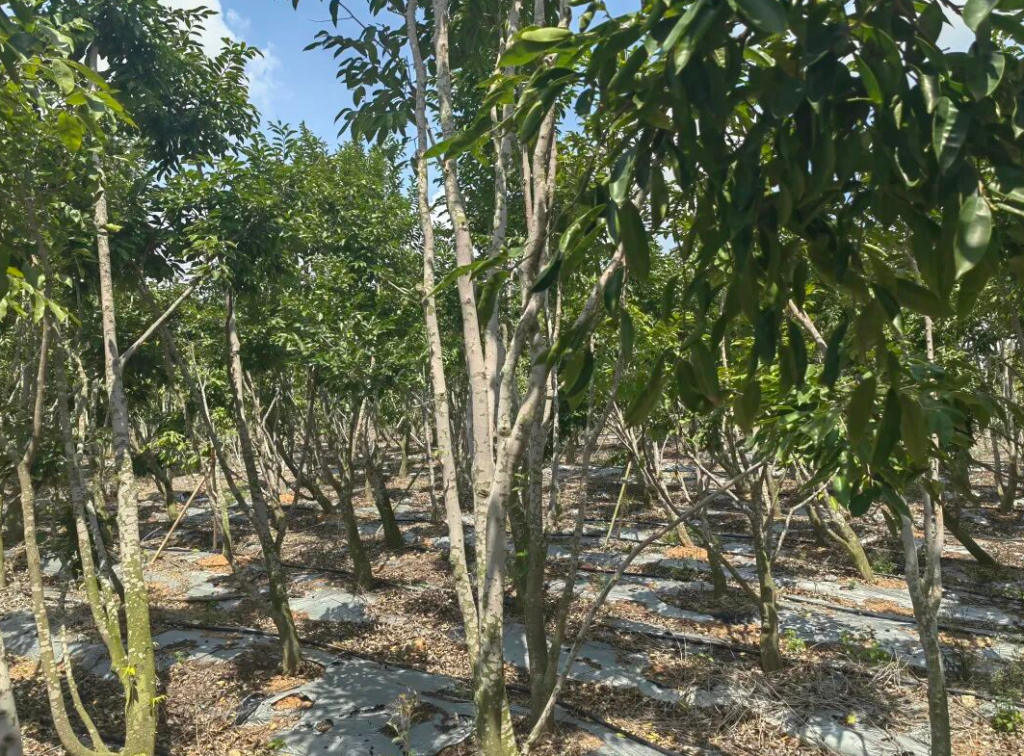
How the cultivation and processing ends of the agarwood industry can achieve supply-demand coordination, ensure stable raw material supply, avoid sharp fluctuations in raw material prices, and achieve mutual benefit for growers and processing enterprises is a practical issue that must be addressed comprehensively once the project is operational.
Looking back, Dianbai qinan agarwood has completed its transformation from individual farmers to an industrial cluster; looking ahead, opportunities and challenges coexist. On the product side, it is necessary to deepen standardization, enrich premium offerings, and resolve homogenization; on the trade side, it is necessary to consolidate overseas export achievements and drive the shift from raw material exports to brand exports; on the processing side, it is necessary to rely on flagship deep-processing projects to connect the technology transfer chain and extend product added value.
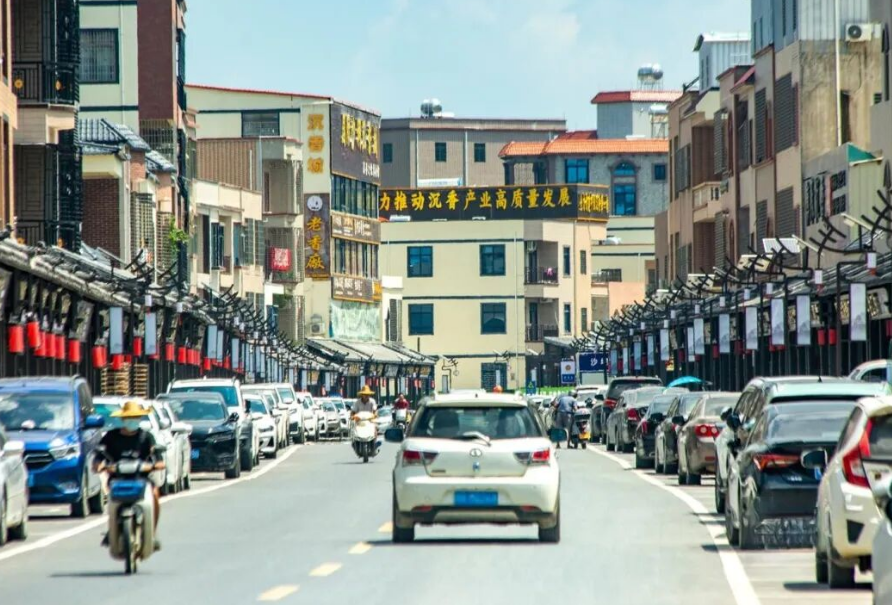
The future of Dianbai qinan agarwood lies not in advancing a single segment in isolation, but in the coordinated progress of cultivation, processing, research, branding and trade. Only by building on local resource endowments, upholding craftsmanship and quality, making good use of technological empowerment, improving standards systems, telling the story of agarwood culture well, and promoting deep integration of the primary, secondary and tertiary industries can this thousand-year fragrance emerge from the forests—enriching farmers and villages while reaching broader domestic and international markets—and truly achieve the leap from a major agarwood resource county to a strong agarwood industry county.
This article was compiled by "Chenxiang Web." Original source: https://www.chenxiang123.com/dianbai-qinan-chenxiang-luzai-hefang/
Compiled for general knowledge; traditional references are cultural notes, not medical advice.
Frequently Asked Questions
What is Where Does Dianbai Qinan Agarwood Go From Here??
Dianbai, Maoming, the "Hometown of Agarwood in China," has built a diversified qinan agarwood industry spanning cultivation, processing, trade and cultural tourism. At a critical turning point, it faces the challenge of advancing standardization, scale, branding and internationalization.
How should I choose agarwood?
Buy from traceable, testable channels and match the form (incense, beads, raw wood) to your use. Avoid exaggerated claims such as "wild" or "sinking grade" without proof, and prefer products with lab reports and origin documentation.
How should agarwood be stored and maintained?
Agarwood dislikes moisture, odours and direct sunlight. Keep it sealed, dark and cool, store different origins separately, and air and inspect long-stored pieces periodically against mould and insects.
How can I tell real agarwood from fake?
Authentication combines sensory checks with technical ones: natural agarwood has a clean, long-lasting, cool-sweet scent and burns with pale, non-pungent smoke. GC-MS analysis of characteristic compounds (chromones, sesquiterpenes) adds objective confirmation. Buying through traceable channels with certificates lowers the risk.
How do agarwood origins differ?
Climate, tree species and resin-induction methods give each origin a distinct scent profile — for example Hainan tends to be clean and elegant, Vietnam sweet and cool, Indonesia deep and full. Origin is a key factor in grading and pricing.
What is the current agarwood market like?
Prices diverge sharply by resin density, origin and form, with both top-end collectibles and entry-level consumer products active. Use actual transactions from legal, testable channels as reference rather than a single quotation.
What is the relationship between agarwood and incense culture?
Agarwood is the core medium of East Asian incense culture, spanning temple offerings, literati gatherings and contemporary lifestyle aesthetics. Understanding this cultural background helps explain its value.
Does agarwood have health benefits?
Traditionally agarwood has been used for calming and sleep-related rituals, but evidence quality and dosage need careful reading. Keep traditional use and scientific evidence clearly separated and follow professional guidance.
参考资料
You may also like
评论区
评论匿名可浏览,登录后可发表;提交后先审后显。
评论加载中…