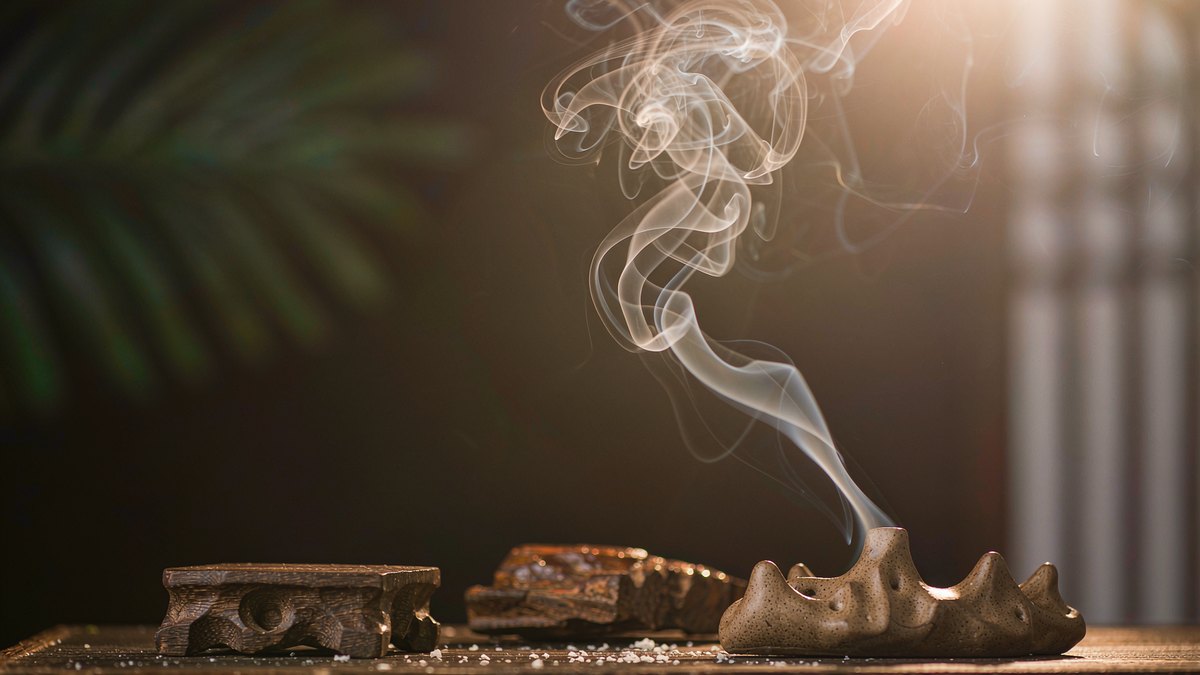
Dianbai Agarwood's Overseas 'Adventure Story'
Recently, multiple agarwood processed products from Dianbai Agarwood Investment Group Co., Ltd. launched in Abu Dhabi, the capital of the UAE, including leaf tea, pillows, crude oil, incense and daily chemical products.
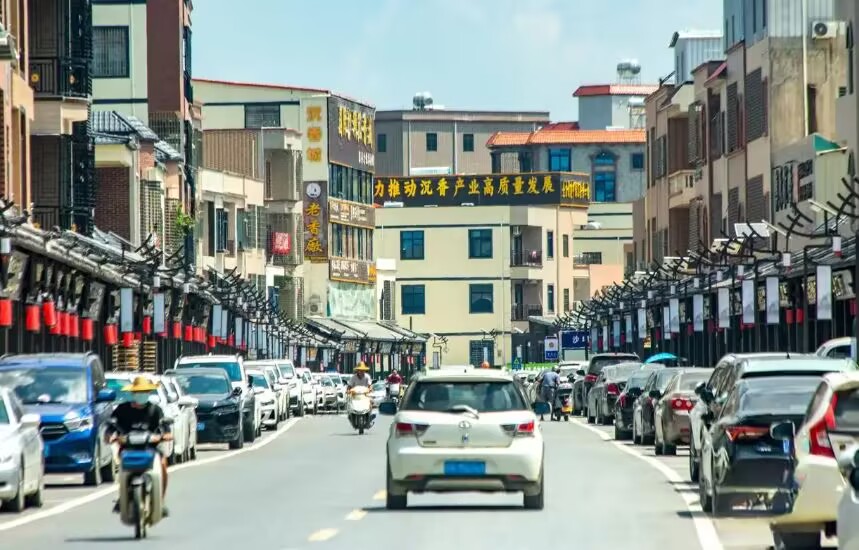
Although this is not an export in the strict sense, it has once again drawn many people's attention to the export path of agarwood. More than a year ago, the export of agarwood raw materials was blocked at every turn due to restrictions on trade in wild agarwood. How could artificially cultivated agarwood prove its "legal identity" and pass through layer upon layer of quarantine checks? This once caused countless incense farmers great headaches.
In September 2024, Senhai Agarwood Cooperative obtained the first import and export permit for Aquilaria sinensis in Dianbai District. However, because it lacked an agarwood fumigation and disinfection certificate, this export order, which had been placed with high hopes, ultimately could not proceed. The contract expired, the order was canceled, and everything returned to the starting point.
This is not a story of failure. On the contrary, it is the starting point of a journey to break through the impasse. From the first import and export permit to the first batch export, Dianbai agarwood spent less than two years opening up a path full of "adventures" to break the impasse.
The "First Permit" Meets Setbacks: Figuring Out the Ropes Through Failure
Let us return to September 2024. Senhai Agarwood Cooperative obtained the first import and export permit for Aquilaria sinensis in Dianbai District. This certificate was hard-won, meaning that artificially cultivated agarwood finally had a "pass" for legal export.
"The Middle East has great demand for agarwood. We have established a company in Saudi Arabia and have five or six long-term client resources," said Liu Jisheng, head of Senhai Agarwood Cooperative. They have long been developing orders in Saudi Arabia, the UAE and other places. The hard-won "pass" excited everyone in the cooperative. However, the excitement was soon dampened by reality. Having the "pass" did not mean the export could proceed; the process was far more complicated than imagined.
Liu Jisheng still remembers that tortuous experience. In early 2023, they began preparing for agarwood export. According to the process, they first had to sign a contract with an overseas client, then bring the contract back to apply for an export license. Just applying for the export procedures for this batch of orders took several months.
"By the time the application was approved, the contract over there had already expired," Liu Jisheng said. Even more troublesome was the disinfection issue. Customs required a fumigation and disinfection certificate, but agarwood as a product cannot withstand high-temperature fumigation. "Once steamed, it turns from black to white, and the quality completely changes. No one wants it." Liu Jisheng searched everywhere for qualified disinfection companies, and the answers he received were all: "We have never handled this kind of thing, and we dare not do it." There was no suitable disinfection site locally in Maoming, and going to Guangzhou or Shenzhen to handle it would involve the hassle of out-of-town procedures. In the end, this "first permit" did not translate into an actual export, and the contract quietly expired.
This failure exposed several major bottlenecks in Dianbai agarwood exports: How can the yield of artificially cultivated agarwood be scientifically demonstrated? How should the certificate of origin be handled? How can the "dead knot" of fumigation and disinfection be untied?
Breaking Through Bottlenecks: A Breakthrough from 50 Kilograms to 1 Ton
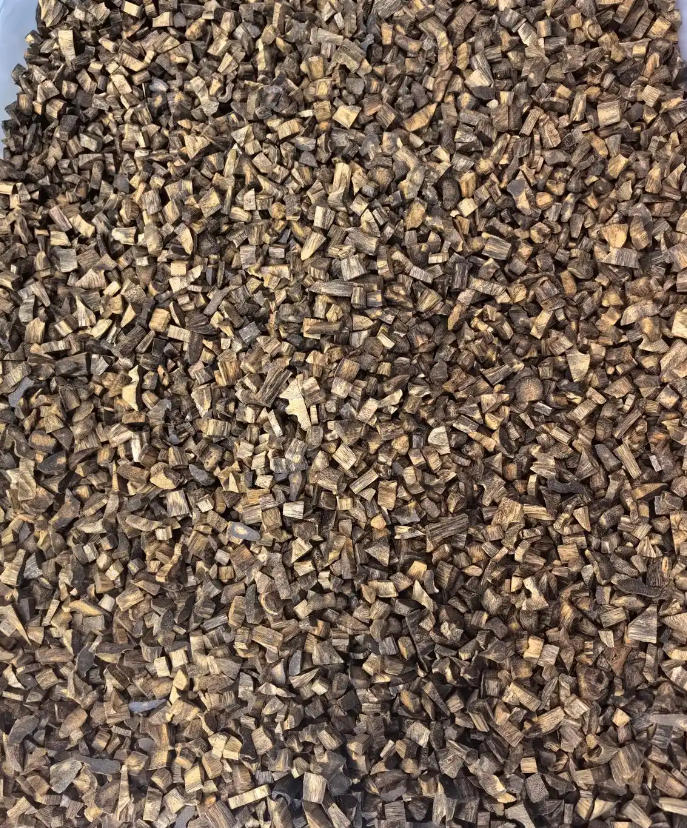
Just as Senhai Cooperative encountered setbacks, another company, Maoming Yufeng Agarwood Creative Industry Co., Ltd., began its own exploration. In April 2025, Yufeng successfully exported 50 kilograms of agarwood wood chips to Riyadh, Saudi Arabia. This was Dianbai agarwood's first truly successful overseas order.
Wen Quanjun, head of Yufeng Agarwood Company, recalled that the preparation process was likewise full of twists and turns. The biggest problem was also disinfection. There were no suitable disinfection sites in Maoming or Zhanjiang, so they had to go to Shenzhen. "We took many detours, consumed a great deal of time and cost, which was equivalent to paying a lot of tuition," Wen Quanjun said.
In the end, they explained Maoming's actual situation clearly to the Saudi client, and the client accepted the out-of-town disinfection plan.
More noteworthy is that Yufeng Company signed a 1.15-ton raw material export contract with a Saudi foreign trade company. As of the interview, eight or nine batches of this order had already been exported. "Once the services are all worked out, it becomes much faster. Customs is very cooperative, and customs clearance is very quick," Wen Quanjun said.
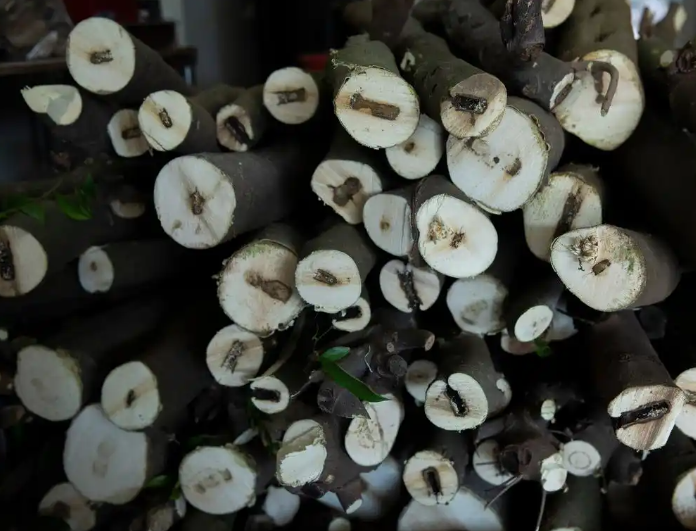
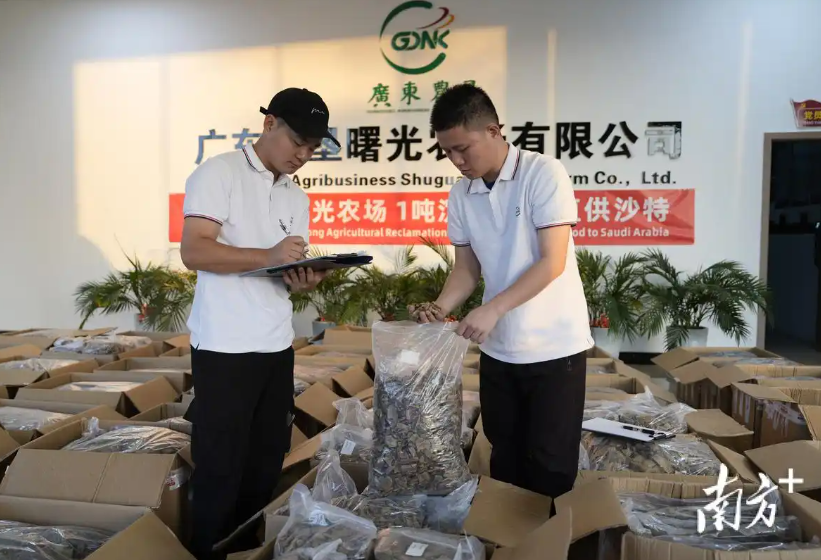
The biggest bottleneck now has shifted from disinfection to the application and approval of endangered species permits, "which takes even longer." Another milestone appeared in December 2025. At that time, Guangdong State Farms Shuguang Farm completed Dianbai agarwood's first large-batch export—a full ton of agarwood raw materials sent to Saudi Arabia.
Tu Tu, deputy farm director of Guangdong State Farms Shuguang Farm, believes that the significance of this batch export lies not in the quantity but in "being recognized." "Sporadic exports may only be to small clients or occasional buyers, but batch exports show that Middle Eastern clients have already recognized our products, which is why they make large-scale purchases." This solved the issue that Dianbai agarwood growers worried about most: with so much agarwood planted, can it actually be sold? At present, Dianbai agarwood exports are mainly agarwood raw material chips.
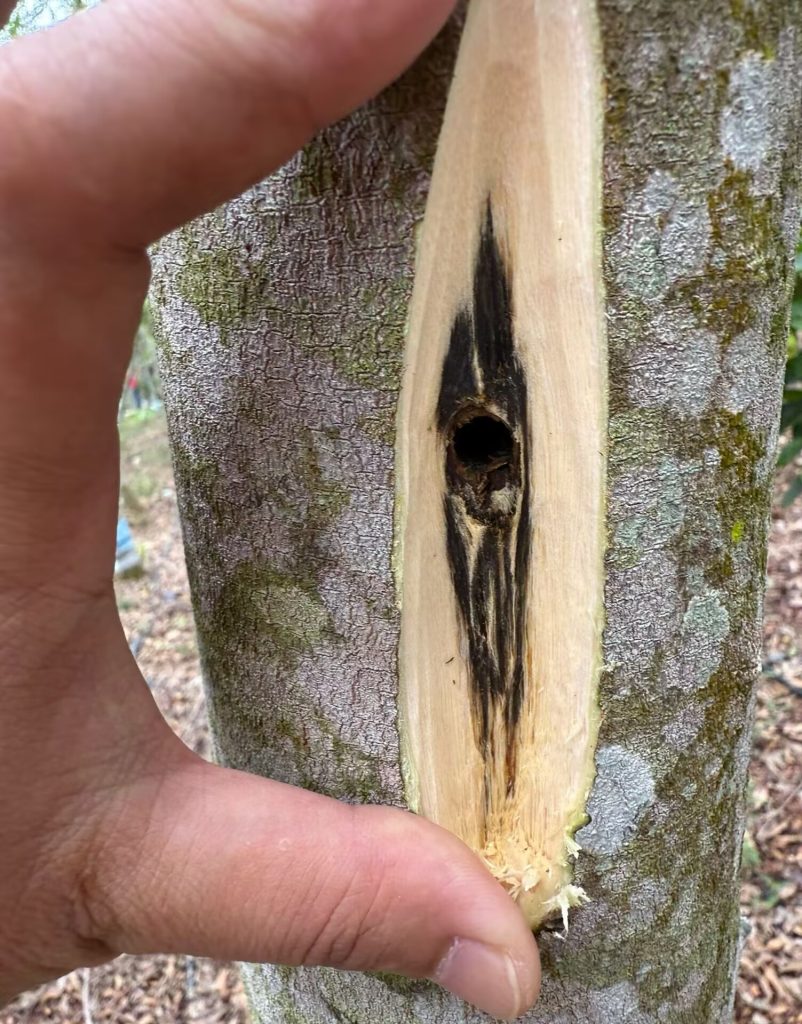
Tu Tu introduced that the Middle East is the world's largest consumer market for agarwood, but for a long time the local market has been flooded with counterfeit goods. "Much agarwood is produced through oil soaking, fumigation, fermentation and various other methods; it is not purely natural." The naturally cultivated agarwood from standardized Dianbai plantations precisely fills the gap in this authentic product market.
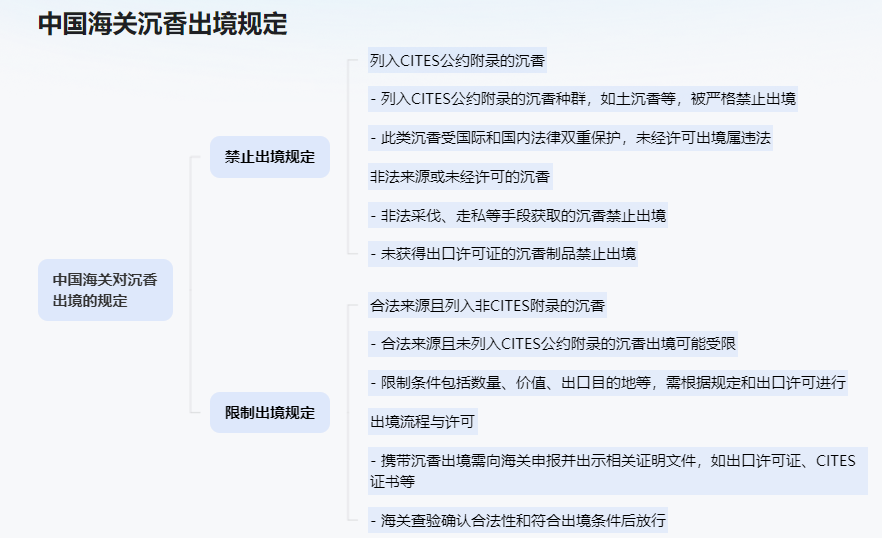
The realization of batch exports has also benefited from a gradually clarified compliance process. Formal export requires simultaneously possessing an endangered species import and export permit, customs declaration procedures and inspection and quarantine certificates. Tu Tu emphasized that the process itself is not complicated: "As long as the paperwork is complete and customs verifies that the product name, code, specifications and weight are consistent, the process is smooth." However, he also admitted that obtaining a single certificate takes at least two months.
Policy Breakthroughs: Troublesome Links Being Resolved One by One
Looking back, the most critical step in clearing the bottlenecks for Dianbai agarwood exports actually occurred in early 2024.
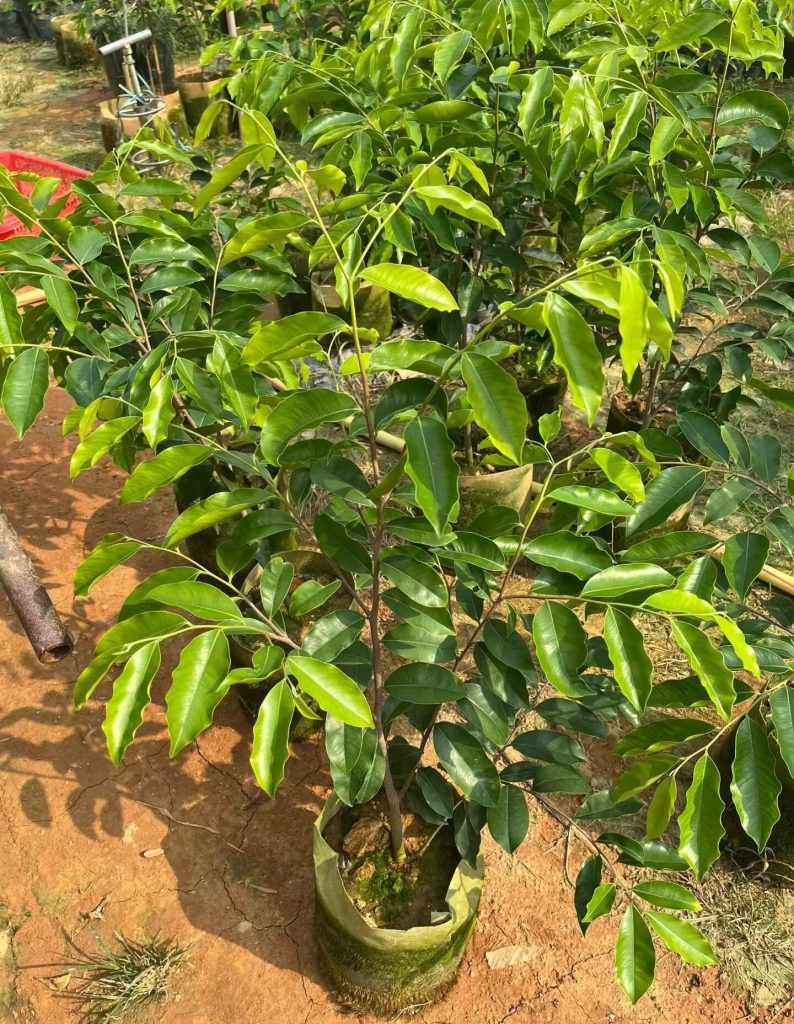
At that time, the Dianbai District Natural Resources Bureau realized a problem: many people came to apply for certificates of origin, but there were no unified standards for what conditions qualified for application and what materials were required. "Some trees have not yet undergone resin formation, or even have not been drilled, and people are requesting certificates just one or two years after planting. That is unreasonable," said Li Yanmei, head of the Industrial Development Group of the Dianbai District Natural Resources Bureau.
Therefore, they drafted the Work Plan of the Dianbai District Natural Resources Bureau of Maoming City for Handling Agarwood Certificates of Origin, and together with the district agarwood task force and the district agarwood federation, organized local experts to hold a demonstration meeting.
The core questions the demonstration meeting needed to resolve were very specific: For Dianbai's mainstream agarwood varieties, how many years of planting are needed for resin formation? How many trees are planted per mu? On average, how much incense can one tree produce?
Liu Jisheng described this step as "the most troublesome": "You are not cutting it down and weighing it. If you say it produces one ton or two tons of incense, there must be a basis. Experts have to come and verify: how many mu are planted on your land, how many trees per mu, and what the average yield is after six years."
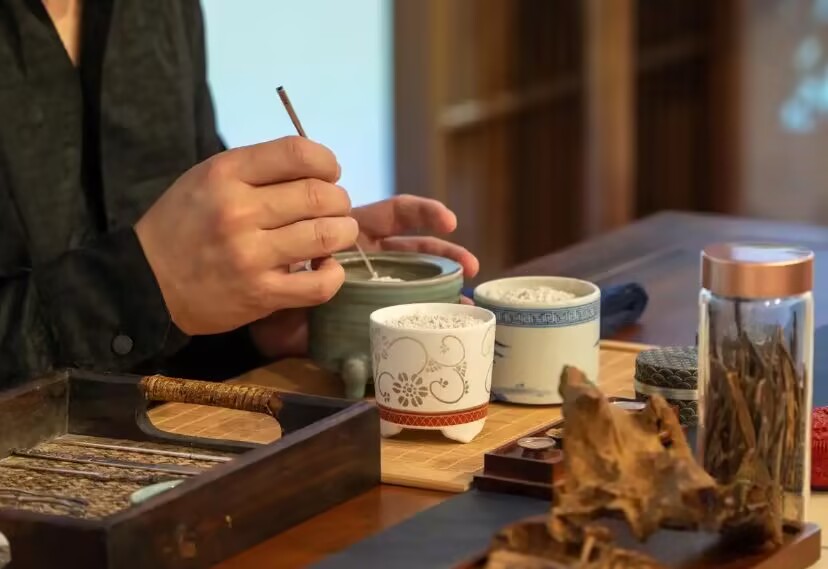
In 2024 and 2026, Dianbai organized two rounds of expert review. The varieties demonstrated included market-validated varieties such as Green Qinan, Watermelon Leaf, Oil Leaf, Concave Body and Golden Sand Leaf. The standards are also continuously
Compiled for general knowledge; traditional references are cultural notes, not medical advice.
Frequently Asked Questions
What is Dianbai Agarwood's Overseas 'Adventure Story'?
Recently, multiple agarwood processed products from Dianbai Agarwood Investment Group Co., Ltd. launched in Abu Dhabi, UAE, including leaf tea, pillows, crude oil, incense and daily chemical products.
How should I choose agarwood?
Buy from traceable, testable channels and match the form (incense, beads, raw wood) to your use. Avoid exaggerated claims such as "wild" or "sinking grade" without proof, and prefer products with lab reports and origin documentation.
How should agarwood be stored and maintained?
Agarwood dislikes moisture, odours and direct sunlight. Keep it sealed, dark and cool, store different origins separately, and air and inspect long-stored pieces periodically against mould and insects.
How can I tell real agarwood from fake?
Authentication combines sensory checks with technical ones: natural agarwood has a clean, long-lasting, cool-sweet scent and burns with pale, non-pungent smoke. GC-MS analysis of characteristic compounds (chromones, sesquiterpenes) adds objective confirmation. Buying through traceable channels with certificates lowers the risk.
How do agarwood origins differ?
Climate, tree species and resin-induction methods give each origin a distinct scent profile — for example Hainan tends to be clean and elegant, Vietnam sweet and cool, Indonesia deep and full. Origin is a key factor in grading and pricing.
What is the current agarwood market like?
Prices diverge sharply by resin density, origin and form, with both top-end collectibles and entry-level consumer products active. Use actual transactions from legal, testable channels as reference rather than a single quotation.
What is the relationship between agarwood and incense culture?
Agarwood is the core medium of East Asian incense culture, spanning temple offerings, literati gatherings and contemporary lifestyle aesthetics. Understanding this cultural background helps explain its value.
Does agarwood have health benefits?
Traditionally agarwood has been used for calming and sleep-related rituals, but evidence quality and dosage need careful reading. Keep traditional use and scientific evidence clearly separated and follow professional guidance.
参考资料
You may also like
评论区
评论匿名可浏览,登录后可发表;提交后先审后显。
评论加载中…