Quality Analysis and Evaluation of Qinan Agarwood According to the Chinese Pharmacopoeia
Basic Research · Quality Analysis and Evaluation of Agarwood Produced from Qinan Germplasm Based on the Pharmacopoeia of the People's Republic of China
1. Hainan Branch of the Institute of Medicinal Plant Development, Chinese Academy of Medical Sciences & Peking Union Medical College / Hainan Key Laboratory for Conservation and Development of Southern Medicinal Resources / Key Laboratory of Sustainable Utilization of Agarwood, National Administration of Traditional Chinese Medicine
2. Institute of Medicinal Plant Development, Chinese Academy of Medical Sciences & Peking Union Medical College / Key Laboratory of Bioactive Substances and Resources Utilization of Chinese Herbal Medicine, Ministry of Education / National Engineering Laboratory for Breeding of Endangered Medicinal Materials
[Abstract] Objective: To analyze and evaluate the quality of agarwood produced from qinan germplasm.
Methods: According to the agarwood medicinal material standard in the 2020 edition (Part I) of the Pharmacopoeia of the People's Republic of China (hereinafter referred to as the Chinese Pharmacopoeia), a comprehensive analysis was conducted on the macroscopic characters, identification, extractives, content determination, and characteristic chromatographic profile of agarwood produced from qinan germplasm.
Results: The microscopic structural features and physicochemical color reactions of 10 batches of agarwood produced from qinan germplasm complied with the agarwood standard in the 2020 edition of the Chinese Pharmacopoeia, while the macroscopic characters, thin-layer chromatography, and characteristic chromatographic profile did not comply; the mass fraction of alcohol-soluble extractives was 32.94%–56.69%, but the mass fraction of agarotetrol was only 0.01%–0.02%.
Conclusion: The quality of 10 batches of agarwood produced from qinan germplasm does not comply with the agarwood standard in the 2020 edition of the Chinese Pharmacopoeia.
Domestic medicinal agarwood is the resin-containing wood of Aquilaria sinensis (Lour.) Gilg of the Thymelaeaceae family. As a medicinal material, it was first recorded in the Han-Wei period in Mingyi Bielu (Supplementary Records of Famous Physicians) and listed as a superior grade [1]; it is a precious medicinal material and spice in China. The 2020 edition (Part I) of the Pharmacopoeia of the People's Republic of China (hereinafter referred to as the Chinese Pharmacopoeia) records that agarwood has the effects of promoting qi and relieving pain, warming the middle and stopping vomiting, and improving qi reception and relieving asthma [2]. Normally, healthy Aquilaria sinensis trees do not produce agarwood under natural conditions; only when induced by fungal infection, physical or chemical external damage, and other external injuries do they initiate defense responses and produce defensive substances, such as sesquiterpenes and 2-(2-phenylethyl)chromone compounds. These defensive substances participate in resin formation to resist further damage to Aquilaria sinensis from external injury, ultimately forming agarwood [3-4].
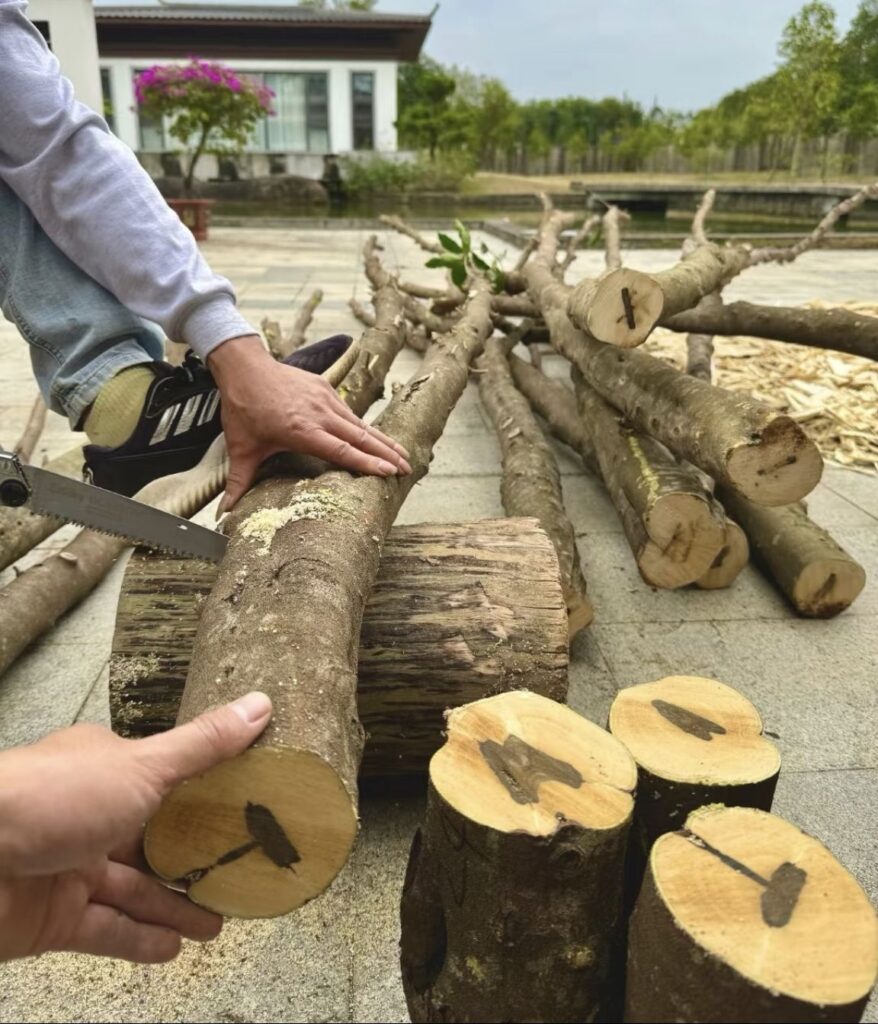
The name "qinan" was first seen in the Ming dynasty Xingcha Shenglan [5], and is also known as gajian, qinan, qinan, etc. According to records, the macroscopic characters of "qinan" agarwood are coiled and knotted, crumbling into clumps, and it is mainly produced in Southeast Asian countries [6]; it can be distinguished from ordinary agarwood by its unique odor and characters. In recent years, agarwood farmers in Guangdong and Hainan, China, have discovered a type of qinan agarwood germplasm. After grafting its budwood onto ordinary Aquilaria sinensis trees for 4 years, treatment by the drilling method for 1–2 years can produce agarwood with high resin content.
Because the fragrance and characters of the agarwood produced are similar to those of the recorded "qinan" agarwood, the agarwood produced from this qinan germplasm is regarded in Chinese agarwood circles as "qinan" agarwood and has been planted in large quantities in Guangdong and Hainan.
Previous studies have found that the chemical composition of agarwood produced from qinan germplasm differs significantly from that of ordinary agarwood [7-8]. However, to date, there are no research reports on whether agarwood produced from qinan germplasm can be used as medicinal agarwood. Therefore, based on the agarwood standard in the 2020 edition of the Chinese Pharmacopoeia, this study conducted macroscopic character examination, microscopic identification, thin-layer chromatographic identification, physicochemical color reaction identification, extractives determination, agarotetrol content determination, and characteristic chromatographic profile analysis on 10 batches of agarwood produced from qinan germplasm collected in Guangdong and Hainan. The aim is to verify whether commercially available agarwood produced from qinan germplasm meets the medicinal agarwood standard and to provide a reference basis for whether it can be used clinically as a medicinal material.
1 Materials
1.1 Samples
Ten batches of agarwood samples produced from qinan germplasm, 4 batches collected from Hainan and 6 batches from Guangdong. At the same time, 3 batches of agarwood produced from ordinary Aquilaria sinensis germplasm (referred to as ordinary agarwood) were taken as controls, as shown in Table 1. The 10 batches of agarwood samples produced from qinan germplasm were identified by Researcher Liu Yangyang of the Hainan Branch of the Institute of Medicinal Plant Development, Chinese Academy of Medical Sciences
as resin-containing wood, and the research group used DNA barcoding technology to identify the original plant as Aquilaria sinensis (Lour.) Gilg. Voucher specimens are deposited in the Agarwood Identification Center Herbarium of the Hainan Branch of the Institute of Medicinal Plant Development, Chinese Academy of Medical Sciences; the agarwood reference medicinal material (batch No.: 121222-201203) was purchased from the National Institutes for Food and Drug Control.
Table 1: Agarwood sample information
| Category | No. | Germplasm information | Origin |
| Agarwood produced from qinan germplasm | QN01 | Aoshen | Hainan |
| QN02 | Tangjie | Hainan | |
| QN03 | Bolangzai | Hainan | |
| QN04 | Ruhu | Hainan | |
| QN05 | Xiaokong chenshui | Guangdong | |
| QN06 | Shujie banchen | Guangdong | |
| QN07 | Wushen yuanye | Guangdong | |
| QN08 | Jinsiyou | Guangdong | |
| QN09 | Lü qinan | Guangdong | |
| QN10 | Wushen yuanye | Guangdong | |
| Ordinary agarwood | BM01 | Ordinary Aquilaria sinensis | Hainan |
| BM02 | Ordinary Aquilaria sinensis | Hainan | |
| BM02 | Ordinary Aquilaria sinensis | Guangdong |
1.2 Reagents
Reference substance agarotetrol (batch No.: 111980-201601, purity: 96.8%) was purchased from the National Institutes for Food and Drug Control; GF254 thin-layer chromatography plates (Merck, Germany); acetonitrile was chromatographic grade (Fisher, USA); vanillin, hydrochloric acid, formic acid, chloral hydrate, chloroform, diethyl ether, anhydrous ethanol, and 95% ethanol were all domestic analytical grade.
1.3 Instruments
1525 high-performance liquid chromatograph (Waters, USA); Eclipse biological microscope (Nikon, Japan); LE104E electronic balance (Mettler-Toledo, Switzerland); JY02S ultraviolet analyzer (Beijing Junyi Dongfang Electrophoresis Equipment Co., Ltd.).
2 Methods and Results
Referring to the methods specified in the agarwood standard of the 2020 edition (Part I) of the Chinese Pharmacopoeia [2], macroscopic character examination, microscopic identification, thin-layer chromatographic identification, physicochemical color reaction identification, extractives determination, agarotetrol content determination, and characteristic chromatographic profile analysis were carried out on 13 batches of agarwood samples.
2.1 Macroscopic character examination
The macroscopic characters of agarwood produced from qinan germplasm and ordinary agarwood are shown in Figure 1.
The appearance and morphology of the 10 batches of agarwood samples produced from qinan germplasm were basically consistent, all appearing as irregular strips and pieces, with surfaces ranging from light yellowish-brown to blackish-brown, uneven, and showing alternating longitudinal blackish-brown, brownish, yellowish-brown, or brownish-yellow stripes, occasionally yellow-green, dense, and densely covered with blackish-brown, brownish, or yellowish-brown resin markings; the side edges have holes distributed symmetrically, with darker color; the cross-section shows obvious resin, the texture is relatively hard, easy to cut, with a noticeable resistance when cut by knife, waxy and soft, lustrous, oily or apparently oily; the odor is fresh and strongly fragrant, the taste is bitter, pungent, or slightly pungent, and chewing gives a numbing sensation on the tongue. Compared with ordinary agarwood, whose characters are "holes, concave surfaces mostly appearing decayed-wood-like, solid texture, aromatic odor, bitter taste," those of agarwood produced from qinan germplasm are inconsistent. It can be seen that the characters of agarwood produced from qinan germplasm are not completely consistent with the agarwood characters specified in the 2020 edition of the Chinese Pharmacopoeia.
2.2 Microscopic identification
Agarwood samples were softened by soaking in water, cut into thin slices with a blade, placed on a glass slide, dropped with chloral hydrate, covered with a coverslip, and observed under a microscope. The microscopic structural features of agarwood produced from qinan germplasm and ordinary agarwood are shown in Figure 2. In all 13 batches of samples, microscopic structures such as rays, vessels, and interxylary phloem could be observed. The interxylary phloem was flat-elliptical, band-like, or "island"-like, numerous, with thin cell walls, filled with brown or yellowish-brown resin. Rays were up to 1–2 cells wide, filled with resin, and often intersected with the interxylary phloem. Vessels were subrounded or polygonal, scattered singly or aggregated in multiples. The microscopic structural features of agarwood produced from qinan germplasm were consistent with the agarwood microscopic structural features specified in the 2020 edition of the Chinese Pharmacopoeia.
2.3 Thin-layer chromatographic identification
Agarwood sample powder (0.5 g) was taken, 30 mL of diethyl ether was added, ultrasonically treated for 60 min, filtered, the filtrate was evaporated to dryness, and the residue was dissolved in 2 mL of chloroform to serve as the test solution. Separately, 0.5 g of agarwood reference medicinal material was taken and prepared in the same way as the reference medicinal material solution. Aliquots of 10 μL each of the sample solution and the agarwood reference medicinal material solution were separately spotted on the same silica gel GF254 thin-layer chromatography plate, developed with chloroform-diethyl ether (10:1) as the developing solvent, removed, air-dried, and examined under ultraviolet light at 365 and 254 nm. The results are shown in Figure 3. The fluorescent spots at the corresponding positions in the chromatograms of the 3 batches of ordinary agarwood and the reference medicinal material were consistent, but the chromatographic spots of the 10 batches of agarwood samples produced from qinan germplasm were inconsistent with the fluorescent spots at the corresponding positions in the chromatograms of the 3 batches of ordinary agarwood and the reference medicinal material.
2.4 Physicochemical color reaction identification
The alcohol-soluble extractives of agarwood samples produced from qinan germplasm and ordinary agarwood were subjected to microsublimation. All samples yielded yellowish-brown oily matter, in relatively large amounts, with a rich fragrance. One drop of hydrochloric acid and a small amount of vanillin were added to the oily matter, followed by 1–2 drops of ethanol. After the color reaction, the color of all samples gradually appeared
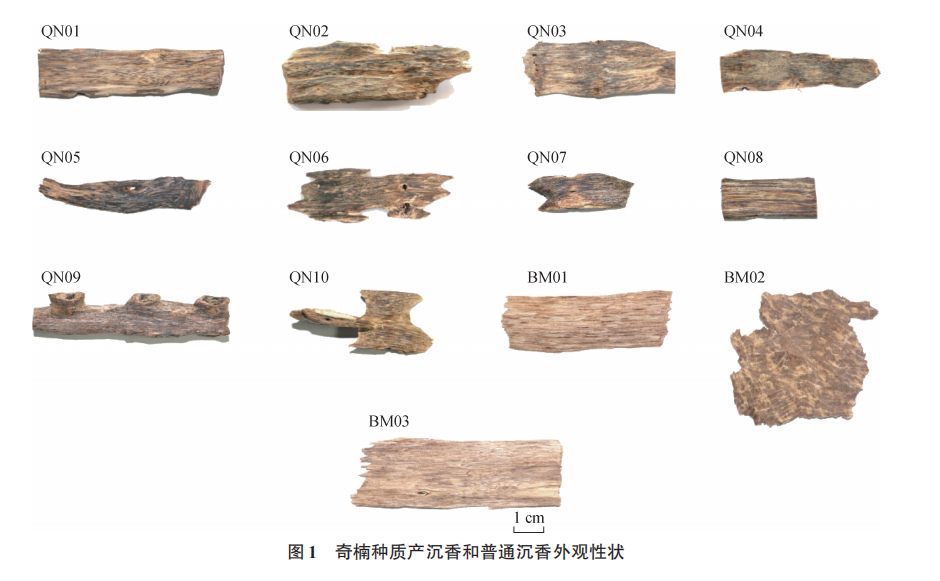
Figure 1: Qinan germplasm-produced agarwood
Compiled for general knowledge; traditional references are cultural notes, not medical advice.
Frequently Asked Questions
What is Quality Analysis and Evaluation of Qinan Agarwood According to the Chinese Pharmacopoeia?
Basic research · Quality analysis and evaluation of agarwood produced from qinan germplasm based on the Pharmacopoeia of the People's Republic of China. 1. Institute of Medicinal Plant Development, Chinese Academy of Medical Sciences & Peking Union Medical College, Hainan Branch...
How should I choose agarwood?
Buy from traceable, testable channels and match the form (incense, beads, raw wood) to your use. Avoid exaggerated claims such as "wild" or "sinking grade" without proof, and prefer products with lab reports and origin documentation.
How should agarwood be stored and maintained?
Agarwood dislikes moisture, odours and direct sunlight. Keep it sealed, dark and cool, store different origins separately, and air and inspect long-stored pieces periodically against mould and insects.
How can I tell real agarwood from fake?
Authentication combines sensory checks with technical ones: natural agarwood has a clean, long-lasting, cool-sweet scent and burns with pale, non-pungent smoke. GC-MS analysis of characteristic compounds (chromones, sesquiterpenes) adds objective confirmation. Buying through traceable channels with certificates lowers the risk.
How do agarwood origins differ?
Climate, tree species and resin-induction methods give each origin a distinct scent profile — for example Hainan tends to be clean and elegant, Vietnam sweet and cool, Indonesia deep and full. Origin is a key factor in grading and pricing.
What is the current agarwood market like?
Prices diverge sharply by resin density, origin and form, with both top-end collectibles and entry-level consumer products active. Use actual transactions from legal, testable channels as reference rather than a single quotation.
What is the relationship between agarwood and incense culture?
Agarwood is the core medium of East Asian incense culture, spanning temple offerings, literati gatherings and contemporary lifestyle aesthetics. Understanding this cultural background helps explain its value.
Does agarwood have health benefits?
Traditionally agarwood has been used for calming and sleep-related rituals, but evidence quality and dosage need careful reading. Keep traditional use and scientific evidence clearly separated and follow professional guidance.
参考资料
You may also like



评论区
评论匿名可浏览,登录后可发表;提交后先审后显。
评论加载中…