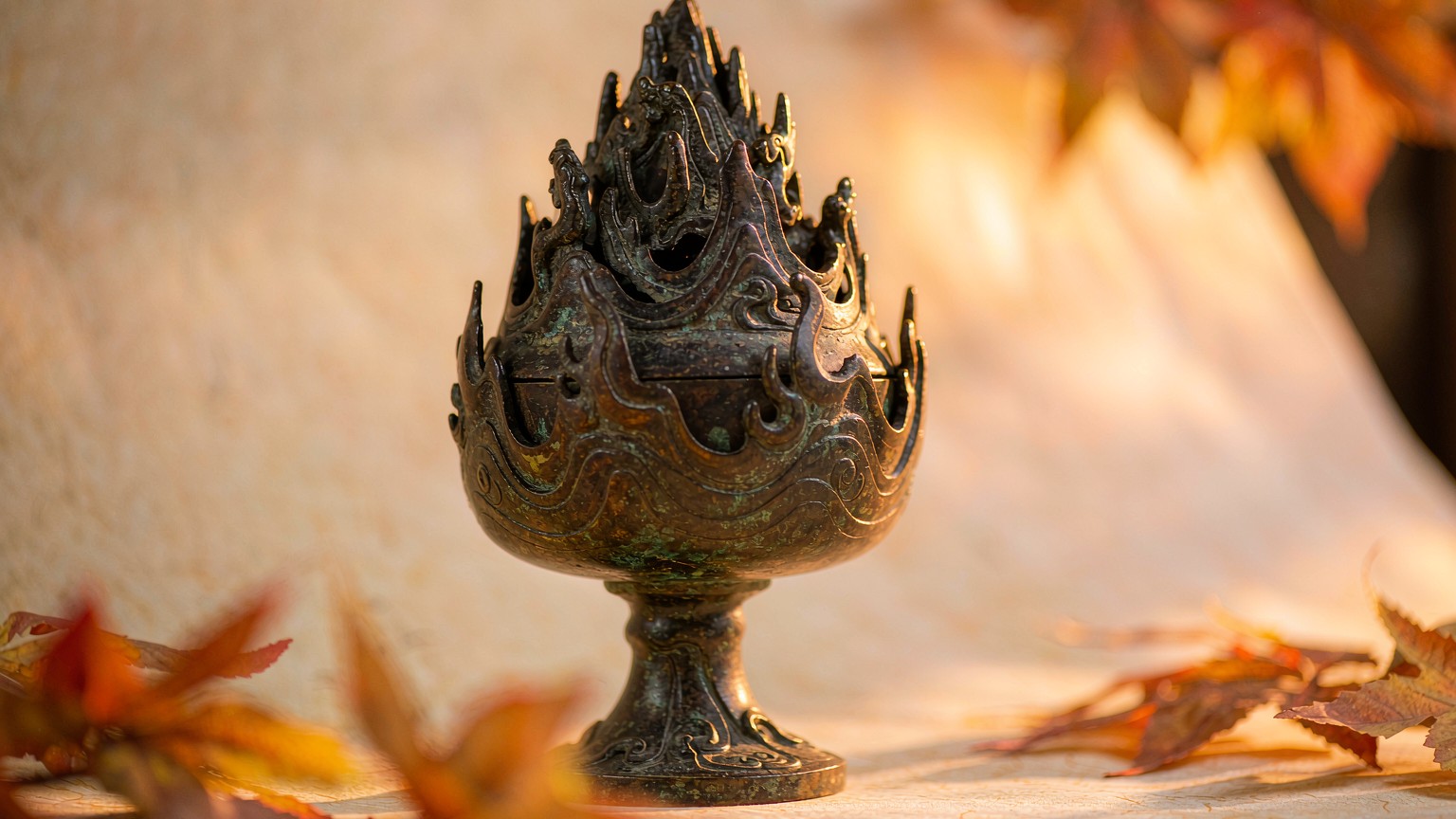
Current Status of Agarwood Plantations in China and Worldwide
China Agarwood Industry Development Report - Current Status of Agarwood Cultivation in China and Worldwide
I. Current Status of China's Agarwood Planting Industry
China's source species for agarwood is Aquilaria sinensis. Artificial agarwood planting is mainly concentrated in Aquilaria sinensis producing areas such as Guangdong, Hainan, Guangxi and Yunnan, with a planting area of 1 million mu, annual afforestation of 50,000–100,000 mu, and more than 20 million Aquilaria sinensis trees with a diameter at breast height (DBH) of over 10 cm. The artificial planting area is still insufficient to support the Chinese market. According to statistics, more than 80% of the agarwood consumed in China each year depends on imports. Overall, China's agarwood industry is still in its early stage of development.
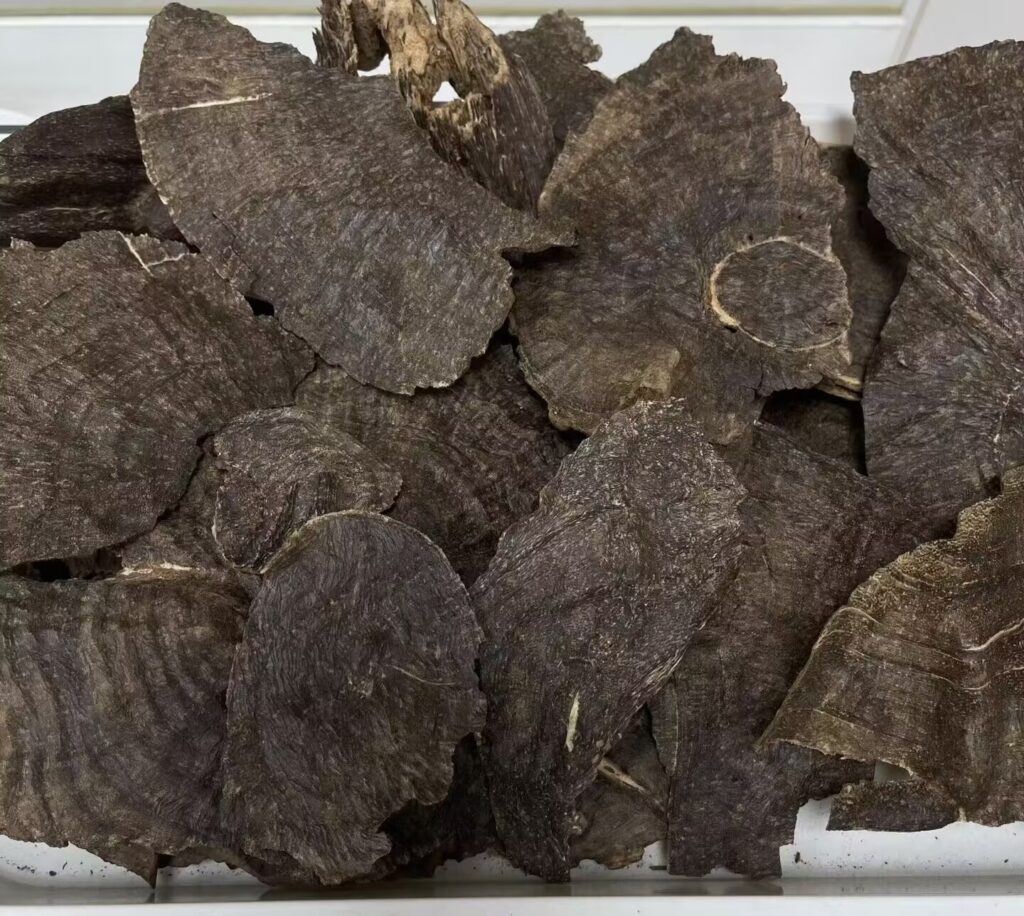
In recent years, in addition to traditional producing areas, non-producing areas such as Fujian, Sichuan, Chongqing, Jiangxi and Shandong (greenhouses) have also begun to introduce Aquilaria sinensis. Domestically planted agarwood trees suitable for resin formation and with DBH over 10 cm exceed 10 million; resin formation generally occurs 5–6 years after transplanting and establishment. They are mainly distributed in Hainan, western Guangdong, southern Guangxi, Xishuangbanna and Pu'er in Yunnan, and southeastern Fujian, and the number is still increasing at a rate of more than 1 million trees per year (Zhou Yafei et al., 2017).
Guangdong currently plants about 500,000 mu of Aquilaria sinensis trees, mainly distributed in Zhongshan, Dongguan, Zhanjiang (Xuwen), Shantou, Maoming (Huazhou, Gaozhou, Dianbai), Shanwei (Lufeng, Luhe), Jiangmen (Heshan), Huizhou (Huidong) and Zhaoqing (Guangning), among other places.
Among them, Zhongshan City has about 3 million Aquilaria sinensis trees with a DBH of about 5 cm; Dongguan City has planted about 16,000 mu of Aquilaria sinensis trees, mainly concentrated in Liaobu, Dalingshan, Qingxi, Fenggang, Zhangmutou and the Dongguan Botanical Garden, totaling about 800,000 trees; Dianbai District of Maoming City has more than 100,000 Aquilaria sinensis trees over 10 years old and more than 500,000 trees over 8 years old; Pingding Town of Huazhou City and surrounding areas have jointly formed the Pingding agarwood planting area, centered on Pingding Town.
Artificial agarwood plantations in Dianbai District, Guangdong, originated in 1997, when the "Chenxiang Mountain" agarwood GAP (Good Agricultural Practice) planting base was established, with tens of thousands of mu of Aquilaria sinensis planted in the base. In 2013, Dianbai was awarded the title "Hometown of Chinese Agarwood" by the state, establishing the historical status of Dianbai agarwood in China.
At present, Dianbai cultivates and produces about 30 million qinan agarwood seedlings annually, accounting for more than 80% of the national market and ranking largest in China. In particular, the "Chenxiang Mountain" agarwood GAP planting base reaches 35,000 mu, making it the largest agarwood planting demonstration base in China to date. Dianbai's primary, secondary and tertiary agarwood industries have achieved effective integrated development, forming a "one-stop" business model integrating planting, processing and sales.
Guangxi currently has about 200,000 mu of Aquilaria sinensis planting area, of which Beiliu has more than 6,000 agarwood growing households, has established 3 large agarwood nursery bases, 132 planting sites of over 10 mu, 47 contiguous planting bases of 100 mu, and 3 contiguous planting bases of 1,000 mu, and has set up 15 agarwood planting professional cooperatives, mainly distributed in Shiwo Town and Liujing Town, with a total of more than 20,000 Aquilaria sinensis trees planted.
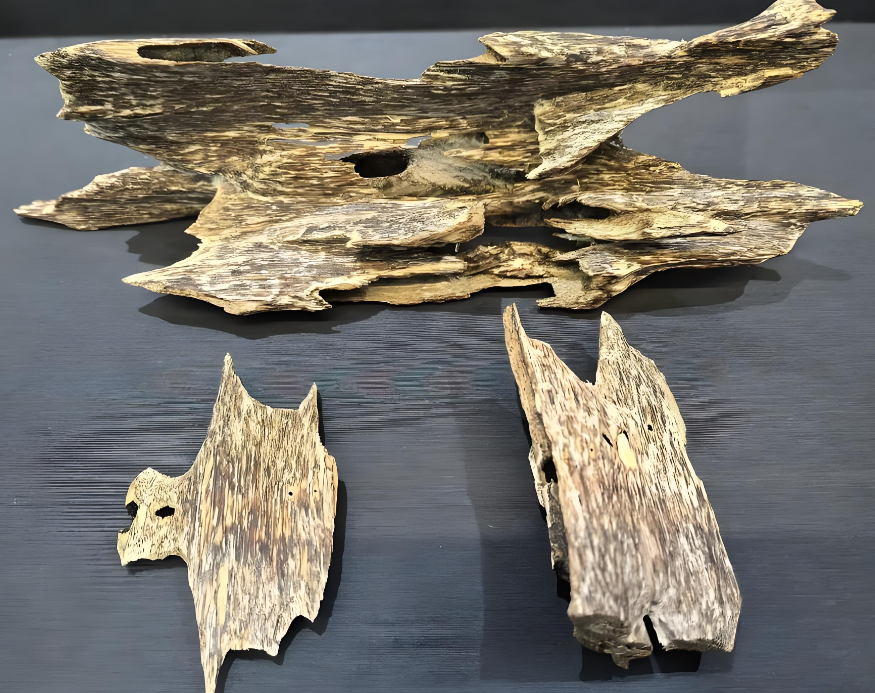
Hengxian in Guigang currently has about 50,000 mu of Aquilaria sinensis planting area, Yulin about 40,000 mu, Wuzhou about 10,000 mu, Beihai about 20,000 mu, and Qinzhou about 2,000 mu. In addition, the total planting area of Aquilaria sinensis trees in Naliang and Nasuo is 2,000–3,000 mu.
Yunnan has unique advantages for agarwood planting. The whole province currently has about 100,000 mu of agarwood planting area, of which Xishuangbanna accounts for 60,000–70,000 mu. In addition, Pu'er has about 10,000 mu of agarwood planting area, and Dehong and Lincang have several thousand mu each. After Xishuangbanna issued a policy in 2002 to vigorously plant rare tree species, a large amount of agarwood was planted.
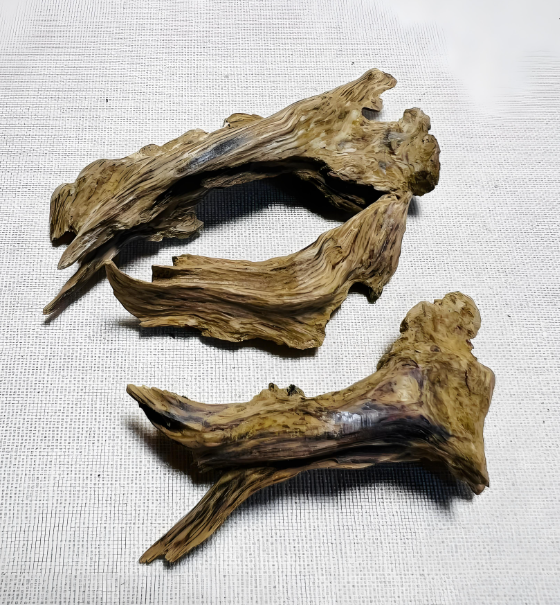
In other areas of Yunnan, agarwood planting mainly began after 2012. The existing planting model in Yunnan is mainly a combination of enterprises, cooperatives and farmers.
Fujian agarwood is relatively sparsely distributed, but in recent years, with strong support from the Fujian provincial government, the momentum of its agarwood industry development has attracted attention. At present, Fujian's agarwood planting area is about 35,000 mu, of which Quanzhou has about 10,000 mu and Zhangzhou about 6,000 mu.
The Xianyou County government has issued support policies to encourage farmers to open up wasteland and miscellaneous land and to interplant agarwood when planting economic tree species. In addition, Longhai also has agarwood planting, with an area of about several dozen mu. Because winter temperatures in Fujian are relatively low, agarwood is prone to frost damage, causing the death of some seedlings.
Hainan Province has listed Hainan agarwood as one of the fifteen major varieties for strengthening and optimizing tropical characteristic high-efficiency agriculture, and as one of the "Six Trees" that Hainan Province focuses on developing.

The Hainan provincial government, in accordance with medicinal and fragrance-use agarwood varieties, coordinates planning and rationally lays out advantageous agarwood planting areas, guides scattered planting toward scaled and intensive clustering, and gives priority to developing traditional advantageous production areas such as Tunchang, Qiongzhong and Chengmai, as well as central and western suitable forest areas and low-efficiency forest improvement areas such as Lingao, Danzhou and Ledong.
Tunchang, Qiongzhong, Chengmai and Wenchang mainly develop traditional medicinal Aquilaria sinensis, while cities (counties) such as Lingao, Danzhou and Ledong mainly develop easy-resin-forming varieties. After years of cultivation, Hainan's agarwood planting area has steadily increased, the agarwood industry chain has been continuously improved, and the level of agarwood scientific and technological innovation has continued to rise.
At present, Hainan agarwood planting area is about 140,000 mu (including trees around houses, roads, water and homesteads), of which Aquilaria sinensis accounts for 100,000 mu, about 80% of which has reached the age for resin formation; easy-resin-forming varieties account for 40,000 mu, about 50% of which can already form resin.
In addition to agarwood planting, agarwood seedling cultivation also occupies an important position in the development of the agarwood planting industry. In the Pingding agarwood planting area of Huazhou, Guangdong, since the late 1990s, seedlings have been dug from wild forests for transplanting and seed collection and seedling raising. By 2004 it had become large-scale and increased by hundreds of thousands of cups per year. In 2011 it exceeded 5 million cups, in 2012 the seedling quantity exceeded 10 million cups, in 2013 it was about 20 million cups, and in 2022 it reached 50 million cups. The Dongguan Botanical Garden has collected agarwood germplasm resources from Hainan, Guangxi, Yunnan, Guangdong and other places, and can provide more than 30,000 Aquilaria sinensis seedlings to the market each year.
Conducting systematic surveys and evaluations of agarwood source plant germplasm resources and breeding superior varieties with easy resin production, high yield and good quality through corresponding breeding technologies is of important practical significance for the development of the agarwood industry.
The agarwood research team of the Institute of Tropical Bioscience and Biotechnology, Chinese Academy of Tropical Agricultural Sciences, has worked for many years and established the world's largest agarwood germplasm resource nursery. Through mother tree selection, seed orchard establishment, introduction and domestication, regional trials, biological trait evaluation, resin formation evaluation, molecular evaluation, DUS (distinctness, uniformity, stability) testing, grafting and propagation and other means, it took the lead in breeding 5 improved agarwood varieties that have obtained new variety examination (approval) in China.
'Reke No. 1' Aquilaria sinensis: commonly known among growers as "yellow oil grade", it has the characteristics of easy resin production, high yield and excellent quality, and can be planted in Hainan, Guangdong, Guangxi, Yunnan, Fujian and other places. The recognition and promotion of this variety will have important and far-reaching significance for promoting the development of the agarwood industry. The characteristics of 'Reke No. 1' Aquilaria sinensis are mainly as follows: First, easy resin production: after the trunk is injured, yellow-brown agarwood material quickly forms, and its color gradually deepens over time, with a large diffusion range of resin formation around the wound; second, high yield: under the same resin formation conditions, the resin yield of 'Reke No. 1' Aquilaria sinensis increases by an average of 30% compared with ordinary Aquilaria sinensis; third, excellent quality: under the same origin, same tree age, same resin-forming part, same resin-inducing method and simultaneous resin collection conditions, the content of characteristic components in the agarwood produced by 'Reke No. 1' Aquilaria sinensis is significantly higher than that of ordinary Aquilaria sinensis trees, and the 2-(2-phenylethyl)chromone components contained in the agarwood formed average 4.6 times that of ordinary Aquilaria sinensis. 'Reke No. 1' Aquilaria sinensis has high application value and broad prospects; the agarwood it forms can be used to produce high-quality agarwood ornaments, bracelets, essential oils and incense sticks, etc.
'Reke No. 2' Aquilaria sinensis: characterized by easy resin formation, soft fragrance texture and high oil content, with the trait of resin formation in young trees; after injury it quickly forms dark brown agarwood and spreads around the wound. Its high content of characteristic agarwood components is shown by: under the same conditions, the total relative content of characteristic chemical components in the agarwood produced by 'Reke No. 2' Aquilaria sinensis is on average 32% higher than that of ordinary Aquilaria sinensis. Its excellent quality is shown by: the total relative content of chromone components in 'Reke No. 2' agarwood averages 12.37 times that of the ordinary Aquilaria sinensis control; in particular, the sum of the two characteristic components found in relatively high amounts in qinan agarwood, 2-(2-phenylethyl)chromone and 2-[2-(4-methoxyphenyl)ethyl]chromone, averages 51.25% in 'Reke No. 2' Aquilaria sinensis, giving it the characteristics of high-quality qinan agarwood. It is the first qinan agarwood variety recognized and approved in the world.
'Reke No. 3' Aquilaria sinensis: derived from Hainan Limu Mountain "black oil" material; after the trunk is injured, it gradually browns and forms dark brown agarwood. The agarwood produced has the characteristics of high density, hard texture, immediate sinking in water, high oil content, spicy taste and elegant aroma. Under the same conditions, the sesquiterpene components in the agarwood produced are diverse and relatively high in content, namely 33 types and 98.76%, which are 1.94 times and 2.87 times those of ordinary Aquilaria sinensis (17 types, 34.39%), respectively. In terms of morphological characteristics, it is clearly different from ordinary Aquilaria sinensis in twig color, leaf shape, leaf tip, fruit traits, agarwood block texture, agarwood block density and aroma, while other characteristics show no difference from ordinary Aquilaria sinensis, and there is no significant difference in flowering and fruiting period or adaptability.
'Reke No. 5' Aquilaria sinensis: the plant grows quickly; bark is grayish green; annual branches mostly have longitudinal cracks; young branches are reddish brown; new branches are light green and pubescent; leaves are emerald green, large, mature leaves nearly elliptical, thinly leathery, with acuminate tips; leaf margins are neat and pale yellow-green; young leaves are light green, with the front end relatively large and obovate; xylem is white; fruit is green, slightly obovate. One year after hole-drilling for resin formation, the average ether extract content of the agarwood formed by 'Reke No. 5' Aquilaria sinensis reaches 18.80%.
'Reke No. 6' Aquilaria sinensis: the plant grows quickly; bark is grayish white with many white fungal spots; young branches are reddish brown; new branches are light green and pubescent; leaves are dark green, mature leaves nearly spindle-shaped, leathery, with acute to blunt tips; leaf margins are neat, without wrinkles, pale yellow-green; xylem is pale yellow-green; fruit is green, nearly spherical; it has the trait of resin formation in young trees, and trees or young branches about 3 years old can achieve resin formation. One year after induction by drilling or pruning, the plant can form dark brown agarwood with rich oil content and luster. Regional trial results show that one year after hole-drilling for resin formation, the average ether extract content of the agarwood formed by 'Reke No. 6' Aquilaria sinensis reaches 21.23%.
II. Current Status of the Global Agarwood Planting Industry
At present, the global agarwood planting area is more than 15 million mu, among which Indonesia, Malaysia, Vietnam and Thailand are important agarwood planting countries, and agarwood raw materials mainly come from artificial resin formation technology. According to statistics, the total value of global agarwood trade in 2018 was US$30–32 billion, and it is expected to increase to US$64 billion by 2029. From 2000 to 2020, the total export volume of global agarwood products was about 36,700 tons, and a total of 39 countries worldwide imported agarwood products, mainly countries in the Middle East. International trade in agarwood products mainly includes agarwood chips (about 43%), essential oils or other extracts (about 27%), wood or logs (about 11%), wood shavings (about 8%) and others, mainly raw materials and primary processed products. Since 2017, the proportion of artificially planted agarwood products in global trade has exceeded that of wild agarwood.
In recent years, as governments have gradually attached importance to the agarwood industry, agarwood-producing countries have increased their awareness of protecting wild agarwood plants and strictly prohibit the import and export of wild agarwood, making wild agarwood resources unable to meet market demand and increasingly highlighting the contradiction between resource scarcity and soaring prices. To meet market demand, the agarwood planting industry has gradually emerged, and traditional agarwood producing areas all have artificial agarwood planting.
According to surveys, Laos currently has 20–30 million artificially planted agarwood trees over 10 years old.
In Vietnam, artificial planting of agarwood trees is mainly distributed in southeastern Vietnam, the Central Highlands, the central region and the Mekong River region, including Quang Nam, Hue, Quang Binh and Hanoi, among other places. In addition, there is also planting around Nha Trang, in the border area with Laos and on Phu Quoc Island, with larger planting quantities in Quang Nam and Hue.
There are 4 agarwood-producing plant species in Vietnam, namely Aquilaria crassna, Aquilaria baillonii, Aquilaria banaensis and Aquilaria rugosa.
Among them, 90% of Vietnam's agarwood comes from Aquilaria crassna, which is the most important variety in Vietnam's agarwood planting.
Compiled for general knowledge; traditional references are cultural notes, not medical advice.
Frequently Asked Questions
What is Current Status of Agarwood Plantations in China and Worldwide?
China Agarwood Industry Development Report: Current status of agarwood cultivation in China and worldwide. China's native agarwood species is Aquilaria sinensis; plantation area is about 1 million mu, yet over 80% of annual consumption still relies on imports.
How should I choose agarwood?
Buy from traceable, testable channels and match the form (incense, beads, raw wood) to your use. Avoid exaggerated claims such as "wild" or "sinking grade" without proof, and prefer products with lab reports and origin documentation.
How should agarwood be stored and maintained?
Agarwood dislikes moisture, odours and direct sunlight. Keep it sealed, dark and cool, store different origins separately, and air and inspect long-stored pieces periodically against mould and insects.
How can I tell real agarwood from fake?
Authentication combines sensory checks with technical ones: natural agarwood has a clean, long-lasting, cool-sweet scent and burns with pale, non-pungent smoke. GC-MS analysis of characteristic compounds (chromones, sesquiterpenes) adds objective confirmation. Buying through traceable channels with certificates lowers the risk.
How do agarwood origins differ?
Climate, tree species and resin-induction methods give each origin a distinct scent profile — for example Hainan tends to be clean and elegant, Vietnam sweet and cool, Indonesia deep and full. Origin is a key factor in grading and pricing.
What is the current agarwood market like?
Prices diverge sharply by resin density, origin and form, with both top-end collectibles and entry-level consumer products active. Use actual transactions from legal, testable channels as reference rather than a single quotation.
What is the relationship between agarwood and incense culture?
Agarwood is the core medium of East Asian incense culture, spanning temple offerings, literati gatherings and contemporary lifestyle aesthetics. Understanding this cultural background helps explain its value.
Does agarwood have health benefits?
Traditionally agarwood has been used for calming and sleep-related rituals, but evidence quality and dosage need careful reading. Keep traditional use and scientific evidence clearly separated and follow professional guidance.
参考资料
You may also like



评论区
评论匿名可浏览,登录后可发表;提交后先审后显。
评论加载中…